Connect with us

Technology

Shipbroking Market to Grow by USD 263.7 Million from 2024-2028, Driven by Key Value Additions in Shipping and AI’s Impact on Market Trends – Technavio

Published

on

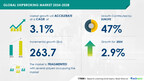
NEW YORK, Oct. 17, 2024 /PRNewswire/ — Report on how AI is redefining market landscape – The Global Shipbroking Market size is estimated to grow by USD 263.7 million from 2024-2028, according to Technavio. The market is estimated to grow at a CAGR of almost 3.1%  during the forecast period. demand for key value addition in shipping process is driving market growth, with a trend towards implementation of advanced technologies. However, increased exposure to global macroeconomic factors  poses a challenge – Key market players include AGORA SHIPBROKING Corp., Aries Asia, BGC Group Inc., Braemar Plc, BRS Group, Chowgule Brothers Pvt. Ltd., Clarkson Plc, E.A. Gibson Shipbrokers Ltd., Fearnleys AS, Howe Robinson Partners Pte Ltd., IFCHOR GALBRAITHS, Interocean Group, Lorentzen and Co., Maritime London Ltd., MB Shipbrokers KS, McQuilling Partners Inc., Seacore Shipbrokers Ltd., SHIPLINKS, Simpson Spence Young Ltd., and SPI Marine UK Ltd..

Key insights into market evolution with AI-powered analysis. Explore trends, segmentation, and growth drivers- View the snapshot of this report

Shipbroking Market Scope

Report Coverage

Details

Base year

2023

Historic period

2018 – 2022

Forecast period

2024-2028

Growth momentum & CAGR

Accelerate at a CAGR of 3.1%

Market growth 2024-2028

USD 263.7 million

Market structure

Fragmented

YoY growth 2022-2023 (%)

2.9

Regional analysis

Europe, APAC, North America, Middle East and Africa, and South America

Performing market contribution

Europe at 47%

Key countries

UK, Singapore, Norway, US, and China

Key companies profiled

AGORA SHIPBROKING Corp., Aries Asia, BGC Group Inc., Braemar Plc, BRS Group, Chowgule Brothers Pvt. Ltd., Clarkson Plc, E.A. Gibson Shipbrokers Ltd., Fearnleys AS, Howe Robinson Partners Pte Ltd., IFCHOR GALBRAITHS, Interocean Group, Lorentzen and Co., Maritime London Ltd., MB Shipbrokers KS, McQuilling Partners Inc., Seacore Shipbrokers Ltd., SHIPLINKS, Simpson Spence Young Ltd., and SPI Marine UK Ltd.

Market Driver

The maritime industry is witnessing significant advancements driven by technological innovations such as artificial intelligence, machine learning, blockchain, advanced analytics, Big Data, Internet of Things, virtual assistants, automated vehicles, and augmented reality. Modern ships are incorporating smart systems, including advanced sensor systems, drones, satellites, and other robotic devices, to become smarter and more connected. Shipping ports are automating processes and utilizing technology-driven solutions for optimization and efficiency. The use of an Automated Identification System (AIS) is a prime example of how technology is revolutionizing the industry. This system, which consists of a group of satellites tracking ships’ activities and using big data analytics for insights, offers granular-level information for process improvement and optimization. Another groundbreaking innovation is the implementation of blockchain technology, which is expected to bring significant efficiency to the shipbroking and shipping process. Contractual negotiations and documentation, which are traditionally time-consuming due to extensive due diligence, can now be accomplished in minutes with enhanced transparency and minimal human intervention. This development is expected to lead to reduced operating costs for shipbrokers and increased profits. In summary, the maritime industry is undergoing a digital transformation, with technological innovations such as AI, machine learning, blockchain, and Big Data Analytics driving process optimization, efficiency, and transparency. This trend is expected to continue, boosting the growth of the shipbroking market during the forecast period. 

Shipbrokers play a crucial role in the maritime transport industry by connecting ship owners with traders looking to move goods. They facilitate legal agreements between parties, offering charting brokers’ services for vessel chartering. Value-added services include insurance, storage facilities, and inland transportation. Risks such as piracy, sea storms, and container damage are managed. Containers, tankers, dry bulk, and other vessel types are bought and sold through sales and purchase agreements. Valuations, recycling, offshore services, and newbuilding services are also provided. Specialized expertise in sectors like oil and gas, manufacturing, aerospace and defense, international trade, and seaborne transportation are key. Intermediaries coordinate freight rates, vessel supply, and cargo logistics, building strong relationships with clients to ensure successful transactions. Online platforms streamline transaction processing. 

Request Sample of our comprehensive report now to stay ahead in the AI-driven market evolution!

 Market Challenges

The global shipbroking market is significantly influenced by macroeconomic factors, making it susceptible to various risks and uncertainties that could negatively impact the shipping industry. The shipping sector faced significant challenges during the 2008 mortgage crisis, resulting in a decline in economic activity and a drop in profitability. More recently, the collapse of Hanjin, a major container line in 2016, further affected the industry. While the global economy is recovering, risks such as the Chinese economy’s rebalancing, Brexit, and US policy uncertainties continue to pose challenges. Brexit may result in trade barriers between the UK and EU, negatively impacting the entire shipping industry. Protectionism, shortening supply chains, production and trade localization, and the failure of regional trade agreements are also expected to negatively affect the global shipbroking market during the forecast period. The weak investment environment, downturn in trade, and low commodity price levels further compound these challenges.The shipbroking market faces various challenges in the contemporary business landscape. Containers, tankers, dry bulk, and other vessel types require efficient sales and purchase transactions. Valuations, recycling, and newbuilding services are crucial for owners and investors. Oil and gas, manufacturing, aerospace and defense, international trade, and seaborne transportation sectors rely on shipbrokers for logistics and commodities movement. Freight rates, vessel supply, and value-added services impact relationships with clients. Specialized expertise in cargo logistics and intermediaries’ roles are vital in managing freight luggage, vessels, and charterers’ needs. Sellers, logistics, commodities, and freight rates involve significant risks that require mitigation. Online platforms streamline transaction processing, but coordination, charting, and documentation services remain essential. Third-party agencies, blockchain, artificial intelligence, and machine learning offer marine business solutions. Bankers, investors, and charterers require expert advice in offshore projects, offshore services, and oil and gas sectors. Trained professionals handle risks, provide documentation services, and manage relationships with clients and stakeholders. In summary, the shipbroking market faces challenges in managing various vessel types, sectors, and services while ensuring efficient transactions, risk management, and specialized expertise.

Discover how AI is revolutionizing market trends- Get your access now!

Segment Overview 

This shipbroking market report extensively covers market segmentation by  

Application 1.1 Bulker1.2 Tanker1.3 OthersEnd-user 2.1 Oil and gas2.2 Manufacturing2.3 Aerospace and defense2.4 OthersGeography 3.1 Europe3.2 APAC3.3 North America3.4 Middle East and Africa3.5 South America

1.1 Bulker-  The bulker segment’s growth is linked to the expansion of global economic activity and infrastructure development, driving demand for dry bulk seaborne trade. Shipbrokers play a vital role in this sector by acting as intermediaries between shipowners and charterers. They offer essential services like logistics coordination, market research, and negotiation. Shipbrokers’ expertise in freight rates, shipping routes, and market trends enables them to advise clients on optimal shipping strategies. In the bulker segment, where freight rates are influenced by supply and demand shifts, brokers negotiate favorable terms for both parties. They also manage shipping logistics, including scheduling, port preparations, and regulatory compliance, to ensure efficient delivery of commodities like coal, grain, and iron ore. The bulker segment’s growth positively impacts the global shipbroking market. Increased demand for dry bulk commodities necessitates efficient shipping solutions, leading to higher demand for shipbroking services. Shipowners may expand their fleets to meet demand, and brokers facilitate these expansions by connecting them with charterers and managing new contracts. A thriving bulker segment contributes to market stability, benefiting shipbrokers as increased trade volumes and predictable shipping operations enable more accurate forecasts and advice for clients. Consequently, these factors are expected to fuel the growth of the global shipbroking market during the forecast period.

Download a Sample of our comprehensive report today to discover how AI-driven innovations are reshaping competitive dynamics

Research Analysis

The shipbroking market plays a crucial role in facilitating the global maritime transport of goods through various value-added services. Shipbrokers act as intermediaries between ship owners and traders, negotiating charter agreements for the rental of vessels for seaborne transportation. Legal agreements are essential in these transactions, with charting brokers ensuring compliance with international maritime laws. Sea ports serve as crucial hubs for the loading and unloading of goods, with logistics companies providing inland transportation services to move cargo to and from these facilities. Insurance and storage facilities are also essential components of the supply chain, protecting against risks and ensuring the safekeeping of goods. International trade relies heavily on seaborne transportation, with commodities such as grains, oil, and metals frequently transported via vessels. Freight rates and vessel supply are key factors influencing the market, with investors closely monitoring trends to maximize returns. Value-added services offered by shipbrokers include freight forwarding, cargo tracking, and documentation services, enhancing the efficiency and reliability of the maritime transport system. Charterers and traders rely on these services to optimize their supply chains and meet the demands of their customers.

Market Research Overview

The shipbroking market is a dynamic and complex industry that facilitates the buying and selling of various types of vessels, including container vessels, tankers, and dry bulk carriers, among others. Shipbrokers act as intermediaries between ship owners and traders, coordinating legal agreements, charting brokers, and providing value-added services such as insurance, storage facilities, inland transportation, and risk management. Goods are transported via maritime transport to sea ports, where they are loaded onto vessels for seaborne transportation. Freight rates and vessel supply are key factors influencing the market, with specialized expertise in cargo logistics and commodities essential for successful transactions. Risks, such as piracy and sea storms, are managed through insurance and security measures. Online platforms and transaction processing systems streamline the buying and selling process, while newbuilding services and offshore projects require specialized expertise. The market serves clients in various industries, including oil and gas, manufacturing, aerospace and defense, international trade, and logistics transportation. Blockchain, artificial intelligence, and machine learning are increasingly being adopted to enhance marine business solutions and improve efficiency. Third-party agencies and trained professionals provide documentation services and support cross-border imports.

Table of Contents:

1 Executive Summary
2 Market Landscape
3 Market Sizing
4 Historic Market Size
5 Five Forces Analysis
6 Market Segmentation

ApplicationBulkerTankerOthersEnd-userOil And GasManufacturingAerospace And DefenseOthersGeographyEuropeAPACNorth AmericaMiddle East And AfricaSouth America

7 Customer Landscape
8 Geographic Landscape
9 Drivers, Challenges, and Trends
10 Company Landscape
11 Company Analysis
12 Appendix

About Technavio

Technavio is a leading global technology research and advisory company. Their research and analysis focuses on emerging market trends and provides actionable insights to help businesses identify market opportunities and develop effective strategies to optimize their market positions.

With over 500 specialized analysts, Technavio’s report library consists of more than 17,000 reports and counting, covering 800 technologies, spanning across 50 countries. Their client base consists of enterprises of all sizes, including more than 100 Fortune 500 companies. This growing client base relies on Technavio’s comprehensive coverage, extensive research, and actionable market insights to identify opportunities in existing and potential markets and assess their competitive positions within changing market scenarios.

Contacts

Technavio Research
Jesse Maida
Media & Marketing Executive
US: +1 844 364 1100
UK: +44 203 893 3200
Email: media@technavio.com
Website: www.technavio.com/

View original content to download multimedia:https://www.prnewswire.com/news-releases/shipbroking-market-to-grow-by-usd-263-7-million-from-2024-2028–driven-by-key-value-additions-in-shipping-and-ais-impact-on-market-trends—technavio-302278798.html

SOURCE Technavio

Continue Reading
Click to comment

Leave a Reply

Your email address will not be published. Required fields are marked *

Technology

Avnet and HKSTP Invite Global Startups to New AI Hardware Launchpad

Published

on

By

HONG KONG, May 12, 2026 /PRNewswire/ — Avnet (NASDAQ: AVT), a leading global technology distributor and solutions provider, in collaboration with Hong Kong Science and Technology Parks Corporation (HKSTP)  and the Emerging Microelectronics and Ubiquitous Systems Laboratory (EMUS Lab), today announced the launch of the 12-month DfMA Launchpad for AI MMP Programme (Design for Manufacturing and Assembly Launchpad for AI Minimum Marketable Product). The programme is now open for applications from startups worldwide.

Positioned as a co-incubation programme, the initiative is designed to support both local and international startups in accelerating the commercialisation of AI innovations, with a focus on Edge AI, Physical AI, and high-performance computing (HPC), while exposing startups to global market access and supply chain integration. Leveraging Hong Kong as a strategic gateway to Greater Bay Area, the programme provides participating startups with global market exposure, direct access to experienced industry partners and supply chains.

By combining Avnet’s global technology expertise and supply chain capabilities, EMUS Lab’s advanced research infrastructure, co-established by Avnet and the University of Hong Kong (HKU), and HKSTP’s established incubation ecosystem, the programme aims to connect startups with relevant industry, research, and manufacturing partners, with the goal of turning prototype products into market-ready solutions.

Arthur Chung, Vice President, Sales and Supplier Management, Asia at Avnet, said: “Our collaboration with HKSTP, HKU and EMUS Lab brings together global technology expertise, advanced research capabilities, and a strong innovation ecosystem. By supporting startups from development through to production, we aim to accelerate the journey from innovation to scalable, market-ready solutions across Hong Kong, the Greater Bay Area, and beyond.”

Derek Chim, Head of Startup Ecosystem & Development of HKSTP, said: “This partnership with Avnet and EMUS Lab, which is strategically located at the HKSTP Data Technology Hub, provides startups with access to critical infrastructure, technical expertise, and industry networks. It strengthens Hong Kong’s position as a leading global innovation hub while accelerating the commercialisation of next-generation AI hardware solutions through collaborative ecosystem building and market linkage.”

Focus Areas: Edge AI, Physical AI and High-Performance Computing

The programme targets three critical technology domains that underpin next-generation AI hardware deployment:

Edge AI: Enabling real-time intelligence at the device level across applications such as smart cities, industrial automation, retail, and healthcarePhysical AI: Powering robotics, autonomous systems, and intelligent machines through the integration of software and physical environmentsHigh-performance computing (HPC): Supporting AI model training, simulation, and large-scale data processing with advanced compute infrastructure

Startup Support: Funding, Technical Expertise and Global Market Access

Selected startups will receive comprehensive support designed to accelerate product development and go-to-market readiness, including:

Potential funding of up to HKD 100,000 (subject to HKSTP Ideation Programme terms)Access to EMUS Lab and Hong Kong Science Park facilitiesOne-on-one technical mentorship from Avnet engineers and HKU expertsSupport in AI model optimisation, hardware–software co-design, and system validationAccess to Avnet’s global ecosystem of OEMs, enterprise customers, and investorsAccess to co-creation opportunities offered through HKSTP’s extensive co-development partner network

EMUS Lab: Advancing AI Research and Talent Development

Since its establishment, EMUS Lab has demonstrated measurable impact in advancing AI research and talent development. The lab’s research, powered by Avnet-sponsored GPU infrastructure, has resulted in top-tier publications in Nature family journals and elite conference presentations at ICLR and ICML. Furthermore, the lab has engaged more than 260 students through STEM initiatives, contributing to the growth of Hong Kong’s innovation talent pool.

These achievements demonstrate EMUS Lab’s ability to translate advanced research into real-world AI innovation and startup outcomes. The upcoming grand opening will further showcase how this four-pillar collaboration model translates research into innovation, talent development, and startup creation.

Eligibility and Application

Applications for the DfMA Launchpad for AI MMP Programme will open on 1 May 2026 and close on 29 May 2026. Eligible applicants should have a functional prototype or early-stage product aligned with Edge AI, Physical AI, or HPC, and demonstrate readiness to enter or expand into the Hong Kong market. Shortlisted applicants will be invited to interviews scheduled for 2–3 July 2026, which may be conducted either online or on site. The interview panel will comprise two representatives from Avnet or Avnet’s partners, together with two representatives from HKSTP. Final results will be announced on 13 July 2026.

Overseas startups selected for the programme will be required to establish a Hong Kong entity to ensure local ecosystem participation and impact.

For full programme details and application guidelines, visit: https://www.avnet.com/apac/resources/hkstp-co-incubation-program/ 

About Avnet

As a leading global technology distributor and solutions provider, Avnet has served customers’ evolving needs for more than a century. Through regional and specialised businesses around the world, we support customers and suppliers at every stage of the product lifecycle. We help companies adapt to change and accelerate the design and supply stages of product development. With a unique viewpoint from the center of the technology supply chain, Avnet is a trusted partner that solves complex design and supply chain issues so customers can realize revenue faster. Learn more about Avnet at www.avnet.com.

About Hong Kong Science and Technology Parks Corporation

Hong Kong Science and Technology Parks Corporation (HKSTP) was established in 2001 to create a thriving I&T ecosystem grooming 13 unicorns, more than 17,000 research professionals and over 2,500 technology companies from 26 countries and regions focused on developing healthtech, AI and robotics, fintech and smart city technologies, etc.

Our growing innovation ecosystem offers comprehensive support to attract and nurture talent, accelerate and commercialise innovation for technology ventures, with the I&T journey built around our key locations of Hong Kong Science Park in Pak Shek Kok, InnoCentre in Kowloon Tong and three modern InnoParks in Tai Po, Tseung Kwan O and Yuen Long realising a vision of new industrialisation for Hong Kong, where sectors including advanced manufacturing, micro-electronics and biotechnology are being reimagined.

Hong Kong Science Park Shenzhen Branch in Futian, Shenzhen plays positive roles in connecting the world and the mainland with our proximity, strengthening cross-border exchange to bring advantages in attracting global talent and allowing possibilities for the development of technology companies in seven key areas: Medtech, big data and AI, robotics, new materials, microelectronics, fintech and sustainability, with both dry and wet laboratories, co-working space, conference and exhibition facilities, and more.

Through our R&D infrastructure, startup support and enterprise services, commercialisation and investment expertise, partnership networks and talent traction, HKSTP continues to contribute in establishing I&T as a pillar of growth for Hong Kong.

More information about HKSTP is available at www.hkstp.org.

View original content to download multimedia:https://www.prnewswire.com/apac/news-releases/avnet-and-hkstp-invite-global-startups-to-new-ai-hardware-launchpad-302768091.html

SOURCE Avnet

Continue Reading

Technology

Tonik Becomes the First Standalone Digital Bank in the Philippines to Achieve Profitability

Published

on

By

Built on Lending, Not on Users. Powered by the Strongest Unit Economics in Philippine Banking.

MANILA, Philippines and SINGAPORE, May 12, 2026 /PRNewswire/ — Tonik, the holder of BSP Digital Banking License No. 001 and the Philippines’ first standalone digital bank, has reached a defining milestone: sustained profitability. The company generated consolidated positive cash net income (after all costs including cost of risk) in Q1 2026, becoming the first standalone digital bank in the country to do so—and one of the fastest non-ecosystem neobanks globally to reach this point.  At the same time, Tonik’s regulated bank subsidiary, Tonik Digital Bank, Inc. has also achieved IFRS profitability for the entire Q1 2026.

This milestone is the direct outcome of a founding choice: to build a credit-led institution, not a user platform.

A Model Built for Lending, Not Optics

While much of the narrative around the Philippine digital banking market has been defined by user growth, deposits, and payment volumes, Tonik was designed from day one as a lending institution—focused on deploying capital efficiently into consumer credit for the 90% of Filipinos unserved by formal bank lenders.  This strategic choice was driven by a simple logic – revenue on a loan client is 20x higher than on a payment client, and credit inclusion is clearly where the remaining gap in the market is, not payment inclusion.

Five years in, that discipline is now showing up in the only metrics that matter: profitability and capital efficiency.

The Numbers That Matter

As of April 2026:

Loan portfolio: USD 110 million, up 2.3× year-on-year, growth leaderAnnualized revenue run-rate: USD 60M+, with 99% from lendingNIM / Lending RAROC: 51% / 25% — the highest in the banking marketLoan-to-deposit ratio: 82% — the highest among Philippine digital banksNet LTV/CAC: 23× — validating a scaled upsell flywheel engine

These metrics reflect a business built on lending productivity—not user accumulation or idle deposits.

Why the Model Matters

Tonik is the first digital bank in the Philippines to reach profitability without relying on a pre-existing bank, payments, telco, or retail ecosystem. While ecosystem-backed models can accelerate early growth, they often cap long-term scalability—as proven by the fact that most of the world’s largest digital banks were built as standalone, balance-sheet-driven institutions.

What Drove Profitability

Three structural decisions underpin this outcome:

AI-driven risk management. Five years of advanced data and underwriting iteration have enabled profitable lending to thin-file borrowers, improving risk-adjusted returns while sustaining growth.

Portfolio mix diversification. Lending is diversified across employer-channel salary-deduction loans, merchant installment network, and digital personal loans.  These channels provide structural risk mitigation supporting de-risked unit economics. 

Deposit advantage. A BSP license enables retail funding at 3–6%, versus 15%+ for non-bank lenders—creating a structural margin edge on every loan.

CEO Comment

Greg Krasnov, Founder & CEO of Tonik Digital Bank:

“Profitability in digital banking is a function of what you choose not to do. We chose not to chase users as a vanity metric. We chose not to build deposits we couldn’t deploy. We built a credit bank—with the best unit economics in the market—and let the income statement follow.

We are now the only player that is both cleanly profitable and structurally positioned with a digital bank deposit license to scale into the $50-100 billion credit gap. That makes us the growth leader today.  That is a rare combination, and we intend to press it.”

What Comes Next

Tonik enters its next phase as a loan portfolio growth leader among Philippine digital banks, with a model that no longer requires external subsidy to grow. Near-term priorities include expanding employer-channel lending through Tendo, scaling the merchant network, and enhancing revolving credit products to serve a repeat borrower base with an accelerating lifetime customer value flywheel.

About Tonik Digital Bank

Tonik Digital Bank, Inc. holds BSP Digital Banking License No. 001—the first standalone digital banking license issued in the Philippines. It provides personal loans, store installment financing, employer-channel lending, and savings products through a fully digital platform.

Since launch in February 2021, Tonik has grown its loan portfolio to USD 110 million and its revenue run-rate to USD 60M+, reaching cash flow profitability in Q1 2026.  For more information visit tonikbank.com


View original content to download multimedia:https://www.prnewswire.com/apac/news-releases/tonik-becomes-the-first-standalone-digital-bank-in-the-philippines-to-achieve-profitability-302767834.html

SOURCE TONIK Financial Pte Ltd

Continue Reading

Technology

WePlay Partners with Elephant Nature Park for Charity Initiative in Chiang Mai

Published

on

By

CHIANG MAI, Thailand, May 12, 2026 /PRNewswire/ — WePlay launched a charity event focused on animal welfare and ecological protection at the Elephant Nature Park in Chiang Mai, Thailand on April 24. Centered around elephant rescue and daily care, WePlay expressed its support for the park’s long-standing rescue efforts through material supplies, charitable donations, and on-site interactions. This initiative also conveys the brand’s commitment to life care and sustainable philanthropy through practical actions.

Donating Funds and Supplies to Support Elephant Care

As part of this initiative, WePlay provided THB 20,000 in charitable funding to Elephant Nature Park to support the daily care and rescue of elephants. In addition, WePlay donated essential supplies such as feed and fruit. Including both cash and in-kind contributions, the total value of support for this initiative was approximately THB 50,000.

Extending Brand Responsibility from Online Entertainment to Real-World Public Welfare

As a social entertainment platform serving young users around the world, WePlay has always believed that connecting people is only one part of its platform value. Connecting kindness with action matters just as much. This visit to Elephant Nature Park was not only an act of care for animals, but also a reflection of WePlay’s long-term commitment to social issues and to exploring meaningful ways of engaging in public welfare.

At a time when digital entertainment has become increasingly integrated into everyday life, the role of platforms is being redefined. WePlay hopes that, in addition to bringing users joy, interaction, and companionship, it can also turn the warmth of online entertainment into real-world acts of kindness through more tangible public welfare efforts.

About WePlay

WePlay is a next-generation global social entertainment platform under WEJOY PTE. LTD., headquartered in Singapore. The platform integrates games, voice interaction, and party-based entertainment experiences, with a mission to “Bring people together through games, lead the trend of global online social entertainment.”

Platform Achievements:

Over 800 million global downloads, with millions of monthly active usersMultiple top rankings on App Store and Google Play chartsCollaborations with well-known global IPs (e.g., Care Bears, The Little Prince, Chibi Maruko-chan)Integrating social impact into entertainment, promoting “meaningful play” experiences

Media Contact

Company: WEJOY PTE. LTD.
Contact Person: Bryant
Email: bryant@wejoysg.com
WePlay Official News Website: https://weplayapp.com/news-article/mFVgNfvH 
WeJoy Official Website: https://wejoyhub.com/

View original content to download multimedia:https://www.prnewswire.com/apac/news-releases/weplay-partners-with-elephant-nature-park-for-charity-initiative-in-chiang-mai-302767481.html

SOURCE WEJOY PTE. LTD.

Continue Reading

Trending