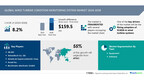
NEW YORK, Oct. 23, 2024 /PRNewswire/ — Report on how AI is redefining market landscape – The Global Wind Turbine Condition Monitoring System Market size is estimated to grow by USD 159.5 million from 2024-2028, according to Technavio. The market is estimated to grow at a CAGR of 8.2% during the forecast period. Rsing adoption of scada in wind turbine systems is driving market growth, with a trend towards rising necessity of remote and e-monitoring of wind turbines. However, high initial investment and cost in installing wind turbine condition monitoring systems poses a challenge – Key market players include AB SKF, Advantech Co. Ltd., American Superconductor Corp., Avnet Inc., Bachmann electronic GmbH, Baker Hughes Co., Emerson Electric Co., ENERCON GmbH, Envision Group, Flender GmbH, Fluke Corp., General Electric Co., Hansford Sensors Ltd., HIMA Paul Hildebrandt GmbH, ifm electronic gmbh, James Fisher and Sons Plc, Nordex SE, NSK Ltd., ONYX Insight, Robert Bosch GmbH, Siemens AG, TUV Rheinland AG, and Yokogawa Electric Corp..
AI-Powered Market Evolution Insights. Our comprehensive market report ready with the latest trends, growth opportunities, and strategic analysis- View your snapshot now
Forecast period
2024-2028
Base Year
2023
Historic Data
2018 – 2022
Segment Covered
Type (Equipment and Software), Application (Onshore wind turbines and Offshore wind turbines), and Geography (APAC, Europe, North America, South America, and Middle East and Africa)
Region Covered
APAC, Europe, North America, South America, and Middle East and Africa
Key companies profiled
AB SKF, Advantech Co. Ltd., American Superconductor Corp., Avnet Inc., Bachmann electronic GmbH, Baker Hughes Co., Emerson Electric Co., ENERCON GmbH, Envision Group, Flender GmbH, Fluke Corp., General Electric Co., Hansford Sensors Ltd., HIMA Paul Hildebrandt GmbH, ifm electronic gmbh, James Fisher and Sons Plc, Nordex SE, NSK Ltd., ONYX Insight, Robert Bosch GmbH, Siemens AG, TUV Rheinland AG, and Yokogawa Electric Corp.
Key Market Trends Fueling Growth
The wind turbine condition monitoring market is witnessing significant growth due to the increasing adoption of remote and e-monitoring systems. These systems enable continuous observation and analysis of turbine performance from a central location, providing a cost-effective solution. The shift towards offshore wind turbines, which are often located in remote areas, necessitates the use of remote condition monitoring systems. Key players in the market, such as General Electric Co., offer digital and remote condition monitoring solutions for onshore wind turbines, ensuring their optimal performance and reducing downtime. For instance, General Electric Co.’s remote monitoring systems keep onshore wind turbines online, servicing major systems. Moreover, e-monitoring systems provide fast internet facilities, increasing monitoring efficiency. In February 2022, Baker Hughes Co.’s remote monitoring system identified a broken tooth in an onshore wind turbine’s gearbox, preventing potential breakdowns. These factors will fuel the growth of the global wind turbine condition monitoring system market during the forecast period.
The Wind Turbine Condition Monitoring System market is experiencing significant growth due to the increasing focus on renewable energy and reducing greenhouse gas emissions. Offshore wind farms are a key trend, with the need for intelligent turbines and advanced monitoring systems to optimize power generation and reduce downtime. Key components for monitoring include gearboxes, which can be costly to replace, and vibration sensors for fault detection. Decarbonization and the shift away from fossil fuels are driving private sector investment in this sector. Advanced technologies like 3D printing and automation are being used to improve component manufacturing and reduce maintenance costs. Remote monitoring and autonomous inspection vessels enable real-time data acquisition and analysis, leading to improved productivity and power production. The market can be segmented into component-based and application-based, with vibration monitoring, temperature monitoring, and shaft power measurement being common applications. The reduction of carbon footprint and maintenance cost reduction are major benefits, making wind energy an affordable alternative energy source for meeting electricity demand and addressing climate change concerns. Key trends include shaft torque, RPM, torsional vibration, and shaft signature monitoring, as well as gearbox installation and high-speed output shaft condition monitoring for generator condition assessment.
Insights on how AI is driving innovation, efficiency, and market growth- Request Sample!
Market Challenges
Wind turbine condition monitoring systems are essential for optimizing the performance and longevity of wind energy infrastructure. However, the cost of installing and maintaining these systems is significant. The expense includes procurement of hardware such as sensors and data acquisition systems, as well as software for data analysis and predictive maintenance. The integration of real-time analysis and time series data requires high-quality, expensive software. Additionally, security features like encryption, user authentication, and accessibility controls add to the cost. A simple wind turbine condition monitoring software costs between USD8,000 and USD16,000, while an average system costs USD16,000 to USD25,000. Complex systems involving SCADA, remote monitoring, AI, and ML cost around USD30,000 initially. The installation process is costly and time-consuming due to logistical challenges and potential modifications to existing turbines. The cost depends on factors like function set, user experience, and design requirements, which may hinder market growth.The Wind Turbine Condition Monitoring System market is witnessing significant growth due to the global push towards decarbonization and the increasing demand for affordable renewable energy. However, challenges such as autonomous inspection vessels for offshore wind farms, automation for fault detection, and high maintenance costs remain. Shaft power measurement, vibration, and temperature monitoring are crucial for maintaining productivity and reducing downtime. Remote monitoring and real-time data analysis are essential for optimizing site performance and reducing carbon footprint. Wind farm construction and private sector investment in onshore and offshore wind energy require durable turbines with high-speed output shafts and generators in good condition. Permanent condition monitoring systems help reduce maintenance costs by detecting issues in real-time, such as shaft torque, RPM, torsional vibration, and shaft signature. Wind plant flows and turbine layouts are essential factors in selecting the right condition monitoring system, with plug-and-play models and multimegawatt power ratings becoming increasingly popular for larger turbines.
Insights into how AI is reshaping industries and driving growth- Download a Sample Report
Segment Overview
This wind turbine condition monitoring system market report extensively covers market segmentation by
Type 1.1 Equipment1.2 SoftwareApplication 2.1 Onshore wind turbines2.2 Offshore wind turbinesGeography 3.1 APAC3.2 Europe3.3 North America3.4 South America3.5 Middle East and Africa
1.1 Equipment- The Wind Turbine Condition Monitoring System market is growing due to the increasing demand for renewable energy and the need for efficient energy production. These systems help identify potential issues before they cause significant damage, reducing downtime and maintenance costs. They use sensors to collect data on turbine performance and provide real-time analysis, allowing for timely interventions. Companies are investing in advanced technologies like IoT and AI to enhance system capabilities and improve overall performance.
Download complimentary Sample Report to gain insights into AI’s impact on market dynamics, emerging trends, and future opportunities- including forecast (2024-2028) and historic data (2018 – 2022)
Research Analysis
The Wind Turbine Condition Monitoring System market is witnessing significant growth due to the increasing focus on renewable energy and the need to reduce greenhouse gas emissions from fossil fuels. Offshore wind farms are a major contributor to this market, as they generate a large amount of electricity and require advanced monitoring systems to ensure optimal power generation. Intelligent turbines, which use data acquisition and autonomous systems for fault detection and maintenance, are becoming increasingly popular. Key features of these systems include real-time data analysis, remote monitoring, and automation. Shaft power measurement, vibration monitoring, temperature monitoring, and shaft torque and RPM analysis are essential components of these systems. Durable turbines and affordable renewable energy are crucial for reducing downtime and meeting electricity demand. Wind plant flows and turbine layouts are also important considerations for effective condition monitoring. Climate change and the need to reduce carbon emissions are driving the demand for these systems, which help improve wind turbine productivity and reduce maintenance costs. Torsional vibration and shaft signature analysis are also critical for ensuring the longevity and efficiency of wind turbines.
Market Research Overview
The Wind Turbine Condition Monitoring System (WT CMS) market is a vital component of the renewable energy sector, focusing on optimizing wind turbine productivity and ensuring the sustainable operation of wind power generation. With the global shift towards greenhouse gas emissions reduction and decarbonization, the demand for WT CMS is surging, particularly in offshore wind farms where carbon emissions from fossil fuels are significantly higher. WT CMS utilizes intelligent turbines, data acquisition, and real-time monitoring to enhance power generation, minimize downtime, and reduce maintenance costs. Advanced technologies like 3D printing, autonomous inspection vessels, and automation are transforming the component-based and application-based markets. Key components of WT CMS include gearboxes, vibration sensors, temperature monitoring, shaft power measurement, and fault detection systems. These technologies enable the early identification of potential issues, ensuring the longevity and durability of wind turbines. WT CMS plays a crucial role in the transition to affordable renewable energy, addressing electricity demand while reducing the carbon footprint and reliance on natural resources and alternative energy sources. The market encompasses onshore and offshore wind farms, wind farm construction, and private sector investment, all contributing to the growth of the wind energy industry.
Table of Contents:
1 Executive Summary
2 Market Landscape
3 Market Sizing
4 Historic Market Size
5 Five Forces Analysis
6 Market Segmentation
TypeEquipmentSoftwareApplicationOnshore Wind TurbinesOffshore Wind TurbinesGeographyAPACEuropeNorth AmericaSouth AmericaMiddle East And Africa
7 Customer Landscape
8 Geographic Landscape
9 Drivers, Challenges, and Trends
10 Company Landscape
11 Company Analysis
12 Appendix
About Technavio
Technavio is a leading global technology research and advisory company. Their research and analysis focuses on emerging market trends and provides actionable insights to help businesses identify market opportunities and develop effective strategies to optimize their market positions.
With over 500 specialized analysts, Technavio’s report library consists of more than 17,000 reports and counting, covering 800 technologies, spanning across 50 countries. Their client base consists of enterprises of all sizes, including more than 100 Fortune 500 companies. This growing client base relies on Technavio’s comprehensive coverage, extensive research, and actionable market insights to identify opportunities in existing and potential markets and assess their competitive positions within changing market scenarios.
Contacts
Technavio Research
Jesse Maida
Media & Marketing Executive
US: +1 844 364 1100
UK: +44 203 893 3200
Email: media@technavio.com
Website: www.technavio.com/
View original content to download multimedia:https://www.prnewswire.com/news-releases/the-wind-turbine-condition-monitoring-system-market-is-set-to-grow-by-usd-159-5-million-from-2024-2028–driven-by-ai-and-increased-scada-adoption-in-wind-turbine-systems—technavio-302284188.html
SOURCE Technavio









 Technology4 days ago
 Coin Market5 days ago
 Coin Market4 days ago
 Technology4 days ago
 Technology4 days ago
 Technology4 days ago