Connect with us

Technology

Seventy Percent of Economies Are Underprepared for AI Disruption

Published

on

BCG’s AI Maturity Matrix Assesses the AI Maturity and Resilience of 73 Global EconomiesOut of the 73 Economies Assessed, Only Five—Canada, Mainland China, Singapore, UK, and US—Are Categorized as AI PioneersEconomies with a High Share of Sectors That Are Most Exposed to AI— Such as Luxembourg, Hong Kong, and Singapore—Are Among the World’s Most Vulnerable to AI DisruptionMost Economies in the Study Score Low in R&D and InvestmentThe US and Singapore Stand Out with Robust AI Talent Pools, While Mainland China Leads the R&D Race

BOSTON, Nov. 20, 2024 /PRNewswire/ — AI is already transforming industries and starting to reshape economies and is poised to profoundly shape the future of economic development over the next few years. The expansive scale of this growth makes AI an economic priority in every region around the globe. However, new Boston Consulting Group (BCG) research has established that most economies are underprepared for AI-driven disruption. The study, released today, shows that over 70% of the economies studied score below average in critical areas such as ecosystem participation, skills, and research and development.

BCG’s AI Maturity Matrix offers a comprehensive overview of the AI landscape across 73 economies by focusing on two pivotal aspects. First, it assesses each economy’s vulnerability to AI-driven shifts, such as job displacement and industrywide productivity gains. Second, it evaluates the preparedness of each economy to navigate the risks associated with AI, while leveraging its potential to stimulate economic growth. 

The report then offers recommendations tailored to the different groups to guide policymakers, and provides an interactive dashboard for a more detailed exploration of the analysis.

“This first-of-its-kind study offers a broad view of global adoption, revealing that while most economies are gradually embracing AI, a small influential group of pioneers is emerging as global leaders,” said Christian Schwaerzler, a BCG managing director, partner, chair of BCG’s Center for Public Economics, and coauthor of the report. “This handful of leading markets stand to gain significant economic advantages and are uniquely positioned to shape how humanity will engage with this transformative technology.”

Six Sectors Are Most Exposed to AI-Driven Changes

According to the report, there are six sectors that are most exposed to AI-driven change: information and communication, high-tech goods, retail, financial services, public services, and motor vehicle manufacturing. Economies with a high share of sectors that are most exposed to AI are among the world’s most exposed to disruption. These include Luxembourg (with financial services making up almost 30% of GDP), Hong Kong (22% financial services and 22% business services), and Singapore (18% business services, 16% retail, 14% financial services).

Economies with industry sectors that are less susceptible to AI disruption are less exposed. Such sectors include construction, agriculture, and furniture manufacturing; countries include Indonesia (13% agriculture and 11% construction of GDP), India (17% agriculture and 8% construction), and Ethiopia (36% agriculture).

Measuring AI Readiness Using the ASPIRE Index

“Readiness” for AI refers to an economy’s ability to effectively implement and integrate AI. The study measures readiness across the six dimensions that make up BCG’s ASPIRE index: Ambition, Skills, Policy and regulation, Investment, Research and innovation, and Ecosystem.

Of the 73 economies assessed, only five—categorized as AI pioneers—have achieved a high level of readiness. Pioneers are also out in front in skills, R&D (research and development), ecosystems, and investments. In skills, the US and Singapore stand out with robust AI talent pools, crucial for driving innovation. The US leads in investing, driven by its sophisticated capital markets and the abundance of AI unicorns. In the R&D race, Mainland China is leading in patents and AI academic papers.

Six Distinct Archetypes of AI Adoption

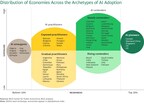
The combined analysis of AI exposure and readiness reveals six distinct adoption groups:

AI Pioneers: These are the vanguards of AI adoption, building on strong infrastructure and engaging the technology in diverse sectors. All pioneers invest liberally in R&D and job sectors, and education systems are full of highly skilled talent. AI will make up progressively larger shares of the pioneers’ GDPs over the next several years, as these actors supply more and more AI technologies, services, skills, and investment to the world.Steady Contenders: These economies have higher shares of highly exposed service sectors, however their exposure is balanced by high readiness. This group is mainly dominated by high-income European economies like Germany, which has high exposure due to its large information and communication technology (ICT) and advanced manufacturing sectors. Malaysia stands out as a non-European leader, with its government’s strong focus on AI through the National AI Roadmap, tech hubs, and university training. This illustrates how public sector leadership can drive tech maturity and competitiveness in emerging economies.Rising Contenders: These are mainly economies with lower AI exposure due to a relatively higher share of industrial and/or resource-based mix of sectors. This lower level of exposure is the main difference between rising contenders and steady contenders, but governments in this subgroup push for AI adoption with the same commitment as steady contenders. India, Saudi Arabia, and Indonesia are notable examples in this group.Gradual Practitioners: These are typically upper middle- and lower middle-income countries that are adopting AI at a moderate pace. Their economies include low-tech sectors such as tourism, textiles, wood manufacturing, and agriculture, where adopting AI is not yet imperative for companies.Exposed Practitioners. This group includes developing and developed economies vulnerable to AI disruption due to more high-exposure sectors and low readiness. Actors here will need to accelerate AI adoption and mitigate potential risks. While these countries may currently have a gap between their AI exposure and readiness, they are well positioned to gain ground quickly with investments in infrastructure and education. Notable economies in this group include Malta, Cyprus, Bahrain, Kuwait, Greece, and Bulgaria.AI Emergents: These economies are at the early stages of AI adoption. They need to build foundational strategies and infrastructure to reach the basic levels of AI integration and competitiveness. These countries lack a national AI strategy or similar holistic approaches to AI. Skilled workers and investment are often scarce, as is activity related to research papers, patents, and startups.

Positioning Governments for Success in the AI-Driven Future

The report proposes a set of initiatives for each archetype across three themes:

Enabling AI: establishing the foundational elements for AI emergentsAccelerating AI: customizing the ASPIRE levers for AI contenders and AI practitionersAmplifying AI: driving the global AI agenda for AI pioneers

These recommendations offer an economywide approach to AI readiness that economic managers can apply to drive sectoral transformation.

“Policymakers need to act decisively to prepare for an AI-driven world by enhancing resilience, productivity, job creation, modernization, and competitiveness,” said Aparna Bharadwaj, a BCG managing director, partner, global leader for the firm’s Global Advantage practice, and coauthor of the report. “Our research provides a practical framework to guide them through the rapidly evolving AI landscape, empowering economies to leverage AI’s transformative potential for sustainable growth and societal wellbeing.”

Download the publication here:
https://www.bcg.com/publications/2024/which-economies-are-ready-for-ai

Access the interactive dashboard here to easily view AI engagement and explore factors like sector deployment, exposure, investment, regulation, and readiness for disruption across the economies studied.

Media Contact:
Eric Gregoire
+1 617 850 3783
gregoire.eric@bcg.com 

About Boston Consulting Group

Boston Consulting Group partners with leaders in business and society to tackle their most important challenges and capture their greatest opportunities. BCG was the pioneer in business strategy when it was founded in 1963. Today, we work closely with clients to embrace a transformational approach aimed at benefiting all stakeholders—empowering organizations to grow, build sustainable competitive advantage, and drive positive societal impact.

Our diverse, global teams bring deep industry and functional expertise and a range of perspectives that question the status quo and spark change. BCG delivers solutions through leading-edge management consulting, technology and design, and corporate and digital ventures. We work in a uniquely collaborative model across the firm and throughout all levels of the client organization, fueled by the goal of helping our clients thrive and enabling them to make the world a better place.

View original content to download multimedia:https://www.prnewswire.com/news-releases/seventy-percent-of-economies-are-underprepared-for-ai-disruption-302310674.html

SOURCE Boston Consulting Group (BCG)

Continue Reading
Click to comment

Leave a Reply

Your email address will not be published. Required fields are marked *

Technology

Jack Henry’s Annual Survey of Financial Institutions Highlights Priorities Amid Economic Uncertainty and a New Hybrid Monetary Era

Published

on

By

Banks and credit unions plan to increase technology spending, led by investments in AI, digital banking, and data analytics

MONETT, Mo., April 28, 2026 /PRNewswire/ — Banks and credit unions are prioritizing operational efficiency, deposit growth, and new payment capabilities as they navigate economic uncertainty and increasing technological complexity, according to findings from Jack Henry’s eighth annual Strategy Benchmark.

Jack Henry® (Nasdaq: JKHY) surveyed 193 executives from financial institutions using Jack Henry solutions. The survey highlights the industry’s most pressing strategic priorities, top concerns, and technology investment plans for the next two years.

“Banks and credit unions have finally recognized their biggest competitive threat in Big Fintech and Big Crypto,” says Lee Wetherington, Senior Director of Corporate Strategy and lead author of the benchmark. “As we enter a new hybrid monetary era, the game is changing and charter franchises are under attack. The goal of strategy is no longer simply to win but to ensure you’re competing to win the right game.”

The vast majority of financial institutions plan to increase technology spending, with 88% expecting to raise their tech budgets over the next two years, up from 76% last year. Four in 10 institutions (41%) plan increases of 6% to 10%, compared with 33% a year ago. Artificial intelligence (48%) is the top planned technology investment for the first time, followed by digital banking (38%) and data analytics (32%). While banks remain focused on growing deposits (64%) as their top strategic priority in 2026-2027, credit unions (40%) continue to place outsized emphasis on acquiring younger accountholders (Gen Z/Alpha).

“Financial institutions are in a high-stakes race for Gen Z and small business,” says Jennifer Geis, Senior Strategic Advisor of Corporate Strategy at Jack Henry and Managing Editor of the study. “Given Gen Z now drives most small-business formation—and given small-business deposits are 4-5X larger than retail—understanding and meeting the unique needs of “bizumers” is key to growth, whether you frame it in terms of deposits or demographics.”

Among the highlights from the survey:

PaymentsMore than nine out of 10 CEOs (94%) plan to add new payment services within the next two years, yet only 36% have a formal payments strategy in place.More than four out of five (82%) financial institutions plan to incorporate tap-to-pay as part of their strategy to add younger accountholders.Nearly half (47%) of CEOs plan to embed payments into their digital banking experience over the next two years.Small Business FocusThree out of four CEOs say they plan to expand services for small- and medium-sized businesses (SMBs).The most common planned addition is payment services, including FedNow®, request for payment, and tap-to-pay. 
 Cryptocurrency18% of CEOs plan to support stablecoins, tokenized money, and/or cryptocurrency by the end of 2027. This includes:Tokenized deposits/deposit tokensSupport for on-chain wallets for accountholdersAbility to orchestrate, exchange, and settle dollars to and from stablecoins/crypto.However, only 3% of CEOs report having a formal stablecoin strategy in place.
 Getting YoungerThe second most important strategic priority for credit unions (and fourth overall) is adding younger accountholders. It is also one of the top three concerns for CEOs.More than 40% of credit unions have a formal strategy, compared to just 10% of banks.Fintechs and neobanks are considered the biggest competitive threat in this area.Data analytics and AILeveraging data is the 5th most important strategic priority overall among banks and credit unionsPlans to implement AI grew double digits compared to last year1/3 of FIs plan to embed data collection/analysis tools within digital banking

The study’s results are based on an online survey conducted in January and February 2026 of a diverse sample of Jack Henry clients with assets ranging from less than $500 million to more than $5 billion. Download the eBook to learn more.

About Jack Henry & Associates, Inc.®
Jack Henry® (Nasdaq: JKHY) is a well-rounded financial technology company that strengthens connections between financial institutions and the people and businesses they serve. We are an S&P 500 company that prioritizes openness, collaboration, and user centricity – offering banks and credit unions a vibrant ecosystem of internally developed modern capabilities as well as the ability to integrate with leading fintechs. For 50 years, Jack Henry has provided technology solutions to enable clients to innovate faster, strategically differentiate, and successfully compete while serving the evolving needs of their accountholders. We empower approximately 7,400 clients with people-inspired innovation, personal service, and insight-driven solutions that help reduce the barriers to financial health. Additional information is available at jackhenry.com.

Statements made in this news release that are not historical facts are “forward-looking statements.” Because forward-looking statements relate to the future, they are subject to inherent risks and uncertainties that could cause actual results to differ materially from those expressed or implied by such statements. Such risks and uncertainties include, but are not limited to, those discussed in the Company’s Securities and Exchange Commission filings, including the Company’s most recent reports on Form 10-K and Form 10-Q, particularly under the heading “Risk Factors.” Any forward-looking statement made in this news release speaks only as of the date of the news release, and the Company expressly disclaims any obligation to publicly update or revise any forward-looking statement, whether because of new information, future events or otherwise.

View original content to download multimedia:https://www.prnewswire.com/news-releases/jack-henrys-annual-survey-of-financial-institutions-highlights-priorities-amid-economic-uncertainty-and-a-new-hybrid-monetary-era-302756018.html

SOURCE Jack Henry & Associates, Inc.

Continue Reading

Technology

CorroHealth Honored As Stevie® Award Winner In 2026 American Business Awards®

Published

on

By

PLANO, Texas, April 28, 2026 /PRNewswire/ — Leading revenue cycle technology company CorroHealth was named the winner of a Silver Stevie® Award in the Health Provider category in The 24th Annual American Business Awards®.

The American Business Awards are the U.S.A.’s premier business awards program. All organizations operating in the U.S.A. are eligible to submit nominations – public and private, for-profit and non-profit, large and small. This year, the program received more than 3,600 nominations from organizations across virtually every industry.

“We are honored to receive this prestigious award and to be recognized alongside many esteemed American business leaders,” said Pat Leonard, CEO of CorroHealth. “This acknowledgement reflects CorroHealth’s ongoing commitment to the healthcare industry, serving as the leading revenue cycle technology company built for the future of healthcare finance.”

CorroHealth earned recognition for its mission and purpose, transforming healthcare operations and driving innovation to deliver better outcomes for hospitals and health systems. The company was selected after a methodical nomination process and careful evaluation of its industry impact and dedication to bridging the gap between patient care and financial performance.

More than 250 professionals worldwide participated in the judging process to select this year’s Stevie Award winners. One judge who evaluated the nomination stated, “CorroHealth’s blend of expert driven services and AI-powered platforms delivers measurable, enterprise scale financial gains that far exceed industry norms.” The judges also recognized the company as a leader in innovation and operational excellence within the healthcare financial technology sector.

To learn more about CorroHealth, visit corrohealth.com.

About CorroHealth 
CorroHealth, the leading healthcare technology and revenue cycle management company that helps providers and payers improve financial performance through automation, data-driven analytics, and clinically led expertise. CorroHealth delivers integrated, scalable solutions that support complex reimbursement and documentation workflows, backed by a global workforce operating in more than 10 locations, including the United States, United Kingdom, India, and the United Arab Emirates. The company was recently named one of the “Top Places to Work in Healthcare in 2026” by Becker’s Healthcare and a Great Place To Work® Certified™ in India for the second time in two years. Further information is available at corrohealth.com.

About the Stevie Awards
Stevie Awards are conferred in nine programs: the Asia-Pacific Stevie Awards, the German Stevie Awards, the Middle East & North Africa Stevie Awards, The American Business Awards®, The International Business Awards®, the Stevie Awards for Women in Business, the Stevie Awards for Great Employers, the Stevie Awards for Sales & Customer Service, and the new Stevie Awards for Technology Excellence. Stevie Awards competitions receive more than 12,000 entries each year from organizations in more than 70 nations. Honoring organizations of all types and sizes, as well as the people behind them, the Stevies recognize outstanding workplace performance worldwide. Learn more about the Stevie Awards at http://www.StevieAwards.com.

Media Contact:
CorroHealth
Mellissa Gardner, Chief Marketing and Strategy Officer
mellissa.gardner@corrohealth.com

View original content to download multimedia:https://www.prnewswire.com/news-releases/corrohealth-honored-as-stevie-award-winner-in-2026-american-business-awards-302755949.html

SOURCE CorroHealth

Continue Reading

Technology

Singular Genomics Names John Stark as Chief Executive Officer as Company Builds on Spatial Platform Momentum

Published

on

By

SAN DIEGO, April 28, 2026 /PRNewswire/ — Singular Genomics Systems, Inc. today announced the appointment of John Stark as Chief Executive Officer. This leadership transition comes as Singular builds on the launch of its market-leading spatial platform and enters its next phase, focused on expanding adoption, deepening strategic partnerships, and increasing the impact of multimodal spatial data across translational research, drug development, and future clinical applications. Josh Stahl will transition to a new role as Independent Director on the Board.

“With Singular’s G4X platform now successfully on the market, the company is positioned to realize spatial pathology’s potential across translational research and clinical applications,” said Allison Ballmer, Chair of the Board. “Josh strengthened Singular and repositioned the company’s technology, culminating in the successful launch of the G4X platform. John’s leadership experience will now help scale the business and capitalize on the opportunity to drive precision medicine forward.”

John brings more than 25 years of experience commercializing innovative technologies while scaling organizations and raising capital. Most recently, John served as Chief Executive Officer of Resolve Biosciences, a spatial biology platform company, where he drove partnerships and routine use across the translational, drug development, and clinical research markets. Prior to Resolve, John served as Chief Executive Officer of Quantum-Si, a next-generation single-molecule protein sequencing platform company, and Chief Executive Officer of Celsee, a single-cell genomics platform company acquired by Bio-Rad in 2020. Earlier in his career, he held senior leadership positions at Life Technologies, Pacific Biosciences, and Affymetrix.

“Singular has built a competitive spatial platform and a strong foundation in a rapidly evolving market,” said John Stark, CEO. “I’m excited to build on that momentum – deepening partnerships, scaling adoption, and unlocking broader value from spatial data across research, drug development, and precision medicine.”

“We thank Josh Stahl for building an exceptional foundation for Singular, and welcome John Stark, who brings a long history of commercial leadership to the company,” said Andrew ElBardissi, Partner at Deerfield Management. “We remain confident in Singular’s technology, market opportunity, and path to leadership in precision medicine and are committed to supporting the company’s continued growth.”

About Singular Genomics

Singular is a life science technology company focused on delivering high-throughput spatial pathology solutions to advance precision medicine. The company’s G4X™ Spatial Sequencer enables scalable, multiomic analysis directly in tissue, combining performance, throughput, and cost efficiency to support translational research, AI-driven insights, and clinical developments. Singular is headquartered in San Diego, California.

Forward-Looking Statements

Certain statements contained in this press release, other than statements of historical fact, may constitute forward-looking statements within the meaning of the federal securities laws. These statements are based on current expectations and involve risks and uncertainties that could cause actual results to differ materially. Singular Genomics undertakes no obligation to update forward-looking statements, except as required by law.

Media Contact
Darius Fugere
dariusf@singulargenomics.com

View original content to download multimedia:https://www.prnewswire.com/news-releases/singular-genomics-names-john-stark-as-chief-executive-officer-as-company-builds-on-spatial-platform-momentum-302754834.html

SOURCE Singular Genomics

Continue Reading

Trending