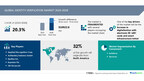
NEW YORK, Nov. 27, 2024 /PRNewswire/ — Report with market evolution powered by AI – The global identity verification market size is estimated to grow by USD 16.92 billion from 2024-2028, according to Technavio. The market is estimated to grow at a CAGR of 20.3% during the forecast period. Increase in digitalization with electronic id (eid) cards and smart infrastructure initiatives is driving market growth, with a trend towards growing adoption of bring your own device (BYOD) among enterprises. However, privacy and security concerns of data transferred through iot poses a challenge.Key market players include Applied Recognition Corp., Authenteq Tarbena GmbH, Equifax Inc., Experian Plc, GB Group plc, Gen Digital Inc., ID Merit, Intellicheck Inc., Jumio Corp., Khosla Labs Pvt. Ltd., Mastercard Inc., Mitek Systems Inc., Onfido, PXL Vision AG, RELX Plc, Shufti Pro Ltd., Thales Group, TransUnion, UAB iDenfy., and WebID Solutions GmbH.
Key insights into market evolution with AI-powered analysis. Explore trends, segmentation, and growth drivers- View Free Sample PDF
Identity Verification Market Scope
Report Coverage
Details
Base year
2023
Historic period
2018 – 2022
Forecast period
2024-2028
Growth momentum & CAGR
Accelerate at a CAGR of 20.3%
Market growth 2024-2028
USD 16922.8 million
Market structure
Fragmented
YoY growth 2022-2023 (%)
16.35
Regional analysis
North America, APAC, Europe, South America, and Middle East and Africa
Performing market contribution
North America at 32%
Key countries
US, Australia, UK, Canada, and Germany
Key companies profiled
Applied Recognition Corp., Authenteq Tarbena GmbH, Equifax Inc., Experian Plc, GB Group plc, Gen Digital Inc., ID Merit, Intellicheck Inc., Jumio Corp., Khosla Labs Pvt. Ltd., Mastercard Inc., Mitek Systems Inc., Onfido, PXL Vision AG, RELX Plc, Shufti Pro Ltd., Thales Group, TransUnion, UAB iDenfy., and WebID Solutions GmbH
Market Driver
The Identity Verification Market is experiencing significant growth due to increasing security risks associated with online transactions and digital identities. Businesses in finance, healthcare, emerging markets, and various industries are adopting advanced verification techniques such as artificial intelligence (AI), biometric technologies, and multi-factor authentication to secure their digital services and protect against identity-related theft incidents. These technologies include facial recognition, video analytics, liveness detection, and smart cities’ intelligent border control. The finance sector, in particular, is prioritizing security measures to comply with Anti-Money Laundering (AML) regulations and prevent cyber threats. Healthcare and life sciences, retail and e-commerce, energy and utilities, IT and ITES, and government and defense sectors are also investing in identity verification systems to secure confidential data, client financial details, and personal identifiers. Emerging technologies like blockchain-based identity verification, biometric checks, and cloud-based deployment are gaining popularity for their efficiency and security. However, a lack of awareness and potential losses due to fraudulent activities continue to be concerns for businesses. System integrators and security professionals are providing consulting, biometric devices, and security training to help organizations navigate the complex IT infrastructure and technical expertise required for effective identity verification. The identity verification industry is also addressing regulatory compliance, data analysis, and fraud detection needs across various sectors, including e-commerce, gaming, travel, and cryptocurrency exchanges. The market is expected to continue growing as digitization initiatives increase and cybersecurity needs become more pressing.
In today’s business landscape, the Bring Your Own Device (BYOD) trend is gaining popularity among enterprises. This shift towards a mobile-first, web next scenario enables employees to access their privileged accounts via mobile devices, enhancing productivity and morale. Privileged users, also known as admin users, possess the authority to manage backend functions of a system. They can create, modify, and delete accounts, alter user roles, adjust settings, and view sensitive data. This streamlined approach allows enterprises to adapt to the evolving work environment while ensuring secure access to critical information.
Request Sample of our comprehensive report now to stay ahead in the AI-driven market evolution!
Market Challenges
The Identity Verification Market is facing several challenges in today’s digital world. Security risks associated with online transactions and digital identities require advanced verification techniques to ensure safety. Artificial Intelligence (AI) and biometric technologies are emerging as effective solutions for businesses in finance, healthcare, and emerging markets. However, these technologies also pose new security challenges. Identity-related theft incidents, border controls, and intelligent border control systems using facial recognition, video analytics, and liveness detection are becoming increasingly common. Businesses need to invest in security measures, hire security personnel with technical expertise and security skills, and provide security training to prevent breaches. Regulations such as Anti-Money Laundering (AML) and data privacy concerns demand cloud-based deployment and data analysis for fraud detection and regulatory compliance. The eCommerce, gaming, and travel industries are particularly vulnerable to identity-related fraud and cybercrime. Traditional non-biometric solutions and industry-specific requirements call for fraud mitigation tools and machine learning models. The Identity Verification Industry is continuously evolving with emerging technologies like blockchain-based identity verification and biometric checks. Despite these challenges, the market offers opportunities for system integrators, consulting firms, and corporations to provide efficient and secure identity verification solutions for digital services, digitalization initiatives, and confidential data protection.In today’s security-challenged world, ensuring complete security for IoT systems and data is a formidable task. With the increasing use of customized software modules and connected devices, the number of potential entry points for hackers and cybercriminals grows. Sensitive information transferred through IoT devices is critical and must be protected. The challenge lies in securing the numerous interfaces linking system components. Organizations must implement identity verification solutions to mitigate risks and safeguard their IoT systems and data. Identity verification market offers advanced technologies like multi-factor authentication, biometric verification, and behavioral analytics to strengthen security measures. These solutions provide an additional layer of protection, ensuring only authorized access to IoT systems and data.
Discover how AI is revolutionizing market trends- Get your access now!
Segment Overview
This identity verification market report extensively covers market segmentation by
Component 1.1 Solutions1.2 ServicesType 2.1 Large enterprises2.2 SMEsGeography 3.1 North America3.2 APAC3.3 Europe3.4 South America3.5 Middle East and Africa
1.1 Solutions- Identity verification solutions are essential for businesses to authenticate the identity of users or customers. These solutions ensure that the person engaging in a process is the true owner of the provided information, preventing unauthorized use, false identities, and fraud. Offline methods include face-to-face verification, where individuals present themselves in person at a company location or institution. Online identity verification methods include knowledge-based authentication, biometric verification, and document verification. The global market for identity verification solutions is projected to expand due to the increasing need for secure and reliable identity verification processes.
Download a Sample of our comprehensive report today to discover how AI-driven innovations are reshaping competitive dynamics
Research Analysis
The Identity Verification Market is witnessing significant growth due to the increasing number of online transactions and the need to secure digital identities. With the rise of emerging technologies such as artificial intelligence (AI) and biometric technologies, verification techniques are becoming more sophisticated and efficient. The finance and healthcare sectors are major contributors to this market, with AML requirements and data breach concerns driving demand. However, emerging markets and businesses in lower-income countries are also adopting identity verification solutions to meet cybersecurity needs and enable digital payment methods. Internet penetration is expanding, but data privacy concerns and cybersecurity risks, including data breaches and cyberattacks, remain significant challenges. Regulations are playing a crucial role in shaping the identity verification industry, with the financial sector and emerging technologies such as blockchain-based identity verification leading the way. On-premise solutions are still prevalent, but cloud-based and hybrid models are gaining popularity. Overall, the identity verification market is expected to continue growing as businesses and individuals seek to secure their digital identities and mitigate risks.
Market Research Overview
The Identity Verification Market is witnessing significant growth due to the increasing number of online transactions and the digitalization of various industries, including finance, healthcare, and emerging markets. Digital identities have become essential in today’s world, and the need for secure verification techniques is more critical than ever. Artificial intelligence (AI) and biometric technologies are playing a crucial role in identity verification, offering enhanced security measures and efficiency. However, with the increasing use of digital services, there are also rising security risks, such as identity-related theft incidents and cyber threats. Businesses across sectors, from BFSI to retail and e-commerce, are implementing identity verification systems to ensure regulatory compliance, prevent fraudulent activities, and protect confidential data. Technologies like facial recognition, video analytics, liveness detection, and multi-factor authentication are being used to verify identities in real-time. Emerging technologies like machine learning (ML) and biometrics are transforming the identity verification industry, offering data-driven verification methods and intelligent border control solutions. However, there are challenges, such as a lack of awareness, potential losses, and data privacy concerns, that need to be addressed. Industry-specific requirements, such as Anti-Money Laundering (AML) regulations and cybersecurity needs, are driving the adoption of identity verification systems in various sectors. Cloud-based deployment and cloud services are becoming increasingly popular due to their cost-effectiveness and scalability. Despite the benefits, there are also concerns around the use of traditional non-biometric solutions and the potential for breaches and data breaches. Security personnel, system integrators, and consulting firms are playing a crucial role in implementing security measures, providing security training, and offering technical expertise to businesses. In conclusion, the identity verification market is a critical component of the digital economy, offering essential security measures and enabling businesses to operate efficiently while protecting confidential data and ensuring regulatory compliance. However, it also presents challenges that need to be addressed to ensure data security and privacy.
Table of Contents:
1 Executive Summary
2 Market Landscape
3 Market Sizing
4 Historic Market Size
5 Five Forces Analysis
6 Market Segmentation
ComponentSolutionsServicesTypeLarge EnterprisesSMEsGeographyNorth AmericaAPACEuropeSouth AmericaMiddle East And Africa
7 Customer Landscape
8 Geographic Landscape
9 Drivers, Challenges, and Trends
10 Company Landscape
11 Company Analysis
12 Appendix
About Technavio
Technavio is a leading global technology research and advisory company. Their research and analysis focuses on emerging market trends and provides actionable insights to help businesses identify market opportunities and develop effective strategies to optimize their market positions.
With over 500 specialized analysts, Technavio’s report library consists of more than 17,000 reports and counting, covering 800 technologies, spanning across 50 countries. Their client base consists of enterprises of all sizes, including more than 100 Fortune 500 companies. This growing client base relies on Technavio’s comprehensive coverage, extensive research, and actionable market insights to identify opportunities in existing and potential markets and assess their competitive positions within changing market scenarios.
Contacts
Technavio Research
Jesse Maida
Media & Marketing Executive
US: +1 844 364 1100
UK: +44 203 893 3200
Email: media@technavio.com
Website: www.technavio.com/
View original content to download multimedia:https://www.prnewswire.com/news-releases/identity-verification-market-to-grow-by-usd-16-92-billion-2024-2028-with-eid-cards-and-smart-infrastructure-driving-demand-report-on-how-ai-redefines-landscape—technavio-302316299.html
SOURCE Technavio










 Technology5 days ago


 Technology4 days ago

 Technology3 days ago

 Technology3 days ago



 Coin Market3 days ago