Connect with us

Technology

Last Mile Delivery Market in North America to Grow by USD 18.78 Billion (2024-2028), Driven by US B2C E-Commerce and AI-Powered Market Evolution – Technavio

Published

on

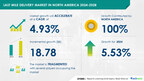
NEW YORK, Dec. 10, 2024 /PRNewswire/ — Report on how AI is driving market transformation – The last mile delivery market in north america size is estimated to grow by USD 18.78 billion from 2024-2028, according to Technavio. The market is estimated to grow at a CAGR of  4.93%  during the forecast period. Growing B2C e-commerce industry in the US is driving market growth, with a trend towards strong focus on technological advances. However, operational challenges for last mile delivery companies  poses a challenge. Key market players include ArcBest Corp., Averitt Express Inc., AxleHire, C H Robinson Worldwide Inc., CMA CGM SA Group, CRST The Transportation Solution Inc., DDC Logistics Inc., Deutsche Bahn AG, DSV AS, FarEye Technologies Inc., FedEx Corp., GEODIS, J B Hunt Transport Services Inc., Llama Logisol Pvt. Ltd., Ryder System Inc., SEKO Logistics, SF Express Co. Ltd., Washington Express LLC, Werner Enterprises Inc., XPO Inc., and JungleWorks Inc..

Key insights into market evolution with AI-powered analysis. Explore trends, segmentation, and growth drivers- View Free Sample PDF

Last Mile Delivery Market In North America Scope

Report Coverage

Details

Base year

2023

Historic period

2018 – 2022

Forecast period

2024-2028

Growth momentum & CAGR

Accelerate at a CAGR of 4.93%

Market growth 2024-2028

USD 18.78 billion

Market structure

Fragmented

YoY growth 2022-2023 (%)

5.53

Regional analysis

North America

Performing market contribution

North America at 100%

Key countries

US, Canada, and Mexico

Key companies profiled

ArcBest Corp., Averitt Express Inc., AxleHire, C H Robinson Worldwide Inc., CMA CGM SA Group, CRST The Transportation Solution Inc., DDC Logistics Inc., Deutsche Bahn AG, DSV AS, FarEye Technologies Inc., FedEx Corp., GEODIS, J B Hunt Transport Services Inc., Llama Logisol Pvt. Ltd., Ryder System Inc., SEKO Logistics, SF Express Co. Ltd., Washington Express LLC, Werner Enterprises Inc., XPO Inc., and JungleWorks Inc.

Market Driver

Last mile delivery and logistics in North America are experiencing significant trends. The transportation hub and warehouse sectors are key players, managing the movement of goods from shipping activities to customers’ doorsteps. Weak infrastructure and logistics costs remain challenges, but technology adoption is paradigm-shifting. Autonomous delivery via motorcycles, LCVs, HCVs, drones, and delivery robots is on the rise. B2C deliveries dominate, with regular, same day, and express options for FMCG, healthcare, mails and packages, and cosmetic and international destinations. Technology, including cloud platforms, advanced sensors, and autonomous vehicles, is transforming the delivery process. Logistics professionals coordinate timely, satisfactory deliveries using cutting-edge systems, robotics, artificial intelligence, and advanced sensors. The shift to contactless delivery services and autonomous mobility, including 5G technology and unmanned vehicles, is shaping the future of last mile delivery. The supply chain, including warehousing, distribution, and fulfillment services, is adapting to these advancements, ensuring supply chain reliability and enhanced safety. The aviation industry, including fun flights, helicopters, and airplanes, is exploring aerial delivery drones for cargo and medications. The future of last mile delivery is an exciting blend of advanced technologies and human intervention. 

In the North American last mile delivery market, there is a significant trend toward utilizing technological advancements for real-time package tracking. Consumers can now manage and modify retail deliveries using accessible online tools, ensuring transparency and control over their package deliveries. However, for large or high-value packages, customers must collect these directly during delivery due to security concerns. This presents a challenge for delivery providers, leading them to offer web and mobile applications for managing the scheduling of such deliveries. These tools streamline the process and enhance the overall customer experience. 

Request Sample of our comprehensive report now to stay ahead in the AI-driven market evolution!

Market Challenges

Last mile delivery in North America faces several challenges in the logistics sector. Weak infrastructure and high logistics costs are major hurdles for transportation hubs and warehouses looking to deliver goods to their destination. Shipping expenses are a significant concern for trade activities, especially for B2C deliveries of FMCG, healthcare, mails and packages, and online grocery stores. The postal address system can be complex, leading to delays and errors in delivery. Autonomous delivery and a multi-modal system are being explored to improve efficiency and reduce costs. Regular, same day, and express deliveries require different delivery modes and vehicles, including motorcycles, LCVs, HCVs, drones, and delivery robots. Technology adoption, such as cloud platforms, advanced sensors, and autonomous vehicles, is a paradigm shift in the last mile delivery process. Delivery robots and autonomous guided vehicles are being used for contactless delivery services. The use of advanced electronics, power sources, and data gathering and processing technologies is essential for timely and satisfactory deliveries. The logistics industry is adapting to traffic management, environmental friendliness, and safety concerns, using technologies like LiDAR, radar, and cameras. The aviation industry is exploring the use of drones for aerial delivery and safety drones. The use of autonomous mobility, such as self-driving trucks and unmanned vehicles, is also increasing. However, there are challenges with restricted airspace and the need for Unmanned Traffic Management. The logistics professionals are focusing on supply chain reliability, technology adoption, and coordination to ensure efficient and cost-effective last mile delivery. The use of advanced sensors, passive and active, and traffic intensity data is essential for optimizing delivery routes and reducing shipping costs. Shopping behavior and environmental concerns are also driving the adoption of more environmentally friendly delivery vehicles and technologies.Last mile delivery in North America faces the challenge of maintaining profitability while ensuring transparency and enhancing efficiency. Unlike long-distance transportation, last mile delivery involves individual deliveries to numerous locations within a region, leading to significant labor and fuel costs. Intense competition among last mile delivery companies primarily revolves around pricing and delivery time. Efficiently managing these costs and optimizing delivery routes can help companies stay competitive in this market.

Discover how AI is revolutionizing market trends- Get your access now!

Segment Overview 

This last mile delivery market in North America report extensively covers market segmentation by  

Product 1.1 B2C1.2 B2BVehicle Type2.1 Large OEMs2.2 Custom vehicle OEMsGeography 3.1 North America

1.1 B2C-  Last mile delivery in North America for Business-to-Consumer (B2C) transactions refers to transporting goods from distribution centers or retail stores directly to consumers’ locations. Consumers increasingly demand faster and more convenient delivery options, leading to the popularity of same-day or next-day deliveries with specific delivery windows or locations. B2C last mile delivery poses challenges for operators due to the individual delivery requirements compared to Business-to-Business (B2B) deliveries. However, the B2C segment of the last mile delivery market has experienced significant growth in recent years, driven by the increasing popularity of B2C services. To meet consumer expectations, last mile delivery operators offer new services like next-day delivery, same-day delivery, and package returns. Real-time shipment tracking and package delivery status updates are also available for B2C customers. Vendors utilize big data and consumer analytics to optimize delivery times and enhance the consumer experience. DHL, for instance, uses big data along with real-time road, weather, and traffic information to optimize delivery routes for faster deliveries. Additionally, historical purchase data is used to dispatch forward inventory, reducing pre-last mile logistics time and improving delivery efficiency. These factors contribute to the growth of the B2C segment of the North American last mile delivery market.

Download a Sample of our comprehensive report today to discover how AI-driven innovations are reshaping competitive dynamics

Research Analysis

Last Mile Delivery, also known as the final leg of the supply chain, refers to the transportation of goods from a transportation hub or warehouse to the end customer. This critical stage of the logistics process is often the most costly and complex due to the increasing volume of e-commerce sales and customer expectations for fast and affordable shipping. The last mile delivery market in North America is witnessing significant innovation, with companies exploring various solutions to reduce shipping expenses. These include the use of drones for aerial delivery, ground delivery vehicles equipped with advanced sensors and self-driving capabilities, and humanoid robots for contactless delivery services. Additionally, cloud platforms and artificial intelligence are being utilized to optimize routes and improve delivery accuracy. Enhanced safety features, such as cameras, radar, and LiDAR, are also being integrated to ensure secure and efficient last mile delivery. Overall, the last mile delivery market in North America is undergoing a technological revolution to meet the growing demands of online shopping and product delivery services.

Market Research Overview

Last mile delivery refers to the final leg of the supply chain journey, transporting goods from a transportation hub or warehouse to their final destination, typically a consumer’s doorstep. This critical phase of logistics involves managing delivery vehicles, coordinating timely and satisfactory deliveries, and ensuring efficient distribution and fulfillment services. Weak infrastructure and high logistics costs are challenges in last mile delivery, particularly in North America. However, advancements in technology, such as autonomous delivery systems and multi-modal transportation, are transforming the last mile landscape. B2C deliveries, including mails and packages, FMCG, healthcare, and online shopping, dominate last mile delivery activities. Regular, same day, and express delivery modes cater to various customer needs. Delivery vehicles, from motorcycles and light commercial vehicles (LCVs) to heavy commercial vehicles (HCVs) and drones, are used for last mile delivery. Autonomous delivery technologies, such as delivery robots and drones, are gaining popularity for their efficiency and environmental friendliness. The rise of online shopping and the increasing importance of supply chain reliability have led to the adoption of cutting-edge systems, including cloud platforms, advanced sensors, and robotics, to optimize the last mile delivery process. Logistics professionals are leveraging technology, such as autonomous vehicles, autonomous guided vehicles, and unmanned traffic management systems, to enhance safety, reduce shipping costs, and improve delivery process coordination. The last mile delivery market in North America is undergoing a paradigm shift, with a focus on advanced sensors, artificial intelligence, and self-driving vehicles to streamline the delivery process and meet the evolving needs of consumers and businesses.

Table of Contents:

1 Executive Summary
2 Market Landscape
3 Market Sizing
4 Historic Market Size
5 Five Forces Analysis
6 Market Segmentation

ProductB2CB2BVehicle TypeLarge OEMsCustom Vehicle OEMsGeographyNorth America

7 Customer Landscape
8 Geographic Landscape
9 Drivers, Challenges, and Trends
10 Company Landscape
11 Company Analysis
12 Appendix

About Technavio

Technavio is a leading global technology research and advisory company. Their research and analysis focuses on emerging market trends and provides actionable insights to help businesses identify market opportunities and develop effective strategies to optimize their market positions.

With over 500 specialized analysts, Technavio’s report library consists of more than 17,000 reports and counting, covering 800 technologies, spanning across 50 countries. Their client base consists of enterprises of all sizes, including more than 100 Fortune 500 companies. This growing client base relies on Technavio’s comprehensive coverage, extensive research, and actionable market insights to identify opportunities in existing and potential markets and assess their competitive positions within changing market scenarios.

Contacts

Technavio Research
Jesse Maida
Media & Marketing Executive
US: +1 844 364 1100
UK: +44 203 893 3200
Email: media@technavio.com
Website: www.technavio.com/

View original content to download multimedia:https://www.prnewswire.com/news-releases/last-mile-delivery-market-in-north-america-to-grow-by-usd-18-78-billion-2024-2028-driven-by-us-b2c-e-commerce-and-ai-powered-market-evolution—technavio-302326193.html

SOURCE Technavio

Continue Reading
Click to comment

Leave a Reply

Your email address will not be published. Required fields are marked *

Technology

Jack Henry’s Annual Survey of Financial Institutions Highlights Priorities Amid Economic Uncertainty and a New Hybrid Monetary Era

Published

on

By

Banks and credit unions plan to increase technology spending, led by investments in AI, digital banking, and data analytics

MONETT, Mo., April 28, 2026 /PRNewswire/ — Banks and credit unions are prioritizing operational efficiency, deposit growth, and new payment capabilities as they navigate economic uncertainty and increasing technological complexity, according to findings from Jack Henry’s eighth annual Strategy Benchmark.

Jack Henry® (Nasdaq: JKHY) surveyed 193 executives from financial institutions using Jack Henry solutions. The survey highlights the industry’s most pressing strategic priorities, top concerns, and technology investment plans for the next two years.

“Banks and credit unions have finally recognized their biggest competitive threat in Big Fintech and Big Crypto,” says Lee Wetherington, Senior Director of Corporate Strategy and lead author of the benchmark. “As we enter a new hybrid monetary era, the game is changing and charter franchises are under attack. The goal of strategy is no longer simply to win but to ensure you’re competing to win the right game.”

The vast majority of financial institutions plan to increase technology spending, with 88% expecting to raise their tech budgets over the next two years, up from 76% last year. Four in 10 institutions (41%) plan increases of 6% to 10%, compared with 33% a year ago. Artificial intelligence (48%) is the top planned technology investment for the first time, followed by digital banking (38%) and data analytics (32%). While banks remain focused on growing deposits (64%) as their top strategic priority in 2026-2027, credit unions (40%) continue to place outsized emphasis on acquiring younger accountholders (Gen Z/Alpha).

“Financial institutions are in a high-stakes race for Gen Z and small business,” says Jennifer Geis, Senior Strategic Advisor of Corporate Strategy at Jack Henry and Managing Editor of the study. “Given Gen Z now drives most small-business formation—and given small-business deposits are 4-5X larger than retail—understanding and meeting the unique needs of “bizumers” is key to growth, whether you frame it in terms of deposits or demographics.”

Among the highlights from the survey:

PaymentsMore than nine out of 10 CEOs (94%) plan to add new payment services within the next two years, yet only 36% have a formal payments strategy in place.More than four out of five (82%) financial institutions plan to incorporate tap-to-pay as part of their strategy to add younger accountholders.Nearly half (47%) of CEOs plan to embed payments into their digital banking experience over the next two years.Small Business FocusThree out of four CEOs say they plan to expand services for small- and medium-sized businesses (SMBs).The most common planned addition is payment services, including FedNow®, request for payment, and tap-to-pay. 
 Cryptocurrency18% of CEOs plan to support stablecoins, tokenized money, and/or cryptocurrency by the end of 2027. This includes:Tokenized deposits/deposit tokensSupport for on-chain wallets for accountholdersAbility to orchestrate, exchange, and settle dollars to and from stablecoins/crypto.However, only 3% of CEOs report having a formal stablecoin strategy in place.
 Getting YoungerThe second most important strategic priority for credit unions (and fourth overall) is adding younger accountholders. It is also one of the top three concerns for CEOs.More than 40% of credit unions have a formal strategy, compared to just 10% of banks.Fintechs and neobanks are considered the biggest competitive threat in this area.Data analytics and AILeveraging data is the 5th most important strategic priority overall among banks and credit unionsPlans to implement AI grew double digits compared to last year1/3 of FIs plan to embed data collection/analysis tools within digital banking

The study’s results are based on an online survey conducted in January and February 2026 of a diverse sample of Jack Henry clients with assets ranging from less than $500 million to more than $5 billion. Download the eBook to learn more.

About Jack Henry & Associates, Inc.®
Jack Henry® (Nasdaq: JKHY) is a well-rounded financial technology company that strengthens connections between financial institutions and the people and businesses they serve. We are an S&P 500 company that prioritizes openness, collaboration, and user centricity – offering banks and credit unions a vibrant ecosystem of internally developed modern capabilities as well as the ability to integrate with leading fintechs. For 50 years, Jack Henry has provided technology solutions to enable clients to innovate faster, strategically differentiate, and successfully compete while serving the evolving needs of their accountholders. We empower approximately 7,400 clients with people-inspired innovation, personal service, and insight-driven solutions that help reduce the barriers to financial health. Additional information is available at jackhenry.com.

Statements made in this news release that are not historical facts are “forward-looking statements.” Because forward-looking statements relate to the future, they are subject to inherent risks and uncertainties that could cause actual results to differ materially from those expressed or implied by such statements. Such risks and uncertainties include, but are not limited to, those discussed in the Company’s Securities and Exchange Commission filings, including the Company’s most recent reports on Form 10-K and Form 10-Q, particularly under the heading “Risk Factors.” Any forward-looking statement made in this news release speaks only as of the date of the news release, and the Company expressly disclaims any obligation to publicly update or revise any forward-looking statement, whether because of new information, future events or otherwise.

View original content to download multimedia:https://www.prnewswire.com/news-releases/jack-henrys-annual-survey-of-financial-institutions-highlights-priorities-amid-economic-uncertainty-and-a-new-hybrid-monetary-era-302756018.html

SOURCE Jack Henry & Associates, Inc.

Continue Reading

Technology

CorroHealth Honored As Stevie® Award Winner In 2026 American Business Awards®

Published

on

By

PLANO, Texas, April 28, 2026 /PRNewswire/ — Leading revenue cycle technology company CorroHealth was named the winner of a Silver Stevie® Award in the Health Provider category in The 24th Annual American Business Awards®.

The American Business Awards are the U.S.A.’s premier business awards program. All organizations operating in the U.S.A. are eligible to submit nominations – public and private, for-profit and non-profit, large and small. This year, the program received more than 3,600 nominations from organizations across virtually every industry.

“We are honored to receive this prestigious award and to be recognized alongside many esteemed American business leaders,” said Pat Leonard, CEO of CorroHealth. “This acknowledgement reflects CorroHealth’s ongoing commitment to the healthcare industry, serving as the leading revenue cycle technology company built for the future of healthcare finance.”

CorroHealth earned recognition for its mission and purpose, transforming healthcare operations and driving innovation to deliver better outcomes for hospitals and health systems. The company was selected after a methodical nomination process and careful evaluation of its industry impact and dedication to bridging the gap between patient care and financial performance.

More than 250 professionals worldwide participated in the judging process to select this year’s Stevie Award winners. One judge who evaluated the nomination stated, “CorroHealth’s blend of expert driven services and AI-powered platforms delivers measurable, enterprise scale financial gains that far exceed industry norms.” The judges also recognized the company as a leader in innovation and operational excellence within the healthcare financial technology sector.

To learn more about CorroHealth, visit corrohealth.com.

About CorroHealth 
CorroHealth, the leading healthcare technology and revenue cycle management company that helps providers and payers improve financial performance through automation, data-driven analytics, and clinically led expertise. CorroHealth delivers integrated, scalable solutions that support complex reimbursement and documentation workflows, backed by a global workforce operating in more than 10 locations, including the United States, United Kingdom, India, and the United Arab Emirates. The company was recently named one of the “Top Places to Work in Healthcare in 2026” by Becker’s Healthcare and a Great Place To Work® Certified™ in India for the second time in two years. Further information is available at corrohealth.com.

About the Stevie Awards
Stevie Awards are conferred in nine programs: the Asia-Pacific Stevie Awards, the German Stevie Awards, the Middle East & North Africa Stevie Awards, The American Business Awards®, The International Business Awards®, the Stevie Awards for Women in Business, the Stevie Awards for Great Employers, the Stevie Awards for Sales & Customer Service, and the new Stevie Awards for Technology Excellence. Stevie Awards competitions receive more than 12,000 entries each year from organizations in more than 70 nations. Honoring organizations of all types and sizes, as well as the people behind them, the Stevies recognize outstanding workplace performance worldwide. Learn more about the Stevie Awards at http://www.StevieAwards.com.

Media Contact:
CorroHealth
Mellissa Gardner, Chief Marketing and Strategy Officer
mellissa.gardner@corrohealth.com

View original content to download multimedia:https://www.prnewswire.com/news-releases/corrohealth-honored-as-stevie-award-winner-in-2026-american-business-awards-302755949.html

SOURCE CorroHealth

Continue Reading

Technology

Singular Genomics Names John Stark as Chief Executive Officer as Company Builds on Spatial Platform Momentum

Published

on

By

SAN DIEGO, April 28, 2026 /PRNewswire/ — Singular Genomics Systems, Inc. today announced the appointment of John Stark as Chief Executive Officer. This leadership transition comes as Singular builds on the launch of its market-leading spatial platform and enters its next phase, focused on expanding adoption, deepening strategic partnerships, and increasing the impact of multimodal spatial data across translational research, drug development, and future clinical applications. Josh Stahl will transition to a new role as Independent Director on the Board.

“With Singular’s G4X platform now successfully on the market, the company is positioned to realize spatial pathology’s potential across translational research and clinical applications,” said Allison Ballmer, Chair of the Board. “Josh strengthened Singular and repositioned the company’s technology, culminating in the successful launch of the G4X platform. John’s leadership experience will now help scale the business and capitalize on the opportunity to drive precision medicine forward.”

John brings more than 25 years of experience commercializing innovative technologies while scaling organizations and raising capital. Most recently, John served as Chief Executive Officer of Resolve Biosciences, a spatial biology platform company, where he drove partnerships and routine use across the translational, drug development, and clinical research markets. Prior to Resolve, John served as Chief Executive Officer of Quantum-Si, a next-generation single-molecule protein sequencing platform company, and Chief Executive Officer of Celsee, a single-cell genomics platform company acquired by Bio-Rad in 2020. Earlier in his career, he held senior leadership positions at Life Technologies, Pacific Biosciences, and Affymetrix.

“Singular has built a competitive spatial platform and a strong foundation in a rapidly evolving market,” said John Stark, CEO. “I’m excited to build on that momentum – deepening partnerships, scaling adoption, and unlocking broader value from spatial data across research, drug development, and precision medicine.”

“We thank Josh Stahl for building an exceptional foundation for Singular, and welcome John Stark, who brings a long history of commercial leadership to the company,” said Andrew ElBardissi, Partner at Deerfield Management. “We remain confident in Singular’s technology, market opportunity, and path to leadership in precision medicine and are committed to supporting the company’s continued growth.”

About Singular Genomics

Singular is a life science technology company focused on delivering high-throughput spatial pathology solutions to advance precision medicine. The company’s G4X™ Spatial Sequencer enables scalable, multiomic analysis directly in tissue, combining performance, throughput, and cost efficiency to support translational research, AI-driven insights, and clinical developments. Singular is headquartered in San Diego, California.

Forward-Looking Statements

Certain statements contained in this press release, other than statements of historical fact, may constitute forward-looking statements within the meaning of the federal securities laws. These statements are based on current expectations and involve risks and uncertainties that could cause actual results to differ materially. Singular Genomics undertakes no obligation to update forward-looking statements, except as required by law.

Media Contact
Darius Fugere
dariusf@singulargenomics.com

View original content to download multimedia:https://www.prnewswire.com/news-releases/singular-genomics-names-john-stark-as-chief-executive-officer-as-company-builds-on-spatial-platform-momentum-302754834.html

SOURCE Singular Genomics

Continue Reading

Trending