Connect with us

Technology

Gas Turbine Market to Grow by USD 2.65 Billion (2024-2028), Enhanced Efficiency & Robustness Boosting the Market, with AI Driving Market Transformation – Technavio

Published

on

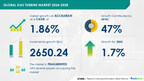
NEW YORK, Jan. 31, 2025 /PRNewswire/ — Report with the AI impact on market trends – The global gas turbine market size is estimated to grow by USD 2.65 billion from 2024-2028, according to Technavio. The market is estimated to grow at a CAGR of 1.86% during the forecast period. Enhanced efficiency and robustness of gas turbines is driving market growth, with a trend towards growing use of alternative types of fuel in aeroderivative gas turbines. However, inherent challenges in handling natural gas poses a challenge. Key market players include Ansaldo Energia Spa, Bharat Heavy Electricals Ltd., Capstone Green Energy Corp., Caterpillar Inc., Doosan Heavy Industries and Construction Co. Ltd., General Electric Co., Harbin Electric Corp., IHI Aerospace Co. Ltd., Kawasaki Heavy Industries Ltd., MAN Energy Solutions SE, MAPNA Group Co., Mitsubishi Heavy Industries Ltd., Motor Sich JSC, MTU Aero Engines AG, Rolls Royce Holdings Plc, Siemens Energy AG, Solar Turbines Inc., Wartsila Corp., Shanghai Electric Group Co. Ltd., and OPRA Turbines BV.

Key insights into market evolution with AI-powered analysis. Explore trends, segmentation, and growth drivers- View Free Sample PDF

Gas Turbine Market Scope

Report Coverage

Details

Base year

2023

Historic period

2018 – 2022

Forecast period

2024-2028

Growth momentum & CAGR

Accelerate at a CAGR of 1.86%

Market growth 2024-2028

USD 2650.24 million

Market structure

Fragmented

YoY growth 2022-2023 (%)

1.7

Regional analysis

APAC, North America, Europe, Middle East and Africa, and South America

Performing market contribution

APAC at 47%

Key countries

US, China, Japan, India, and Germany

Key companies profiled

Ansaldo Energia Spa, Bharat Heavy Electricals Ltd., Capstone Green Energy Corp., Caterpillar Inc., Doosan Heavy Industries and Construction Co. Ltd., General Electric Co., Harbin Electric Corp., IHI Aerospace Co. Ltd., Kawasaki Heavy Industries Ltd., MAN Energy Solutions SE, MAPNA Group Co., Mitsubishi Heavy Industries Ltd., Motor Sich JSC, MTU Aero Engines AG, Rolls Royce Holdings Plc, Siemens Energy AG, Solar Turbines Inc., Wartsila Corp., Shanghai Electric Group Co. Ltd., and OPRA Turbines BV

Market Driver

The gas turbine industry is experiencing significant growth in the power generation sector, with mechanical drive applications in jet engines and electricity production leading the way. Emission norms and concerns over carbon dioxide emissions are driving the shift towards natural gas reserves as a cleaner alternative to coal production. Renewable energy sources like solar and wind power are also increasing in capacity, leading to the retirement of fossil-fired power plants. New power plants, including combined cycle plants and gas-fired reciprocating engines, are being ordered to meet electricity demand driven by urbanization and economic growth. The International Energy Agency predicts GT capacity additions will continue, with combined cycle technology and open cycle technology seeing strong demand. Gas turbine OEMs like Solar Turbines, IHI Corporation, Wartsila, OPRA Turbines, Centrax Gas Turbines, Zorya-Mashproekt, and Cryostar are at the forefront of this trend. Design types, including aeroderivative gas turbines, are being optimized for efficiency and emissions reduction. The electric power sector is undergoing a transformation, with renewables, wind energy, and solar energy gaining ground. Electric utility peaking and ancillary systems are also important considerations for power plant technologies. Installation costs, project financing, and equipment pricing are key factors in the decision-making process. Gas turbines, as mechanical devices using the Brayton cycle, consist of a heater, compressor, turbine, and cooler to generate electricity. Climate change initiatives and regulations are driving the need for carbon emissions reduction and the exploration of hydrogen fuel blends. The power sector continues to evolve, with natural gas, nuclear energy, coal, and renewables all playing a role. 

The cost of fuel is a significant expense in gas turbine power generation, making up a substantial portion of the overall cost. In response, there is a growing trend towards using low-cost alternatives, particularly in the marine and industrial sectors. Fuel flexibility is a key driver for innovation in gas turbine technology. Aeroderivative gas turbines, for instance, have been developed to accommodate various fuel types for enhanced versatility. Traditionally, natural gas has been the primary fuel for these systems, but other fuels and gases, such as biofuel and synthetic gas, are gaining traction due to their affordability. However, the large-scale production of these alternative fuels is still in its infancy. 

Request Sample of our comprehensive report now to stay ahead in the AI-driven market evolution!

Market Challenges

The gas turbine industry faces several challenges in the power generation sector. Mechanical drive applications, including jet engines, require advanced gas turbine technology. Emission norms and carbon dioxide reduction targets pose significant hurdles for fossil-fired power plants, pushing the industry towards renewable energy sources like solar and wind power. Natural gas reserves and economic growth in urban areas increase electricity demand, leading to new power plants. Design types, such as combined cycle plants and gas-fired reciprocating engines, are in high demand. Rating capacity additions in the electric power sector require project financing and equipment pricing considerations. International Energy Agency reports show renewable capacity additions surpassing new gas turbine orders. Retiring coal-fired generation and hydrogen fuel blends add complexity. Carbon emissions, gas turbine designs, and ancillary systems are key areas of focus. Gas turbine OEMs like Solar Turbines, IHI Corporation, Wartsila, OPRA Turbines, Centrax Gas Turbines, Zorya-Mashproekt, and Cryostar innovate to meet power sector needs. Gas turbines, as mechanical devices, use the Brayton cycle, with a working fluid, heater, compressor, turbine, and cooler, to generate electricity. Climate change initiatives and regulations drive innovation in power plant technologies. MW demand, installation costs, and overhaul and repair are ongoing concerns. Gas turbines have applications in marine, aerospace, and process plants.Natural gas-fired power plants offer efficiency advantages over coal-fired alternatives. However, the environmental concern of methane leaks from natural gas storage is a significant challenge. Methane, a major component of natural gas, is odorless and has a global warming potential 82 times greater than carbon dioxide. Undetected leaks can contribute to environmental damage. Regulatory measures addressing gas storage safety are anticipated, which may restrict the expansion of the gas turbine market during the forecast period.

Discover how AI is revolutionizing market trends- Get your access now!

Segment Overview

This gas turbine market report extensively covers market segmentation by

Product 1.1 Heavy-duty gas turbine1.2 Aeroderivative gas turbineTechnology 2.1 CCGT2.2 OCGTGeography 3.1 APAC3.2 North America3.3 Europe3.4 Middle East and Africa3.5 South America

1.1 Heavy-duty gas turbine- The global heavy-duty gas turbine market is projected to experience robust growth due to the increasing demand for electric power as a result of rising power consumption worldwide. Developing nations are expected to drive significant power generation activities during the forecast period. Gas turbines are preferred over coal-based power generation due to environmental concerns, contributing to market growth. High-baseload plants requiring turbines over 300 MW will contribute significantly. Vendors, like General Electric Co., secure long-term agreements for constructing new heavy-duty gas turbines to expand market presence. For instance, in March 2022, GE received an order from Harbin Electric Co. Ltd for three GE 9HA.01 gas turbines. This trend of increasing orders for heavy-duty gas turbines is expected to accelerate market growth during the forecast period.

Download a Sample of our comprehensive report today to discover how AI-driven innovations are reshaping competitive dynamics

Research Analysis

The gas turbine industry is a critical segment of the power generation sector, focusing on the production of electricity using the Brayton cycle. A gas turbine is a mechanical device that converts the energy contained in a working fluid into mechanical power, which is then converted into electricity. The working fluid, typically natural gas, is heated in a heater, causing it to expand and drive a turbine. The expanding gas then passes through a cooler to condense and repeat the process. Gas turbines are used in various applications, including mechanical drive and jet engines. In the electric power sector, they are often used in combined cycle plants, which also incorporate steam turbine generators. The gas turbine market is driven by the increasing demand for electricity and the availability of natural gas reserves. However, emission norms and the shift towards renewable energy sources, such as solar and wind, are major challenges. Renewable capacity additions are expected to impact gas turbine orders, but gas-fired reciprocating engines may still play a role in the transition towards a low-carbon energy sector.

Market Research Overview

The gas turbine industry is a critical segment of the power generation sector, focusing on the production of electricity using the Brayton cycle. Gas turbines, mechanical devices that convert the energy of a working fluid into mechanical power, are used in various applications, including jet engines, mechanical drive, and electricity production. The increasing demand for electricity due to urbanization, economic growth, and electricity demand drives the market. Natural gas reserves and coal production are significant fuel sources for gas-fired power plants, which include combined cycle plants and gas-fired reciprocating engines. Renewable energy sources, such as solar power plants and wind power plants, are also increasingly integrated into the power sector, leading to renewable capacity additions. Emission norms and climate change initiatives have led to the development of carbon dioxide capture technologies and the use of hydrogen fuel blends. The power sector is undergoing a significant shift towards cleaner energy sources, with retiring coal-fired generation and the growth of nuclear energy, renewables, wind energy, and solar energy. The gas turbine market is influenced by various factors, including electricity demand, project financing, equipment pricing, and gas turbine OEMs such as Solar Turbines, IHI Corporation, Wartsila, OPRA Turbines, Centrax Gas Turbines, Zorya-Mashproekt, and Cryostar. The market also includes combined cycle technology, open cycle technology, and marine and aerospace applications. Gas turbine designs continue to evolve, with aeroderivative gas turbines and ancillary systems playing essential roles in the industry. Installation costs, overhaul and repair, and rating capacity are also significant factors influencing the market. The International Energy Agency forecasts continued growth in gas turbine capacity additions, driven by the electric power sector’s increasing reliance on gas-fired power plants.

Table of Contents:

1 Executive Summary
2 Market Landscape
3 Market Sizing
4 Historic Market Size
5 Five Forces Analysis
6 Market Segmentation

ProductHeavy-duty Gas TurbineAeroderivative Gas TurbineTechnologyCCGTOCGTGeographyAPACNorth AmericaEuropeMiddle East And AfricaSouth America

7 Customer Landscape
8 Geographic Landscape
9 Drivers, Challenges, and Trends
10 Company Landscape
11 Company Analysis
12 Appendix

About Technavio

Technavio is a leading global technology research and advisory company. Their research and analysis focuses on emerging market trends and provides actionable insights to help businesses identify market opportunities and develop effective strategies to optimize their market positions.

With over 500 specialized analysts, Technavio’s report library consists of more than 17,000 reports and counting, covering 800 technologies, spanning across 50 countries. Their client base consists of enterprises of all sizes, including more than 100 Fortune 500 companies. This growing client base relies on Technavio’s comprehensive coverage, extensive research, and actionable market insights to identify opportunities in existing and potential markets and assess their competitive positions within changing market scenarios.

Contacts

Technavio Research
Jesse Maida
Media & Marketing Executive
US: +1 844 364 1100
UK: +44 203 893 3200
Email: media@technavio.com
Website: www.technavio.com/

View original content to download multimedia:https://www.prnewswire.com/news-releases/gas-turbine-market-to-grow-by-usd-2-65-billion-2024-2028-enhanced-efficiency–robustness-boosting-the-market-with-ai-driving-market-transformation—technavio-302364748.html

SOURCE Technavio

Continue Reading

Technology

Rho Launches Card Payments on Invoices, Letting Businesses Accept Credit Card, Debit Card, and Google Pay

Published

on

By

Rho Invoicing customers can now accept credit card payments on invoices alongside ACH and wire, from the same account they already use for banking, with invoices syncing automatically to QuickBooks Online

NEW YORK, Sept. 4, 2026 /PRNewswire/ — Rho, the all-in-one finance platform for businesses, today announced that Rho Invoicing customers can now accept credit and debit card payments, including Google Pay, directly on their invoices. The feature is rolling out to eligible Rho Invoicing customers and adds to the existing ACH, domestic wire, and international wire options already available on Rho invoices. No separate merchant account, no new dashboard, and no waiting on a wire.

Here is how it works for the payer: your client opens the invoice, enters their card information, and pays in a few clicks. Card payments carry a processing fee of 2.9% plus $0.30 per transaction, paid by the business issuing the invoice and deducted from the payment before depositing into your account. Inbound ACH and wire stay free, and the payer never sees a surcharge at checkout. Card payments cover USD-denominated invoices and have a default daily limit of $10,000 across all of a business’s invoices, which can be raised on request.

An invoice is marked paid once the payout is initiated, and funds follow on card-network timelines rather than instantly. A business’s first card payment can take up to two weeks to deposit while Stripe, which powers Rho’s card payment features, completes its initial review.

Rho Invoicing remains free for all Rho customers, aside from card processing fees, and supports up to 100 line items per invoice with per-line sales tax, recurring billing, payment matching, and a fully white-labeled template that carries the business’s brand rather than Rho’s, with virtual account numbers that keep the business’s actual bank details private. Rho invoices sync into QuickBooks Online as accounts receivable through Rho’s direct integration, so AR aging stays accurate without duplicate entry.

Card payments run through the same Rho account a business already uses for banking, corporate cards, and bill pay. No merchant account. No second dashboard. No new password to add to a growing list. Getting paid should not add another tool to the financial stack.

Availability is limited to eligible Rho Invoicing customers for USD-denominated invoices. Access to and enablement of card payment functionality requires completion of Stripe’s verification process and is subject to third-party underwriting and approval, which is not guaranteed.

To learn more, read how to accept credit card payments with Rho Invoicing.

About Rho

Rho is the modern banking platform built for the AI era. Startups and growth-stage companies can open accounts in minutes, issue cards, manage expenses, pay bills, and close the books – all in one connected platform backed by real human support.

Rho is a fintech company, not a bank or an FDIC-insured depository institution. Checking account and card services provided by Webster Bank, a division of Santander Bank, N.A. Member FDIC.

Card payment features on Rho Invoicing, including credit card, debit card, and Google Pay options, are powered by Stripe, Inc. This content is for informational purposes only. It doesn’t necessarily reflect the views of Rho and should not be construed as legal, tax, benefits, financial, accounting, or other advice. If you need specific advice for your business, please consult with an expert, as rules and regulations change regularly.

Media Contact:
Justin Wolz
justin.wolz@rho.co
(919) 306-7084

View original content:https://www.prnewswire.com/news-releases/rho-launches-card-payments-on-invoices-letting-businesses-accept-credit-card-debit-card-and-google-pay-302870490.html

SOURCE Rho

Continue Reading

Technology

Amwell Receives Frost & Sullivan’s 2026 United States Technology Innovation Leadership Recognition for Technology-Enabled Care Platforms

Published

on

By

Amwell® is transforming virtual care delivery through its unified Amwell Platform, combining interoperability, clinical integration, and intelligent orchestration to improve access, efficiency, and outcomes.

SAN ANTONIO, Sept. 4, 2026 /CNW/ — As healthcare organizations move beyond fragmented telehealth solutions toward connected virtual care models, Amwell is helping redefine how digital care is delivered at scale. Frost & Sullivan is pleased to recognize Amwell with the 2026 United States Technology Innovation Leadership Recognition in the Technology-Enabled Care Platforms industry for its ability to address healthcare fragmentation through a unified platform that connects patients, health plan members, clinicians, and partner ecosystems across the care continuum.

Frost & Sullivan evaluates companies through a rigorous benchmarking process across two core dimensions: strategy effectiveness and strategy execution. Amwell excelled in both, demonstrating its ability to align strategic initiatives with evolving healthcare needs while executing with flexibility, scalability, and measurable customer impact. “The combination of reliability, flexibility, and clinically integrated workflows positions the Amwell Platform as a strategic enabler for organizations seeking to reduce fragmentation, improve member engagement with covered programs, expand access to care, and create more connected healthcare experiences,” said Sagar Mukhekar, Industry Analyst, Frost & Sullivan.

Guided by a strategy centered on connected care, interoperability, and continuous, digital innovation, Amwell has positioned the Amwell Platform as an operating layer for next-generation healthcare delivery. Rather than relying on disconnected point solutions, the platform integrates technology, services, and clinical intelligence to orchestrate personalized care experiences across virtual primary care, urgent care, behavioral health, chronic condition management, and specialized digital programs.

Backed by 20 years of technology-enabled care innovation, more than 90 million covered lives, and over 38.7 million virtual visits, Amwell continues to help health plans and healthcare organizations modernize digital care delivery at scale.

“As healthcare becomes more digital, it risks becoming more fragmented. Health plans need more than point solutions. They need enterprise infrastructure, clinical integration, and an open platform that brings partners and programs together. Our vision at Amwell is that technology creates value when it improves access, engagement, quality, and efficiency, and produces measurable clinical and business outcomes. We’re honored by this recognition from Frost & Sullivan,” said Dan Zamansky, Chief Product and Technology Officer at Amwell.

Amwell’s enterprise scale includes supporting the digital transformation of the Defense Health Agency’s Military Health System, serving approximately 9.6 million beneficiaries. The company’s commitment to measurable outcomes is also reflected in a landmark National Institute of Mental Health (NIMH)-funded study, published in Nature Human Behaviour and among the largest studies of its kind. The study found that students offered SilverCloud® by Amwell® engaged in mental healthcare at more than double the rate of traditional care, experienced lower rates of mental health disorders, and generated an estimated $1.18 million in avoided costs for the study population.

The company further differentiates its platform through intelligent orchestration and navigation, helping guide members to appropriate programs while giving clinicians visibility across care plans. Amwell also evaluates integrated third-party programs for clinical effectiveness, scalability, and enterprise readiness.

Frost & Sullivan commends Amwell for setting a high standard in competitive strategy, execution, and technological innovation. The company’s unified approach to digital care is helping reduce fragmentation, improve access, strengthen operational efficiency, and support more equitable and sustainable healthcare delivery.

Each year, Frost & Sullivan presents the Technology Innovation Leadership Recognition to a company that demonstrates outstanding strategy development and implementation, resulting in measurable improvements in market share, customer satisfaction, and competitive positioning. The recognition identifies forward-thinking organizations that are reshaping their industries through innovation and growth excellence.

Frost & Sullivan Best Practices Recognition

Frost & Sullivan’s Best Practices Recognitions honor companies across regional and global markets that exhibit exceptional achievement and consistent excellence in areas such as leadership, technological innovation, customer experience, and strategic product development. Each recognition is the result of a rigorous analytical process in which Frost & Sullivan industry experts benchmark performance through comprehensive interviews, deep-dive analysis, and extensive secondary research. The goal is to identify true best-in-class organizations that are driving transformative growth and setting new industry standards.
Contact us: Start the discussion.

Contact:
Ashley Shreve
E: ashley.weinkauf@frost.com 

View original content:https://www.prnewswire.com/news-releases/amwell-receives-frost–sullivans-2026-united-states-technology-innovation-leadership-recognition-for-technology-enabled-care-platforms-302870492.html

SOURCE Frost & Sullivan

Continue Reading

Technology

Midea Brings “Simply ideal” to Life at IFA 2026

Published

on

By

BERLIN, Sept. 4, 2026 /PRNewswire/ — At IFA 2026, Midea brings its “Simply ideal” vision to life through the latest innovations, designed to bring greater intelligence, comfort, efficiency and ease to the home.

The exhibition also highlights Midea’s new five-year partnership with FC Barcelona.

The Midea Suites: Ways to Master the Home

The new SMART MASTER showcases Midea’s AI-powered home ecosystem. The AI Agent enables more natural, intuitive interaction with appliances across daily household scenarios. Midea Robot brings AI into the physical world through cooking, cleaning, laundry, care and whole-home control.

At IFA 2026, Midea unveiled its new AI voice-controlled air conditioner. Cliff Liang, General Manager of Enterprise Commercial for the China Region at Microsoft, joined the Midea event and shared Microsoft’s perspective on the next phase of AI.

AI ECOMASTER coordinates appliances and connected systems through intelligent power management. It learns household routines and adapts to changing needs for greater flexibility and comfort.

For homes where every inch counts, SPACE MASTER delivers more usable capacity within the same external dimensions, as demonstrated by the refrigerator’s expanded storage.

Alongside the MASTER Suites, the BUILT-IN Series includes the Milanese-inspired Ispira Series, combining cohesive design with intelligent functionality for an integrated cooking experience.

The Midea Scenarios: Innovation for Everyday Living

Comfort begins with the air around us. Midea’s R290 Series responds to growing demand for efficient cooling. It combines advanced compressor and safety-sealing technologies with ultra-low-GWP R290 refrigerant, delivering around 10% higher energy efficiency. Residential applications include H-Pack and PortaSplit, with PortaSplit set to adopt R290 in 2027.

In the kitchen, technology simplifies daily routines, from food storage and cooking to after-meal care. The Visionary Series refrigerators make food easier to see and access through GlassVision, hands-free lighting and clear, even illumination.

The InfiniteFit Series hobs feature an ultra-slim design for seamless integration into European kitchens, while OmniFlex enables flexible cookware placement. The PizzaPro built-in oven combines rapid heating with an 81L cavity, balancing speed with capacity.

After the meal, the Tri-GreenApex System brings washing, drying and storage together while using around 50% less energy than required for Europe’s highest A rating.

Laundry brings its own everyday needs. Midea’s family laundry room concept combines multi-drum solutions for different garment-care needs, allowing separate loads to run at the same time. The OMNI SERIES offers flexible combinations to suit different household routines.

Tobin Richardson, President and CEO of the Connectivity Standards Alliance, introduced Matter at Midea’s booth, highlighting its open, secure, interoperable framework and Midea’s role in advancing smart appliance connectivity.

Partnership and Brand Portfolio

At IFA 2026, Midea celebrated its partnership through an immersive FC Barcelona experience at its booth. FC Barcelona legend Carles Puyol made a special appearance, sharing insights from his career on leadership, teamwork and the pursuit of excellence. His presence reflected Midea and FC Barcelona’s shared commitment to world-class performance.

As part of Midea Group’s multi-brand portfolio, TEKA presents its latest innovations under the “Meaningful Experiences Through Technology” concept, including its new coffee machine range, the In-Line Series and Laundry Care solutions, bringing European design and functionality to modern living.

About Midea and Midea Group

Midea is one of over 10 brands within the Smart Home Business of Midea Group.

Founded in 1968, Midea Group is a leading global technology company and one of the world’s largest home appliance manufacturers. As a Fortune Global 500 enterprise, it ranked No. 231 in 2026. The Group has streamlined its core operations into seven high-growth business pillars to drive future growth: Smart Home, Industrial Technologies, Building Technologies, KUKA, New Energy, Midea Healthcare, and ANNTO Logistics.

www.midea-group.com

www.midea.com

View original content to download multimedia:https://www.prnewswire.com/news-releases/midea-brings-simply-ideal-to-life-at-ifa-2026-302870435.html

SOURCE Midea Group

Continue Reading

Trending