1 in 4 households saw their debt grow last quarter as consumer optimism falters amid tariff threats and a stagnating job market
SAN MATEO, Calif., Feb. 13, 2025 /PRNewswire/ — Amid growing concerns that new U.S. tariff policies could spark a global trade war, reignite inflation and threaten job security, fewer American households believe their personal finances will improve in 2025, according to a new study by Achieve, the leader in digital personal finance.
1 in 4 households accrued more debt last quarter as optimism falters amid tariff threats and a stagnating job market
While many Americans continue to experience financial strain and rising debt, overall trends were mostly stable in the latest edition of Achieve’s quarterly household debt study:
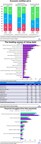
26% of households accrued more debt over the past three months, down slightly from 28% in Achieve’s fourth quarter 2024 study.35% decreased their total debt, an improvement from 31% in the previous quarter.39% reported their debt remained flat, down slightly from 42% last quarter.57% are carrying a credit card balance to cover essential expenses, down slightly from 58% last quarter. Nearly half of these respondents have had this debt for more than six months.36% find it difficult to pay their debts on time, unchanged for the past three quarters. Key reasons include insufficient income (68%), owing on too many accounts (36%, up from 31% last quarter) and cash-flow issues (27%, up from 25%).
“Achieve’s latest household debt data shifted slightly in a positive direction, but we can’t ignore the long-term financial impact debt has on consumers,” said Achieve Co-Founder and Co-CEO Andrew Housser. “For people struggling to make ends meet and who feel like they have no other option but to take on more debt, it can take months, if not years, to regain financial stability.”
Consumer expectations vs. reality: a growing disconnect
In the final months of the 2024 election cycle that focused predominantly on the economy, 44% of consumers believed their financial situation would improve in the second half of the year, according to Achieve’s 3Q24 survey. At the time, only 14% expected their finances to worsen. However, Achieve’s latest survey paints a more concerning picture:
Only 28% of respondents said their financial situation improved in the last six months of 2024.29% reported their finances worsened, more than double the share of those who initially expected to be worse off.Looking ahead to 3Q25, 47% of respondents expect their finances will improve, down from 56% who predicted the same back in 3Q24.
“While the stock market has made monumental gains throughout 2024, that’s of little comfort to households living paycheck to paycheck, contending with inflation, prospects of job loss and continued high levels of debt,” Housser said.
Debt trends show mixed progress as financial pressures persist
This study, conducted by Achieve’s think tank, the Achieve Center for Consumer Insights, complements the Federal Reserve Bank of New York’s Quarterly Report on Household Debt and Credit by providing qualitative insights into consumer borrowing and debt. To further examine the causes and ramifications of rising loan delinquencies, the survey panel includes a subset of respondents who have missed one or more debt payments over the past year.
Similar to previous editions of the survey, consumers who took on more debt over the past three months attributed the increases to difficulty making ends meet (31%); job losses (25%); and general overspending (24%), among other challenges.
As borrowers prioritize the essentials, missed-payment risk rises for unsecured debts like BNPL
Achieve’s 1Q25 survey found small declines in the share of respondents at risk of being late or missing payments on many essential monthly bills, as well as loans secured by collateral during the next three months. At the same time, missed-payment risk increased on buy now, pay later (BNPL) debt, personal loans and credit cards. This shift highlights how consumers are adapting their borrowing and repayment behaviors in response to short-term financial pressures, particularly after the holiday season.
“Consumers frequently rely on credit cards, BNPL and other short-term credit over the holidays, so it makes sense to now see elevated concern about repaying these debts. It’s also common for many households to be stretched thin early in the year, which is why we’re seeing consumers prioritize key expenses like rent, utilities and insurance,” said Housser. “Tax season often provides families breathing room to get caught up on bills, but broader economic pressures like inflation and trade policy changes are currently reshaping many households’ budgeting decisions.”
Meanwhile, student loan borrowers are still struggling following the resumption of federal loan payments. Student loan obligations continue to face the highest levels of uncertainty and volatility, even as missed payment risk fell to 32% in 1Q25, from 38% in 4Q24.
“While student loan forgiveness is seemingly off the table, many borrowers remain hesitant about resuming payments,” said Housser. “It may take time for borrowers to accept this reality and get back into regular payment routines.”
Stretched too thin: Why borrowers get behind on their debts
Macroeconomic factors like inflation and job market uncertainty continue to shape consumer financial behavior. Rising financial strain — driven by cash shortages, income instability and essential costs — prevents many from staying current on debts. Among respondents who missed a payment on any type of debt, 29% cited not having the money to pay as the primary reason for the delinquency, up from 25% in 4Q24. Student loan borrowers saw a similar rise, with 37% running out of money, up from 32%. Lost jobs and income were the second most common reason, affecting 16% of all borrowers and 21% of student loan borrowers.
Meanwhile, missed auto loan payments due to simply forgetting to pay surged to 13%, compared to 1% last quarter. The impact of rising essential costs lessened slightly, with 6% citing it as their primary reason for delinquency, down one percentage point. Among credit card holders, 7% blamed higher costs, down from 13% last quarter.
Methodology
The data and findings presented are based on an Achieve survey conducted in January 2025 consisting of 2,000 U.S. consumers ages 18 and older with an active account for one or more of the following categories of consumer debt: auto loan; major credit card with a minimum outstanding balance of $100; first-lien mortgage; home equity line of credit (HELOC); student loan; and other (unsecured personal loan, store-branded credit card, buy now, pay later loan, or closed-end home equity loan). The sample was augmented to include a statistically significant subset of credit card, auto loan and student loan borrowers who have been 30 days or more past due at least once in the past six months.
About the Achieve Center for Consumer Insights
The Achieve Center for Consumer Insights is a think tank that leverages Achieve’s team of digital personal finance experts to provide a view into the state of consumer finances. In addition to sharing insights gleaned from Achieve’s proprietary data and analytics, the Achieve Center for Consumer Insights publishes in-depth research, bespoke data and thoughtful commentary in support of Achieve’s mission of helping everyday people get on the path to a better financial future.
About Achieve
Achieve, THE digital personal finance company, helps everyday people get on, and stay on, the path to a better financial future. Achieve pairs proprietary data and analytics with personalized support to offer personal loans, home equity loans, debt resolution and debt consolidation, along with financial tips and education and free mobile apps: Achieve MoLO® (Money Left Over) and Achieve GOOD™ (Get Out Of Debt). Achieve has 2,500 dedicated teammates across the country, with hubs in Arizona, California, Florida and Texas. Achieve is frequently recognized as a Best Place to Work.
Achieve refers to the global organization and may denote one or more affiliates of Achieve Company, including Achieve.com (NMLS ID #138464); Achieve Home Loans, Equal Housing Lender (NMLS ID #1810501); Achieve Personal Loans (NMLS ID #227977); Achieve Resolution (NMLS ID # 1248929) and Freedom Financial Asset Management (CRD #170229).
Contact
Erica Bigley
Vice President
Corporate Communications
ebigley@achieve.com
415-710-9006
Austin Kilgore
Director
Corporate Communications
akilgore@achieve.com
214-908-5097
View original content to download multimedia:https://www.prnewswire.com/news-releases/debt-burdened-americans-brace-for-more-inflation-fewer-jobs-achieve-survey-finds-302376407.html
SOURCE Achieve







 Near Videos3 days ago

 Technology4 days ago

 Technology4 days ago

 Technology4 days ago

 Technology5 days ago

 Technology3 days ago

 Technology3 days ago

 Technology2 days ago