Connect with us

Technology

Agility: As Risks Loom, Logistics Execs Say They’ve Rewired Supply Chains

Published

on

Industry looks to shield itself from trade wars, inflation, possible recession

DUBAI, UAE, Feb. 18, 2025 /PRNewswire/ — More than 62% of logistics industry professionals say they’ve overhauled their supply chains to safeguard against inflation, looming trade tariffs, the possibility of a global economic downturn and other major risks.

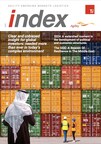
Entering 2025, the logistics industry is looking to protect itself from rising costs and a potential trade war ignited by expected U.S. tariff hikes and a flood of exports from China, according to a survey of 567 executives for the 2025 Agility Emerging Markets Logistics Index.

Nearly 55% of respondents see a global recession as likely or certain. Almost 82% say tariffs and other trade protectionism are having a significant impact on their supply chains. Seventy-two percent say risks in emerging markets have increased over the past year.

“There is wariness and uncertainty among shippers, carriers, forwarders and others when it comes to the geopolitical factors that drive up costs, affect trade volumes, and alter supply chains,” says Agility Vice Chairman Tarek Sultan. “Companies doing business internationally continue to shift production as they re-evaluate investment plans and search for durable paths to growth.”

The survey and Index are Agility’s 16th annual snapshot of industry sentiment and ranking of the world’s 50 leading emerging markets. The Index ranks countries for overall competitiveness based on domestic and international logistics strengths, business climates and digital readiness — factors that make them attractive to logistics providers, freight forwarders, air and ocean carriers, distributors and investors.

The 2025 Index features an in-depth analysis of the Arabian Gulf economies. Individually and as a group, the six Gulf countries are positioning themselves as global trade hubs, investing heavily in infrastructure, AI, energy transition, and workforce development. Despite increasing risk to global supply chains, the United Arab Emirates, Saudi Arabia and other Gulf countries have become “beacons of stability” and resilience, the Index concludes.

Stability at the top of the 50-country rankings was accompanied by volatility and movement further down in the Index. China, India, UAE, Saudi Arabia, Malaysia, Indonesia, Mexico, Qatar, Thailand and Vietnam rank 1 through 10. Colombia (No. 21) leaped up the rankings; Nigeria (43), Bangladesh (39) and Ukraine (40) tumbled.

The six Gulf countries all are among the top 11 for business conditions: UAE again tops the rankings for best business climate; Saudi Arabia is 3rd; Qatar 5th. The countries most digitally ready are China, UAE, Malaysia, Qatar and Saudi Arabia.

In international logistics opportunities, China, India, Mexico, Indonesia and Saudi Arabia rank highest. In domestic logistics, the leaders are China, India, Indonesia, Saudi Arabia and UAE. 

2025 Index Highlights

SURVEY

China – 54% intend to move production or sourcing out of China in the next five years with U.S.-China trade friction, labor costs and increasing domestic regulation being the biggest factors.Africa – Despite seeing heightened risks in emerging markets, 35% plan to boost investment in Africa in 2025 vs. only 8% planning to cut back there.Net-Zero – Nearly 65% say their companies are on track to meet net-zero goals.

COUNTRY RANKINGS

In the Middle East and North Africa, overall rankings are: UAE (3); Saudi Arabia (4); Qatar (8); Turkey (11); Oman (14); Bahrain (16); Jordan (17); Kuwait (18); Egypt (24); Morocco (26); Iran (32); Tunisia (36); Algeria (38); Lebanon (42); Libya (46).Rankings in Sub-Saharan Africa: South Africa (20); Kenya (22); Ghana (31); Tanzania (37); Uganda (41); Nigeria (43); Ethiopia (45); Angola (47); Mozambique (48).Rankings in Asia: China (1); India (2); Malaysia (5); Indonesia (6); Thailand (9); Vietnam (10); Philippines (23); Kazakhstan (25); Sri Lanka (27); Cambodia (30); Pakistan (33); Bangladesh (39); Myanmar (49).Rankings for Latin America: Mexico (7); Chile (11); Brazil (13); Uruguay (19); Colombia (21); Peru (28); Argentina (29); Ecuador (34); Paraguay (35); Bolivia (44); Venezuela (50).In Europe: Ukraine (40).

Transport Intelligence (Ti), a leading analysis and research firm for the logistics industry, has compiled the Index since it was launched in 2009.

John Manners-Bell, Chief Executive of Ti, said: “The supply chain industry is entering a new era in which the ability to respond to macro-economic and geopolitical events will be critical. The looming prospect of tariffs and trade wars will force shippers to re-evaluate the resilience of their production, off-shoring and sourcing strategies and it will be imperative for logistics providers to respond appropriately in a timely and effective manner.”

2025 Agility Emerging Markets Logistics Index: agility.com/2025index

About Agility

Agility is a global leader in supply chain services, infrastructure, and innovation with 60,000+ employees across six continents. A multi-business operator and investor, Agility specializes in growing and scaling operating businesses. Agility’s companies include the world’s largest aviation services company (Menzies Aviation); a global fuel logistics business (Tristar); a leading logistics parks developer and operator across the Middle East, South Asia, and Africa (Agility Logistics Parks); and a commercial real-estate company developing a mega-mall in the UAE (UPAC). Other Agility companies offer customs digitization services, remote-site infrastructure services, defense and government services, and ecommerce-enablement and digital logistics. Agility invests in supply chain innovation, sustainability, and resilience, and has minority holdings in a growing portfolio of listed and non-listed companies. 

For more information about Agility, visit:

Website: www.agility.com
Twitter: twitter.com/agility
LinkedIn: linkedin.com/company/agility 
YouTube: youtube.com/user/agilitycorp 

Infographic – https://mma.prnewswire.com/media/2620419/Agility_Infographic.jpg 
Logo – https://mma.prnewswire.com/media/2620506/Agility_Logo.jpg

View original content:https://www.prnewswire.co.uk/news-releases/agility-as-risks-loom-logistics-execs-say-theyve-rewired-supply-chains-302378233.html

Continue Reading
Click to comment

Leave a Reply

Your email address will not be published. Required fields are marked *

Technology

BOE continues to launch new products and solutions in the field of high-end displays

Published

on

By

LOS ANGELES, May 9, 2026 /PRNewswire/ — 

1、Redefine Visual Experience with Scientific Standards! BOE Releases Core Research Findings on OLED Display Clarity-Legibility Index, Paving the Way for the Industry’s First Transparent Pro Standard to Deliver Supreme Visual Experience

With the rapid popularization of OLED display technology, basic screen indicators including resolution, color gamut and brightness keep improving. Meanwhile, display transparency — a core experience metric that determines visual comfort , image authenticity and premium visual quality — has drawn growing attention across the industry.

Recently, BOE has empowered the launch of the industry’s first flagship high-transparency OLED display panel, setting an industry-leading benchmark in four key dimensions: color, depth , clarity and dynamic range. It ushers high-end display into a new era, shifting from purely numerical technical specifications to ultimate user-centric visual experience.

In addition, BOE officially unveiled its in-depth research achievements on OLED display transparency. It has identified the core underlying factors affecting visual transparency through scientific research, pioneered the industry’s first display transparency index formula, and facilitated the release of the first authoritative evaluation standard for OLED display transparency. This marks an industry’s transformation from specs-oriented to experience-driven development. This marks a full-process breakthrough covering underlying technical analysis, scientifically guided image quality development and mass production application.

At present, the group standard 《Standard of Associations Organic light emitting diode display —Evaluation method for display clarity》, led and formulated by BOE based on relevant research outcomes, has been officially issued. As the world’s first dedicated evaluation standard focusing on OLED display transparency, it fills the long-standing industry gap in correlating subjective visual perception with objective image quality parameters.

Leveraging this standard and transparency research results, BOE has assisted partners in developing the industry’s first flagship high-transparency OLED screen. The company has built a comprehensive technical system for OLED visual transparency. Supported by cutting-edge technologies such as tandem, LTPO and high-precision Demura crosstalk optimization algorithms, BOE and its partners have carried out full-link optimization from display panels to end devices.

Going forward, BOE will continue to deepen research on display human factors engineering and visual experience. Through technological innovation and standard leadership, it will bring more ultimate, high-transparency premium display experiences to users worldwide.

2、BOE Beneficial “Natural” Light Technology (BNL): Solving Visual Health Pain Points and Leading the Display Industry Trend

In an era of ubiquitous displays, users are spending increasingly longer hours on screens. Nevertheless, the luminous properties of conventional displays poorly align with the human visual system, sparking widespread consumer concerns over visual health. To address such challenges, BOE draws inspiration from natural light. By deeply analyzing natural light and extracting beneficial features highly consistent with health and comfort, BOE established the Beneficial “Natural” Light Technology (BNL) architecture. Evolving from single technical upgrades to a systematic solution, BNL replicates the merits of natural light across four core dimensions: Depolarization Adjustment, Spectrum Optimization, Light Profile Optimization and Time-varying Adaptation, advancing display technology toward healthy viewing.

BNL & Visual Health

Depolarization Adjustment: The linearly polarized light of traditional displays causes targeted stimulation to retinal lutein, resulting in dry eyes, eyelid redness and other discomforts. Based on the mainstream Circular Polarization (QWP) solution, BOE BNL has developed a series of technologies like BSF/RDF Random Depolarization technology and un-Polarization,which convert linearly polarized light into randomly polarized light, enabling balanced lutein utilization across the entire visual field, and deliver natural-light-level eye protection.

Spectrum Optimization: Conventional narrow-band RGB spectra feature poor continuity and imbalanced energy distribution, with excessive high-energy blue light that induces eye strain and increases risks of macular damage. Beyond Low Blue Light solutions, BOE BNL has developed Natural-like Spectrum, Beneficial Red Light, Infrared Light and Circadian Rhythm technologies. Multiple clinical studies have verified that Beneficial Red Light and Infrared Light can effectively inhibit axial elongation and accelerate eye microcirculation.  BOE takes the lead in integrating such optics into displays,achieving a spectral distribution matching degree of over 60%, an energy ratio of Beneficial Red Light (650–670 nm) exceeding 50%, and independent on/off switching and energy adjustment of Infrared Light. Meanwhile, Circadian Rhythm technology regulates melatonin secretion to safeguard sleep quality. Shifting from passive harm reduction to active eye benefits, BOE BNL delivers all-round visual health protection.

Light Profile Optimization: Conventional screens are prone to surface reflection and glare, which interfere with visual recognition and cause cumulative eye fatigue. Powered by industry-leading Anti-Glare, Low Reflection and Wide Viewing Angle technologies, BOE BNL accurately simulates the diffuse reflection of natural light to deliver consistent visual comfort across diverse viewing angles. For instance, BOE UB Cell technology achieves a DGR value below 5 with negligible glare and reflection, ensuring sustained visual comfort.

Time-varying Adaptation: Conventional displays tend to produce low-frequency flicker and fixed brightness and color temperature that fail to adapt to ambient changes, forcing frequent eye muscle adjustments and leading to discomfort. By adopting Flicker Free and Light Self-adaptive technologies, BOE BNL delivers stable, ultra-smooth visuals that replicate the comfort of natural light.

SID 2026: BOE Launches New BNL Display Products

At SID Display Week 2026, BOE launched new BNL health display products. The highlight product is the industry’s first 13.8-inch BNL health display tablet. It integrates all four core dimensions,supported by 7 core BNL technologies, to deliver a healthy and comfortable visual experience.

As a global leader in the display industry, BOE has led the development and officially issued the world’s first “Natural Light” display standard via the Zhongguancun Standardization Association,and has jointly issued the White Paper on Natural Light Display Technologies (Engineering Considerations, Application Value and Challenges) with TÜV Rheinland to drive standardized and high-quality industrial development. In the future, BOE will continue to iterate on technologies, diversify product forms and application scenarios, advance the grading standards for Beneficial “Natural” Light displays, and protect users’ visual health.

View original content to download multimedia:https://www.prnewswire.com/news-releases/boe-continues-to-launch-new-products-and-solutions-in-the-field-of-high-end-displays-302767491.html

SOURCE BOE Technology Group Co., Ltd.

Continue Reading

Technology

BitradeX BXC First Two Subscription Rounds Sell Out, Total Subscriptions Exceed 14M USDT

Published

on

By

LONDON, May 9, 2026 /PRNewswire/ — BitradeX Capital’s ecosystem equity token, BXC, has completed its first and second subscription rounds, selling a total of 50 million BXC with subscriptions exceeding 14 million USDT. The first round sold out in 90 seconds, while the second closed within 48 hours.

While the fundraising size is not unusually large by crypto standards, the structure of the sale has attracted market attention. The first two rounds were not open to the public, but limited to high-tier BitradeX users. The first round was available only to V5 users and above, while the second round expanded access to V3 users and above.

According to BitradeX’s tier system, V3+ users typically have higher recurring investment activity through AiBot, longer platform usage history, and stronger ecosystem participation. This means the early BXC allocation was absorbed mainly by the platform’s internal high-value user base, rather than short-term speculative participants.

This approach differs from many token fundraising campaigns that prioritize broad public participation and market hype. BitradeX instead adopted a more selective, staged model, gradually lowering the participation threshold while keeping the sale within its active ecosystem community.

BXC is positioned as more than a standard platform token. Its value framework is linked to BitradeX Capital’s broader ecosystem, including its exchange business, AiBot quantitative strategies, BTX Card payments, and Labs incubation platform. Public information indicates that BXC holders may receive staking rewards, benefit from ecosystem buybacks and burns, and gain priority access to Launchpad projects and governance participation.

The third subscription round is launched on April 30 at $0.35 USDT per BXC, with a total supply of 100 million BXC. It is now open to users participating in AiBot recurring investment. The fourth round price is expected to rise to $0.45 USDT.

The long-term value of BXC will ultimately depend on the growth of BitradeX’s underlying businesses, including exchange profitability, AiBot user expansion, and BTX Card adoption. However, the rapid sellout of the first two rounds suggests that BitradeX’s core user base has already shown strong confidence in the ecosystem’s future.

View original content:https://www.prnewswire.com/news-releases/bitradex-bxc-first-two-subscription-rounds-sell-out-total-subscriptions-exceed-14m-usdt-302767467.html

SOURCE BitradeX Capital

Continue Reading

Technology

South and East Asia identified as hotspots of global warming related impacts on male fertility

Published

on

By

BEIJING, May 9, 2026 /PRNewswire/ — A major new study has shown that South and East Asia dominate patterns of global warming related decline in male fertility with the strongest and most consistent evidence coming from India, Pakistan and the southern parts of China.

The effects of increased environmental temperatures on male reproductive health include declining sperm concentration and motility and increased sperm DNA fragmentation, or genetic damage that can hinder fertilisation and embryo development.

Male related factors account for around 50 per cent of infertility cases around the world and the impact of rising ambient heat on semen parameters raises serious implications across wide areas of Asia where total fertility rates are in serious decline.

Outcomes of the study undertaken by the Taiwan IVF Group and Ton Yen General Hospital, Taiwan (China) in collaboration with Stanford University (USA) are being presented at the 2026 Congress of the Asia Pacific Initiative on Reproduction (ASPIRE) in Beijing.

Research principal and Adjunct Clinical Assistant Professor at Stanford University, Dr Jack Yu Jen Huang, MD, PhD, FACOG said: “Given the temperature sensitivity of spermatogenesis, even modest increases in ambient temperature could have cumulative, population-level effects over time.

“As global warming accelerates, male reproductive health may represent an emerging climate sensitive public health concern.”

The testes function optimally at temperatures lower than the internal body heat level, and previous studies have shown elevated scrotal or ambient temperatures can impair sperm production.

The latest research explored global patterns to reveal comparative data across regions. It is based on a systematic review of international studies on temperature exposure and semen parameter trends between 2000 and 2024. Artificial intelligence algorithms and machine learning tools were applied to extract key variables including geographic regions and semen outcomes.

Dr Huang said studies examining occupational heat exposure alone were excluded from the analysis as they reflected localised, job-specific conditions rather than broader climatic trends.

“Our findings therefore represent population level climate associated temperature effects including consistent seasonal variations showing poor semen quality parameters in warmer periods.”

The global patterns on temperature associated lower sperm concentration and motility show South and East Asia as major hot spots of concern followed by the Middle East, Europe and North America.

“South and East Asia are likely more affected due to a combination of factors including higher baseline ambient temperatures and rapid urbanisation that contribute to greater cumulative heat stress on spermatogenesis,” Dr Huang explained.

“With ongoing global warming, chronic heat exposure may increasingly impact male reproductive health.”

Dr Huang said potential approaches to address the issue include:

increasing public awareness of heat exposure and reproductive health;encouraging protective behaviours;expanding research integrating climate and reproductive health data; andexploring clinical and lifestyle interventions to mitigate heat-related effects.

The research team was assisted by research intern Jeffrey Zi Kang Huang from Taipei American School, particularly in the application of artificial intelligence in biomedical research including AI-assisted data analysis and pattern recognition across global datasets.

“Further longitudinal and mechanistic studies will be important to better define causality and guide interventions,” he added.

The ASPIRE Congress is being held at the China National Convention Centre in Beijing. More than 3,000 scientists, clinicians, nurses and counsellors in assisted reproduction from around the world are attending the Congress.

For further information, go to https://www.aspire2026.com


View original content to download multimedia:https://www.prnewswire.com/apac/news-releases/south-and-east-asia-identified-as-hotspots-of-global-warming-related-impacts-on-male-fertility-302767469.html

SOURCE ASPIRE

Continue Reading

Trending