
Coin Market
Astar reduces base staking rewards to curb inflation pressure





Technology32 minutes ago
JAMS Launches AI for Enterprise Job Scheduling: JAX and JAMS MCP, on the Model You Choose

Technology32 minutes ago
Video: CNPC offers green chemical answer

Technology32 minutes ago
Shanghai Electric showcases embodied intelligence robot matrix and AI-native smart factory solutions at WAIC 2026

Technology2 years ago
Send Rakhi to UK swiftly with UK Gifts Portal

Near Videos4 years ago
Whiteboard Series with NEAR | Ep: 45 Joel Thorstensson from ceramic.network

Technology2 years ago
New Gooseneck Omni Antennas Offer Enhanced Signals in a Durable Package

Near Videos4 years ago
Why You Should Build on #NEAR – Co-founder Illia Polosukhin at CV Labs
Near Videos4 years ago
Whiteboard Series with NEAR | Ep: 45 Joel Thorstensson from ceramic.network

Near Videos4 years ago
NEAR End of Year Town Hall 2021: The Open Web World, MetaBUILD 2 Hackathon and 2021 recap
-

 Technology4 days ago
“Every Day CO₂ Challenge”: More Than a Game, A New Way of Learning
-
 Coin Market5 days ago
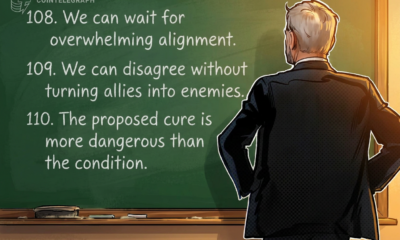
Saylor turns up heat with ‘110 reasons’ why BIP-110 is a bad idea
-
Technology5 days ago
China-Europe Youth Exchange Campaign: When Fashion Meets Football — A Green Pitch Appointment for Cross-Cultural Dialogue
-

 Coin Market4 days ago
Will the US get CLARITY this week? Bitcoin’s new $80K target: Hodler’s Digest, July 19
-

 Technology4 days ago
Powering ASEAN’s Manufacturing Transformation: IME 2026 Connects Technology, Industry and Opportunity
-
 Technology4 days ago
Trakka Systems to Demonstrate Advanced ISR Capabilities at Farnborough International Airshow 2026
-
 Technology4 days ago
Signeasy expands beyond eSignatures with Intelligent Contract Management for growing businesses
-
 Technology4 days ago
DBS named Asia’s Best Digital Bank by Euromoney, recognised for its AI leadership and responsible innovation