
Technology
DXC Technology Reports Fourth Quarter and Full Fiscal Year 2026 Results

Published
6 months agoon
By

Total revenue for Q4 FY26 of $3.13 billion, down 1.2% YoY, down 6.6% on an organic basis(1)Q4 FY26 Bookings of $3.3 billion, book to bill ratio of 1.07xQ4 FY26 EBIT margin of (1.2)%, and adjusted EBIT(2) margin of 7.6%Q4 FY26 Diluted earnings per share of $(0.84) down 158.7% YoY; Non-GAAP diluted earnings per share(3) of $0.77, down 8.3% YoYQ4 FY26 Free cash flow(4) was $110 million and full fiscal year 2026 was $713 million, up 3.8% YoYRepurchased $60 million of shares in Q4, and $250 million of shares in full fiscal year 2026
ASHBURN, Va., May 7, 2026 /PRNewswire/ – DXC Technology (NYSE: DXC) today reported results for the fourth quarter and full fiscal year 2026.
“We delivered another quarter of strong free cash flow with adjusted EBIT margin ahead of our expectations, while our top line performance fell short,” said DXC Technology President and CEO Raul Fernandez. “Over the past year, we leaned into innovation to reposition DXC for the next phase of enterprise IT and AI driven transformation, including the recent launch of our AI based orchestration platform, OASIS and continued progress across our Core Track and Fast Track initiatives. With our deep client relationships and a clear strategy in place, we remain confident in our direction and are focused on improved revenue performance and long-term value creation.”
Financial Highlights – Fourth Quarter Fiscal Year 2026
Total revenue was $3.13 billion, down 1.2% year-over-year, down 6.6% on an organic basis.(1)EBIT was $(39) million, down 111.1% year-over-year with a corresponding margin of (1.2)%. Adjusted EBIT(2) was $237 million, up 3.0% year-over-year, with a corresponding margin(2) of 7.6%.Diluted earnings per share was $(0.84), down 158.7% year-over-year. Non-GAAP diluted earnings per share(3) was $0.77, down 8.3% year-over-year.Cash generated from operations was $239 million, down $76 million year-over-year. Free cash flow(4) was $110 million, down $1 million year-over-year.Bookings of $3.3 billion declined 13.5% year-over-year, with a book to bill ratio of 1.07x.Returned $60 million of capital to shareholders by repurchasing approximately 4.6 million shares.
Segment Highlights – Fourth Quarter Fiscal Year 2026
Consulting and Engineering Services (“CES”)
Revenue was $1,256 million, up 1.7% year-over-year, down 3.9% on an organic basis.(1)Segment profit was $124 million, up 5.1% year-over-year, with a corresponding margin of 9.9%.Bookings declined 11.1% year-over-year, with a book to bill ratio of 1.07x.
Global Infrastructure Services (“GIS”)
Revenue was $1,549 million, down 5.0% year-over-year, down 10.6% on an organic basis.(1)Segment profit was $100 million, up 2.0% year-over-year, with a corresponding margin of 6.5%.Bookings declined 18.9% year-over-year, with a book to bill ratio of 1.11x.
Insurance Software & Services (“Insurance”)
Revenue was $325 million, up 7.3% year-over-year, up 4.0% on an organic basis.(1)Segment profit was $33 million, up 6.5% year-over-year, with a corresponding margin of 10.2%.Bookings increased 20.3% year-over-year, with a book to bill ratio of 0.88x.
Financial Highlights – Full Fiscal Year 2026
Total revenue was $12.64 billion, down 1.8% year-over-year, down 4.8% on an organic basis.(1)EBIT was $353 million, down 49.3% year-over-year with a corresponding margin of 2.8%. Adjusted EBIT(2) was $970 million, down 4.8% year-over-year, with a corresponding margin(2) of 7.7%.Diluted earnings per share was $0.10, down 95.2% year-over-year. Non-GAAP diluted earnings per share(3) was $3.23, down 5.8% year-over-year.Cash generated from operations was $1,248 million, down $150 million year-over-year. Free cash flow(4) was $713 million, up $26 million year-over-year.Bookings of $12.4 billion declined 6.2% year-over-year, with a book to bill ratio of 0.98x.
Segment Highlights – Full Fiscal Year 2026
Consulting and Engineering Services (“CES”)
Revenue was $5,023 million, down 0.8% year-over-year, down 3.8% on an organic basis.(1)Segment profit was $518 million, down 10.7% year-over-year, with a corresponding margin of 10.3%.Bookings increased 1.1% year-over-year, with a book to bill ratio of 1.10x.
Global Infrastructure Services (“GIS”)
Revenue was $6,342 million, down 3.9% year-over-year, down 7.2% on an organic basis.(1)Segment profit was $432 million, up 0.2% year-over-year, with a corresponding margin of 6.8%.Bookings declined 13.3% year-over-year, with a book to bill ratio of 0.94x.
Insurance Software & Services (“Insurance”)
Revenue was $1,279 million, up 5.4% year-over-year, up 3.6% on an organic basis.(1)Segment profit was $129 million, down 20.4% year-over-year, with a corresponding margin of 10.1%.Bookings increased 3.6% year-over-year, with a book to bill ratio of 0.76x.
First Quarter Fiscal Year 2027 and Full Fiscal Year 2027 Guidance
First Quarter Fiscal Year 2027
Total revenue in the range of $2.97 billion to $3.00 billion, a decline of 7.5% to 6.5% year-over-year on an organic basis.(1)Adjusted EBIT margin(2) of ~5.0%.Non-GAAP Diluted EPS(3) in the range of ~$0.40.
Full Fiscal Year 2027
Total revenue in the range of $12.11 billion to $12.35 billion, a decline of 5.0% to 3.0% year-over-year on an organic basis.(1)Adjusted EBIT margin(2) in the range of 6.0% to 7.0%.Non-GAAP diluted EPS(3) in the range of $2.40 to $2.90. Free Cash Flow(4) of ~$600 million.
Additional metrics for the fourth quarter and full fiscal year 2027 guidance are presented in the table below.
Revenue
Q1 FY27
Guidance
FY27 Guidance
Low
High
Low
High
YoY Organic Revenue %
(7.5) %
(6.5) %
(5.0) %
(3.0) %
Acquisition & Divestitures Revenues %
— %
— %
Foreign Exchange Impact on Revenues %
1.3 %
2.2 %
Others
Non-GAAP Net Interest Expense ($M)
$15
$56
Non-GAAP Tax Rate
48.0 %
40.0 %
Foreign Exchange Assumptions
Current Estimate
Current Estimate
$/Euro Exchange Rate
$1.17
$1.17
$/GBP Exchange Rate
$1.35
$1.35
$/AUD Exchange Rate
$0.70
$0.70
DXC does not provide reconciliations of non-GAAP measures included in its guidance because certain key information necessary for such reconciliations—most notably the impact of significant non-recurring items—is unavailable without unreasonable effort or may not be available at all. As a result, DXC believes any such reconciliation would not be meaningful.
Earnings Conference Call and Webcast
DXC Technology senior management will host a conference call and webcast to discuss fourth quarter and full fiscal 2026 results at 5:00 p.m. ET on May 7, 2026. The dial-in number for domestic callers is 888-596-4144. Callers who reside outside of the United States should dial +1-646-968-2525. The passcode for all participants is 9664077#. The webcast audio and any presentation slides will be available through a link posted on DXC Technology’s Investor Relations website.
A replay of the conference call will be available until 11:59 PM ET on May 14, 2026, at 800-770-2030 for domestic callers and at +1-609-800-9909 for international callers. The replay passcode is 9664077#. A transcript of the conference call will be posted on DXC Technology’s Investor Relations website.
About DXC Technology
DXC Technology (NYSE: DXC) is a leading enterprise technology and innovation partner delivering software, services, and solutions to global enterprises and public sector organizations — helping them harness AI to drive outcomes at a time of exponential change with speed. With deep expertise in Managed Infrastructure Services, Application Modernization, and Industry-Specific Software Solutions, DXC modernizes, secures, and operates some of the world’s most complex technology estates. Learn more on DXC.com.
Forward-Looking Statements
Except for historical information, statements in this document may constitute “forward-looking statements” based on our current assumptions regarding future performance. These statements involve numerous risks, uncertainties, and other factors outside our control that could cause actual results to differ materially, including: inability to effectively manage our sales organization, including execution, pipeline, and talent management; our inability to expand service offerings to address emerging technological trends and competitive pressures; failure to attract and retain key personnel, including artificial intelligence (AI) and technical experts, or maintain partner relationships; risks associated with AI, including adoption, deployment, and governance, reliance on third-party platforms, cybersecurity, privacy, evolving regulations, and competitive displacement; inability to accurately estimate contract costs and timelines, or failure by us or third parties to deliver on commitments; systems failures, catastrophic events, and resulting service interruptions; liability or reputational damage from security breaches, cyber-attacks, or disclosure of confidential or personal data; failure to comply with new or existing laws, regulations, and customer contracts, including those relating to data privacy, economic sanctions, export controls, AI, and environmental, social, and governance (ESG) expectations; failure to maintain our credit rating, manage indebtedness, or raise capital, adversely affecting our liquidity and borrowing costs; risks associated with international operations, including exchange rate fluctuations and geopolitical conflicts (such as in Russia/Ukraine and the Middle East); macroeconomic challenges, including inflation, reduced customer spending, and economic slowdowns affecting deal closures and cost-takeout efforts; inability to compete effectively, maintain customer relationships, collect receivables, or comply with government contracting regulations; failure to succeed in strategic transactions, acquisitions, or partnerships; securities price volatility; supply chain disruptions, supplier non-performance, or increased procurement costs due to trade tensions, tariffs, or hostilities; climate change, natural disasters, and increased scrutiny of ESG initiatives; infringement of intellectual property rights, or inability to procure necessary third-party licenses; failure to achieve expected benefits of restructuring plans, workforce reductions, and automation/AI reliance; failure to maintain effective disclosure controls and internal control over financial reporting; asset impairment charges, including but not limited to intangibles and deferred tax assets; inability to pay dividends or repurchase shares; pending investigations, claims, and disputes; changes in tax rates, tax laws, and the timing and outcome of tax examinations; and risks related to completed strategic transactions. For a written description of these factors, see our most recently filed Annual Report on Form 10-K, our upcoming Annual Report on Form 10-K for the fiscal year ended March 31, 2026, and any updating information in subsequent SEC filings. Forward-looking statements speak only as of the date made. Except as required by law, we assume no obligation to update or revise any forward-looking statements.
About Non-GAAP Measures
In an effort to provide investors with supplemental financial information, in addition to the preliminary and unaudited financial information presented on a GAAP basis, we also disclose in this press release preliminary non-GAAP information including: earnings before interest and taxes (“EBIT”), EBIT margin, adjusted EBIT, adjusted EBIT margin, non-GAAP diluted EPS, organic revenues, organic revenue growth, free cash flow, and non-GAAP tax rate.
We believe EBIT, adjusted EBIT, non-GAAP income before income taxes, non-GAAP net income, non-GAAP net income attributable to DXC common stockholders, and non-GAAP EPS provide investors with useful supplemental information about our operating performance after excluding certain categories of expenses as well as gains and losses on certain dispositions and certain tax adjustments.
We believe constant currency revenues provides investors with useful supplemental information about our revenues after excluding the effect of currency exchange rate fluctuations for currencies other than U.S. dollars in the periods presented. See below for a description of the methodology we use to present constant currency revenues.
One category of expenses excluded from adjusted EBIT, non-GAAP income before income tax, non-GAAP net income, non-GAAP net income attributable to DXC common stockholders, and non-GAAP EPS, incremental amortization of intangible assets acquired through business combinations, if included, may result in a significant difference in period over period amortization expense on a GAAP basis. We exclude amortization of certain acquired intangible assets as these non-cash amounts are inconsistent in amount and frequency and are significantly impacted by the timing and/or size of acquisitions. Although DXC management excludes amortization of acquired intangible assets, primarily customer-related intangible assets, from its non-GAAP expenses, we believe it is important for investors to understand that such intangible assets were recorded as part of purchase accounting and support revenue generation. Any future transactions may result in a change to the acquired intangible asset balances and associated amortization expense.
Another category of expenses excluded from adjusted EBIT, non-GAAP income before income tax, non-GAAP net income, non-GAAP net income attributable to DXC common stockholders, and non-GAAP EPS is impairment losses, which, if included, may result in a significant difference in period-over-period expense on a GAAP basis. We exclude impairment losses as these non-cash amounts reflect generally an acceleration of what would be multiple periods of expense and are not expected to occur frequently. Further, assets such as goodwill may be significantly impacted by market conditions outside of management’s control.
Selected references are made to revenue growth on an “organic basis” in order that certain financial results can be viewed without the impact of fluctuations in foreign currency rates and without the impacts of acquisitions and divestitures, thereby providing comparisons of operating performance from period to period of the business that we have owned during both periods presented. Organic revenue growth is calculated by dividing the year-over-year change in GAAP revenues attributed to organic growth by the GAAP revenues reported in the prior comparable period. Organic revenue is calculated as constant currency revenue excluding the impact of mergers, acquisitions or similar transactions until the one-year anniversary of the transaction and excluding revenues of divestitures during the reporting period. This approach is used for all results where the functional currency is not the U.S. dollar. We believe organic revenue growth provides investors with useful supplemental information about our revenues after excluding the effect of currency exchange rate fluctuations for currencies other than U.S. dollars and the effects of acquisitions and divestitures in both periods presented.
Free cash flow represents cash flow from operations, less capital expenditures. Free cash flow is utilized by our management, investors, and analysts to evaluate cash available for normal business operations, to pay debt, repurchase shares, and provide further investment in the business.
There are limitations to the use of the non-GAAP financial measures presented in this report. One of the limitations is that they do not reflect complete financial results. We compensate for this limitation by providing a reconciliation between our non-GAAP financial measures and the respective most directly comparable financial measure calculated and presented in accordance with GAAP. Additionally, other companies, including companies in our industry, may calculate non-GAAP financial measures differently than we do, limiting the usefulness of those measures for comparative purposes between companies. Selected references are made on a “constant currency basis” so that certain financial results can be viewed without the impact of fluctuations in foreign currency rates, thereby providing comparisons of operating performance from period to period. Financial results on a “constant currency basis” are non-GAAP measures calculated by translating current period activity into U.S. Dollars using the comparable prior period’s currency conversion rates. This approach is used for all results where the functional currency is not the U.S. Dollar.
Condensed Consolidated Statements of Operations
(preliminary and unaudited)
Three Months Ended
Fiscal Years Ended
(in millions, except per-share amounts)
March 31, 2026
March 31, 2025
March 31, 2026
March 31, 2025
Revenues
$ 3,130
$ 3,169
$ 12,644
$ 12,871
Costs of services
2,407
2,401
9,613
9,770
Selling, general and administrative
333
359
1,402
1,348
Depreciation and amortization
278
312
1,160
1,287
Restructuring costs
23
29
115
153
Interest expense
55
58
216
265
Interest income
(43)
(46)
(181)
(199)
Gain on disposition of businesses
—
—
—
(7)
Other expense (income), net
128
(282)
1
(376)
Total costs and expenses
3,181
2,831
12,326
12,241
(Loss) income before income taxes
(51)
338
318
630
Income tax expense
89
75
290
234
Net (loss) income
(140)
263
28
396
Less: net income (loss) attributable to non-controlling interest, net of tax
1
(1)
10
7
Net (loss) income attributable to DXC common stockholders
$ (141)
$ 264
$ 18
$ 389
(Loss) income per common share:
Basic
$ (0.84)
$ 1.46
$ 0.10
$ 2.15
Diluted
$ (0.84)
$ 1.43
$ 0.10
$ 2.10
Weighted average common shares outstanding for:
Basic EPS
168.33
181.09
175.02
180.68
Diluted EPS
168.33
184.84
178.65
184.92
Selected Condensed Consolidated Balance Sheet Data
(preliminary and unaudited)
As of
(in millions)
March 31, 2026
March 31, 2025
Assets
Cash and cash equivalents
$ 1,737
$ 1,796
Receivables, net
2,973
2,972
Prepaid expenses
526
477
Other current assets
126
118
Total current assets
5,362
5,363
Intangible assets, net
1,612
1,642
Operating right-of-use assets, net
663
635
Goodwill
527
526
Deferred income taxes, net
802
819
Property and equipment, net
1,122
1,253
Other assets
2,802
2,967
Total Assets
$ 12,890
$ 13,205
Liabilities
Short-term debt and current maturities of long-term debt
$ 520
$ 880
Accounts payable
561
549
Accrued payroll and related costs
564
571
Operating lease liabilities
232
227
Accrued expenses and other current liabilities
1,261
1,358
Deferred revenue and advance contract payments
748
762
Income taxes payable
53
64
Total current liabilities
3,939
4,411
Long-term debt, net of current maturities
3,032
2,996
Non-current deferred revenue
559
635
Non-current operating lease liabilities
463
444
Non-current income tax liabilities and deferred tax liabilities
502
495
Non-current pension obligations
385
387
Other long-term liabilities
801
347
Total Liabilities
9,681
9,715
Total Equity
3,209
3,490
Total Liabilities and Equity
$ 12,890
$ 13,205
Condensed Consolidated Statements of Cash Flows
(preliminary and unaudited)
Fiscal Years Ended
(in millions)
March 31, 2026
March 31, 2025
Cash flows from operating activities:
Net income
$ 28
$ 396
Adjustments to reconcile net income to net cash provided by operating activities:
Depreciation and amortization
1,182
1,313
Goodwill impairment losses
14
—
Operating right-of-use expense
305
309
Pension & other post-employment benefits, actuarial & settlement losses (gains)
169
(232)
Share-based compensation
86
79
Deferred taxes
26
(35)
Loss (gain) on dispositions
3
24
Provision for losses on accounts receivable
9
12
Unrealized foreign currency exchange (gains) losses
(14)
40
Impairment losses and contract write-offs
7
32
Amortization of debt issuance costs and discount
5
5
Cash surrender value in excess of premiums paid
(16)
(12)
Other non-cash charges, net
2
7
Changes in assets and liabilities, net of effects of acquisitions and dispositions:
Decrease in receivables
294
320
(Increase) decrease in prepaid expenses and other current assets
(164)
(81)
Decrease in accounts payable and accruals
(275)
(335)
(Decrease) increase in income taxes payable and income tax liability
(19)
(57)
Decrease in operating lease liability
(305)
(309)
Decrease in advance contract payments and deferred revenue
(95)
(78)
Other operating activities, net
6
—
Net cash provided by operating activities
1,248
1,398
Cash flows from investing activities:
Purchases of property and equipment
(212)
(248)
Payments for transition and transformation contract costs
(106)
(135)
Software purchased and developed
(217)
(328)
Business dispositions
—
26
Proceeds from sale of assets
35
161
Other investing activities, net
16
12
Net cash used in investing activities
(484)
(512)
Cash flows from financing activities:
Borrowings of commercial paper
—
367
Repayments of commercial paper
—
(369)
Principal payments on long-term debt
(1,062)
—
Payments on finance leases and borrowings for asset financing
(188)
(298)
Proceeds from bond issuance
742
—
Taxes paid related to net share settlements of share-based compensation awards
(14)
(20)
Repurchase of common stock
(249)
(14)
Other financing activities, net
(5)
17
Net cash used in financing activities
(776)
(317)
Effect of exchange rate changes on cash and cash equivalents
(47)
3
Net (decrease) increase in cash and cash equivalents
(59)
572
Cash and cash equivalents at beginning of year
1,796
1,224
Cash and cash equivalents at end of year
$ 1,737
$ 1,796
Reconciliation of Non-GAAP Financial Measures
Our non-GAAP adjustments include:
Restructuring costs – includes costs, net of reversals, related to workforce and real estate optimization and other similar charges.Transaction, separation and integration-related (“TSI”) costs – includes third party costs related to integration, separation, planning, financing and advisory fees and other similar charges associated with mergers, acquisitions, strategic investments, joint ventures, and dispositions and other similar transactions incurred within one year of such transactions closing, except for costs associated with related disputes, which may arise more than one year after closing.Amortization of acquired intangible assets – includes amortization of intangible assets acquired through business combinations.Pension and OPEB actuarial and settlement gains and losses – pension and OPEB actuarial mark to market adjustments and settlement gains and losses.Merger related indemnification – represents the Company’s estimate of potential net liability for tax related indemnifications.Gains and losses on dispositions – gains and losses related to dispositions of businesses, strategic assets and interests in less than wholly-owned entities.Gains and losses on real estate and facility sales – gains and losses related to dispositions of real property.Impairment losses – non-cash charges associated with the permanent reduction in the value of the Company’s assets (e.g., impairment of goodwill and other long-term assets including fixed assets and impairments to deferred tax assets for discrete changes in valuation allowances). Future discrete reversals of valuation allowances are likewise excluded.Debt extinguishment costs – costs associated with early retirement, redemption, repayment or repurchase of debt and debt-like items including any breakage, make-whole premium, prepayment penalty or similar costs as well as solicitation and other legal and advisory expenses.Tax adjustments – discrete tax adjustments to impair or recognize certain deferred tax assets, adjustments for changes in tax legislation, tax litigation matters, and adjustments to transition tax. Income tax expense (benefit) from the impact of mergers and divestitures is separately computed based on the underlying transaction. Income tax expense of all other (non-discrete) non-GAAP adjustments is computed by applying the jurisdictional tax rate to the pre-tax adjustments on a jurisdictional basis. In fiscal 2026, includes the unfavorable summary judgment in a tax matter relating to a foreign exchange tax case.
Non-GAAP Results
A reconciliation of reported results to non-GAAP results is as follows:
Three Months Ended March 31, 2026
(in millions, except per-share amounts)
As
Reported
Restructuring
Costs
Transaction,
Separation and
Integration-Related Costs
Amortization
of Acquired
Intangible
Assets
Merger related Indemnification
(Gains) and Losses on
Real Estate, Facility Sales
and Dispositions
Impairment
Losses
Pension and OPEB actuarial
and Settlement (Gains) and Losses
Tax Adjustment
Non-GAAP
Results
(Loss) income from continuing operations, before taxes
$ (51)
$ 23
$ 1
$ 87
$ (3)
$ 7
$ 3
$ 158
$ —
$ 225
Income tax expense
89
5
—
19
1
2
1
35
(63)
89
Net (loss) income
(140)
18
1
68
(4)
5
2
123
63
136
Less: net income attributable to non-controlling interest, net of tax
1
—
—
—
—
—
—
2
—
3
Net (loss) income attributable to DXC common stockholders
$ (141)
$ 18
$ 1
$ 68
$ (4)
$ 5
$ 2
$ 121
$ 63
$ 133
Effective Tax Rate
(174.5) %
39.6 %
Basic EPS
$ (0.84)
$ 0.11
$ 0.01
$ 0.40
$ (0.02)
$ 0.03
$ 0.01
$ 0.72
$ 0.37
$ 0.79
Diluted EPS
$ (0.84)
$ 0.10
$ 0.01
$ 0.39
$ (0.02)
$ 0.03
$ 0.01
$ 0.70
$ 0.37
$ 0.77
Weighted average common shares outstanding for:
Basic EPS
168.33
168.33
168.33
168.33
168.33
168.33
168.33
168.33
168.33
168.33
Diluted EPS
168.33
172.38
172.38
172.38
172.38
172.38
172.38
172.38
172.38
172.38
Fiscal Year Ended March 31, 2026
(in millions, except per-share amounts)
As
Reported
Restructuring
Costs
Transaction,
Separation and
Integration-
Related Costs
Amortization
of Acquired
Intangible
Assets
Merger Related Indemnification
(Gains) and Losses on
Real Estate, Facility Sales
and Dispositions
Debt Extinguishment
Costs
Impairment
Losses
Pension and
OPEB Actuarial
and Settlement
(Gains) and
Losses
Tax Adjustment
Non-GAAP Results
Income before income taxes
318
115
3
349
(35)
(1)
1
17
169
—
936
Income tax expense
290
24
—
71
(1)
1
—
5
37
(80)
347
Net income
28
91
3
278
(34)
(2)
1
12
132
80
589
Less: net income attributable to non-controlling interest, net of tax
10
—
—
—
—
—
—
—
2
—
12
Net income attributable to DXC common stockholders
$ 18
$ 91
$ 3
$ 278
$ (34)
$ (2)
$ 1
$ 12
$ 130
$ 80
$ 577
Effective Tax Rate
91.2 %
37.1 %
Basic EPS
$ 0.10
$ 0.52
$ 0.02
$ 1.59
$ (0.19)
$ (0.01)
$ 0.01
$ 0.07
$ 0.74
$ 0.46
$ 3.30
Diluted EPS
$ 0.10
$ 0.51
$ 0.02
$ 1.56
$ (0.19)
$ (0.01)
$ 0.01
$ 0.07
$ 0.73
$ 0.45
$ 3.23
Weighted average common shares outstanding for:
Basic EPS
175.02
175.02
175.02
175.02
175.02
175.02
175.02
175.02
175.02
175.02
175.02
Diluted EPS
178.65
178.65
178.65
178.65
178.65
178.65
178.65
178.65
178.65
178.65
178.65
Three Months Ended March 31, 2025
(in millions, except per-share amounts)
As
Reported
Restructuring
Costs
Amortization
of Acquired
Intangible
Assets
Merger related Indemnification
(Gains) and Losses on
Real Estate, Facility Sales
and Dispositions
Impairment
Losses
Pension and OPEB actuarial
and Settlement (Gains) and Losses
Tax Adjustment
Non-GAAP Results
Income from continuing operations, before taxes
338
29
85
2
(9)
5
(232)
—
218
Income tax expense
75
8
24
1
3
(1)
(66)
20
64
Net income
263
21
61
1
(12)
6
(166)
(20)
154
Less: net loss attributable to non-controlling interest, net of tax
(1)
—
—
—
—
—
(1)
—
(2)
Net income attributable to DXC common stockholders
$ 264
$ 21
$ 61
$ 1
$ (12)
$ 6
$ (165)
$ (20)
$ 156
Effective Tax Rate
22.2 %
29.4 %
Basic EPS
$ 1.46
$ 0.12
$ 0.34
$ 0.01
$ (0.07)
$ 0.03
$ (0.91)
$ (0.11)
$ 0.86
Diluted EPS
$ 1.43
$ 0.11
$ 0.33
$ 0.01
$ (0.06)
$ 0.03
$ (0.89)
$ (0.11)
$ 0.84
Weighted average common shares outstanding for:
Basic EPS
181.09
181.09
181.09
181.09
181.09
181.09
181.09
181.09
181.09
Diluted EPS
184.84
184.84
184.84
184.84
184.84
184.84
184.84
184.84
184.84
Fiscal Year Ended March 31, 2025
(in millions, except per-share amounts)
As
Reported
Restructuring
Costs
Transaction,
Separation and
Integration-
Related Costs
Amortization
of Acquired
Intangible
Assets
Merger Related Indemnification
(Gains) and Losses on
Real Estate, Facility Sales
and Dispositions
Impairment
Losses
Pension and
OPEB Actuarial
and Settlement
(Gains) and
Losses
Tax Adjustment
Non-GAAP
Results
Income before income taxes
630
153
25
348
2
10
17
(232)
—
953
Income tax expense
234
33
5
77
6
6
1
(66)
17
313
Net income
396
120
20
271
(4)
4
16
(166)
(17)
640
Less: net income attributable to non-controlling interest, net of tax
7
—
—
—
—
—
—
(1)
—
6
Net income attributable to DXC common stockholders
$ 389
$ 120
$ 20
$ 271
$ (4)
$ 4
$ 16
$ (165)
$ (17)
$ 634
Effective Tax Rate
37.1 %
32.8 %
Basic EPS
$ 2.15
$ 0.66
$ 0.11
$ 1.50
$ (0.02)
$ 0.02
$ 0.09
$ (0.91)
$ (0.09)
$ 3.51
Diluted EPS
$ 2.10
$ 0.65
$ 0.11
$ 1.47
$ (0.02)
$ 0.02
$ 0.09
$ (0.89)
$ (0.09)
$ 3.43
Weighted average common shares outstanding for:
Basic EPS
180.68
180.68
180.68
180.68
180.68
180.68
180.68
180.68
180.68
180.68
Diluted EPS
184.92
184.92
184.92
184.92
184.92
184.92
184.92
184.92
184.92
184.92
The above tables serve to reconcile the non-GAAP financial measures to the most directly comparable GAAP measures. Please refer to the “About Non-GAAP Measures” section of the press release for further information on the use of these non-GAAP measures.
Year-over-Year Organic Revenue Growth
Fiscal Year 2026
Q1 FY26
Q2 FY26
Q3 FY26
Q4 FY26
FY26
Total revenue growth
(2.4) %
(2.5) %
(1.0) %
(1.2) %
(1.8) %
Foreign currency
(2.0) %
(1.9) %
(3.3) %
(5.4) %
(3.1) %
Acquisition and divestitures
0.1 %
0.2 %
— %
— %
0.1 %
Organic revenue growth
(4.3) %
(4.2) %
(4.3) %
(6.6) %
(4.8) %
CES revenue growth
(2.7) %
(1.9) %
(0.1) %
1.7 %
(0.8) %
Foreign currency
(2.0) %
(1.9) %
(3.5) %
(5.6) %
(3.2) %
Acquisition and divestitures
0.3 %
0.4 %
— %
— %
0.2 %
CES organic revenue growth
(4.4) %
(3.4) %
(3.6) %
(3.9) %
(3.8) %
GIS revenue growth
(3.5) %
(4.2) %
(2.7) %
(5.0) %
(3.9) %
Foreign currency
(2.2) %
(2.1) %
(3.5) %
(5.6) %
(3.3) %
Acquisition and divestitures
— %
— %
— %
— %
— %
GIS organic revenue growth
(5.7) %
(6.3) %
(6.2) %
(10.6) %
(7.2) %
Insurance revenue growth
5.4 %
4.6 %
4.6 %
7.3 %
5.4 %
Foreign currency
(1.8) %
(1.0) %
(1.4) %
(3.3) %
(1.8) %
Acquisition and divestitures
— %
— %
— %
— %
— %
Insurance organic revenue growth
3.6 %
3.6 %
3.2 %
4.0 %
3.6 %
Fiscal Year 2025
Q1 FY25
Q2 FY25
Q3 FY25
Q4 FY25
FY25
Total revenue growth
(6.1) %
(5.7) %
(5.1) %
(6.4) %
(5.8) %
Foreign currency
1.4 %
— %
0.7 %
2.1 %
1.0 %
Acquisition and divestitures
0.3 %
0.1 %
0.2 %
0.1 %
0.2 %
Organic revenue growth
(4.4) %
(5.6) %
(4.2) %
(4.2) %
(4.6) %
CES revenue growth
(3.0) %
(3.3) %
(3.5) %
(6.4) %
(4.0) %
Foreign currency
1.7 %
(0.1) %
0.9 %
2.1 %
1.1 %
Acquisition and divestitures
0.4 %
— %
0.4 %
0.3 %
0.3 %
CES organic revenue growth
(0.9) %
(3.4) %
(2.2) %
(4.0) %
(2.6) %
GIS revenue growth
(10.1) %
(9.2) %
(8.2) %
(7.5) %
(8.8) %
Foreign currency
1.3 %
0.1 %
0.8 %
2.2 %
1.1 %
Acquisition and divestitures
0.2 %
0.1 %
0.2 %
0.1 %
0.2 %
GIS organic revenue growth
(8.6) %
(9.0) %
(7.2) %
(5.2) %
(7.5) %
Insurance revenue growth
5.3 %
5.5 %
6.6 %
— %
4.3 %
Foreign currency
0.9 %
(0.2) %
(0.2) %
1.1 %
0.4 %
Acquisition and divestitures
— %
— %
— %
— %
— %
Insurance organic revenue growth
6.2 %
5.3 %
6.4 %
1.1 %
4.7 %
Segment Profit
Segment profit is defined as segment revenues less costs of services, selling, general and administrative, depreciation and amortization, and other segment items. The Company does not allocate to its segments certain operating expenses managed at the corporate level. These unallocated expenses generally include certain corporate function costs, pension and OPEB actuarial and settlement gains and losses, restructuring costs, transaction, separation, and integration-related costs, amortization of acquired intangible assets, impairment losses, gains/(losses) on dispositions of businesses, gains/(losses) on real estate and facility sales, and other costs that do not reflect ongoing segment operating performance. As part of the transition to the new segment structure, the Company updated the assumptions that define which expenses remain in corporate post allocation. The tables below reflect those revised assumptions.
Fiscal Year 2026
(in millions)
Q1 FY26
Q2 FY26
Q3 FY26
Q4 FY26
FY26
CES profit
$ 105
$ 145
$ 144
$ 124
$ 518
GIS profit
97
122
113
100
432
Insurance profit
33
28
35
33
129
Corporate expenses
(19)
(41)
(29)
(20)
(109)
Adjusted EBIT
216
254
263
237
970
Restructuring costs
(37)
(35)
(20)
(23)
(115)
Transaction, separation and integration-related costs
(1)
(1)
—
(1)
(3)
Amortization of acquired intangible assets
(87)
(88)
(87)
(87)
(349)
Merger related indemnification
(2)
—
34
3
35
Gains on dispositions
—
1
—
—
1
Gains (losses) on real estate and facility sales
—
7
—
(7)
—
Impairment losses
(14)
—
—
(3)
(17)
Pension and OPEB actuarial and settlement losses
—
—
(11)
(158)
(169)
EBIT
75
138
179
(39)
353
Interest Income
46
46
46
43
181
Interest expense
(54)
(53)
(54)
(55)
(216)
Income (loss) before income tax
67
131
171
(51)
318
Income tax expense
(49)
(91)
(61)
(89)
(290)
Net Income (loss)
$ 18
$ 40
$ 110
$ (140)
$ 28
Segment profit margins
CES
8.4 %
11.6 %
11.4 %
9.9 %
10.3 %
GIS
6.1 %
7.7 %
7.0 %
6.5 %
6.8 %
Insurance
10.5 %
8.8 %
10.9 %
10.2 %
10.1 %
Total Company margins
Adjusted EBIT margin
6.8 %
8.0 %
8.2 %
7.6 %
7.7 %
EBIT margin
2.4 %
4.4 %
5.6 %
(1.2) %
2.8 %
Fiscal Year 2025
(in millions)
Q1 FY25
Q2 FY25
Q3 FY25
Q4 FY25
FY25
CES profit
$ 123
$ 175
$ 164
$ 118
$ 580
GIS profit
101
120
112
98
431
Insurance profit
44
37
50
31
162
Corporate expenses
(44)
(53)
(40)
(17)
(154)
Adjusted EBIT
224
279
286
230
1,019
Restructuring costs
(39)
(42)
(43)
(29)
(153)
Transaction, separation and integration-related costs
(7)
(15)
(3)
—
(25)
Amortization of acquired intangible assets
(87)
(89)
(87)
(85)
(348)
Merger related indemnification
—
—
—
(2)
(2)
Gains on dispositions
—
5
8
—
13
(Losses) gains on real estate and facility sales
(2)
(27)
(3)
9
(23)
Impairment losses
—
—
(12)
(5)
(17)
Pension and OPEB actuarial and settlement gains
—
—
—
232
232
EBIT
89
111
146
350
696
Interest Income
51
51
51
46
199
Interest expense
(72)
(69)
(66)
(58)
(265)
Income before income tax
68
93
131
338
630
Income tax expense
(43)
(48)
(68)
(75)
(234)
Net Income
$ 25
$ 45
$ 63
$ 263
$ 396
Segment profit margins
CES
9.6 %
13.7 %
12.9 %
9.6 %
11.5 %
GIS
6.1 %
7.2 %
6.8 %
6.0 %
6.5 %
Insurance
14.8 %
12.1 %
16.3 %
10.2 %
13.4 %
Total Company margins
Adjusted EBIT margin
6.9 %
8.6 %
8.9 %
7.3 %
7.9 %
EBIT margin
2.8 %
3.4 %
4.5 %
11.0 %
5.4 %
View original content to download multimedia:https://www.prnewswire.com/news-releases/dxc-technology-reports-fourth-quarter-and-full-fiscal-year-2026-results-302766066.html
SOURCE DXC Technology Company

You may like
Technology
FF EAI Robotics Ecosystem Inc. Announces Details for Its Listing Ceremony and Nasdaq Investor Day, Taking Place on Monday, Oct. 26, at Nasdaq’s MarketSite in NYC
Published
58 minutes agoon
October 21, 2026By

FF EAI Robotics Ecosystem Inc. (NASDAQ: FFR) will hold its official listing ceremony to mark the Company’s name and ticker change, and first Investor Day at the Nasdaq Tower on Monday, Oct. 26. Subject to completion of the transaction, FFR management will provide 2026 full year guidance, share details on FFR’s future strategy and business plan.A video recap of the event will be available at 4:30 p.m. ET on Oct. 26 at www.ff.com
LOS ANGELES, Oct. 20, 2026 /PRNewswire/ — FF EAI Robotics Ecosystem Inc. (NASDAQ: FFR) (“FFR” or the “Company”), a U.S.-based Embodied AI (EAI) robotics company, today announced details for its Nasdaq listing ceremony and first Investor Day, to be held on Oct. 26 at the Nasdaq Tower in NYC. Subject to completion of the transaction, FFR management will provide 2026 full year guidance, share further details on FFR’s future strategy and business plans at this event and will be available to speak with attending investors onsite. A video recap of the event will be available beginning at 4:30 p.m. ET at www.ff.com.
FFR and FFAI recently signed definitive agreements for FFR to acquire FFAI’s robotics assets and business in an all-stock transaction at an approximate $200 million valuation. FFR will issue shares at $2.246 per share, representing an approximately 50% premium to FFR’s closing price on the date the agreements were signed. Upon closing, FFR will become the No. 1 U.S.-listed pure-play “Four-Core Full-Stack AI” humanoid and bionic EAI robotics ecosystem company.
Note: Event materials will be available on the FF IR website at https://investors.ff.com/events-and-presentations
About FF EAI Robotics Ecosystem Inc.
FF EAI Robotics Ecosystem Inc. (NASDAQ: FFR) (renamed from AIxCrypto Holdings, Inc. and AIXC, effective September 30, 2026) is a U.S.-based Embodied AI (EAI) robotics company that is in the process of acquiring the FF EAI Robotics business. Upon completion of the acquisition, the Company will focus on the research and development, manufacturing, commercialization, and deployment of intelligent robotic technologies, products, and industry solutions.
The Company is committed to building a “Four-Core Full-Stack” AI ecosystem covering the full lifecycle of robotics, consisting of EAI Brain & Developer Platform, EAI Devices, Industry Productivity Solutions, and EAI Data Factory. Guided by the technology and product philosophy of “One Brain, Multi-forms, Multi-capabilities,” the Company aims to empower humanoid, biomimetic, and other robotic form factors through a unified EAI Brain, while continuously expanding their multi-task and multi-scenario capabilities. The ecosystem is designed to support the full robotics lifecycle, including R&D, deployment, data collection and training, operations, and commercial applications.
The FF EAI Robotics business has already achieved commercial deliveries of humanoid and biomimetic robotic products. Through its multi-form-factor robotic products, EAI technology platform, closed-loop data capabilities, and industry solutions, the business continues to advance the scaled adoption of robotics across real-world applications. The Company also operates RoboShare, a robot-sharing and services platform designed to connect robotic assets, service capabilities, customer demand, and ecosystem partners, further strengthening its robotics commercialization and service ecosystem.
For more information, visit www.ff.com.
ABOUT FARADAY FUTURE
Founded in 2014, Faraday Future (FF) is a U.S.-based Physical AI ecosystem company dedicated to reshaping the future of robotics and mobility solutions through AI innovation and technologies. FF focuses on two major product strategies within the Embodied AI (EAI) robotics business: EAI humanoid and bionic robots, and EAI automotive-focused robots. By building a “Four-Core Full-Stack AI” ecosystem of EAI Brain and Developer Platform, EAI Devices, Industry Productivity Solutions and EAI Data Factory, FF aims to create an evolutionary flywheel: scaled device delivery, data collection and training, continuous evolution of the EAI Brain, stronger product capability, and even larger-scale delivery and deployment. Through this flywheel, FF seeks to maximize its commercial value and lead to the advancement of Physical AI. For more information, please visit Faraday Future’s official website: https://www.ff.com/
FFR Forward-Looking Statements
This communication, including any presentation, press release, investor materials or other document of which it forms a part (this “Communication”), contains “forward-looking statements” within the meaning of the “safe harbor” provisions of the Private Securities Litigation Reform Act of 1995, as amended, and other securities laws, regarding FF EAI Robotics Ecosystem Inc. (“FFR,” the “Company,” “us,” “our,” or “we”) and our industry. All statements, whether written or oral, other than statements of historical fact, including any financial projections and any statements regarding future events, our strategy, our transition to robotics operations, our plans for RoboShare, our digital asset disposition plans, the proposed acquisition of the FF EAI Robotics business, the projections referenced in this communication, our name and ticker change, any related financing, and the anticipated benefits and timing of the foregoing, our objectives, expectations, or anticipated actions or results, are forward-looking statements. You can often identify forward-looking statements by words such as “may,” “might,” “will,” “shall,” “should,” “expects,” “plans,” “anticipates,” “could,” “intends,” “targets,” “projects,” “contemplates,” “believes,” “estimates,” “predicts,” “potential,” “goal,” “objective,” “seeks,” “likely,” or “continue,” or the negative of these terms or other similar expressions; the absence of these words does not mean a statement is not forward-looking. These statements reflect our current expectations and projections about future events as of the date of this Communication and are necessarily based on estimates and assumptions that, while considered reasonable by management, are inherently uncertain. FFR can give no assurance that such forward-looking statements or financial projections will prove to be correct.
Actual results may differ materially from those expressed or implied by these forward-looking statements as a result of numerous risks and uncertainties, both general and specific, including, but not limited to:
The proposed acquisition transaction and PIPE. The definitive agreements may be terminated in accordance with their terms, and the proposed transactions may not be completed on the terms described or at all; the conditions to closing, including the completion of FFAI’s internal restructuring of the robotics business, the execution of key employee agreements and other customary conditions, and the parties’ ability to satisfy them; the risk that the stockholder approval required under Nasdaq listing rules for the conversion of the preferred stock issued as consideration is not obtained or is delayed, and the effect of the conversion restrictions and the information statement process on the timing of conversion; the timing of the transaction and the costs of pursuing it; the issuance of a substantial number of shares as consideration and the resulting dilution to existing stockholders; the fact that the counterparty is our controlling stockholder, that it will hold a substantial majority of our outstanding shares following closing, that certain members of management serve both companies, and the conflicts of interest inherent in the transaction; the risk that the agreed valuations do not reflect the market value of our shares or of the acquired business; our dependence on the counterparty for transition, supply and support following any closing; the scope and enforceability of the non-competition and governance arrangements; the consequences of the transaction under Nasdaq listing rules, including the possibility that Nasdaq determines that the transaction requires us to satisfy initial listing requirements in connection with a business combination, change of control or change in the nature of our business; the risk that the PIPE financing, on which the transaction is not conditioned, is not completed on the anticipated terms or at all; the risk of litigation relating to the transaction; our ability to integrate and operate the acquired business; and the risk that the acquired business performs differently than anticipated.
Projections. The projections referenced in this communication were prepared by FFAI management for the FF EAI Robotics business on a standalone basis and do not reflect our existing business, transaction-related expenses or the combined company. We have not independently verified them or adopted them as guidance. They were not prepared with a view toward public disclosure or toward compliance with the published guidelines of the Securities and Exchange Commission or the American Institute of Certified Public Accountants regarding prospective financial information, and no independent registered public accounting firm has examined, compiled or performed any procedures with respect to them, and none expresses an opinion or any other form of assurance with respect to them. The projections reflect estimates and assumptions that are inherently uncertain and subject to change, including through due diligence and the review of our special committee and its financial advisor. Actual results are likely to differ, and may differ materially.
Liquidity, capital and going concern. Our limited cash and liquidity position and our history of operating losses and negative operating cash flow; substantial doubt regarding our ability to continue as a going concern, as described in our periodic reports; our need to obtain additional financing on acceptable terms or at all, and the substantial dilution to existing stockholders that additional financing may cause, including any financing completed in connection with the proposed transaction, which may not be completed or may be on less favorable terms than anticipated; our ability to fund operations pending and following the disposition of our digital asset positions; and our ability to satisfy the continued listing requirements of The Nasdaq Stock Market, including stockholders’ equity, minimum bid price and other applicable standards.
Our strategic transition and the disposition of digital assets. Risks associated with a fundamental shift in our business strategy and the redeployment of resources from a digital asset treasury strategy to robotics operations; our ability to execute the disposition of our digital asset positions in an orderly manner and on acceptable terms; the risk that amounts realized on disposition are materially less than carrying value as a result of price volatility, market depth, execution timing, custody or transfer constraints, or other limitations; tax, accounting and regulatory consequences of the dispositions; the continued volatility and regulatory uncertainty associated with digital assets and cryptocurrencies during the wind-down period; the concentration of a substantial portion of our assets in a single equity investment, including an investment in a related party, and the illiquidity, valuation uncertainty, holding-period and transfer restrictions associated with that investment; and risks arising from our relationships and agreements with related parties and significant stockholders.
Our robotics operations business. Our limited operating history in robotics operations and commercialization and the absence of a meaningful revenue history; the early stage of RoboShare and the risk that customer demand, repeat demand, pricing, utilization or unit economics do not develop as anticipated; our dependence on a small number of customers, on a single initial geographic market, and on individual events or engagements, and the risk that the loss of, or a change in the terms of, any such relationship has a disproportionate effect; our dependence on third-party robot owners, operators, suppliers, original equipment manufacturers and local partners, and on their willingness to make robots available on our platform; risks relating to the availability, cost, quality, maintenance, transport, insurance and technological obsolescence of robots and related equipment, and to supply chains, tariffs and trade measures affecting them; and our ability to expand into additional markets and to attract and retain participants on both sides of our marketplace.
Operations, safety and liability. Risks of property damage, personal injury or death arising from the operation of humanoid robots, quadrupeds and other autonomous or semi-autonomous machines in proximity to performers, employees, guests and the public, including at live events and in uncontrolled environments; product liability, premises liability, negligence and related claims and the adequacy, scope, availability and cost of our insurance coverage and of contractual indemnities from customers, owners and suppliers; the allocation of responsibility among us, robot owners, venues, event producers and customers; permitting, licensing, occupational safety and event-specific regulatory requirements; and the reputational consequences of any safety incident.
Technology, data and intellectual property. Systems, network, telecommunications or service disruptions, failures, defects or cyber-attacks; the performance, reliability and autonomy limitations of robotic systems and of the software, models and networks that support them; our collection, use, storage, transmission and protection of personal information, including images and any biometric or biometric-adjacent data captured in the course of robot deployments, and evolving privacy, biometric and artificial intelligence laws and regulations across the jurisdictions in which we operate or intend to operate; our ability to obtain, maintain, protect and enforce our intellectual property rights and to defend against third-party claims of infringement or misappropriation; and our reliance on third-party technology, platforms and licenses.
Legal, regulatory and general. The regulated industries and jurisdictions in which we operate; current or future laws or regulations and new interpretations of existing laws or regulations, including those applicable to digital assets, robotics, autonomous systems, consumer protection, advertising and endorsements; the risk that our marketplace arrangements, or the manner in which they are described, are characterized differently than we intend by regulators or courts; the failure of counterparties to perform their contractual obligations; litigation, regulatory inquiries, investigations and enforcement actions, and their costs and outcomes; business, economic, market and capital-market conditions; competition in our industry; changes in market demand for, and the pricing of, our products and services; our ability to define, design and release new products and services in a timely manner that meet customer needs; our ability to attract, retain and motivate qualified personnel, including key management; our ability to manage our growth and our transition; and our ability to maintain effective internal control over financial reporting and disclosure controls and procedures.
This list of factors is not exhaustive. Additional risks and uncertainties are described more fully in our filings with the U.S. Securities and Exchange Commission (the “SEC”), including our Annual Report on Form 10-K for the year ended December 31, 2025, our Quarterly Reports on Form 10-Q, and our subsequent filings, which are available on the SEC’s website at www.sec.gov. Investors are urged to review the liquidity, capital resources and going concern disclosures contained in those reports.
The forward-looking statements in this Communication speak only as of the date hereof. Except as required by law, neither FFR nor any other person undertakes any obligation to update or revise any forward-looking statement or financial projection set out herein, whether as a result of new information, future events or otherwise. This Communication is provided for informational purposes only, does not constitute an offer to sell or the solicitation of an offer to buy any security, and does not constitute investment, tax or legal advice or any investment recommendation, and does not take into account the investment objectives or financial situation of any person. FFR reserves the right to amend or replace the information contained herein, in whole or in part, at any time, and undertakes no obligation to notify any recipient thereof. Readers are cautioned not to place undue reliance on these forward-looking statements. This caution is made under, and these forward-looking statements are intended to be covered by, the safe-harbor provisions of the Private Securities Litigation Reform Act of 1995.
FFAI FORWARD LOOKING STATEMENTS
Important factors that may affect actual results or outcomes include, among others: the Company’s ability to continue as a going concern and improve its liquidity and financial position; the Company’s ability to pay its outstanding obligations, which it currently lacks; the availability of sufficient share capital to meet its current obligations and execute on its strategy; the willingness of convertible debt investors to fund the Company; demand for the Company’s robotics products; competition in the robotics industry, which includes companies with far superior experience, funding and name recognition; the ability of the Company to build an EAI education ecosystem that serves both the B2C consumer market and the B2B institutional education market; the acceptance by teachers and students of the Company’s robotics products in the education market; the ability of the Company to expand into additional markets for its robotics products; the Company’s reliance on a single OEM for most of its robotics products; the Company’s reliance on Chinese OEMs for all of its robotics products; the possibility of the federal government banning imports of Chinese robotics products; the Company’s ability to get the planned robotics products to comply with all applicable U.S. rules and regulations; the ability of the robotics OEM to timely supply robotics to the Company; tariff uncertainty for imported products, particularly from China; the ability of the Company to close its transaction with FF EAI Robotics Ecosystem Inc. (FFR) for the sale of its robotics business; demand from automobile dealers for robotics products; the Company’s ability to homologate FX vehicles for sale; the Company’s ability to secure the necessary funding to execute on the FX strategy, which is substantial; the Company’s ability to secure an occupancy certificate covering all of its Hanford facility; the Company’s ability to remediate its material weaknesses in internal control over financial reporting and the risks related to the restatement of previously issued consolidated financial statements; the Company’s limited operating history and the significant barriers to growth it faces; the Company’s history of substantial losses and expectation of continued losses; the success of the Company’s payroll expense reduction plan; the Company’s ability to execute on its plans to develop and market its vehicles and the timing of these development programs; the Company’s ability to execute on its plans to enter the robotaxi and cybercab industries; the Company’s estimates of the size of the markets for its vehicles and cost to bring those vehicles to market; the rate and degree of market acceptance of the Company’s vehicles; the Company’s ability to cover future warranty claims; the success of other competing manufacturers; the performance and security of the Company’s vehicles; current and potential litigation involving the Company; the Company’s ability to receive funds from, satisfy the conditions precedent of and close on the various financings described elsewhere by the Company; the result of future financing efforts, the failure of any of which could result in the Company seeking protection under the Bankruptcy Code; the Company’s indebtedness; the Company’s ability to use its “at-the-market” program; insurance coverage; general economic and market conditions impacting demand for the Company’s products; potential negative impacts of a reverse stock split; potential cost, headcount and salary reduction actions may not be sufficient or may not achieve their expected results; circumstances outside of the Company’s control, such as natural disasters, climate change, health epidemics and pandemics, terrorist attacks, and civil unrest; risks related to the Company’s operations in China; the success of the Company’s remedial measures taken in response to the Special Committee findings; the Company’s dependence on its suppliers and contract manufacturer; the Company’s ability to develop and protect its technologies; the Company’s ability to protect against cybersecurity risks; and the ability of the Company to attract and retain employees, any adverse developments in existing legal proceedings or the initiation of new legal proceedings; the volatility of the Company’s stock price; the ability of the Company to maintain its stock price above $1.00; and the ability of the Company to maintain compliance with Nasdaq regulations for continued listing. You should carefully consider the foregoing factors and the other risks and uncertainties described in the “Risk Factors” section of the Company’s Form 10-Q for the quarter ended June 30, 2026, filed with the SEC on August 13, 2026; the quarter ended March 31, 2026, filed with the SEC on May 14, 2026; and Form 10-K filed with the SEC on March 31, 2026, and other documents filed by the Company from time to time with the SEC.
View original content to download multimedia:https://www.prnewswire.com/news-releases/ff-eai-robotics-ecosystem-inc-announces-details-for-its-listing-ceremony-and-nasdaq-investor-day-taking-place-on-monday-oct-26-at-nasdaqs-marketsite-in-nyc-302914833.html
SOURCE FF EAI Robotics Ecosystem Inc.
Technology
Lovense Launches Glint, a Touch-Responsive Butt Plug That Syncs Anal Stimulation with a Partner’s Thrust During Intercourse
Published
58 minutes agoon
October 21, 2026By

For vibrator-loving couples, Glint offers something genuinely new: vibration driven by a partner’s touch.
SINGAPORE, Oct. 20, 2026 /PRNewswire/ — In the middle of sex, reaching for a phone to adjust a partner’s toy can interrupt the very connection the toy is meant to create.
Lovense today announced Glint, a touch-responsive butt plug for couples, designed to enhance intercourse by synchronizing anal stimulation with a partner’s thrust for a more intense, connected dual penetration experience. Its external base responds to a partner’s thrust as well as to touch, translating that contact into responsive anal stimulation in real time.
Glint allows couples to shape the experience through the movement and touch they are already sharing—not through a phone screen. Glint is not simply removing the phone from the experience. It changes what controls the experience: physical touch, contact and movement become the real-time input.
The numbers behind the pause
In a nationally representative U.S. study published by researchers at Indiana University[1], 43.8% of heterosexual men reported having used a vibrator. Among male vibrator users, approximately 94% had used one during partnered sexual activity and 82% during intercourse. The research suggests that vibrators are already part of partnered sex. The next question is not whether couples use them, but how physical interaction can become part of the control.
Grand View Research projects the global sextech market to reach USD 107.85 billion by 2030[2,3], growing at 16.77% annually—nearly twice the projected growth rate of the sex toys market, which is expected to reach USD 62.7 billion at a CAGR of 8.69%. Many of these devices now connect to apps and to other devices.
What makes Glint different
Glint is worn anally. The base stays outside the body and carries a touch sensor that reads how much skin is on it, at what angle and for how long, then moves the vibration across five intensity levels. A light touch can produce a lighter response, while broader or firmer contact can produce a stronger response, depending on the user’s sensitivity setting.
Users set their sensitivity and choose from three response modes in the Lovense Remote app:
Pulse, for rhythmic touch-based feedback;Sustain, for continuous vibration while contact continues;Crescendo, for vibration that builds as contact is maintained.
Glint is 0.84 inches (21.5 mm) across and weighs 55 grams. The small size keeps it comfortable to wear and approachable for people new to anal play. Its compact anal form factor is designed to stay out of the way during intercourse. It runs up to 7,500 vibrations per minute, lasts 95 to 178 minutes on a charge depending on level, charges in about an hour and is IPX7 waterproof. Through Toy Sync, its base can also control other Lovense devices.
Three ways couples will use it
Thrust-synced intercourse. During intercourse, each thrust against the external base is synchronized with anal stimulation in real time. The stimulation follows the couple’s rhythm rather than a preset pattern. With Glint in place, dual penetration feels fuller and more intense.
Touch-led foreplay. One partner wears Glint while the other explores the external base with a fingertip or hand. The wearer feels the response change as contact changes. The wearer can choose whether Touch Response is active and set the sensitivity before play begins.
Two toys, one movement. One partner wears Glint while the other wears a compatible Lovense device, such as Edge 2, Lush 4 or Gush 2 Motion. When the toys are paired through Toy Sync, physical contact with Glint can trigger responsive feedback in both devices, allowing the couple’s movement to shape the shared experience in real time. For example, one partner may wear Glint while the other wears Edge 2, Lovense’s prostate massager, allowing both partners to feel stimulation shaped by the same thrust. Either partner can wear Glint. The wearer remains in control, while the couple creates the rhythm together.
For couples in different locations, Lovense Remote continues to provide long-distance control.
For in-person use, Glint includes Touch Records, which is optional and turned off by default. If enabled, Touch Records lets users review selected interaction data after a session.
The oldest interface
“The simplest thing two people do during sex is touch each other,” said Dan Liu, CEO of Lovense. “With Glint, we wanted to explore what happens when touch becomes a new control layer between two people—so the couple can stay inside the interaction rather than reaching for a screen.”
Since 2010, Lovense has built an ecosystem that turns signals from apps, games and live streams into feedback on connected devices. Glint adds physical touch and movement as another way for signals to reach the body. The app is still there for setup and for partners in different cities; during sex, the couple can leave it on the nightstand.
Availability
Glint launches worldwide on October 20, 2026 and will be available at lovense.com.
About Lovense
Lovense is a connected intimacy technology company founded in 2010. Its ecosystem combines smart intimate devices, the Lovense Remote app, creator and live-streaming tools, platform integrations and developer APIs to help individuals and couples create more connected experiences across distance, content and everyday intimacy.
Reference:
1.Reece M, Herbenick D, et al. Vibrator Use Among Heterosexual Men Varies by Partnership Status. Journal of Sex & Marital Therapy, 2010, 36(5): 389–407.
https://doi.org/10.1080/0092623X.2010.510774
2.Grand View Research, SexTech Market Size To Reach $107.85 Billion By 2030. https://www.grandviewresearch.com/press-release/global-sextech-market
3.Grand View Research, Sex Toys Market Size To Reach $62.7 Billion By 2030. https://www.grandviewresearch.com/press-release/global-sex-toys-market
View original content to download multimedia:https://www.prnewswire.com/news-releases/lovense-launches-glint-a-touch-responsive-butt-plug-that-syncs-anal-stimulation-with-a-partners-thrust-during-intercourse-302914858.html
SOURCE Lovense
Technology
Kontron Launches Two New KBox F-Series Industrial Computers To Bring Greater Flexibility and Scalability to Industrial Edge Computing
Published
2 hours agoon
October 21, 2026By
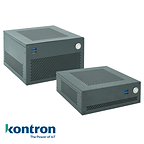
TAIPEI, Oct. 21, 2026 /PRNewswire/ — Kontron, a leading global provider of IoT/Embedded Computing Technology (ECT), expands its KBox F-Series with the KBox F-203-RPS and KBox F-204-RPS, two compact industrial computers designed to address diverse requirements in intelligent Industry 4.0, edge computing and industrial IoT applications.
Both systems are powered by 12th, 13th or 14th Gen Intel® Core™ i9/i7/i5/i3 S-Series socket-type processors with a TDP of up to 65 W and support up to 96 GB DDR5 memory, providing a scalable computing foundation for demanding industrial applications requiring flexible performance configuration and long-term deployment.
The KBox F-203-RPS offers two LAN configurations with either two or four GbE ports, allowing customers to select the connectivity level that best fits their applications. The dual-LAN configuration provides an efficient solution for general industrial computing, equipment control and edge applications, while the four-LAN configuration offers additional network connectivity for applications involving multiple devices or network segments, such as machine vision, industrial automation and IoT gateways.
For applications requiring greater system expandability, the KBox F-204-RPS provides one PCIe x16 or two PCIe x8 expansion slots, offering the flexibility to integrate graphics, networking, AI acceleration or other add-on cards according to specific application requirements. With support for up to four 2.5-inch SATA HDDs/SSDs, it also provides extensive storage scalability for data-intensive workloads. These capabilities make the KBox F-204-RPS particularly suitable for industrial edge computing, machine vision, video processing and applications requiring additional functionality or large local data storage.
Together, the KBox F-203-RPS and KBox F-204-RPS enable customers to select the configuration that best matches their requirements, from a slimmer, network-focused industrial computer to a highly expandable edge computing platform.
To learn more about KBox F-203-RPS and KBox F-204-RPS, refer to https://www.kontron.com/en/products/kbox-f-203-rps/p301099 and https://www.kontron.com/en/products/kbox-f-204-rps/p311867.
About Kontron
At Kontron, we champion IoT and Industry 4.0, by creating secure, state-of-the-art solutions that span hardware, software and services. Our approach speeds market entry, reduces the cost of ownership, and offers longevity, ensuring our role as your trusted partner in the integration of smart technologies. For more information, please visit www.kontron.com, dial +886-2-2799-2789 or email SalesAsia@kontron.com.
View original content to download multimedia:https://www.prnewswire.com/apac/news-releases/kontron-launches-two-new-kbox-f-series-industrial-computers-to-bring-greater-flexibility-and-scalability-to-industrial-edge-computing-302909761.html
SOURCE Kontron


FF EAI Robotics Ecosystem Inc. Announces Details for Its Listing Ceremony and Nasdaq Investor Day, Taking Place on Monday, Oct. 26, at Nasdaq’s MarketSite in NYC

Lovense Launches Glint, a Touch-Responsive Butt Plug That Syncs Anal Stimulation with a Partner’s Thrust During Intercourse

Kontron Launches Two New KBox F-Series Industrial Computers To Bring Greater Flexibility and Scalability to Industrial Edge Computing

Send Rakhi to UK swiftly with UK Gifts Portal

Whiteboard Series with NEAR | Ep: 45 Joel Thorstensson from ceramic.network

Nullmax and Renesas Forge Strategic Partnership to Deliver Competitive ADAS Solutions for the Global Market

Why You Should Build on #NEAR – Co-founder Illia Polosukhin at CV Labs
Whiteboard Series with NEAR | Ep: 45 Joel Thorstensson from ceramic.network

NEAR End of Year Town Hall 2021: The Open Web World, MetaBUILD 2 Hackathon and 2021 recap
Trending
-

 Coin Market5 days ago
OpenAI model helped itself to testnet crypto, then kept quiet about it
-

 Technology5 days ago
FF EAI Robotics (FFR) and FF Jointly Launch FF Nova, First Embodied AI Humanoid Robot Priced Below $2,500 in U.S., FF Nova Mini, Physical AI Spark Program Curriculum, Nova Reinforcement Learning Developer Program and Developer Community Recruitment
-
 Technology4 days ago
JinkoSolar Unveils Tiger Neo 5.0 All-Black Residential Solar Module with 25.52% Efficiency
-

 Technology4 days ago
Highland and Bath Counties, Virginia Go Live on a Shared Caliber Hosted CAD Environment
-

 Coin Market4 days ago
Bitcoin price steadies around $82K after Fed’s Warsh avoids rate-hike hints
-
 Technology5 days ago
Frost & Sullivan: Netradyne Receives the 2026 Global Commercial Vehicle Video Telematics Product Leadership Recognition for Excellence in AI-Driven Fleet Safety and Operational Intelligence
-

 Near Videos4 days ago
What if you could build a skyscraper with one prompt?
-
Technology5 days ago
/R E P E A T — Media Advisory – Minister Hodgson to deliver remarks and participate in fireside chat/