Connect with us

Technology

Disrupting B2B Finance: Why Signed Deals Do Not Always Become Usable Capital

Published

on

On Disruption Interruption, DealSync Founder Shalom Ben Or explains why companies with complex revenue models can struggle to convert signed business-to-business deals into usable cash. 

TAMPA BAY, Fla., Aug. 27, 2026 /PRNewswire/ — Secured finance is a massive market, with outstandings reaching approximately $12.2 trillion as of the fourth quarter of 2024 and annual transaction volume totaling $6.5 trillion, according to the Secured Finance Network. But that scale does not mean every business-to-business (B2B) deal can be turned into usable capital when companies need it. Atradius reported that 43% of credit-based B2B sales in the U.S. were overdue in 2025, primarily because of customer cash-flow pressure, underscoring the gap between financing capacity in the market and liquidity inside individual companies.

That gap is sharper for companies with complex or non-standard revenue models, where signed deals may not fit conventional revenue-based financing. On this episode of Disruption Interruption, host Karla Jo Helms (KJ) speaks with Shalom Ben Or, Founder of DealSync, about why Chief Financial Officers (CFOs) are often left reacting to sales-to-cash problems, why conventional revenue-based financing can break down for AI companies with outcome-based models, and how complex revenue can be structured as a financeable asset. “Currently, cash flow is managed,” Ben Or says. “It’s about time that software will make it programmable.”

Why B2B Revenue Still Gets Stuck

For Ben Or, the problem begins with the gap between closing a sale and turning that agreement into cash the business can use. Sales teams close deals, but finance teams still have to determine how payment terms, discounts, financing options, and working-capital needs affect liquidity.

As companies grow, they may add people and processes to manage deal desks, debt, treasury, and working capital. But many of the decisions still depend on context, judgment, meetings, and manual coordination.

When a company is not selling a straightforward subscription product, the problem becomes more pronounced. Ben Or estimates that B2B companies outside pure software-as-a-service models can have 20% to 30% of revenue tied up somewhere because of long payment terms, financing friction, discounts, or revenue that does not fit a lender’s standard underwriting model.

The conventional response is often to seek outside debt, but that can introduce another source of delay. “CFOs go to the places they know, which usually are not necessarily the right ones,” Ben Or says. “It’s a trap, because it takes too long to get what they want.”

Making Complex Revenue Financeable

DealSync was built around Ben Or’s argument that cash-flow decisions should become programmable rather than remain dependent on disconnected manual processes. He divides the CFO technology stack into three layers:

Systems of Record: Hold financial information.Workflow Tools: Move tasks and approvals through finance processes.Judgment Layer: Support CFOs, treasurers, and controllers make higher-stakes decisions about debt, deal structure, and liquidity.

DealSync operates in the third layer, where CFOs make higher-stakes financial decisions. The platform helps companies identify revenue that is stuck between the sale and the cash, package it in a way lenders can evaluate, and connect with lenders who understand how to finance it. Ben Or says the company starts with debt because that is often the most urgent problem, but the larger opportunity is helping finance teams shape deals earlier, before sales terms create cash-flow problems.

That matters for companies that do not fit traditional lending models. Outcome-based AI businesses may get paid only after they deliver a defined result. Hardware companies may need capital to grow before revenue arrives. In both cases, standard revenue-based financing may not know how to value the opportunity.

“We are able to create an asset out of their revenue,” Ben Or says. That structure can give lenders a clearer basis for evaluating deals that might otherwise fall outside conventional financing models.

The goal is not to give finance teams another workflow tool, but to move financial judgment earlier in the process, so CFOs can understand the deal’s implications before a liquidity problem develops. “We want to make sure the CFO can control the cash flow at the onset,” Ben Or says, “not react to problems.”

Links

Disrupting the Cash Flow Trap: Turning Hard-to-Finance Deals into Usable Capital with Shalom Ben Or

Disruption Interruption is the podcast where you will hear from today’s biggest Industry Disruptors. Learn what motivated them to bring about innovation and how they overcame opposition to adoption.

https://omny.fm/shows/disruption-interruption/disrupting-the-cash-flow-trap-turning-hard-to-finance-deals-into-usable-capital-with-shalom-ben-or

LinkedIn: https://www.linkedin.com/in/shalombenor/
Company Website: https://dealsynchq.com

About Disruption Interruption™ 
Disruption is happening on an unprecedented scale, impacting all manner of industries — MedTech, Finance, IT, eCommerce, shipping, logistics, and more — and COVID has moved their timelines up a full decade or more. But WHO are these disruptors and when did they say, “THAT’S IT! I’VE HAD IT!”? Time to Disrupt and Interrupt with host Karla Jo “KJ” Helms, veteran communications disruptor. KJ interviews bad asses who are disrupting their industries and altering economic networks that have become antiquated with an establishment resistant to progress. She delves into uncovering secrets from industry rebels and quiet revolutionaries that uncover common traits — and not-so-common — that are changing our economic markets… and lives. Visit the world’s key pioneers that persist to success, despite arrows in their backs at www.disruption-interruption.com.

About Shalom Ben Or
Shalom Ben Or is the Founder of DealSync, a fintech company focused on making cash flow programmable for B2B companies with complex revenue models. His work centers on helping CFOs turn non-standard revenue into financeable assets by bringing AI-driven context into the judgment layer of the sales-to-cash process. Before DealSync, Ben Or built fintech experience financing commodities in Africa, where he saw how easily capital can move when an asset fits a lender structure, and how difficult financing becomes when revenue falls outside the traditional box.

About Karla Jo Helms
Karla Jo Helms is the Chief Evangelist and Anti-PR® Strategist for JOTO PR Disruptors™. Karla Jo learned firsthand how unforgiving business can be when millions of dollars are on the line — and how the control of public opinion often determines whether one company is happily chosen, or another is brutally rejected. Being an alumnus of crisis management, Karla Jo has worked with litigation attorneys, private investigators, and the media to help restore companies of goodwill into the good graces of public opinion — Karla Jo operates on the ethic of getting it right the first time, not relying on second chances and doing what it takes to excel. Helms speaks globally on public relations, how the PR industry itself has lost its way, and how, in the right hands, corporations can harness the power of Anti-PR to drive markets and impact market perception.

References

Atradius. (2025). B2B payment practices trends in North America 2025. atradius.us/knowledge-and-research/reports/b2b-payment-practices-trends-usmca2025Secured Finance Network. (2026, February 10). SFNet study: Secured finance surges past $12 trillion, powering the middle market as a critical engine of the U.S. economy. sfnet.com/home/industry-data-publications/the-secured-lender/tsl-express-daily-articles-news/tsl-express-daily-articles-news/2026/02/10/sfnet-study-secured-finance-surges-past-%2412-trillion-powering-the-middle-market-as-a-critical-engine-of-the-u.s.-economy

Media Inquiries:
Karla Jo Helms
JOTO PR™ 
727-777-4629

View original content to download multimedia:https://www.prnewswire.com/news-releases/disrupting-b2b-finance-why-signed-deals-do-not-always-become-usable-capital-302861202.html

SOURCE Disruption Interruption

Continue Reading
Click to comment

Leave a Reply

Your email address will not be published. Required fields are marked *

Technology

Hilco Global Seeks Offers to Acquire Autonomous Navigation Patents

Published

on

By

NEW YORK, Aug. 27, 2026 /PRNewswire/ — Hilco Global’s Intellectual Property Services group (www.hilcoglobal.com), a leading intellectual property advisory firm specializing in intangible asset valuation, advisory, and monetization services, announced that it is seeking offers to acquire the patent portfolio and related assets of Canyon Navigation, which developed self-describing fiducial (SDF) technology for use in navigation of autonomous machines such as drones, industrial robots, and self-driving cars in GPS-degraded environments.

Non-binding indications of interest are due September 17, 2026. Interested parties should contact Hilco Global directly at ehurwitz@hilcoglobal.com or ssilverstein@hilcoglobal.com to learn more.

Canyon Navigation’s SDF-based landmarks optically transmit their own position, enabling precise localization without satellite signals – making them immune to jamming and multipath errors – to augment or completely replace GPS. GPS can become limited, denied, or degraded in many common, real-world situations such as urban canyons in metropolitan areas, inside tunnels or buildings, and intentional jamming of signals.

The SDF solution is low-cost, including just the measurement device (the camera) and the measurement targets (the SDFs). Along with the ease of producing the latter, SDFs are scalable across systems from a single warehouse to a city-wide positioning service.

Hilco IP Services Senior Director Eric Hurwitz notes of this portfolio, “Position information is key to the operations in a wide range of industries: automotive, aircraft, maritime, construction, and agriculture, and many more.” Hurwitz continued, “It is even more critical in emerging autonomous-forward markets including warehouse automation, self-driving cars, construction inspection, eVTOL aircraft, drone delivery and other drone applications. SDFs are a low-cost, scalable solution to GPS degradation in those and other large, rapidly expanding markets where fiducial-based positioning is already being adopted.”

For more information, click here or please contact the Hilco Global IP Services team and ehurwitz@hilcoglobal.com or ssilverstein@hilcoglobal.com.

About Hilco Global: Hilco Global, a subsidiary of ORIX Corporation USA, is a diversified financial services company that delivers integrated professional services and capital solutions that help clients maximize value and drive performance across the retail, commercial industrial, real estate, manufacturing, brand and intellectual property sectors, and more. Hilco Global provides a range of customized solutions to healthy, stressed, and distressed companies to resolve complex situations and enhance long-term enterprise value. Hilco Global works to deliver the best possible result by aligning interests with clients and providing strategic advice and, in many instances, the capital required to complete the deal. Hilco Global is based in Northbrook, Illinois and has more than 810 professionals operating on four continents. Visit www.hilcoglobal.com.

View original content to download multimedia:https://www.prnewswire.com/news-releases/hilco-global-seeks-offers-to-acquire-autonomous-navigation-patents-302861477.html

SOURCE Hilco Trading, LLC

Continue Reading

Technology

Redwood Software Orchestrates the Enterprise, From Hybrid Cloud to Agentic AI — Named a Leader for the Third Consecutive Year in the 2026 Gartner® Magic Quadrant™ for Service Orchestration and Automation Platforms

Published

on

By

Key facts

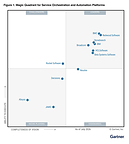
Redwood Software has been named a Leader three years in a row in the 2026 Gartner® Magic Quadrant™ for Service Orchestration and Automation Platforms (SOAP), positioned furthest in Completeness of Vision.Redwood has been ranked #1 in four out of five Use Cases and tied for #1 in one Use Case in the 2026 Gartner Critical Capabilities for SOAP report.Redwood’s Model Context Protocol (MCP) server has reached general availability, offering 50+ production-ready tools across nine global AWS regions.New native AWS connectivity — spanning S3, EventBridge and AWS Glue — extends RunMyJobs across the hybrid estate without re-architecting existing systems.Three additional AI capabilities — Operations Agent, Workflow Builder and Agent Studio — extend RunMyJobs toward autonomous, agentic enterprise operations, validated with Microsoft Copilot, SAP’s Joule and Claude Code.

VIENNA, Va., Aug. 27, 2026 /PRNewswire/ — Redwood Software, the leading orchestration platform for the autonomous enterprise, today announced its recognition as a Leader in the 2026 Gartner® Magic Quadrant™ for Service Orchestration and Automation Platforms (SOAP) and its #1 ranking in four of five Use Cases and tie for #1 in the fifth Use Case in the Critical Capabilities report. Alongside this, Redwood released RunMyJobs 2026.3, bringing native AWS connectivity and its Model Context Protocol (MCP) server to general availability while introducing new AI capabilities to accelerate autonomous operations.

Orchestrating the enterprise, from hybrid cloud to agentic AI

Enterprises with AI mandates face the challenge of turning AI from experimentation into operations. RunMyJobs 2026.3 helps close the gap between AI reasoning and enterprise action by unifying execution across hybrid systems and removing the infrastructure constraints that slow innovation on legacy workload automation tools. The latest release delivers:

MCP server & native AWS connectivity: Redwood’s MCP server, validated with Microsoft Copilot, SAP’s Joule and Claude Code, provides AI models governed access to 50+ tools across nine global AWS regions with full auditability, instantly agentifying decades of business logic. Native AWS integration (S3, EventBridge, Glue) allows real-time orchestration across the hybrid estate without re-architecting systems.

Bi-directional agentic AI governance & Agent Studio*: Support for MCP and Agent2Agent (A2A) protocols enables AI agents to trigger workflows and lets teams build agents that enhance orchestrations under the same governance model as the entire business process chain. Agent Studio embeds LLM-powered reasoning as native job types within existing workflows.

Workflow Builder & Operations Agent*: Workflow Builder generates auditable workflows from plain English descriptions or documentation. Operations Agent detects failures and SLA risks in real time, delivering enriched context to operators for faster autonomous responses.

“AI agents can reason about a problem, but they can’t fix it unless they’re connected to the systems that run the business,” said Charles Crouchman, Chief Product Officer at Redwood Software. “We believe our recognition as a Leader and the availability of our MCP server and AWS connectivity validate that the market is shifting toward governed, agentic orchestration that operates within the enterprise’s existing trust model.”

Gartner recognition

The Gartner Magic Quadrant™ for SOAP evaluates vendors on Ability to Execute and Completeness of Vision. Redwood Software was positioned furthest in Completeness of Vision for the third year in a row. Redwood attributes this placement to its 2026 intelligent automation expansions, including native support for MCP and A2A protocols, the new Redwood RangerAI assistant portfolio and Redwood Insights Premium.

The Critical Capabilities report “provides deeper insight into providers’ product and service offerings by extending the Magic Quadrant™ analysis.”** Redwood attributes this positioning to its commitment to customer success and driving efficient business transformation.

View a complimentary copy of the Magic Quadrant™ report to learn more about why Redwood Software was positioned as a Leader: https://www.redwood.com/resource/gartner-soaps-mq/ 

View a complimentary copy of the Critical Capabilities report to learn more about why Redwood Software ranked first in four SOAP Use Cases and tied for first in one Use Case: https://www.redwood.com/resource/gartner-critical-capabilities-soaps/ 

*Workflow Builder, Operations Agent and Agent Studio are currently in tech preview.

**Source: Gartner Critical Capabilities Research Methodology

Report citations: Gartner, Inc., Magic Quadrant for Service Orchestration and Automation Platforms, Hassan Ennaciri, Daniel Betts, Chris Saunderson, 5 August 2026. Gartner, Inc. Critical Capabilities for Service Orchestration and Automation Platforms. Chris Saunderson, Hassan Ennaciri, Daniel Betts, etl. 24 Aug 2026.

Gartner disclaimer: GARTNER is a registered trademark and service mark of Gartner, Inc. and/or its affiliates in the U.S. and internationally. MAGIC QUADRANT is a registered trademark of Gartner, Inc. and/or its affiliates and is used herein with permission. All rights reserved. Gartner does not endorse any vendor, product or service depicted in its research publications, and does not advise technology users to select only those vendors with the highest ratings or other designation. Gartner research publications consist of the opinions of Gartner’s research organization and should not be construed as statements of fact. Gartner disclaims all warranties, expressed or implied, with respect to this research, including any warranties of merchantability or fitness for a particular purpose.

About Redwood Software

Redwood Software is the leading orchestration platform for the autonomous enterprise, driving business transformation at the lowest total cost of ownership. Redwood empowers organizations to intelligently automate and orchestrate mission-critical business and IT processes across complex ERP, hybrid cloud, data and emerging agentic AI systems. Through its SaaS-first automation fabric — with AI embedded across the automation lifecycle — Redwood accelerates the path to autonomous operations. Backed by 30 years of experience and trusted by more than 50% of the Fortune 50, Redwood helps organizations unlock human potential to focus on innovation, growth and what’s next.

Media Contact: 

redwood@nextpr.com

View original content to download multimedia:https://www.prnewswire.com/news-releases/redwood-software-orchestrates-the-enterprise-from-hybrid-cloud-to-agentic-ai–named-a-leader-for-the-third-consecutive-year-in-the-2026-gartner-magic-quadrant-for-service-orchestration-and-automation-platforms-302861943.html

SOURCE Redwood Software

Continue Reading

Technology

Harness Launches Code Repository With AI Code Review for Agent-Ready Development

Published

on

By

Built for the volume of AI-generated code, with permissions for AI agents, reviews that keep pace, an enterprise free plan, and one-click migration from existing Git providers

SAN FRANCISCO, Aug. 27, 2026 /PRNewswire/ — Harness, the platform for the autonomous SDLC, today launched Agent-Ready Harness Code Repository and AI Code Review, built for teams increasing their adoption of AI coding agents. The capabilities are designed to work as one experience: code lands in a repository built for the volume now generated by agents, and is reviewed by a system that understands what a change puts at risk.

Coding stopped being the hard part

Generating code is no longer the constraint. With agents in the loop, teams produce far more code, far faster, than they could alone, and the work has shifted to what happens next: storing, reviewing, approving, and shipping all of it without anything breaking.

The tools underneath were not built for that. Legacy source code management tools in wide use today, GitHub included, assume a human writes code and opens a pull request before a few colleagues look at it over the next few hours or days. When agents are doing the writing, the cracks show up in ordinary places: search and file history get slower as indexing falls behind, pull requests pile up faster than anyone can read them, and a permission system designed around a list of developers has no good answer for an agent that might merge code on its own. Harness has now rebuilt that layer.

“Software delivery is going through its biggest shift since the move to the cloud, and the systems we all built our workflows around were designed for a different scale and a different kind of user,” said Jyoti Bansal, CEO and co-founder of Harness. “You do not solve that by adding AI features to a repository designed fifteen years ago. The entire SDLC has to become autonomous, which means the repository, the review, the pipeline, and the governance must all work as one system.”

Inside Agent-Ready Harness Code Repository

Harness Code Repository is what source control looks like when agents are part of the team.

Keeps up as commit and pull request volume increases: Harness Code Repository is scale-tested to handle thousands of pull requests and commits opened at once, which is roughly what a team running agents looks like on an ordinary day. Search, history, and diffs keep working at that volume, across repositories of varying sizes and with branches in the tens of thousands.Agents get their own permissions: Agents inherit permissions from humans that trigger them. Developers can further define what an agent may touch, merge, or deploy, just as they would scope a new engineer, down to a specific repository, branch, or environment. RBAC and Open Policy Agent (OPA) policies put that boundary in writing rather than leaving it to convention, so it holds before the merge instead of turning up in an audit afterward.Tailored to be used by humans and agents via MCP and CLI: Harness Code Repository and AI Code Review are both reachable from the command line through the Harness MCP and CLI, which covers the full pull request lifecycle, allowing users to find a review by the author’s email instead of an internal ID, see every open pull request across every repository in one place, and create, reply to, or resolve comment threads without opening a browser. AI agents can leverage Harness CLI commands to execute Harness Code and Review operations more deterministically and in headless mode.Free to start, simple to migrate: Any team can start using Harness Code Repository for free, with 50 GB storage. Migration takes a few clicks, regardless of whether organizations are migrating one repository or an entire GitHub organization, GitLab group, Bitbucket workspace, or Azure DevOps project, and the Harness CLI brings pull requests, labels, webhooks, and branch rules along with it.

AI Code Review

A repository that can withstand a flood of code does not help if a human still has to review all of it. AI Code Review reads a pull request the way a tech lead would.

Checks that gate the merge. Teams decide which AI Checks are mandatory, setting them once for an account or tuning them by project, and a change that fails a required check cannot be merged.Diff grouping by risk. The diff is grouped by risk rather than by file, so the few high-risk changes that alter how the software behaves are not buried under mass renames and dependency bumps.One-click remediation. Feedback describes what a change puts at stake rather than noting that a line moved, and suggested reviewers and labels arrive before anyone opens the pull request. If the feedback is valid, changes can be merged with a single click.

Agents can write code, but someone still has to decide what ships. AI Code Review is built so that the decision is an informed one instead of a rushed one.

One platform, from commit to production

Committing, reviewing, building, testing, securing, and deploying code already follow a single sequence inside Harness, which is why the repository and the review layer could ship together. Both are now part of the outer loop that the Harness Software Delivery Agent runs end-to-end, from commit to production, under one policy engine.

That sequence is also what makes the review useful. Harness already knows how a team releases software, which policies they enforce, and what has failed in their production before. All of that is mapped in the Harness SDLC Knowledge Graph, providing enterprise context for every review to reference.

By dogfooding these capabilities over the past several months, Harness engineering teams have saved more than 10,000 hours of manual review time per month.

Availability

Agent-Ready Harness Code Repository and AI Code Review are available today – book a demo to learn more.

About Harness

Harness is the AI Software Delivery Platform™ company, enabling engineering teams to build, test, and deliver software faster and more securely. Powered by Harness AI and the Software Delivery Knowledge Graph, the platform brings intelligent automation to every stage of the software delivery lifecycle after code — removing toil and freeing developers from manual, repetitive work. Companies like United Airlines, Morningstar, and Choice Hotels use Harness to accelerate releases by up to 75%, cut cloud costs by 60%, and achieve 10x efficiency across DevOps. Based in San Francisco, Harness is backed by Goldman Sachs, Menlo Ventures, IVP, Unusual Ventures, and Citi Ventures.

View original content to download multimedia:https://www.prnewswire.com/news-releases/harness-launches-code-repository-with-ai-code-review-for-agent-ready-development-302861964.html

SOURCE Harness

Continue Reading

Trending