Connect with us

Technology

Radial Tires Market to Reach USD 154.25 Billion by 2035, Reports Radial Insights

Published

on

MIDDLETOWN, Del., Aug. 27, 2026 /PRNewswire/ — The global Radial Tires Market was valued at USD 94.4 billion in 2025 and is projected to expand from USD 99.78 billion in 2026 to USD 154.25 billion by 2035, registering a compound annual growth rate of 4.96% during the forecast period, according to the latest market intelligence study published by Radial Insights.

Demand is being supported by the continued transition from bias-ply to radial construction across passenger vehicles, commercial fleets, agricultural machinery and off-the-road equipment. Radial tires offer lower rolling resistance, improved heat dissipation, longer tread life and more predictable road behavior, making them increasingly important as vehicle manufacturers and fleet operators pursue lower fuel consumption, improved safety and lower lifecycle costs.

The new study, titled “Radial Tires Market Size, Share, Growth & Trends Analysis, 2025–2035,” examines the market by vehicle type, sub-construction, end user, rim size, brand tier and region. It also evaluates bias-to-radial conversion, EV-specific tire development, premiumization, replacement demand, manufacturing capacity expansion and regulatory trends shaping future radial tire penetration.

Bias-to-Radial Conversion Remains the Core Structural Growth Driver

Radial construction already dominates mainstream passenger and commercial vehicle applications, but substantial conversion opportunities remain in developing markets and selected agricultural, construction and off-road segments. The performance advantage remains central to the transition. A National Academies review found radial-ply passenger tires delivered average rolling resistance more than 20% below bias-ply designs and associated the historical transition with an approximately 25% reduction in rolling resistance.

For commercial fleets, those differences translate directly into fuel consumption and lifecycle economics. Bridgestone’s SmartWay-verified and CARB-compliant M713 Ecopia drive radial, for example, is positioned with an 8% improvement in rolling resistance and 15% longer tread life for regional and long-haul applications. Lower heat buildup and improved tread behavior also make radial construction particularly attractive for vehicles operating long distances or at higher sustained speeds.

Regulation is reinforcing the same direction. The European Union tire label evaluates rolling resistance, wet grip and external noise, while India’s AIS-142-based framework incorporates wet-grip performance together with rolling-resistance and rolling-sound requirements across passenger, light-truck and truck-bus tires.

This combination of operating economics and regulatory pressure is supporting continued radial migration in both OEM and replacement channels, particularly across Asia-Pacific, Latin America and Africa.

Key Insights From Radial Insights’ Market Study

Passenger vehicles remain the largest application because radialization is already mature and the global installed vehicle base generates substantial recurring replacement demand.Steel-belted construction maintains leadership because of its strength, durability, stability and suitability across passenger and commercial vehicle applications.The replacement market benefits from the enormous global vehicle parc and recurring tire replacement cycles, while OEM demand remains closely tied to vehicle production.The 18-22 inch segment is expanding as SUVs, crossovers, luxury vehicles and EVs increasingly adopt larger wheel-and-tire packages.Asia-Pacific accounts for 42.61% of global revenue and remains the largest runway for continued radialization and manufacturing capacity expansion.

EV Growth Accelerates Premium Radial Tire Innovation

Electric vehicle adoption is adding a new layer of product development to the radial tire industry. Global electric car sales increased 20% in 2025 to more than 20 million units, representing approximately 25% of total car sales. These vehicles place greater emphasis on rolling resistance, load capacity, instant-torque durability and noise reduction, strengthening demand for higher-value radial products.

Major tire manufacturers are responding with dedicated EV-compatible portfolios. Michelin’s Pilot Sport EV is offered in premium fitments such as 255/40 R20 101W XL and incorporates acoustic technology designed to reduce perceived cabin noise. Bridgestone’s Turanza EV uses ENLITEN technology and carries a 50,000-mile limited warranty.

In an Audi Q4 e-tron original-equipment application, Bridgestone reported that ENLITEN technology reduced rolling resistance by up to 30% and tire weight by up to 20%. These improvements demonstrate why EV growth is influencing radial tire design beyond simple vehicle volume.

The opportunity is particularly attractive in premium replacement channels. EVs commonly use larger rim sizes and higher load ratings, raising average selling prices and encouraging manufacturers to invest in advanced compounds, lightweight construction and low-noise tread designs.

Asia-Pacific Provides the Largest Radialization Runway

Asia-Pacific leads the global Radial Tires Market with a 42.61% share, supported by expanding vehicle ownership, strong automotive manufacturing and continued conversion from bias-ply technology. India and Southeast Asia represent particularly important opportunities as manufacturers localize production and increase radial capacity.

India’s vehicle manufacturing base continues to expand. Maruti Suzuki produced a record 23.4 lakh passenger vehicles in fiscal 2025-26, while government programs such as the automotive production-linked incentive scheme and PM E-DRIVE continue to support modernization and electric mobility.

Tire manufacturers are responding with new capacity. Apollo’s Andhra Pradesh operation was designed for production of 15,000 passenger-car tires and 3,000 truck-bus radial tires per day. CEAT added a 1,500-tire-per-day truck-bus radial line at Chennai alongside passenger-car capacity, while JK Tyre expanded its Banmore facility to 30,000 passenger-car radial tires per day in January 2026.

Regional Market Outlook

Europe holds 24.78% of the Radial Tires Market and remains an important center for premium technology, advanced safety requirements and environmental regulation. High radial penetration limits basic conversion opportunities, but premium replacement, EV tires and specialty applications continue to support market value.

North America accounts for 21.90%, with demand driven primarily by mature replacement cycles, SUV and light-truck ownership, commercial fleet activity and continued adoption of high-performance products. The region’s established aftermarket infrastructure supports premium and mid-range suppliers.

Latin America represents 5.10% of global demand, with increasing vehicle ownership and infrastructure investment creating steady radialization opportunities. The Middle East holds 3.05%, supported by fleet modernization, construction and logistics, while Africa accounts for 2.56% and remains a longer-term conversion market as vehicle ownership and mechanization expand.

Radial Tires Market Snapshot, 2025–2035

Market Metric

Strategic Data Point

Historical Period

2020–2025

Base Year

2025

Forecast Period

2025–2035

2025 Baseline Market Size

USD 94.4 Billion

2026 Current Market Size

USD 99.78 Billion

2035 Forecast Market Size

USD 154.25 Billion

Forecast CAGR

4.96 %

Leading Region

Asia-Pacific

Asia-Pacific Market Share

42.61 %

Leading Vehicle Segment

Passenger Cars

Dominant Construction

Steel-Belted Radial

Core Volume Rim Size

13-17 Inch

Leading Sales Channel

Replacement / Aftermarket

Primary Growth Driver

Bias-to-Radial Conversion

Market Challenges

Raw material volatility remains a persistent profitability challenge. Natural rubber, synthetic rubber, steel and petrochemical-derived inputs can experience significant pricing swings, while intense competition limits the ability of manufacturers to fully pass higher costs to customers. This is particularly challenging for mid-range and economy suppliers competing in highly price-sensitive replacement markets.

Supply chain disruption and regulatory complexity add further risk. Tire manufacturers operate across multiple jurisdictions with different safety, labeling and environmental requirements, increasing certification and compliance costs. Companies seeking global expansion must therefore combine manufacturing scale with resilient sourcing, localized inventories and strong regulatory capabilities.

Recent Industry Developments

In January 2026, Pirelli introduced the third-generation Scorpion SUV tire with reinforced construction, updated compounds and virtual development technologies. The product targets heavier SUV platforms and highlights growing convergence between mileage, wet safety and EV compatibility.In February 2026, Bridgestone introduced three off-the-road tires at CONEXPO-CON/AGG, expanding its offerings for haulers, loaders and quarry equipment. The launch strengthens radial technology penetration in higher-value construction and mining applications.

Executive Q&A Summary

Q: What is the projected size of the Radial Tires Market?
A: The global market is projected to increase from USD 99.78 billion in 2026 to USD 154.25 billion by 2035, registering a CAGR of 4.96%.

Q: What is the most important growth driver?
A: Continued conversion from bias-ply to radial construction remains the primary driver, particularly in developing vehicle, commercial, agricultural and OTR markets.

Q: Which region leads global Radial Tires demand?
A: Asia-Pacific leads with a 42.61% market share, supported by vehicle production, expanding ownership, new radial manufacturing capacity and continued technology conversion.

Competitive Landscape

The Radial Tires Market is led by Michelin, Bridgestone, Goodyear, Continental, Pirelli, Sumitomo Rubber, Hankook, Yokohama, ZC Rubber, Maxxis, Kumho, Apollo, Nexen, MRF and Giti. These companies compete through manufacturing scale, OEM relationships, compound innovation, premium product portfolios and extensive global distribution networks.

Competition is increasingly shifting toward EV-ready technology, connected tires, lower rolling resistance and larger premium fitments. At the same time, mid-range manufacturers are expanding capacity in Asia and other emerging regions, putting greater pricing pressure on established Tier 1 brands. The ability to combine technology leadership with localized production and efficient replacement-market distribution will remain a key differentiator through 2035.

Explore the Full Radial Tires Market Study

Tire manufacturers, automotive OEMs, distributors, investors, raw material suppliers and mobility companies can access the complete Radial Insights study for deeper intelligence beyond headline market estimates.

The full report provides:

Global Radial Tires Market sizing and forecasts through 2035Passenger car, SUV, LCV, truck-bus, agricultural and OTR analysisSteel-belted, textile and aramid radial technology assessmentBias-to-radial conversion analysis by regionEV-specific radial tire opportunity assessmentOEM versus replacement market intelligenceRim-size and premiumization trendsRegional and country-level growth opportunitiesBrand-tier and competitive benchmarkingManufacturing capacity, pricing and distribution analysis

Request a Free Sample Report:
Visit https://www.radialinsights.com/report/radial-tires-market to explore the complete Radial Tires Market study, access sample data tables and charts, review the research methodology and request a free sample report.

Recently Published Reports –

Aircraft Tires Market Size, CAGR & Forecast,2025-2035 – Radial Insights
https://www.radialinsights.com/report/aircraft-tires-market 

Industrial Tires Market Size, CAGR & Forecast, 2025-2035 – Radial Insights
https://www.radialinsights.com/report/industrial-tires-market 

Tire Market Size, Share, Growth & Trends Analysis,2025-2035
https://www.radialinsights.com/report/tire-market 

Racing Tires Market Size, CAGR & Forecast, 2025-2035
https://www.radialinsights.com/report/racing-tires-market 

Airless Non-Pneumatic Tires Market Size, CAGR & Forecast, 2025-2035
https://www.radialinsights.com/report/airless-non-pneumatic-tires-market 

E-Bike Tires Market Size, CAGR & Forecast, 2025-2035       
https://www.radialinsights.com/report/e-bike-tires-market 

Forestry Tires Market Size, CAGR & Forecast, 2025-2035
https://www.radialinsights.com/report/forestry-tires-market 

Military & Defense Vehicle Tires Market Size, CAGR & Forecast, 2025-2035     
https://www.radialinsights.com/report/military-defense-vehicle-tires-market 

RV & Motorhome Tires Market Size, CAGR & Forecast, 2025-2035
https://www.radialinsights.com/report/rv-motorhome-tires-market 

About Us

Radial Insights is North America’s leading specialist market research and strategic consulting firm dedicated exclusively to the global tire, rubber, and automotive industries. Headquartered in the United States, the firm delivers proprietary plant-level intelligence, dual-track validated market forecasts, competitive analysis, and custom advisory services spanning 160+ countries.

Its core assets include a continuously updated database tracking 284 tire manufacturing facilities across 38 countries, a rigorous dual-track methodology that reconciles bottom-up and top-down data within strict error tolerances, and 50–80 primary expert interviews per study with OEM purchasing managers, plant directors, and industry executives. Radial Insights supports tire manufacturers, suppliers, investors, and automotive stakeholders with actionable intelligence on market sizing, EV and mobility transitions, supply-chain dynamics, technology roadmaps, regulatory developments, and growth strategy.

Address
651 N Broad St
Suite 201
Middletown, DE 19709 US
Phone- +1 6505015505
Email- sales@radialinsights.com
Web: www.radialinsights.com
www.radialinsights.jp

Our Social reach –

https://www.linkedin.com/company/radial-insights/ 

https://www.youtube.com/@RadialInsights      

https://www.instagram.com/radialinsights 

https://x.com/radialinsights 

https://www.trustpilot.com/review/radialinsights.com  

https://clutch.co/profile/radial-insights  

https://www.crunchbase.com/organization/radial-insights 

https://www.goodfirms.co/company/radial-insights 


View original content to download multimedia:https://www.prnewswire.com/news-releases/radial-tires-market-to-reach-usd-154-25-billion-by-2035–reports-radial-insights-302861243.html

SOURCE Radial Insights

Continue Reading
Click to comment

Leave a Reply

Your email address will not be published. Required fields are marked *

Technology

Hilco Global Seeks Offers to Acquire Autonomous Navigation Patents

Published

on

By

NEW YORK, Aug. 27, 2026 /PRNewswire/ — Hilco Global’s Intellectual Property Services group (www.hilcoglobal.com), a leading intellectual property advisory firm specializing in intangible asset valuation, advisory, and monetization services, announced that it is seeking offers to acquire the patent portfolio and related assets of Canyon Navigation, which developed self-describing fiducial (SDF) technology for use in navigation of autonomous machines such as drones, industrial robots, and self-driving cars in GPS-degraded environments.

Non-binding indications of interest are due September 17, 2026. Interested parties should contact Hilco Global directly at ehurwitz@hilcoglobal.com or ssilverstein@hilcoglobal.com to learn more.

Canyon Navigation’s SDF-based landmarks optically transmit their own position, enabling precise localization without satellite signals – making them immune to jamming and multipath errors – to augment or completely replace GPS. GPS can become limited, denied, or degraded in many common, real-world situations such as urban canyons in metropolitan areas, inside tunnels or buildings, and intentional jamming of signals.

The SDF solution is low-cost, including just the measurement device (the camera) and the measurement targets (the SDFs). Along with the ease of producing the latter, SDFs are scalable across systems from a single warehouse to a city-wide positioning service.

Hilco IP Services Senior Director Eric Hurwitz notes of this portfolio, “Position information is key to the operations in a wide range of industries: automotive, aircraft, maritime, construction, and agriculture, and many more.” Hurwitz continued, “It is even more critical in emerging autonomous-forward markets including warehouse automation, self-driving cars, construction inspection, eVTOL aircraft, drone delivery and other drone applications. SDFs are a low-cost, scalable solution to GPS degradation in those and other large, rapidly expanding markets where fiducial-based positioning is already being adopted.”

For more information, click here or please contact the Hilco Global IP Services team and ehurwitz@hilcoglobal.com or ssilverstein@hilcoglobal.com.

About Hilco Global: Hilco Global, a subsidiary of ORIX Corporation USA, is a diversified financial services company that delivers integrated professional services and capital solutions that help clients maximize value and drive performance across the retail, commercial industrial, real estate, manufacturing, brand and intellectual property sectors, and more. Hilco Global provides a range of customized solutions to healthy, stressed, and distressed companies to resolve complex situations and enhance long-term enterprise value. Hilco Global works to deliver the best possible result by aligning interests with clients and providing strategic advice and, in many instances, the capital required to complete the deal. Hilco Global is based in Northbrook, Illinois and has more than 810 professionals operating on four continents. Visit www.hilcoglobal.com.

View original content to download multimedia:https://www.prnewswire.com/news-releases/hilco-global-seeks-offers-to-acquire-autonomous-navigation-patents-302861477.html

SOURCE Hilco Trading, LLC

Continue Reading

Technology

Redwood Software Orchestrates the Enterprise, From Hybrid Cloud to Agentic AI — Named a Leader for the Third Consecutive Year in the 2026 Gartner® Magic Quadrant™ for Service Orchestration and Automation Platforms

Published

on

By

Key facts

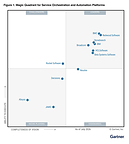
Redwood Software has been named a Leader three years in a row in the 2026 Gartner® Magic Quadrant™ for Service Orchestration and Automation Platforms (SOAP), positioned furthest in Completeness of Vision.Redwood has been ranked #1 in four out of five Use Cases and tied for #1 in one Use Case in the 2026 Gartner Critical Capabilities for SOAP report.Redwood’s Model Context Protocol (MCP) server has reached general availability, offering 50+ production-ready tools across nine global AWS regions.New native AWS connectivity — spanning S3, EventBridge and AWS Glue — extends RunMyJobs across the hybrid estate without re-architecting existing systems.Three additional AI capabilities — Operations Agent, Workflow Builder and Agent Studio — extend RunMyJobs toward autonomous, agentic enterprise operations, validated with Microsoft Copilot, SAP’s Joule and Claude Code.

VIENNA, Va., Aug. 27, 2026 /PRNewswire/ — Redwood Software, the leading orchestration platform for the autonomous enterprise, today announced its recognition as a Leader in the 2026 Gartner® Magic Quadrant™ for Service Orchestration and Automation Platforms (SOAP) and its #1 ranking in four of five Use Cases and tie for #1 in the fifth Use Case in the Critical Capabilities report. Alongside this, Redwood released RunMyJobs 2026.3, bringing native AWS connectivity and its Model Context Protocol (MCP) server to general availability while introducing new AI capabilities to accelerate autonomous operations.

Orchestrating the enterprise, from hybrid cloud to agentic AI

Enterprises with AI mandates face the challenge of turning AI from experimentation into operations. RunMyJobs 2026.3 helps close the gap between AI reasoning and enterprise action by unifying execution across hybrid systems and removing the infrastructure constraints that slow innovation on legacy workload automation tools. The latest release delivers:

MCP server & native AWS connectivity: Redwood’s MCP server, validated with Microsoft Copilot, SAP’s Joule and Claude Code, provides AI models governed access to 50+ tools across nine global AWS regions with full auditability, instantly agentifying decades of business logic. Native AWS integration (S3, EventBridge, Glue) allows real-time orchestration across the hybrid estate without re-architecting systems.

Bi-directional agentic AI governance & Agent Studio*: Support for MCP and Agent2Agent (A2A) protocols enables AI agents to trigger workflows and lets teams build agents that enhance orchestrations under the same governance model as the entire business process chain. Agent Studio embeds LLM-powered reasoning as native job types within existing workflows.

Workflow Builder & Operations Agent*: Workflow Builder generates auditable workflows from plain English descriptions or documentation. Operations Agent detects failures and SLA risks in real time, delivering enriched context to operators for faster autonomous responses.

“AI agents can reason about a problem, but they can’t fix it unless they’re connected to the systems that run the business,” said Charles Crouchman, Chief Product Officer at Redwood Software. “We believe our recognition as a Leader and the availability of our MCP server and AWS connectivity validate that the market is shifting toward governed, agentic orchestration that operates within the enterprise’s existing trust model.”

Gartner recognition

The Gartner Magic Quadrant™ for SOAP evaluates vendors on Ability to Execute and Completeness of Vision. Redwood Software was positioned furthest in Completeness of Vision for the third year in a row. Redwood attributes this placement to its 2026 intelligent automation expansions, including native support for MCP and A2A protocols, the new Redwood RangerAI assistant portfolio and Redwood Insights Premium.

The Critical Capabilities report “provides deeper insight into providers’ product and service offerings by extending the Magic Quadrant™ analysis.”** Redwood attributes this positioning to its commitment to customer success and driving efficient business transformation.

View a complimentary copy of the Magic Quadrant™ report to learn more about why Redwood Software was positioned as a Leader: https://www.redwood.com/resource/gartner-soaps-mq/ 

View a complimentary copy of the Critical Capabilities report to learn more about why Redwood Software ranked first in four SOAP Use Cases and tied for first in one Use Case: https://www.redwood.com/resource/gartner-critical-capabilities-soaps/ 

*Workflow Builder, Operations Agent and Agent Studio are currently in tech preview.

**Source: Gartner Critical Capabilities Research Methodology

Report citations: Gartner, Inc., Magic Quadrant for Service Orchestration and Automation Platforms, Hassan Ennaciri, Daniel Betts, Chris Saunderson, 5 August 2026. Gartner, Inc. Critical Capabilities for Service Orchestration and Automation Platforms. Chris Saunderson, Hassan Ennaciri, Daniel Betts, etl. 24 Aug 2026.

Gartner disclaimer: GARTNER is a registered trademark and service mark of Gartner, Inc. and/or its affiliates in the U.S. and internationally. MAGIC QUADRANT is a registered trademark of Gartner, Inc. and/or its affiliates and is used herein with permission. All rights reserved. Gartner does not endorse any vendor, product or service depicted in its research publications, and does not advise technology users to select only those vendors with the highest ratings or other designation. Gartner research publications consist of the opinions of Gartner’s research organization and should not be construed as statements of fact. Gartner disclaims all warranties, expressed or implied, with respect to this research, including any warranties of merchantability or fitness for a particular purpose.

About Redwood Software

Redwood Software is the leading orchestration platform for the autonomous enterprise, driving business transformation at the lowest total cost of ownership. Redwood empowers organizations to intelligently automate and orchestrate mission-critical business and IT processes across complex ERP, hybrid cloud, data and emerging agentic AI systems. Through its SaaS-first automation fabric — with AI embedded across the automation lifecycle — Redwood accelerates the path to autonomous operations. Backed by 30 years of experience and trusted by more than 50% of the Fortune 50, Redwood helps organizations unlock human potential to focus on innovation, growth and what’s next.

Media Contact: 

redwood@nextpr.com

View original content to download multimedia:https://www.prnewswire.com/news-releases/redwood-software-orchestrates-the-enterprise-from-hybrid-cloud-to-agentic-ai–named-a-leader-for-the-third-consecutive-year-in-the-2026-gartner-magic-quadrant-for-service-orchestration-and-automation-platforms-302861943.html

SOURCE Redwood Software

Continue Reading

Technology

Harness Launches Code Repository With AI Code Review for Agent-Ready Development

Published

on

By

Built for the volume of AI-generated code, with permissions for AI agents, reviews that keep pace, an enterprise free plan, and one-click migration from existing Git providers

SAN FRANCISCO, Aug. 27, 2026 /PRNewswire/ — Harness, the platform for the autonomous SDLC, today launched Agent-Ready Harness Code Repository and AI Code Review, built for teams increasing their adoption of AI coding agents. The capabilities are designed to work as one experience: code lands in a repository built for the volume now generated by agents, and is reviewed by a system that understands what a change puts at risk.

Coding stopped being the hard part

Generating code is no longer the constraint. With agents in the loop, teams produce far more code, far faster, than they could alone, and the work has shifted to what happens next: storing, reviewing, approving, and shipping all of it without anything breaking.

The tools underneath were not built for that. Legacy source code management tools in wide use today, GitHub included, assume a human writes code and opens a pull request before a few colleagues look at it over the next few hours or days. When agents are doing the writing, the cracks show up in ordinary places: search and file history get slower as indexing falls behind, pull requests pile up faster than anyone can read them, and a permission system designed around a list of developers has no good answer for an agent that might merge code on its own. Harness has now rebuilt that layer.

“Software delivery is going through its biggest shift since the move to the cloud, and the systems we all built our workflows around were designed for a different scale and a different kind of user,” said Jyoti Bansal, CEO and co-founder of Harness. “You do not solve that by adding AI features to a repository designed fifteen years ago. The entire SDLC has to become autonomous, which means the repository, the review, the pipeline, and the governance must all work as one system.”

Inside Agent-Ready Harness Code Repository

Harness Code Repository is what source control looks like when agents are part of the team.

Keeps up as commit and pull request volume increases: Harness Code Repository is scale-tested to handle thousands of pull requests and commits opened at once, which is roughly what a team running agents looks like on an ordinary day. Search, history, and diffs keep working at that volume, across repositories of varying sizes and with branches in the tens of thousands.Agents get their own permissions: Agents inherit permissions from humans that trigger them. Developers can further define what an agent may touch, merge, or deploy, just as they would scope a new engineer, down to a specific repository, branch, or environment. RBAC and Open Policy Agent (OPA) policies put that boundary in writing rather than leaving it to convention, so it holds before the merge instead of turning up in an audit afterward.Tailored to be used by humans and agents via MCP and CLI: Harness Code Repository and AI Code Review are both reachable from the command line through the Harness MCP and CLI, which covers the full pull request lifecycle, allowing users to find a review by the author’s email instead of an internal ID, see every open pull request across every repository in one place, and create, reply to, or resolve comment threads without opening a browser. AI agents can leverage Harness CLI commands to execute Harness Code and Review operations more deterministically and in headless mode.Free to start, simple to migrate: Any team can start using Harness Code Repository for free, with 50 GB storage. Migration takes a few clicks, regardless of whether organizations are migrating one repository or an entire GitHub organization, GitLab group, Bitbucket workspace, or Azure DevOps project, and the Harness CLI brings pull requests, labels, webhooks, and branch rules along with it.

AI Code Review

A repository that can withstand a flood of code does not help if a human still has to review all of it. AI Code Review reads a pull request the way a tech lead would.

Checks that gate the merge. Teams decide which AI Checks are mandatory, setting them once for an account or tuning them by project, and a change that fails a required check cannot be merged.Diff grouping by risk. The diff is grouped by risk rather than by file, so the few high-risk changes that alter how the software behaves are not buried under mass renames and dependency bumps.One-click remediation. Feedback describes what a change puts at stake rather than noting that a line moved, and suggested reviewers and labels arrive before anyone opens the pull request. If the feedback is valid, changes can be merged with a single click.

Agents can write code, but someone still has to decide what ships. AI Code Review is built so that the decision is an informed one instead of a rushed one.

One platform, from commit to production

Committing, reviewing, building, testing, securing, and deploying code already follow a single sequence inside Harness, which is why the repository and the review layer could ship together. Both are now part of the outer loop that the Harness Software Delivery Agent runs end-to-end, from commit to production, under one policy engine.

That sequence is also what makes the review useful. Harness already knows how a team releases software, which policies they enforce, and what has failed in their production before. All of that is mapped in the Harness SDLC Knowledge Graph, providing enterprise context for every review to reference.

By dogfooding these capabilities over the past several months, Harness engineering teams have saved more than 10,000 hours of manual review time per month.

Availability

Agent-Ready Harness Code Repository and AI Code Review are available today – book a demo to learn more.

About Harness

Harness is the AI Software Delivery Platform™ company, enabling engineering teams to build, test, and deliver software faster and more securely. Powered by Harness AI and the Software Delivery Knowledge Graph, the platform brings intelligent automation to every stage of the software delivery lifecycle after code — removing toil and freeing developers from manual, repetitive work. Companies like United Airlines, Morningstar, and Choice Hotels use Harness to accelerate releases by up to 75%, cut cloud costs by 60%, and achieve 10x efficiency across DevOps. Based in San Francisco, Harness is backed by Goldman Sachs, Menlo Ventures, IVP, Unusual Ventures, and Citi Ventures.

View original content to download multimedia:https://www.prnewswire.com/news-releases/harness-launches-code-repository-with-ai-code-review-for-agent-ready-development-302861964.html

SOURCE Harness

Continue Reading

Trending