Connect with us

Technology

iRobot Introduces World’s Most Advanced 2-in-1 Robot Vacuum and Mop with Thoughtful iRobot OS 5.0 Updates

Published

on

First truly hands-free 2-in-1 with a fully retractable mop pad: Roomba Combo™ j7+ simultaneously vacuums and mops with no wet carpet messes

iRobot OS 5.0 lets j7 Series robots avoid more objects and clean more specific places; provides greater voice and personalization control across product lineup

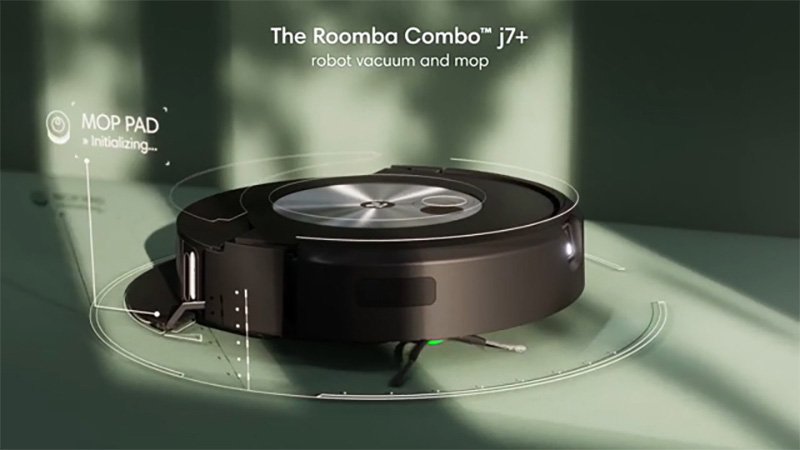
BEDFORD, Mass., Sept. 27, 2022 /PRNewswire/ — iRobot Corp. (NASDAQ: IRBT), a leader in consumer robots, today introduced the Roomba Combo™ j7+, the world’s most advanced robot vacuum and mop, along with thoughtful iRobot OS 5.0 updates. Designed for busy households with a mixture of carpets, rugs and hard floors, and those who want a robot vacuum that can also mop, the Roomba Combo j7+ stands out from other 2-in-1 robots by vacuuming and mopping in a single cleaning job, saving time while keeping floors fresh and clean. This is possible thanks to a fully retractable mop pad that lifts itself to the top of the robot when it encounters carpet and rugs – the first 2-in-1 of its kind – preventing wet carpet messes. iRobot OS 5.0 introduces new features and digital experiences that improve intelligence and personalization across the company’s portfolio of connected robots – offering even more thoughtful updates for pet owners, busy families and those looking for more control over how they clean.

Experience the full interactive Multichannel News Release here: https://www.multivu.com/players/English/9090251-irobot-introduces-worlds-most-advanced-robot-vacuum-and-mop/ 


“iRobot OS provides the intelligence that powers our robots. It brings to life thoughtful and intelligent home products that respect, connect and understand the user’s home and lifestyle, helping our robots become a valued and trusted partner in the home,” said Colin Angle, chairman and CEO of iRobot. “The Roomba Combo j7+ perfectly marries iRobot OS intelligence with beautifully designed hardware to give customers a vacuum and mop solution like no other, capable of keeping carpet, rugs and hard floors cleaner and fresher every day, so customers can live their life. With Roomba celebrating its 20th birthday this year, iRobot OS is also giving our connected product lineup the gift of more intelligence, letting customers’ existing robots clean in new ways.”

The World’s Most Advanced Robot Vacuum and Mop – Roomba Combo j7+
“Until today, many 2-in-1 robot vacuums and mops delivered a poor user experience either because they required separate, time-consuming cleaning jobs or created more mess by not fully lifting the mopping pad high enough to avoid carpet and rugs. The Roomba Combo j7+ uniquely solves both of these challenges,” said Keith Hartsfield, chief product officer at iRobot. “And thanks to iRobot OS, your Roomba Combo j7+ will get smarter over time because it will automatically download new capabilities whenever we release them. So, when new enhancements are developed, your robot gets them too, like magic.”

Unlike other 2-in-1s, the Roomba Combo j7+ vacuums rugs and carpets first and then vacuums and mops hard floors concurrently, saving users time by cleaning the area in a single job. Using advanced sensors, the robot is able to detect various floor types. When the Roomba Combo j7+ approaches carpet and rugs, its fully retractable mop arms lift the wet pad to the top of the robot – in a similar way that a convertible raises its roof – preventing wet messes.

Thanks to iRobot OS and the robot’s PrecisionVision Navigation system, customers don’t have to worry about cleaning up before the cleaning begins. The Roomba Combo j7+ recognizes more than 80 common objects,1 which enables the robot to clean more specific places on command, like around kitty litter boxes, toilet bowls, dishwashers and more. It also allows the robot to detect and avoid floor hazards like cords, clothes, shoes, socks, backpacks, pet bowls, pet toys and solid pet waste. To make cleaning even easier, pair the robot with your voice assistant and simply tell it to clean specific rooms or by specific objects in your home, and it does what you ask instantly.2 The Roomba Combo j7+ understands approximately 600 voice commands, more than any other 2-in-1. Users can customize their Roomba Combo j7+ cleaning jobs in the iRobot Home app, choosing which rooms should be vacuumed and mopped or vacuumed only, and adjust the amount of cleaning solution they want the mop to dispense.

The Only Mop That Lifts High to Keep Carpets Dry
Other 2-in-1 mops lift only a few millimeters – if at all – and, as a result, can leave wet messes on many carpets or rugs. The Roomba Combo j7+ is the only 2-in-1 with a mop that lifts itself to the top of the robot, completely away from carpet and rugs. Two fully retracting, durable, metal mop arms raise the mop pad when the robot senses carpet and rugs, preventing unwanted wet messes.

The First Truly Hands-Free Vacuum and Mop Robot
Using the Roomba Combo j7+ is simple. The robot senses when a mop pad is attached and the mopping solution tank is full – and then goes into mopping mode automatically. Other 2-in-1s have a mop that you must manually attach yourself after the vacuuming is done, adding extra work and time. With the Roomba Combo j7+, the mop arm is already attached and ready to go. For vacuuming, it also comes with the Clean Base® Automatic Dirt Disposal system so you can forget about vacuuming for months at a time. The Clean Base allows the Roomba Combo j7+ to empty the dirt and debris it collects into an enclosed bag that doesn’t need to be replaced for up to 60 days.

iRobot OS 5.0 Home Intelligence – Clean Where You Want, When You Want
iRobot OS delivers a premium and customizable experience for all customers, including pet owners, busy families and anybody looking for more control over how they clean. As part of iRobot’s continued development of iRobot OS, the company is introducing new features and thoughtful digital experiences that improve intelligence, personalization and control across its portfolio of connected Roomba robot vacuums and Braava jet™ robot mops.3 Expanded object recognition allows more cleaning on command, navigation of every floor’s obstacle course and a continued focus on delivering more pet features than any other robot.3

Clean More Specific Places on Command – The iRobot OS visual vocabulary is expanding with new Clean Zone recommendations. In addition to previously announced objects like couches, tables, counters and holiday trees, Roomba robot vacuums with Imprint® Smart Mapping and the Braava jet m6 robot mop can now automatically detect and proactively recommend Clean Zones around dishwashers, toilets, ovens/stoves, litter boxes and pet bowls.3 Users are also able to customize their Smart Map by designating their own precision Clean Zones. Using Alexa or Google Assistant-enabled devices, users can instruct their robot to clean these zones with just their voice, such as, “Alexa, tell Braava jet m6 to mop around the toilet.”2Avoids More of the Objects You Want It to Avoid – Roomba j Series robot vacuums can detect and avoid even more floor hazards than before, providing greater peace of mind that the job will get done for busy families and pet owners. Roomba j Series robots will now recognize and avoid pet toys, pet bowls, litter boxes and backpacks, in addition to previously supported items like shoes/slippers, socks, cords, headphones, clothing, towels and solid pet waste.Skip a Room on the Fly – Things do not always go as planned, including your cleaning routine. Now you can skip a room during a current cleaning job to avoid unwanted interruptions or when life throws you a curveball. Pressing the Skip button in the iRobot Home App or using your voice with Alexa will skip the room or zone that the robot is currently cleaning and move onto the next room or area, allowing you to continue your day uninterrupted.Use More Siri Shortcuts – iOS users can now create Siri Shortcuts for directed room cleaning and saved “favorites” from the iRobot Home App. Now you can use your voice to ask Siri to clean areas like the living room or dining room. Or you can start a cleaning job using your voice from your saved favorites in the iRobot Home App. For example, you can say, “Hey Siri, clean after dinner,” and your Roomba or Braava jet m6 will clean the rooms you designated as that favorite.

iRobot Commitment to Customer Data, Privacy and Security
iRobot products and iRobot OS are backed by the company’s commitment to customer privacy and data security. All data is kept secure from start to finish, incorporating multiple layers of protection around the company’s robots, cloud and app. iRobot treats customer data with the highest standards of privacy protection, and to that end, has obtained the globally recognized TRUSTe Certified Privacy Seal. Customers may update their settings in the app at any time, empowering them to determine what information iRobot may access. iRobot does not, and will not, sell customer data.

“At iRobot, protecting customer data and privacy is of the utmost importance as we explore the path forward for home robotics and the future of the home,” continued Colin Angle. “We know that customers welcome us into their homes because they trust that our products will help them do more, and that we will respect their information. We take that trust seriously.”

iRobot is also the first consumer robot company to achieve the third-party TÜV SÜD Cyber Security Mark, a more stringent framework that goes beyond the industry standard, for the Roomba j7/j7+ robot vacuum. The company is currently pursuing this same level of certification for the Roomba Combo j7/j7+ robot vacuum and mop.

Pricing & Availability:

North America:
The Roomba Combo j7+ is available for pre-sale beginning September 27 in the U.S. for $1,099 USD on iRobot.com, with shipments beginning October 4. It will be available for purchase in Canada beginning October 4. The Roomba Combo j7+ will be available at select retailers throughout North America beginning in October. It will also be available as part of the iRobot Select membership program in 2023.

Rest of World:
The Roomba Combo j7+ is also available in Europe beginning October 4, with availability in other international markets throughout Q4 2022.

iRobot OS 5.0 updates have begun rolling out to customers worldwide.

For more information:
Roomba robot vacuum and Braava jet robot mop photos, videos and information can be found at: http://media.irobot.com/media-kits.

iRobot’s Privacy Principles can be found here.

Please join iRobot on FacebookInstagramTikTokTwitter, and YouTube.

Follow iRobot CEO Colin Angle on Twitter and LinkedIn.

1Robot behavior varies by object.
2Works with Alexa, Google Assistant enabled devices and Siri. Alexa and all related logos are trademarks of Amazon.com or its affiliates. Google is a trademark of Google LLC. Siri is a registered trademark of Apple Inc., registered in the U.S. and other countries and regions.
3Certain iRobot OS digital features will only work with Imprint® Smart Mapping robots, like the Roomba i Series, Roomba s Series, Roomba j Series robot vacuums and Braava jet m6 robot mops. Timing and availability of iRobot OS features may also differ based on model.

About iRobot Corp.
iRobot is a global consumer robot company that designs and builds thoughtful robots and intelligent home innovations that make life better. iRobot introduced the first Roomba robot vacuum in 2002. Today, iRobot is a global enterprise that has sold millions of robots worldwide. iRobot’s product portfolio features technologies and advanced concepts in cleaning, mapping and navigation. Working from this portfolio, iRobot engineers are building robots and smart home devices to help consumers make their homes easier to maintain and healthier places to live. For more information about iRobot, please visit www.irobot.com.

For iRobot Investors
Certain statements made in this press release that are not based on historical information are forward-looking statements which are made pursuant to the safe harbor provisions of the Private Securities Litigation Reform Act of 1995. This press release contains express or implied forward-looking statements relating to iRobot Corporation’s expectations concerning new product availability and new product features, including features that expand product performance over time, and privacy certifications. These statements are neither promises nor guarantees, but are subject to a variety of risks and uncertainties, many of which are beyond our control, which could cause actual results to differ materially from those contemplated in these forward-looking statements. Existing and prospective investors are cautioned not to place undue reliance on these forward-looking statements, which speak only as of the date hereof. iRobot undertakes no obligation to update or revise the information contained in this press release, whether as a result of new information, future events or circumstances or otherwise. For additional disclosure regarding these and other risks faced by iRobot, see the disclosure contained in our public filings with the Securities and Exchange Commission including, without limitation, our most recent Annual Report on Form 10-K.


View original content:https://www.prnewswire.com/news-releases/irobot-introduces-worlds-most-advanced-2-in-1-robot-vacuum-and-mop-with-thoughtful-irobot-os-5-0-updates-301633655.html

SOURCE iRobot Corporation

Continue Reading
Click to comment

Leave a Reply

Your email address will not be published. Required fields are marked *

Technology

BREAKTHROUGH PRIZE ANNOUNCES 2026 LAUREATES

Published

on

By

Six $3 Million Prizes Awarded for Outstanding Discoveries in Life Sciences, Fundamental Physics and Mathematics

Gene Therapies for Inherited Blindness, Sickle Cell Disease and Beta-Thalassemia

Discovery of Key Genetic Cause of ALS and Frontotemporal Dementia

Precision Measurement of Muon’s Magnetic Moment

Advances in Mathematics of Waves and Nonlinear Systems

Special Prize for Pioneer of Theory of Strong Nuclear Force

Breakthrough Prize in Life Sciences Awarded to Jean Bennett, Katherine A. High and Albert Maguire; Stuart H. Orkin and Swee Lay Thein; Rosa Rademakers and Bryan Traynor

Breakthrough Prize in Mathematics Awarded to Frank Merle

Breakthrough Prize in Fundamental Physics Awarded to Muon g-2 Collaborations at CERN, Brookhaven National Laboratory, and Fermilab

Special Breakthrough Prize in Fundamental Physics Awarded to David J. Gross

Inaugural Vera Rubin New Frontiers Prize Awarded to Carolina Figueiredo

Six New Horizons Prizes Awarded for Early-Career Achievements in Physics and Mathematics

Three Maryam Mirzakhani New Frontiers Prizes Awarded to Women Mathematicians for Early-Career Work

Laureates to be Celebrated Tonight at Breakthrough Prize Ceremony in Los Angeles

LOS ANGELES, April 19, 2026 /PRNewswire/ — The Breakthrough Prize Foundation today announced the winners of the 2026 Breakthrough Prizes, honoring scientists whose discoveries are significantly driving growth of human knowledge. In the Life Sciences, their work has led to gene therapies for three devastating diseases – inherited blindness, sickle cell disease and beta-thalassemia, and identified a key genetic cause of two more – ALS and frontotemporal dementia. In Physics and Mathematics, they have constructed theories of the fundamental forces of nature and probed them to mind-blowing precision, and revealed deep truths about the mathematical behavior of waves.

The Breakthrough Prizes – popularly known as the “Oscars® of Science” – were created to celebrate the wonders of our scientific age. Co-founded by Sergey Brin, Priscilla Chan and Mark Zuckerberg, Julia and Yuri Milner, and Anne Wojcicki, the prizes are now in their 14th year.

This year, six Breakthrough Prizes of $3 million each were awarded. In addition, the Foundation recognized 15 early-career physicists and mathematicians, who share six $100,000 New Horizons Prizes. Three women mathematicians recently completing PhDs each receives a $50,000 Maryam Mirzakhani New Frontiers Prize.

This year’s prize money totals $18.75 million, bringing the amount conferred over the 15 years of the Breakthrough Prize to more than $340 million.

“This year’s laureates show what great science can do — deepen our understanding of the world and lead to discoveries that improve millions of lives,” said Mark Zuckerberg and Dr. Priscilla Chan, founders of Biohub. “We’re proud to recognize their work.”

“The brilliant scientists who win the Breakthrough Prize,” said Yuri Milner, co-founder of Breakthrough Prize Foundation, “Are building a cathedral of knowledge on foundations laid down by the giants who came before them. We owe our civilization – and its future – to them.”

Breakthrough Prize in Life Sciences

Jean Bennett, Katherine A. High and Albert Maguire share the Breakthrough Prize in Life Sciences. This prize recognizes work that led to the first FDA–approved gene replacement therapy. It has transformed the lives of people born with Leber congenital amaurosis, a rare inherited retinal disease that usually results in total blindness in early adulthood, enabling children who had been going blind to gain their independence, attend regular schools, play outside at night, and in some cases even qualify for driver’s licenses. The therapy replaces the defective RPE65 gene, which produces a malfunctioning version of a protein critical to the visual cycle – the process by which the retina responds to light. The husband-and-wife team of molecular biologist Bennett and ophthalmic surgeon Maguire invented and developed the therapy from first conception to an effective treatment in animal models (including restoring sight to a number of Swedish Briard dogs which they went on to adopt). In 2005, High, a physician-scientist at Children’s Hospital of Philadelphia (CHOP) invited Bennett and Maguire to collaborate on a human trial. High’s laboratory and clinical gene therapy expertise proved crucial in the development of the approved drug, including gaining regulatory approval to conduct the initial clinical trials, and in directing the production and characterization of high-quality viral vector preparations used to introduce the replacement gene. The three physician-scientists worked together to design the pivotal trial, including developing and validating a novel clinical endpoint to measure the vector’s clinical effect.

Nearly all eligible Leber congenital amaurosis patients with RPE65 mutations in the United States have now been treated, and many others around the world are now gaining access to the therapy. The benefits have proved durable, with patients treated over a decade ago maintaining stable vision improvements. More broadly, this discovery demonstrated that the technology could work safely and effectively, establishing regulatory pathways and manufacturing approaches that opened the door to gene therapy approvals for a range of genetic diseases. Since their pioneering work, hundreds of trials, including over 100 retinal gene therapy trials have been conducted, with more than half a dozen currently in late-stage clinical testing.

Stuart H. Orkin and Swee Lay Thein share the Breakthrough Prize in Life Sciences. Their research transformed the devastating blood disorders sickle cell disease and beta-thalassemia from incurable to treatable conditions through gene editing therapy.

In beta-thalassemia the body fails to produce enough healthy hemoglobin; while in sickle cell disease, defective hemoglobin causes red blood cells to become stiff, sticky and sickle-shaped. But people who produce elevated levels of fetal form of hemoglobin as adults, rather than switching entirely to adult hemoglobin, have much milder forms of the diseases. This presented a tantalizing possibility for translational medicine: genetically switching fetal hemoglobin production back on, and so mitigating disease symptoms. Thein mapped the trait of persistent fetal hemoglobin production to chromosome 2, and subsequently identified the gene BCL11A as the key genetic player. Orkin demonstrated that BCL11A functions as the master repressor of fetal hemoglobin, shutting down its production after birth, and that inactivating it restored fetal hemoglobin production in mice and eliminated sickle cell disease symptoms. His laboratory identified a specific DNA enhancer region that controls BCL11A expression itself, but crucially only in red blood cells, providing a precise and safe target for therapeutic intervention without affecting other cells.

The translation of these discoveries into a CRISPR-based gene therapy (Casgevy) that edits this enhancer region in patients’ own blood stem cells resulted in the first CRISPR-based medicine approved for any disease. This work has revolutionized treatment for sickle cell disease and beta-thalassemia, providing a potentially curative one-time therapy for conditions affecting millions worldwide.

Rosa Rademakers and Bryan Traynor independently solved a decades-old mystery in neurodegenerative disease by discovering the most common genetic cause of both amyotrophic lateral sclerosis (ALS), also known as Lou Gehrig’s disease, and frontotemporal dementia (FTD), the second leading cause of early-onset dementia. Through multi-year, international collaborations, they collected large-scale data from families where both ALS and FTD appeared together; and through painstaking genetic analysis they zeroed in on a key genetic trigger for both diseases. In 2011, their labs simultaneously identified a mutation in the C9orf72 gene. It is an expansion mutation – a repeat of the same six-letter sequence of DNA, occurring hundreds to thousands of times in affected individuals.

The discovery represents a landmark moment in the study of these diseases. This single mutation explains about a third of familial cases of both diseases in European populations, as well as more than five percent of cases in patients with no family history of the diseases. It sheds light on the disease mechanisms, pointing in particular to multiple effects of toxic RNA and proteins in brain cells. It has established ALS and FTD – previously considered two largely separate disorders – on a disease spectrum, sharing risk factors and molecular causes. And perhaps most significantly it has enabled genetic testing for affected families, and opened new pathways for the development of treatments for these currently incurable diseases – including at least two therapies currently undergoing clinical trials. While ALS and FTD remain incurable, thanks to the C9orf72 discovery they are now conditions with plausible molecular causes and promising therapeutic targets.

Breakthrough Prize in Mathematics

Frank Merle’s work has significantly advanced the modern understanding of nonlinear evolution equations – the mathematical descriptions of how waves, fluids, and other dynamic systems change over time. His work has a particular focus on singularities: points where solutions to the equations surge to infinity. Alone and in collaborations, he has solved several fundamental problems, including proving that certain equations long thought to be well-behaved actually “blow up” – become infinite – in finite time.

Working on the soliton resolution conjecture (which predicts that any wave disturbance will eventually decompose into a set of stable, shape-preserving waves), Merle and Carlos Kenig, joined later by Thomas Duyckaerts, developed the powerful channels of energy technique coupled with the concentration compactness method. With Yvan Martel and Pierre Raphael, he revealed how singularities form in the KdV type equation (which describes various wave phenomena from shallow waves to rogue waves). Perhaps most remarkable is his work on the nonlinear version of the famous Schrödinger equation from quantum physics. In early work, he made a complete classification of all the ways this equation’s solutions can blow up. Later he proved, with Pierre Raphael, Igor Rodnianski, and Jérémie Szeftel, that the defocusing version of the equation – long believed to be inherently stable – can in fact blow up in finite time. This highly surprising result exploited an unexpected connection to fluid dynamics: it helped to resolve a major open problem, identifying smooth solutions to the compressible Euler and Navier-Stokes equations where the fluid’s density and velocity become infinite – representing a complete breakdown of the fluid description. Throughout his career, Merle’s insights have overturned fundamental assumptions in the field, forged deep connections between mathematics and physics, and opened new avenues toward some of the most celebrated unsolved problems.

Breakthrough Prize in Fundamental Physics

Across more than six decades, scientists and engineers from three “muon g-2” collaborations, representing dozens of institutions, have pushed experimental precision ever higher in pursuit of a single, very significant number: the anomalous magnetic moment of the muon. The muon is a heavy, unstable cousin of the electron, and like the electron it can behave like a tiny magnet. The physicists are looking to capture how the muon’s magnetic strength is subtly affected by the “foam” of virtual particles constantly popping in and out of empty space around it. Measuring the muon’s magnetism and comparing it to theoretical predictions allows physicists to test whether any unknown particles or forces are hidden in this foam. In other words, to probe for new physics beyond the Standard Model, our most successful theory of particles and forces.

The CERN collaboration’s pioneering storage ring experiments of the 1960s and 1970s first measured the anomalous magnetic moment with meaningful precision. Then in the 1990s, Brookhaven National Laboratory’s reimagining of the experiment achieved a major improvement in precision. And after the audacious transportation of Brookhaven’s 50-ton, 15-meter-diameter storage ring 3,200 miles by road and barge to Fermilab in 2013, the experiment was systematically refined to achieve a final precision of 127 parts per billion – a mind-boggling 30,000 times more precise than the first g-2 experiment in 1965. The results had shown a tantalizing discrepancy with the value predicted by theory; and in 2023, Fermilab’s new results pushed that discrepancy close to the threshold considered evidence for new physics. Since then, the final, even more precise results, compared to newly evolved theoretical calculations narrowed the gap, but considerable uncertainty remains for the moment. Whatever the final verdict, this experiment represents a remarkable theoretical, experimental and technological endeavor, achieving extraordinary precision in the quest for fundamental understanding.

Special Breakthrough Prize in Fundamental Physics

David J. Gross has been a leading figure in fundamental physics for six decades. In the early 1970s, there was a gap in quantum field theory, our best theory of particles and forces. The theory could not describe or accurately predict the strong nuclear force, which holds the nucleus of the atom together. But in 1973, Gross and his graduate student Frank Wilczek (as well as, independently, David Politzer) solved the mystery. They discovered that the strong force works the opposite way to familiar forces like gravity: it gets weaker as particles approach each other, but stronger as they move apart. This explained why quarks, the particles inside the atomic nucleus, can never escape or be observed in isolation, and it enabled the development of quantum chromodynamics – the theory of the strong force and the final foundation stone of the Standard Model of particle physics.

Gross has gone on to make seminal contributions across multiple areas of theoretical physics. For example, he and his collaborators developed a simplified quantum field theory that helped explain how particles can acquire mass; and developed new theoretical approaches attempting to unify all fundamental forces, including gravity, in a single framework known as heterotic string theory.

Alongside his theoretical work, Gross has a longstanding record of leadership in the physics community, in roles including Director of the Kavli Institute for Theoretical Physics, and President of the American Physical Society. He has helped establish physics institutes in India, China, and South America. He directed the Jerusalem Winter School in Theoretical Physics and chaired the Solvay Physics Conferences for the last 25 years. In 2025 he was one of the authors of an ambitious 40-year plan for physics on behalf of the National Academies of Sciences, Engineering, and Medicine. And over the course of his career, he has been a mentor to numerous brilliant students who became leaders themselves, passing on his vision of physics as a collaborative international endeavor.

Inaugural Vera Rubin New Frontiers Prize

A new physics prize, the Vera Rubin New Frontiers Prize, will be announced during the ceremony, along with the inaugural recipient, Carolina Figueiredo, from Princeton University. One $50,000 prize is awarded this year; from 2027 there will be 3 per year.

The prize is named in tribute to the great astronomer Vera Rubin, who discovered key evidence for dark matter, and in homage to whom NVIDIA’s new chip platform is named. The new prize recognizes women physicists within two years of their PhDs who have already made important contributions to science.

Carolina Figueiredo discovered that three apparently unrelated theories — two governing nuclear particles called gluons and pions, and the third describing particles in a “toy model” that does not describe the existing world — all forbid exactly the same set of particle collisions. This was a big surprise, as the three theories are quite different, with no reason to think they are connected. Figueiredo’s discovery revealed that the common behavior reflects a single underlying geometric structure: curves drawn on surfaces, within a framework now known as surfaceology. Intriguingly, this structure makes no reference to particles moving through space and time; yet it reproduces the predictions of conventional physics far more efficiently than the traditional approach, which tracks each particle’s movement through these dimensions. Figueiredo’s work thus advances – and perhaps brings closer to the real world – a broader program to reformulate the foundations of particle physics in purely geometric terms, with spacetime as an emergent phenomenon arising from a new set of principles.

New Horizons in Physics Prize

Benjamin R. Safdi has made wide-ranging contributions to the search for the axion, a hypothetical particle that would explain a long-standing puzzle about the strong nuclear force, and could account for the mysterious dark matter that makes up 85 percent of the Universe’s mass. He has proposed ingenious new strategies for detecting axion-like particles using observations of astronomical objects, from radio emissions of neutron stars to X-rays from white dwarfs.

Clay Córdova, Thomas Dumitrescu, Shu-Heng Shao, and Yifan Wang have discovered and developed the theory of “generalized symmetries” in quantum field theory. Symmetries have long been among the most powerful tools in physics. The work of these researchers has shown that the Standard Model of particle physics, as well as other quantum field theories, possess previously unrecognised symmetry structures. Their work has opened a broad new field with applications ranging from falsifying theories beyond the Standard Model to simulating fundamental particles on a lattice.

Dillon Brout, J. Colin Hill, Mathew Madhavacheril, Maria Vincenzi, Daniel Scolnic, and W. L. Kimmy Wu have gleaned powerful new results from the two most important tools for measuring the expansion and composition of the Universe: the cosmic microwave background (CMB) radiation left over from the Big Bang, and light from exploding stars known as Type Ia supernovae. Hill, Madhavacheril, and Wu have pushed analyses of CMB data beyond previous limits, producing the most precise tests to date of the standard cosmological model as well as of gravitational lensing of the CMB – the subtle bending of light from the early Universe by the matter it passes on its way to us. Meanwhile Brout, Scolnic, and Vincenzi built and analysed the largest modern supernova datasets – including Pantheon+, now the most cited supernova analysis in cosmology – delivering tight constraints on dark energy and the rate of expansion of the cosmos.

New Horizons in Mathematics Prize

Otis Chodosh has settled several questions in differential geometry that had been open since the 1970s and 1980s. With Chao Li, he proved a central conjecture in the field concerning a broad class of higher-dimensional spaces known as “aspherical manifolds.” With Christos Mantoulidis, he resolved a key problem in geometric analysis of minimal surfaces – surfaces that locally minimise their area, like soap films.

Vesselin Dimitrov and Yunqing Tang have solved long-standing problems in number theory that had resisted all previous approaches. With Frank Calegari, they proved the “unbounded denominators conjecture,” about a fundamental class of objects known as modular forms, using methods that surprised experts in the field. Most recently, again with Calegari, they proved the irrationality of a number related to a basic infinite series – the first result of its kind since Apéry’s celebrated work forty-five years ago.

Hong Wang has resolved or made advances on a family of notoriously difficult problems in harmonic analysis – a branch of mathematics that studies functions by decomposing them into fundamental components. With Josh Zahl, she proved the Kakeya conjecture in three dimensions, one of the most famous open problems in the field: it concerns how much space is needed to rotate a needle through every possible direction.

Maryam Mirzakhani New Frontiers Prize

Amanda Hirschi has produced a number of significant papers in symplectic topology, a field studying higher-dimensional surfaces with a geometric structure that generalises the mathematics of classical mechanics. With co-authors, she developed a powerful new framework that leads to major simplifications in the foundations of Gromov-Witten theory. Anna Skorobogatova has made notable contributions in geometric measure theory, which uses techniques from analysis to tackle geometric problems such as finding surfaces of minimal area. In a series of papers with collaborators, she resolved a long-standing question about the structure of singularities of area-minimising surfaces, completing a programme that spanned over sixty years. Mingjia Zhang works on higher-dimensional objects in number theory called Shimura varieties. She provided a way to better understand the geometry of Mantovan’s celebrated “product formula” in number theory.

Citations for 2026 Laureates

2026 Breakthrough Prize in Life Sciences

Jean Bennett, University of Pennsylvania

Katherine A. High, University of Pennsylvania, Children’s Hospital of Philadelphia, and Rockefeller University
Albert Maguire, University of Pennsylvania

For developing a therapy for inherited retinal degeneration that became the first FDA-approved gene therapy for a genetic disease.

Rosa Rademakers, VIB, University of Antwerp, and Mayo Clinic
Bryan Traynor, National Institute on Aging, National Institutes of Health

For the discovery of the most common genetic cause of ALS and frontotemporal dementia which charted the path for new mechanistic studies of these diseases.

Stuart H. Orkin, Boston Children’s Hospital, Dana-Farber Cancer Institute, Harvard Medical School, and Howard Hughes Medical Institute
Swee Lay Thein, National Heart, Lung and Blood Institute, National Institutes of Health

For elucidating the mechanism driving the switch from fetal to adult hemoglobin and validating it as a therapeutic target for sickle-cell disease and beta-thalassemia.

2026 Breakthrough Prize in Mathematics

Frank Merle, CY Cergy Paris Université and Institut des Hautes Études Scientifiques

For breakthroughs in nonlinear evolution equations, with regards to their stability, singularity formation, or resolution into solitons.

2026 Breakthrough Prize in Fundamental Physics

The Muon g-2 Collaborations at CERN, Brookhaven National Laboratory, and Fermilab

For multi-decade, groundbreaking contributions to the measurement of the muon’s anomalous magnetic moment, pushing the boundaries of experimental precision and igniting a new era in the quest for physics beyond the Standard Model.

2026 Special Breakthrough Prize in Fundamental Physics

David J. Gross, Kavli Institute for Theoretical Physics, University of California, Santa Barbara

For a lifetime of groundbreaking contributions to theoretical physics, from the strong force to string theory, and for tireless advocacy for basic science worldwide.

2026 Vera Rubin New Frontiers Prize

Carolina Figueiredo, Princeton University

For contributions to the geometric structure of scattering amplitudes, revealing hidden relations among quantum field theories.

2026 Maryam Mirzakhani New Frontiers Prize

Amanda Hirschi, IMJ-PRG, Sorbonne Université

For contributions to symplectic topology.

Anna Skorobogatova, Clay Research Fellow and ETH Zürich

For contributions to geometric measure theory.

Mingjia Zhang, Princeton University and Institute for Advanced Study

For contributions to the theory of Shimura varieties.

2026 New Horizons in Mathematics Prize

Otis Chodosh, Stanford University

For contributions to differential geometry and the calculus of variations, including work on minimal surfaces and manifolds with positive scalar curvature.

Hong Wang, Institut des Hautes Études Scientifiques and New York University

For work in harmonic analysis, partial differential equations, and geometric measure theory, including the local smoothing conjecture, Furstenberg set conjecture, and the Kakeya conjecture.

Vesselin Dimitrov, Caltech
Yunqing Tang, University of California, Berkeley

For work in Diophantine geometry, including the proof of the Atkin-Swinnerton-Dyer unbounded denominators conjecture and new irrationality results for special values of Dirichlet L-series (both joint with Frank Calegari).

2026 New Horizons in Physics Prize

Benjamin R. Safdi, University of California, Berkeley

For proposing new ways to seek axion-like particles with laboratory experiments and astronomical observations.

Clay Córdova, University of Chicago
Thomas Dumitrescu, Mani L. Bhaumik Institute for Theoretical Physics, UCLA
Shu-Heng Shao, MIT
Yifan Wang, New York University

For generalizing the notion of symmetry in various ways, and for exploring the consequences of these generalized symmetries, in quantum field theory, particle physics, condensed matter physics, string theory, and quantum information theory.

Dillon Brout, Boston University
J. Colin Hill, Columbia University
Mathew Madhavacheril, University of Pennsylvania
Maria Vincenzi, University of Oxford
Daniel Scolnic, Duke University
W. L. Kimmy Wu, Caltech

For advances in cosmic microwave background and supernovae cosmology.

Videos and Photos

Assets, including headshots of this year’s winners, can be downloaded for media use here.

Images and select video from the 2026 Breakthrough Prize Gala — red carpet and ceremony — can be downloaded for media use here.

The show will premiere on YouTube on Sunday, April 26th at 3PM Eastern / 12PM Pacific.

For the 14th year, the Breakthrough Prize, renowned as the “Oscars® of Science,” recognizes the world’s top scientists. Each prize is $3 million and presented in the fields of Life Sciences, Fundamental Physics and Mathematics. In addition, up to three New Horizons in Physics Prizes, up to three New Horizons in Mathematics Prizes and up to three Maryam Mirzakhani New Frontiers Prizes are given out to early-career researchers each year. Laureates attend a gala award ceremony designed to celebrate their achievements and inspire the next generation of scientists.

The Breakthrough Prizes were founded by Sergey Brin, Priscilla Chan and Mark Zuckerberg, Julia and Yuri Milner, and Anne Wojcicki and have been sponsored by foundations established by them. Selection Committees composed of previous Breakthrough Prize laureates in each field choose the winners. Information on the Breakthrough Prize is available at breakthroughprize.org.

SOURCE Breakthrough Prize

Continue Reading

Technology

Huawei Cloud Strengthens Thailand’s Insurance Industry with Next-Generation Digital Technologies

Published

on

By

BANGKOK, April 19, 2026 /PRNewswire/ — Huawei Cloud Thailand in collaboration with The Thai Life Assurance Association, hosted an executive forum bringing together more than 30 senior executives and technology leaders from leading insurance companies. The initiative reflects Huawei Cloud’s commitment to strengthening its role as a strategic partner in advancing Thailand’s digital and AI-driven economy, supporting insurance companies in accelerating secure, flexible, and scalable digital transformation through cloud-native infrastructure, advanced database technologies, and industry-specific solutions.

The event served as a platform for industry leaders to exchange insights on the future of the insurance industry in the era of cloud and AI-driven innovation, while exploring how cloud and AI technologies can modernize core insurance systems and enhance operational stability and resilience.

Driving the Future of Digital Insurance

As the insurance industry continues to accelerate its digital transformation, insurers are under increasing pressure to modernize legacy systems in order to support real-time services, rapidly growing data volumes, and evolving customer expectations.

Huawei Insurance Day event aims to position Huawei Cloud as a Strategic Digital Transformation Partner for the insurance industry, helping insurance companies build secure, scalable, and resilient digital infrastructures that can support long-term business growth.

During the event, Huawei Cloud showcased its end-to-end capabilities for the insurance sector, including cloud infrastructure, cloud-native databases, and specialized industry solutions designed to support mission-critical insurance systems.

Key Solutions for Insurance Digital Transformation

Digital Core Insurance Solution
A modernization solution that transform insurance companies migrate from legacy system such as AS/400 systems to cloud-native architectures with A next-generation core insurance architecture that enables insurers to rapidly launch new products, enhance system flexibility, simplifying maintenance and improve overall customer experience.

GaussDB for Mission-Critical Insurance Systems
Huawei’s enterprise-grade database that has been trusted by large financial organization globally, including Thailand. GaussDB designed to support critical workloads with high reliability, security and performance across multiple data centers on Huawei Cloud.

Piyatida Itiravivongs, President of Huawei Cloud Thailand said:

“Digital transformation has become a strategic priority for the insurance industry. Huawei Cloud is committed to supporting insurers in building a strong digital service by combining cloud infrastructure, advanced database technologies, and industry-specific solutions to improve operational efficiency and deliver better customer experiences.”

Meanwhile, Huang Hu, Solution Architect of Sinosoft, said:

“Sinosoft has extensive experience in developing technology platforms for the insurance industry. Through our collaboration with Huawei Cloud, we have successfully modernized insurance systems by adopting cloud-based architectures, helping organizations enhance the performance and stability of their core insurance platforms while supporting long-term business growth.

The success of these projects demonstrates the strong synergy between Sinosoft’s insurance technology expertise and Huawei Cloud’s advanced cloud infrastructure. We hope the experience and case studies shared at this event will provide valuable insights for insurance companies in Thailand as they accelerate their journey toward digital insurance.”

Thailand’s insurance industry is entering a new era in which digital technologies play an increasingly important role in enhancing operational efficiency and improving customer services. Forums such as this provide a valuable platform for industry stakeholders to exchange knowledge and perspectives on emerging technologies and innovations in cloud and digital infrastructure. Such knowledge sharing supports insurance companies in Thailand as they prepare for the ongoing evolution of the digital insurance landscape.

Huawei Cloud will continue to invest in cloud innovation to support the financial services and insurance sectors with secure, reliable, and scalable technologies, enabling sustainable business growth in the digital economy.

About Huawei Cloud Thailand

Huawei Cloud Thailand is a leading cloud service provider committed to accelerating Thailand’s digital transformation under the mission of “In Thailand, For Thailand.” According to the latest report from Gartner, Huawei Cloud is ranked No.2 by revenue in Thailand’s Infrastructure as a Service (IaaS) market, solidifying its position as one of the most trusted and fastest-growing international cloud providers in the country.

As the first international public cloud vendor to establish local data centers in Thailand, Huawei Cloud now operates three Availability Zones, ensuring high reliability and low-latency connectivity for local users. Leveraging Huawei’s 30-plus years of expertise in ICT infrastructure, it integrates cutting-edge Artificial Intelligence (AI), Cloud-Native 2.0, and Big Data technologies to empower over 40 government agencies and thousands of enterprises across the Kingdom. By building a robust digital ecosystem and fostering local talent, Huawei Cloud aims to drive Thailand’s “Digital Economy” forward, bringing cloud and intelligence to every corner of the country for a fully connected, intelligent future.

For more information, please visit Huawei Cloud Thailand online at
https://www.huaweicloud.com/intl/th-th/ or follow us on:
https://www.facebook.com/HuaweiCloudTH
https://www.youtube.com/@HuaweiCloudAPAC

View original content to download multimedia:https://www.prnewswire.com/apac/news-releases/huawei-cloud-strengthens-thailands-insurance-industry-with-next-generation-digital-technologies-302745912.html

SOURCE Huawei Cloud Thailand

Continue Reading

Technology

Breakthrough Prize Foundation Announces Winner of the 11th Annual Breakthrough Junior Challenge

Published

on

By

Matea Cañizarez, Age 18, of Quito, Ecuador, Receives Top Honors and $400,000 in Education Prizes for her Original Video Explaining Quark-Gluon Plasma

SAN FRANCISCO, April 18, 2026 /PRNewswire/ — The Breakthrough Prize Foundation today announced Ecuador-based student Matea Cañizarez as the winner of the 11th annual Breakthrough Junior Challenge, a global competition that empowers young people to creatively communicate complex ideas in the life sciences, physics, and mathematics.

The Breakthrough Junior Challenge will provide $400,000 in educational awards to Matea and her teacher, Roberto Procel. As the student winner, Matea will be granted a $250,000 college scholarship. In recognition of his work as a science teacher, Mr. Procel will receive a $50,000 award. The prize package also includes a cutting-edge science laboratory, designed by Cold Spring Harbor Laboratory and valued at $100,000, to be installed at Colegio Johannes Kepler, Matea’s current school, located in Quito, Ecuador. 

Matea was honored alongside the 2026 Breakthrough Prize laureates at The Breakthrough Prize Ceremony in Los Angeles on April 18, 2026.

“It’s exhilarating to meet bright, curious young people like Matea,” said Julia Milner, co-founder of the Breakthrough Junior Challenge, “And to see them pursuing their passion for ideas and communicating it to others makes me truly hopeful for the future,” said Julia Milner, co-founder of the Breakthrough Prize.

Matea’s winning entry explains quark-gluon plasma, an extreme state of matter that existed just after the Big Bang, in which quarks and gluons move freely instead of being bound inside protons and neutrons. Her short video can be seen here. This was Matea’s first entry to the Breakthrough Junior Prize, and she is currently applying for college next fall.

“Coming from a rural town in Ecuador, my passion for science was not a given. I am humbled by the honor of winning the Breakthrough Junior Challenge and hope to work in the service of society and nature by making the most of this opportunity,” said Matea.

“Congratulations on your beautiful video explaining the quark-gluon plasma,” said David Gross, winner of the 2026 Special Breakthrough Prize in Fundamental Physics, whose theories led directly to the discovery of the phenomenon in Matea’s video. Gross continued, “Very exciting, very well done, and I hope you stay in physics and help us understand even better the properties of the quark-gluon plasma in the laboratory, in the early Universe, and perhaps in the core of neutron stars.”

The Breakthrough Junior Challenge is a global program designed to showcase and advance young people’s understanding of science and core scientific principles, spark enthusiasm for STEM fields, encourage pursuit of STEM careers, and engage the broader public in fundamental scientific concepts. Each year, students ages 13 to 18 are invited to produce original videos of up to two minutes that explain a concept or theory in life sciences, physics, or mathematics.

Entries are judged on how effectively participants communicate complex scientific ideas in clear, compelling, and creative ways.

“Seeing students take on complex topics and explain them with enthusiasm and creativity is inspiring,” said Sal Khan, founder and CEO of Khan Academy and Vision Steward of TED. “Their work is a reminder that when young people are given access and opportunity to explore their interests, they can achieve great things.”

This year, the Breakthrough Junior Challenge attracted more than 2,500 applicants from around the world. Submissions were narrowed down to 30 semifinalists, which represented the top submissions after two rounds of judging: first, a mandatory peer review, followed by an evaluation panel of judges. Sixteen finalists were selected in December 2025.

Celebrating its 11th year, the Breakthrough Junior Challenge has reached a global community of more than 100,000 students, parents, and educators, drawing upwards of 30,000 applications from students in over 200 countries, including Canada, Nigeria, Kazakhstan, the Philippines, Singapore, and the United States. Since its launch, the program has distributed more than $2.5 million in college scholarships, invested $1 million in state-of-the-art science laboratories, and awarded $500,000 to exceptional science and mathematics teachers. Winning submissions have explored subjects ranging from  Mechanogenetic Cellular Engineering, Einstein’s Theory of RelativityCircadian Rhythms, Neutrino Astronomy, and more. Challenge alumni have continued their academic journeys at top-tier universities such as MIT, Harvard, Princeton, and Stanford.

This year’s Selection Committee was comprised of: Thea Booysen, MsC, social media director for neurologist Dr. Richard Isaacson and founder of MadeByHuman; Rachel Crane, space and science correspondent, CNN; Pascale Ehrenfreund, PhD, president, Committee on Space Research COSPAR; Dennis Gaitsgory, professor, Max Planck Institute for Mathematics, and Breakthrough Prize in Mathematics Laureate; John Grunsfelt, PhD astronaut, associate administrator for science, chief scientist at NASA Headquarters; Mae Jemison, physician, former astronaut, entrepreneur; Jeffery W. Kelly, professor of chemistry, Scripps Research Institute and Breakthrough Prize in Life Sciences laureate; Scott Kelly, retired NASA astronaut; Salman Khan, founder and CEO, Khan Academy; Ijad Madisch, CEO, co-founder, ResearchGate; Samaya Nissanke, University of Amsterdam, Breakthrough Prize in Fundamental Physics laureate; Nicole Stott, NASA astronaut, and co-founder of the Space for Art Foundation; Andrew Strominger, professor of physics, Harvard University, and Breakthrough Prize in Fundamental Physics laureate; Terence Tao, UCLA professor and Breakthrough Prize in Mathematics laureate; Esther Wojcicki, founder, Palo Alto High Media Arts Center; Richard Youle, National Institutes of Health, and Breakthrough Prize in Life Sciences laureate; and S. Pete Worden, chairman, Breakthrough Prize Foundation.

Partners

The Breakthrough Junior Challenge
The Breakthrough Junior Challenge, co-founded by Julia and Yuri Milner, is a global science video competition, aiming to develop and demonstrate young people’s knowledge of science and scientific principles and communications skills; generate excitement in these fields; support STEM career choices; and engage the imagination and interest of the public-at-large in key concepts of fundamental science.

The Breakthrough Prize
The Breakthrough Prize, renowned as the “Oscars of Science,” recognizes the world’s top scientists. Each prize is $3 million and presented in the fields of Life Sciences, Fundamental Physics (one per year) and Mathematics (one per year). In addition, up to three New Horizons in Physics Prizes, up to three New Horizons in Mathematics Prizes and up to three Maryam Mirzakhani New Frontiers Prizes are given out to early-career researchers each year. Laureates attend a gala award ceremony designed to celebrate their achievements and inspire the next generation of scientists.

The Breakthrough Prizes were founded by Sergey Brin, Priscilla Chan and Mark Zuckerberg, Julia and Yuri Milner, and Anne Wojcicki. The Prizes have been sponsored by the personal foundations established by Sergey Brin, Priscilla Chan and Mark Zuckerberg, Julia and Yuri Milner and Anne Wojcicki. Selection Committees composed of previous Breakthrough Prize laureates in each field choose the winners. Information on the Breakthrough Prize is available at breakthroughprize.org.

About Khan Academy
Khan Academy is a 501(c)(3) nonprofit organization with the mission of providing a free, world-class education for anyone, anywhere. Since 2008, Khan Academy has provided an education safety net, a free platform designed to provide global access to high-quality learning for students and free resources for teachers. Khan Academy partners with more than 600 school districts in the United States and works with school systems in countries around the world, providing tools that personalize education. Khan Academy is at the forefront of using AI in education to support students while ensuring educators remain at the heart of the classroom. Worldwide, more than 200 million registered learners have used Khan Academy in 190 countries and more than 50 languages. For more information, please see research findings about Khan Academy and our press center.

Cold Spring Harbor Laboratory (CSHL)
The Breakthrough Prize Lab for the winning student’s school is designed in partnership with Cold Spring Harbor Laboratory (CSHL). Founded in 1890, CSHL, an independent 501(c)(3) nonprofit, powers transformational discoveries in cancer, neuroscience, artificial intelligence, plant biology, and quantitative biology. Through world-renowned science and education divisions, CSHL nurtures a culture of curiosity, discovery, and innovation to make lives better. CSHL’s DNA Learning Center (DNALC) is the largest provider of hands-on instruction in genetics and biotechnology, reaching nearly 40,000 middle and high school students through field trips, day camps, summer camps, mentored research projects, and teacher training. For more than a century, CSHL has been a powerful and productive environment for developing, connecting, and sharing world-changing ideas. For more information, visit www.cshl.edu<http://www.cshl.edu/>>.

Contact
For more information, including competition rules, video submission guidelines and queries, go to: breakthroughjuniorchallenge.org.

View original content to download multimedia:https://www.prnewswire.com/news-releases/breakthrough-prize-foundation-announces-winner-of-the-11th-annual-breakthrough-junior-challenge-302746554.html

SOURCE Breakthrough Prize

Continue Reading

Trending