Connect with us

Technology

Software As a Service (SaaS) Market size is set to grow by USD 423.2 billion from 2024-2028, Augmenting use of mobile apps to boost the market growth, Technavio

Published

on

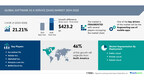
NEW YORK, June 27, 2024 /PRNewswire/ — The global software as a service (SaaS) market  size is estimated to grow by USD 423.2 billion from 2024-2028, according to Technavio. The market is estimated to grow at a CAGR of  21.21%  during the forecast period.  augmenting use of mobile apps is driving market growth, with a trend towards increasing use of vertical SaaS. However, issues associated with system integration  poses a challenge. Key market players include Accenture Plc, Adobe Inc., Alphabet Inc., Amazon.com Inc., BetterCloud Inc., Box Inc., Cisco Systems Inc., Convedo Ltd., Fujitsu Ltd., Hewlett Packard Enterprise Co., Infosys Ltd., International Business Machines Corp., Intuit Inc., Microsoft Corp., Oracle Corp., Salesforce Inc., SAP SE, ServiceNow Inc., Shopify Inc., and Zendesk Inc..

Get a detailed analysis on regions, market segments, customer landscape, and companies – Click for the snapshot of this report

Forecast period

2024-2028

Base Year

2023

Historic Data

2018 – 2022

Segment Covered

Deployment (Public cloud, Private cloud, and Hybrid cloud), End-user (Large enterprises and SMEs), and Geography (North America, Europe, APAC, South America, and Middle East and Africa)

Region Covered

North America, Europe, APAC, South America, and Middle East and Africa

Key companies profiled

Accenture Plc, Adobe Inc., Alphabet Inc., Amazon.com Inc., BetterCloud Inc., Box Inc., Cisco Systems Inc., Convedo Ltd., Fujitsu Ltd., Hewlett Packard Enterprise Co., Infosys Ltd., International Business Machines Corp., Intuit Inc., Microsoft Corp., Oracle Corp., Salesforce Inc., SAP SE, ServiceNow Inc., Shopify Inc., and Zendesk Inc.

Key Market Trends Fueling Growth

Vertical Software as a Service (SaaS) refers to cloud computing solutions designed for specific industries, such as retail, healthcare, or automotive manufacturing. These solutions offer customizable features tailored to clients within these industries and supply chains. Examples include retail analytics software and healthcare business intelligence tools. Enterprises benefit from vertical SaaS due to its industry-specific focus, enabling the generation of valuable customer data and insights. In May 2021, Honeywell International Inc. Launched a cloud-based SaaS solution for building owners and managers, combining operational and business data for improved decision-making and efficiency. Vendors are increasingly offering vertical SaaS to address client demands and expand their customer base. IBM’s Genelco SaaS, designed for the insurance industry, is an example of this trend. The use of vertical SaaS solutions provides significant business value, contributing to the growth of the global SaaS market. 

The Software as a Service (SaaS) market is experiencing significant growth across various application areas like Human Resource Management, Media and Entertainment, and more. Leads and prospects for SaaS are abundant among startups and businesses seeking flexible solutions. Trends include integration with 3D printing technologies and mobile devices. Investment in SaaS is ongoing, with companies like Alphabet’s Google Cloud Marketplace and Microsoft Cloud leading the charge. Business models include Cloud Software, Cloud Consulting Services, and IBM Cloud Integration. Digital transformation brings challenges such as data breaches and cyber-attacks, necessitating focus on data security concerns. Employee well-being and operational efficiency are key considerations. The competitive environment is intense, with Communication Service Providers and IT companies implementing remote work policies. Cloud computing technologies continue to evolve, with hybrid cloud and public cloud offerings from the Cloud Security Alliance. Augmenting company capabilities is a primary goal. However, ongoing costs, including hosting data, electricity, employee fees, and downtime issues, must be managed carefully. 

Research report provides comprehensive data on impact of trend. For more details- Download a Sample Report

Market Challenges

Enterprises are increasingly turning to Software as a Service (SaaS) solutions due to their cost-effectiveness and flexibility compared to traditional IT deployments. However, integrating new software systems and IT infrastructure into existing monolithic architectures poses challenges. Monolithic applications, which combine UI and data access code into a single program, make it difficult to integrate new software. Furthermore, data stored in various formats across different business units can create interoperability issues when migrating to cloud-based software. Lastly, selecting the appropriate integration tool from numerous vendors offering SaaS solutions for various applications, while ensuring hybrid integration capabilities, is a complex task. These integration challenges may hinder the growth of the global SaaS market during the forecast period.The Software as a Service (SaaS) market is experiencing significant growth, with key industries like private cloud, human capital management, operations management, large enterprises in IT and telecom, healthcare, education, B2B and B2C enterprises adopting this model. Challenges include VAT regulations, quarterly earnings reports, and expert opinions on relevant segments. Main drivers are digitization levels, current exchange rates, and country-specific needs. SaaS leaders like AppOmni and Veeva Systems offer Enterprise Resource Planning (ERP) and Customer Relationship Management (CRM) solutions using Artificial Intelligence (AI), Internet of Things (IoT), and Platform as a Service (PaaS). SMEs and small businesses benefit from mobile SaaS growth, allowing access to information, devices, and team partnerships via laptops, tablets, and web browsers on a subscription basis for official purposes. Time and space efficiency are major attributing factors. Deployment is typically cloud-based, ensuring flexibility and ease.

For more insights on driver and challenges – Download a Sample Report

Segment Overview 

This software as a service (saas) market report extensively covers market segmentation by

Deployment 1.1 Public cloud1.2 Private cloud1.3 Hybrid cloudEnd-user 2.1 Large enterprises2.2 SMEsGeography 3.1 North America3.2 Europe3.3 APAC3.4 South America3.5 Middle East and Africa

1.1 Public cloud-  The Software as a Service (SaaS) market continues to grow, with businesses increasingly relying on cloud-based solutions for their software needs. SaaS offers several advantages, including cost savings, flexibility, and ease of use. Companies can access software applications through the internet, eliminating the need for expensive hardware and maintenance. SaaS providers offer regular updates and improvements, ensuring that businesses have access to the latest features. This model allows businesses to focus on their core competencies while leaving the software management to the experts. Overall, the SaaS market is a cost-effective and efficient solution for businesses of all sizes

For more information on market segmentation with geographical analysis including forecast (2024-2028) and historic data (2018 – 2022)  – Download a Sample Report

Research Analysis

The Software as a Service (SaaS) market continues to grow at an unprecedented rate, driven by the increasing level of digitization and the shift towards remote work policies. Communication service providers and B2C enterprises are major contributors to this market, with SaaS products becoming essential for time, space, and information management. Cloud Software, including Google Cloud Marketplace and Microsoft Cloud, dominates the scene, offering a wide range of solutions for businesses of all sizes. IT companies are also leveraging SaaS to provide cloud consulting services and integrate various systems using IBM Cloud Integration. The main drivers of this market include ease of use, cost savings, and flexibility. Current exchange rates and quarterly earnings of key players are closely watched by experts in the relevant segment. SaaS enables team partnerships through laptops, tablets, and other devices, making collaboration more efficient than ever before. VAT and other regulatory considerations are important factors for businesses adopting SaaS solutions.

Market Research Overview

The Software as a Service (SaaS) market is a significant segment of the cloud computing industry, enabling businesses to access and use software applications over the internet on a subscription basis. SaaS offers flexibility, scalability, and cost savings for businesses of all sizes, from SMEs to large enterprises in various industries such as IT and telecom, healthcare, education, B2B, and B2C. Key drivers for SaaS market growth include the level of digitization, remote work policies, and the increasing adoption of cloud computing technologies. Communication Service Providers and IT companies offer SaaS products in areas like Human Capital Management, Operations Management, and Customer Relationship Management. SaaS covers various application areas like Enterprise Resource Planning, Artificial Intelligence, Internet of Things, Robotic Process Automation, and more. The market is shaped by ongoing costs, including hosting data, electricity, and employee fees, as well as downtime issues and the competitive environment. Main drivers for SaaS growth include flexibility, investment, and the shift towards mobile SaaS and cloud-based software services. Relevant segments include public cloud, private cloud, and hybrid cloud solutions. Current exchange rates and country-specific levels of digitization also impact the market. SaaS market statistics show steady growth, with major attributing factors like time, space, information, devices, team partnerships, and official purposes. Key trends include the integration of PaaS, SME adoption, and the impact of net neutrality and VAT on quarterly earnings. Expert opinions and industry reports provide insights into the current state and future prospects of the SaaS market.

Table of Contents:

1 Executive Summary
2 Market Landscape
3 Market Sizing
4 Historic Market Size
5 Five Forces Analysis
6 Market Segmentation

DeploymentPublic CloudPrivate CloudHybrid CloudEnd-userLarge EnterprisesSMEsGeographyNorth AmericaEuropeAPACSouth AmericaMiddle East And Africa

7 Customer Landscape
8 Geographic Landscape
9 Drivers, Challenges, and Trends
10 Company Landscape
11 Company Analysis
12 Appendix

About Technavio

Technavio is a leading global technology research and advisory company. Their research and analysis focuses on emerging market trends and provides actionable insights to help businesses identify market opportunities and develop effective strategies to optimize their market positions.

With over 500 specialized analysts, Technavio’s report library consists of more than 17,000 reports and counting, covering 800 technologies, spanning across 50 countries. Their client base consists of enterprises of all sizes, including more than 100 Fortune 500 companies. This growing client base relies on Technavio’s comprehensive coverage, extensive research, and actionable market insights to identify opportunities in existing and potential markets and assess their competitive positions within changing market scenarios.

Contacts

Technavio Research
Jesse Maida
Media & Marketing Executive
US: +1 844 364 1100
UK: +44 203 893 3200
Email: media@technavio.com
Website: www.technavio.com/

View original content to download multimedia:https://www.prnewswire.com/news-releases/software-as-a-service-saas-market-size-is-set-to-grow-by-usd-423-2-billion-from-2024-2028–augmenting-use-of-mobile-apps-to-boost-the-market-growth-technavio-302184126.html

SOURCE Technavio

Continue Reading

Technology

DataOne Adds Massachusetts Registration and Sales Data to Cross-Sell Reports for Auto Dealers, Expanding State Coverage to 40 States

Published

on

By

BEVERLY, Mass., Oct. 19, 2026 /PRNewswire/ — DataOne Software, a Dominion Enterprises company and a leading provider of automotive data and software solutions, today announced the availability of Massachusetts vehicle registration and sales data within its Cross-Sell Reports market intelligence solutions for dealers. Cross-Sell Reports, including the Cross-Sell Interactive web interface, provide auto dealers with unparalleled insight into local market trends, giving them a competitive edge in reaching new customers and expanding market share. The addition of Massachusetts data to Cross-Sell Reports expands coverage to 40 states.

“As of today, Massachusetts dealers can now access a current, accurate view of new and used vehicle transactions within their market area,” explains David Wall, DataOne head of Cross-Sell Reports. “Localized data, in easy-to-interpret views, are an incredible advantage to dealers who want to spot trends early and make decisions based on accurate market intelligence. We are thrilled to be bringing this capability not only to Massachusetts dealers but also to dealerships in other New England states whose target markets cross into Massachusetts.”

On average, over 3.8 million vehicle transactions are processed monthly for inclusion in Cross-Sell Reports, covering new and used dealer transactions across 40 states, all sourced from official state DMV records.  Each dealer subscription is configured to the dealer’s unique market area and provides:

Competitive market share analysis by dealership, make, and modelZIP code-level heat mapping to identify buyer activity and emerging marketsInventory trend analysis to inform stocking decisions by segment and seasonInteractive dashboards with drill-down reporting — no analytics infrastructure required

“We know dealers trust Cross-Sell Reports for critical market insight, and for those insights to be delivered with industry-leading speed and timeliness,” says Jake Maki, DataOne President. “With the addition of Massachusetts state coverage, we continue to expand our coverage providing more dealers with the most immediate, accurate market intelligence available.”

Since welcoming the Cross-Sell brand into DataOne earlier this year, DataOne has accelerated efforts to expand state coverage of vehicle registration and sales data. In addition to Massachusetts, Cross-Sell Reports recently added Mississippi, Kansas and Georgia to its coverage.

“Our goal is to make DataOne the most accurate and comprehensive source of vehicle registration and sales data, however customers choose to use it,” says Maki. “For a dealer, that might be a Cross-Sell Interactive dashboard tuned to their local market. For other customers looking to license the data, it might be multi-state data integrated directly into their own platforms. Every new state we add makes both more valuable.”

In addition to Cross-Sell Reports and Cross-Sell Interactive, DataOne offers Vehicle Registration and Sales Data for licensing via API or FTP data feed, with coverage configurable by state or region.

For general information about DataOne solutions, contact DataOne at 877.438.8467, e-mail sales@dataonesoftware.com or visit dataonesoftware.com.  For specific information about Cross-Sell Reports or Cross-Sell Interactive for dealers, visit Cross-Sell Reports.

About DataOne Software

DataOne Software (www.dataonesoftware.com) is a premier automotive data source providing the data and software solutions needed to power modern businesses across all segments of the automotive industry. DataOne’s comprehensive data solutions cover everything from VIN decoding and vehicle descriptions to specifications, optional equipment, and market pricing. With the acquisition of Cross-Sell in 2026, DataOne has expanded our product offering to include PII-free vehicle sales and registration data. Our high-quality solutions are delivered with industry-leading support, making them easy to integrate and scale.

Media Contact

Alice Fackre, Product and Brand Marketing Manager

Email: alice.fackre@dataonesoftware.com

Phone: (978) 473-9097

View original content to download multimedia:https://www.prnewswire.com/news-releases/dataone-adds-massachusetts-registration-and-sales-data-to-cross-sell-reports-for-auto-dealers-expanding-state-coverage-to-40-states-302911528.html

SOURCE DataOne Software

Continue Reading

Technology

DR. PHONE FIX ENTERS DEVICE LIFECYCLE AND FULFILLMENT MOU WITH GEO NOVA SCOTIA

Published

on

By

Agreement expands Dr. Phone Fix’s institutional platform through device procurement, triage, repair, refurbishment, accessories and fulfillment services

EDMONTON, AB, Oct. 19, 2026 /CNW/ — Dr. Phone Fix Canada Corporation (TSXV: DPF) (“Dr. Phone Fix” or the “Company”), one of Canada’s fastest-growing and award-winning national consumer electronics lifecycle platforms, is pleased to announce that it has entered into a Memorandum of Understanding (“MOU”) with GEO Nova Scotia (“GEO” or “Getting Everyone Online”), a nonprofit organization focused on advancing digital inclusion across Nova Scotia.

Under the MOU, Dr. Phone Fix will provide a broad range of device lifecycle services supporting GEO’s programs, including device procurement and inventory management, donated-device triage, repair and refurbishment, device preparation, accessories, packaging, fulfillment, shipping, tracking and environmentally responsible disposition, with GEO’s approval, of devices that are uneconomical or impractical to repair.

The relationship builds on GEO’s digital inclusion programs across Nova Scotia. Since 2022, GEO has distributed more than 8,500 devices, including almost 3,500 refurbished mobile phones and iPads, and has provided more than 4,500 home internet and mobile phone connections to individuals who otherwise may not be able to afford them. GEO delivers its programs through a network of more than 125 partner agencies across the province.

“This relationship is a strong example of how the infrastructure we have built at Dr. Phone Fix can support customers well beyond the traditional retail environment,” said Piyush Sawhney, Founder and Chief Executive Officer of Dr. Phone Fix. “We can manage a broad range of device lifecycle services – from procurement and inventory management to assessment, repair, preparation and ultimately fulfillment to the end user. We believe this type of institutional relationship represents an important growth opportunity for Dr. Phone Fix as we continue expanding our capabilities across Canada.”

Under the commercial structure contemplated by the MOU, Dr. Phone Fix will generate revenue through the sale of devices to GEO, per-device processing services, accessories and approved repair and refurbishment work, where applicable. DPF will also maintain GEO-owned inventory and manage fulfillment and distribution of devices to GEO program participants and partner organizations.

Each device processed for fulfillment may include services and accessories such as protective cases, screen protection, charging cables and charging equipment, with DPF managing the preparation, packaging, shipment and associated tracking requirements.

Management believes these relationships can leverage DPF’s existing national infrastructure, supplier network, repair capabilities and centralized operating systems while creating incremental revenue streams across device procurement, repair, refurbishment, accessories and fulfillment.

About GEO Nova Scotia

GEO Nova Scotia, or Getting Everyone Online, is a nonprofit organization dedicated to advancing digital inclusion by helping ensure individuals have access to the devices, connectivity and basic skills required to participate in an increasingly digital economy. GEO works with public-sector, private-sector and community partners across Nova Scotia to support individuals facing barriers to digital access.

About Dr. Phone Fix

Dr. Phone Fix is an award-winning, eco-friendly, and customer-centric integrated device care platform providing repair, refurbishment, certified pre-owned devices, trade-in solutions, accessories and related services through its growing national retail network. Founded in 2019, the Company serves consumers and businesses across multiple Canadian markets, delivering convenient and reliable device care solutions through its corporately owned retail network. With a focus on operational execution, customer service and sustainability, Dr. Phone Fix continues to expand its national platform while supporting the repair, reuse and extension of the useful life of connected devices.

www.docphonefix.com

NEITHER THE TSXV NOR ITS REGULATION SERVICES PROVIDER (AS THAT TERM IS DEFINED IN THE POLICIES OF THE TSXV) ACCEPTS RESPONSIBILITY FOR THE ADEQUACY OR ACCURACY OF THIS NEWS RELEASE.

Cautionary Statement Regarding Forward-Looking Information

This news release contains “forward-looking information” within the meaning of applicable securities laws. Forward-looking information can be identified by words such as “intend”, “believe”, “estimate”, “expect”, “may”, “will”, “would”, “could”, “should”, “plans”, “anticipates” and similar references to future periods. Forward-looking information includes, but is not limited to, statements regarding the expected scope, scale and benefits of the Company’s relationship with GEO Nova Scotia; potential revenues from device sales, processing, repair, refurbishment, accessories and related services; the continued expansion of the Company’s institutional and enterprise business; and the Company’s ability to leverage its national operating platform to support additional device lifecycle programs. Forward-looking information is based on management’s current expectations, assumptions and estimates as of the date of this news release. The MOU does not guarantee any specific number of device purchases and does not specify a minimum processing volume, and actual volumes, revenues and profitability may differ materially from management’s expectations. Forward-looking information is subject to known and unknown risks, uncertainties and other factors that may cause actual results, performance or achievements to differ materially from those expressed or implied. These include, among others, changes in GEO’s program requirements or funding, actual device volumes, availability and condition of donated and purchased devices, supply chain and inventory availability, repair and fulfillment costs, operational execution, termination or modification of the MOU, competitive conditions and general economic and business conditions. Readers are cautioned not to place undue reliance on forward-looking information. The Company undertakes no obligation to update or revise any forward-looking information except as required by applicable law.

SOURCE Dr. Phone Fix

Continue Reading

Technology

A Speed Cap Nobody Will Own Just Shook Up the Satellite Trade

Published

on

By

WASHINGTON, Oct. 19, 2026 /PRNewswire/ — USA News Group News Commentary – Ukrainian President Volodymyr Zelenskyy said on Saturday that tests showed Starlink-equipped drones lost their connection when flying faster than about 100 mph inside Ukraine, while Starlink terminals moving at more than 112 mph inside the European Union worked normally. “In other words, this is a planned operation,” he said. No one in Washington or at SpaceX has claimed the decision. Most U.S.-listed space stocks fell sharply last week, while Europe’s only low Earth orbit broadband rival to SpaceX had its best day in 16 months. Active Companies from around the markets with current developments this week include: Space Exploration Technologies Corp. (NASDAQ: SPCX), AST SpaceMobile, Inc. (NASDAQ: ASTS), Iridium Communications Inc. (NASDAQ: IRDM), Rocket Lab Corporation (NASDAQ: RKLB), Eutelsat Communications SA (Euronext Paris: ETL).

The restrictions reportedly cover both Starlink and Starshield, SpaceX’s military-use service, which Ukraine relies on for communications, logistics, live drone video and targeting. The Telegraph reported on Oct. 16, citing four unnamed sources, that Elon Musk approached President Trump with the idea of slowing Starlink in Ukraine and that Trump “agreed.” Musk said on X that speed or usage limits on Starshield “are decided by the US military and ultimately POTUS.” Trump told reporters, “it wasn’t me, and I don’t think it was Elon.”

Secretary of State Marco Rubio said on Saturday, “We had nothing to do with it. Nobody ordered that Starlink speed to be slowed down. It sorta happened.” He also said Starshield was not available to Ukraine, which Yahoo Finance noted conflicts with a late 2024 Pentagon contract that expanded Ukraine’s Starshield access from about 500 to roughly 3,000 terminals. Speaking on NBC’s Meet the Press on Sunday, Zelenskyy said, “Just give us back Starlink.”

Europe is paying close attention. The European Union is working to develop its own alternative to Starlink, and on Sunday the U.S. ambassador to the EU threatened “devastating” retaliation if the bloc advanced a proposal favoring EU-made satellites over companies like SpaceX, Yahoo Finance reported.

CONTINUED… Read this and more news for the space sector at: usanewsgroup.com

In other industry developments and happenings in the market this week include:

Space Exploration Technologies Corp. (NASDAQ: SPCX)

Shares of SpaceX fell 10.17% last week, from $162.57 at the Oct. 9 close to $146.03 on Oct. 16, according to Stock Analysis data, though they remain above the $135 price of the company’s June initial public offering. Starlink, a core part of SpaceX’s business, has more than 13 million subscribers worldwide, and Yahoo Finance noted this is the first throttling episode since the company went public.

SpaceX has limited service in Ukraine before. In 2023, President and COO Gwynne Shotwell acknowledged the company could restrict how Ukraine used Starlink, saying, “There are things that we can do, and have done.” Musk said on X last week that Starlink “is limited to civilian or defensive activities.”

AST SpaceMobile, Inc. (NASDAQ: ASTS)

AST SpaceMobile, which is building a space-based cellular broadband network that connects directly to standard smartphones, fell 20.23% last week, from $50.97 to $40.66. On Oct. 13, Piper Sandler downgraded the stock to Neutral from Overweight and cut its price target to $54 from $98, citing SpaceX’s direct-to-cell ambitions after its agreement to acquire Grain Management’s 800 MHz spectrum for about $8 billion, subject to regulatory approval.

Piper warned that SpaceX could, in theory, limit launch opportunities for competitors such as AST and pressure pricing by competing with telecom operators. Not every analyst agreed. Deutsche Bank upgraded the shares to Buy on Oct. 12 with a $93 target, and Clear Street reiterated a Buy rating with a $115 target, arguing AST is about six months ahead of SpaceX in direct-to-cell.

Iridium Communications Inc. (NASDAQ: IRDM)

Iridium announced on Oct. 14 that Altair Semiconductor is adding Iridium NTN Direct to its ALT1350 and ALT1550 cellular IoT chipsets, letting device makers, module makers and mobile network operators add satellite coverage without a separate satellite modem. “Iridium is offering device manufacturers a powerful new way to develop connected products,” said Tim Last, executive vice president at Iridium.

Iridium stockholders approved the company’s acquisition by Rocket Lab on Sept. 24, with about 99.6% of votes cast in favor. Each Iridium share is to be exchanged for $27.00 in cash plus Rocket Lab stock based on an exchange ratio subject to a collar, for a notional value of $54.00 per share, and the deal is expected to close by mid-2027, subject to remaining regulatory approvals. Iridium shares fell 7.82% last week, from $47.47 to $43.76.

Rocket Lab Corporation (NASDAQ: RKLB)

Rocket Lab shares fell 25.47% last week, from $68.21 to $50.84, after founder and CEO Sir Peter Beck said in a video posted to YouTube that the first launch of the company’s Neutron rocket would move from late 2026 into 2027. Inspectors found voids in the carbon-fiber layers of a recently made forward propellant dome after curing, according to Space.com.

Beck said the voids “don’t necessarily mean that the dome would fail in flight,” but added, “Possible success isn’t our standard.” Rocket Lab expects to finish a new forward dome by the end of the year and complete first-stage testing in the first quarter of 2027, after which Beck said the company expects to be “in good shape to share a new target launch date.”

Eutelsat Communications SA (Euronext Paris: ETL)

Eutelsat shares jumped 23% on Oct. 14, the stock’s biggest one-day gain in 16 months, Reuters reported, after Ukraine said Starlink had introduced restrictions on its military-grade service. Eutelsat’s OneWeb network has more than 600 satellites in low Earth orbit, compared with about 10,000 for Starlink, and it is the only company besides SpaceX providing space-based internet through a low Earth orbit network. Bernstein analyst Aleksander Peterc said the news put European providers “back in the spotlight as potential alternatives.”

Not everyone sees an easy swap. Existing Starlink users cannot simply switch to OneWeb, since a transition would require new terminals and supporting infrastructure, and independent consultant Christian Freiherr von der Ropp said “considering it as a straightforward substitute overlooks significant operational and infrastructure constraints.”

Space stocks swung hard on headlines last week. Learn to read the charts behind moves like these with the free Stock Preachers guide, plus The Roadmap market reports, at stockpreachers.com.

Contact Information:
usanewsgroup.com

Media Contact: info@usanewsgroup.com 

DISCLAIMER: Nothing in this publication should be considered as personalized financial advice. We are not licensed under securities laws to address your particular financial situation. No communication by our employees to you should be deemed as personalized financial advice. Please consult a licensed financial advisor before making any investment decision. This is not a paid advertisement and is neither an offer nor recommendation to buy or sell any security. We hold no investment licenses and are thus neither licensed nor qualified to provide investment advice. The content in this report or email is not provided to any individual with a view toward their individual circumstances.

This article is independent news commentary. USA News Group is wholly owned and operated by Market Equities Limited (“MEL”), a company incorporated under the laws of Ireland. MEL has not been paid by any company mentioned in this article. MEL and its owners, operators, directors, and affiliates do not currently own any shares of the companies mentioned in this article, but reserve the right to, and will, buy and sell shares of those companies at any time without further notice. Weekly price changes are from the October 9, 2026 close to the October 16, 2026 close based on Stock Analysis data. Information is drawn from company news releases, published reporting and third-party data believed to be reliable, but its accuracy is not guaranteed. Investing in securities carries risk, including the loss of some or all of your investment. This document is governed by the laws of Ireland.


View original content to download multimedia:https://www.prnewswire.com/news-releases/a-speed-cap-nobody-will-own-just-shook-up-the-satellite-trade-302912322.html

SOURCE USA News Group

Continue Reading

Trending