Connect with us

Technology

Artificial Intelligence (Ai) In The Education Sector Market size is set to grow by USD 2.32 billion from 2024-2028, Growing emphasis on customized learning paths using ai boost the market, Technavio

Published

on

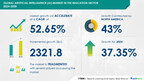
NEW YORK, Aug. 7, 2024 /PRNewswire/ — The global artificial intelligence (AI) in the education sector market size is estimated to grow by USD 2.32 billion from 2024-2028, according to Technavio. The market is estimated to grow at a CAGR of about 52.65% during the forecast period. Growing emphasis on customized learning paths using AI is driving market growth, with a trend towards increased emphasis on chatbots. However, high cost associated with ai poses a challenge. Key market players include 2U Inc., Alphabet Inc., Amazon.com Inc., Brainly, Carnegie Learning Inc., Century Tech Ltd., Cognii Inc., Cognizant Technology Solutions Corp., DreamBox Learning Inc., Fishtree Inc., International Business Machines Corp., Jenzabar Inc., John Wiley and Sons Inc., Kaltura Inc., LAIX Inc., McGraw Hill LLC, Microsoft Corp., n2y LLC, Pearson Plc, and Quantum Adaptive Learning LLC.

Get a detailed analysis on regions, market segments, customer landscape, and companies- View the snapshot of this report

Artificial Intelligence (AI) In The Education Sector Market Scope

Report Coverage

Details

Base year

2023

Historic period

2018 – 2022

Forecast period

2024-2028

Growth momentum & CAGR

Accelerate at a CAGR of 52.65%

Market growth 2024-2028

USD 2321.8 million

Market structure

Fragmented

YoY growth 2022-2023 (%)

37.35

Regional analysis

North America, Europe, APAC, South America, and Middle East and Africa

Performing market contribution

North America at 43%

Key countries

US, China, UK, Germany, and Canada

Key companies profiled

2U Inc., Alphabet Inc., Amazon.com Inc., Brainly, Carnegie Learning Inc., Century Tech Ltd., Cognii Inc., Cognizant Technology Solutions Corp., DreamBox Learning Inc., Fishtree Inc., International Business Machines Corp., Jenzabar Inc., John Wiley and Sons Inc., Kaltura Inc., LAIX Inc., McGraw Hill LLC, Microsoft Corp., n2y LLC, Pearson Plc, and Quantum Adaptive Learning LLC

Market Driver

Artificial Intelligence (AI) chatbots are revolutionizing the education sector by providing personalized learning experiences for students. Utilizing AI, Machine Learning (ML), and deep learning technologies, these chatbots store, process, and communicate data to students. They perform various functions, including answering queries, assessing and correcting assessments, and facilitating conversations. Georgia Tech’s Jill Watson, an IBM virtual teacher assistant, is an example of this innovation. Chatbots can identify a student’s study pattern and offer customized learning pathways. They can also help students learn at spaced intervals by repeating old lessons at optimal times. The increasing adoption of online learning models will drive the demand for chatbots in education, creating new business opportunities for vendors.

Artificial Intelligence (AI) is revolutionizing various industries, including Education. AI technology, such as machine learning, computer vision, and deep learning, is transforming how we learn. In the Education sector, AI is used for personalized learning, automated grading, and content creation. The IT & telecommunication industry, Retail & e-commerce, BFSI, and Media & Entertainment industries are leading AI adoption. Large enterprises in the Education sector are deploying AI on-premises and in the cloud. AI is used in Sales & Marketing for student engagement, Supply Chain Management for resource allocation, Human Resource Management for recruitment, Finance & Accounting for financial forecasting, Cybersecurity for data protection, and Legal & Compliance for regulatory adherence. Netflix, Amazon, Anthropic, and others use AI for content creation and recommendation. AI market trends include generative AI, big data analytics, robotics, and chatbots. AI tools like ChatGPT and AI art generators are transforming business models. Autonomous AI, algorithms, and machine learning techniques are driving innovation. Data availability and quality are crucial for effective AI implementation.

Discover 360° analysis of this market. For complete information, schedule your consultation – Book Here!

Market Challenges

The implementation of Artificial Intelligence (AI) in the education sector faces significant financial barriers. The high cost of developing, procuring, and maintaining AI solutions is a major hindrance to its widespread adoption. Schools and educational institutions require substantial funding to cover the expenses of installing AI software and the ongoing costs of maintenance. The availability of AI solutions is increasing, but the high research and development costs, capital expenditure, and sustainability risks limit their affordability for many public educational institutions. These financial constraints hinder schools from offering students advanced learning environments and resources, and make it challenging for vendors to enter the market. Consequently, the high cost of AI is expected to impede the growth of the global AI market in the education sector.The Artificial Intelligence (AI) market in education is rapidly growing, with AI technologies like Big Data analytics, robotics, and chatbots transforming the sector. Companies like ChatGPT and AI art generators offer innovative solutions, but challenges persist. The technology roadmap includes business models, autonomous AI, algorithms, and machine learning techniques like natural language processing. Data availability and quality are crucial, with potential issues of bias and inaccurate output. Software and service providers offer solutions, while cloud, network, and security providers ensure infrastructure. Ethical and regulatory concerns, privacy issues, and AI-driven automation in customer service are key challenges. Edge AI and edge computing components like deployment mode, enterprise size, business function, and industry vertical are also important considerations. Hardware, software, and the use of supercomputers and quantum computers with deep learning techniques are part of the technology landscape.

For more insights on driver and challenges – Request a sample report!

Segment Overview

This artificial intelligence (ai) in the education sector market report extensively covers market segmentation by

End-user1.1 Higher education1.2 K-12Learning Method2.1 Learner model2.2 Pedagogical model2.3 Domain modelGeography3.1 North America3.2 Europe3.3 APAC3.4 South America3.5 Middle East and Africa

1.1 Higher education- The global artificial intelligence (AI) market in the education sector is projected to expand at a consistent rate. Universities and colleges worldwide are integrating AI tools to enhance education quality and offer personalized learning experiences. AI solutions, such as IBM’s Watson, are used for automating administrative tasks, reducing costs, and minimizing errors. Grading processes are also being streamlined with AI-driven programs like Gradescope, which allows simultaneous assessment of multiple assignments and provides comprehensive student performance analysis. Federal funding, collaborations, and the growing emphasis on AI-driven virtual assistants and Intelligent Technology Systems (ITS) are key growth drivers for the AI market in education during the forecast period.

For more information on market segmentation with geographical analysis including forecast (2024-2028) and historic data (2017-2021) – Download a Sample Report

Learn and explore more about Technavio’s in-depth research reports

The global Artificial Intelligence (AI) market is witnessing rapid growth, driven by advancements in machine learning and data analytics. In the US education sector, AI’s adoption is transforming learning experiences with personalized education tools, intelligent tutoring systems, and administrative efficiency. The market is projected to expand significantly, with AI enhancing student engagement and outcomes while streamlining educational operations. Key players are investing heavily in AI-driven solutions to address evolving educational needs and improve institutional performance. The sector’s focus on innovative technologies promises continued growth and transformation.

Research Analysis

Artificial Intelligence (AI) is revolutionizing the education sector with its ability to process big data analytics, enhance learning experiences, and automate administrative tasks. AI technologies such as robotics, chatbots, AI art generators, and generative AI tools are transforming teaching and learning. The technology roadmap for AI in education includes the use of algorithms and machine learning techniques like deep learning and natural language processing. Data availability and quality are crucial for effective AI implementation, with potential challenges including bias and inaccurate output. Software providers, service providers, cloud providers, network providers, and security providers are essential partners in this transformation. Computer science education is increasingly focusing on AI algorithms, while supercomputers and quantum computers power advanced research. AI’s business models range from freemium to subscription-based, with autonomous artificial intelligence set to redefine education delivery.

Market Research Overview

The Artificial Intelligence (AI) market in the education sector is experiencing significant growth, driven by advancements in Big Data analytics, robotics, and AI technologies like ChatGPT and AI art generators. The technology roadmap includes generative AI tools, algorithms, machine learning techniques, natural language processing, and deep learning. Business models in the sector vary, with software providers, service providers, cloud providers, network providers, and security providers offering solutions. Autonomous AI and ethical concerns, regulatory issues, and privacy are key considerations. AI-driven automation includes chatbots and virtual assistants for customer service. Edge AI and edge computing are gaining popularity for deployment. The education industry, along with IT & telecommunication, retail & e-commerce, BFSI, and media & entertainment industries, are major adopters. Deployment modes include on-premises and cloud, with large enterprises being the primary consumers. Functions like sales & marketing, supply chain management, human resource management, finance & accounting, cybersecurity, and legal & compliance are also utilizing AI. Hardware, software, and services are essential components of the technology. Supercomputers and quantum computers are powering advanced AI applications. Machine learning techniques, computer vision, and generative AI are transforming education. However, challenges like data availability, data quality, bias, and inaccurate output must be addressed.

Table of Contents:

1 Executive Summary
2 Market Landscape
3 Market Sizing
4 Historic Market Size
5 Five Forces Analysis
6 Market Segmentation

End-userHigher EducationK-12Learning MethodLearner ModelPedagogical ModelDomain ModelGeographyNorth AmericaEuropeAPACSouth AmericaMiddle East And Africa

7 Customer Landscape
8 Geographic Landscape
9 Drivers, Challenges, and Trends
10 Company Landscape
11 Company Analysis
12 Appendix

About Technavio

Technavio is a leading global technology research and advisory company. Their research and analysis focuses on emerging market trends and provides actionable insights to help businesses identify market opportunities and develop effective strategies to optimize their market positions.

With over 500 specialized analysts, Technavio’s report library consists of more than 17,000 reports and counting, covering 800 technologies, spanning across 50 countries. Their client base consists of enterprises of all sizes, including more than 100 Fortune 500 companies. This growing client base relies on Technavio’s comprehensive coverage, extensive research, and actionable market insights to identify opportunities in existing and potential markets and assess their competitive positions within changing market scenarios.

Contacts

Technavio Research
Jesse Maida
Media & Marketing Executive
US: +1 844 364 1100
UK: +44 203 893 3200
Email: media@technavio.com
Website: www.technavio.com/

View original content to download multimedia:https://www.prnewswire.com/news-releases/artificial-intelligence-ai-in-the-education-sector-market-size-is-set-to-grow-by-usd-2-32-billion-from-2024-2028–growing-emphasis-on-customized-learning-paths-using-ai-boost-the-market-technavio-302215635.html

SOURCE Technavio

Continue Reading
Click to comment

Leave a Reply

Your email address will not be published. Required fields are marked *

Technology

RSPO Launches New Guidance to Leverage Sustainable Palm Oil Certification for IFRS® Sustainability Disclosure Standards

Published

on

By

KUALA LUMPUR, Malaysia, July 23, 2026 /PRNewswire/ — The Roundtable on Sustainable Palm Oil (RSPO) has released a guidance document, “Leveraging RSPO Principles and Criteria for IFRS® Sustainability Disclosure Standards”. This new resource supports certified sustainable palm oil producers to align their sustainability practices with the IFRS S1 and IFRS S2 disclosure standards that serve as the global framework for reporting sustainability-related financial information.

As more than 30 jurisdictions, representing around 60% of global GDP, move towards adoption of the IFRS Sustainability Disclosure Standards (IFRS SDS), companies are increasingly required to disclose how sustainability-related risks and opportunities affect their financial position and prospects.1

This resource provides a practical pathway for palm oil producers to respond to these requirements by leveraging their existing compliance with the RSPO Principles and Criteria (P&C), without duplicating efforts or creating parallel systems.

Informing investor-relevant disclosures: A four-step approach

Certification and the IFRS SDS serve different purposes. This guidance, developed with support from PwC Malaysia, provides a practical bridge between operational sustainability practices and financial disclosure expectations by helping members translate certification-related topics, metrics, and evidence to inform investor-relevant disclosures.

It sets out a four-step approach to IFRS SDS-aligned reporting, guiding RSPO Members on applicability, reporting boundaries, identification of sustainability-related risks and opportunities, and links to financial performance. It also includes seven practical examples, illustrating how the RSPO P&C requirements and implementation evidence can inform disclosures across key sustainability topics, from ethical conduct and legal compliance to environmental protection and worker health and safety.

Beyond growers, the guidance document also supports financial institutions by helping banks, insurers, and investors understand how palm oil sustainability issues, such as labour disputes and traceability gaps, can translate into financial risks, impacts, and opportunities, enabling clearer risk profiling and more informed financing decisions.

Joseph D’ Cruz, RSPO Chief Executive Officer, said: “As sustainability reporting becomes an integral pillar of financial performance, this guidance bridges certification and disclosure, providing RSPO members with a practical framework to demonstrate sustainability performance in ways that resonate with global capital markets. In line with the growing importance of sustainability disclosures in financing and investment decision-making processes, this guidance illustrates how RSPO Principles and Criteria practices can complement an organisation’s strategy and risk assessment processes.”

Andrew Chan, Partner, Sustainability Leader at PwC Malaysia, said: “This guidance responds to the broader shift towards measuring sustainability through a financial lens, with the adoption of the IFRS Sustainability Disclosure Standards (IFRS S1 and IFRS S2). For RSPO growers, this creates an opportunity to demonstrate how sustainability practices contribute to business resilience as well as value creation — building investor confidence for the long term.”

Importantly, the guidance also reflects RSPO’s longer term interest in progressively strengthening linkages with sustainability disclosure frameworks. As disclosure expectations continue to evolve, RSPO intends to further explore how certification-related data metrics and assurance processes can support broader and more integrated sustainability disclosures in the future.

The Guidance Document can be downloaded here.

For more information, visit www.rspo.org 

About RSPO:
The Roundtable on Sustainable Palm Oil (RSPO) is a global partnership to make palm oil sustainable. Formed in 2004, the RSPO is a multi-stakeholder non-profit organisation that unites members from across the palm oil value chain, including oil palm producers, palm oil processors and traders, consumer goods manufacturers, retailers, banks and investors, environmental or nature conservation non-governmental organisations (NGOs), and social or developmental NGOs.

As a partnership for progress and positive impact, the RSPO facilitates global change to make the production and consumption of palm oil sustainable. To inspire change, we communicate the environmental and social benefits. To make progress, we catalyse collaboration. To provide assurance, we set the standards of certification.

The RSPO is registered as an international association in Zurich, Switzerland, with main offices in Malaysia and Indonesia, and offices in China, Colombia, Netherlands, United Kingdom and the United States. 

About PwC:
At PwC, we help clients build trust and reinvent so they can turn complexity into competitive advantage. We’re a tech-forward, people-empowered network with more than 364,000 people in 136 countries and 137 territories. Across audit and assurance, tax and legal, deals and consulting, we help clients build, accelerate, and sustain momentum. Find out more at www.pwc.com

1

IFRS Foundation, ISSB Podcast February 2025


View original content:https://www.prnewswire.com/apac/news-releases/rspo-launches-new-guidance-to-leverage-sustainable-palm-oil-certification-for-ifrs-sustainability-disclosure-standards-302833097.html

SOURCE Roundtable On Sustainable Palm Oil

Continue Reading

Technology

Nordic Capital announces agreement to sell ArisGlobal to Dassault Systèmes, following its transformation into a scaled and AI-enabled life sciences platform

Published

on

By

WALTHAM, Mass., 23 July 2026 /PRNewswire/ — Nordic Capital today announced that it has entered into a definitive agreement to sell ArisGlobal, a leading provider of software to the life sciences industry, to Dassault Systèmes (Euronext Paris: FR0014003TT8) (Paris: DSY.PA). The transaction represents a full exit for Nordic Capital and marks the successful culmination of a partnership that has transformed ArisGlobal into a scaled, cloud-native and AI-enabled platform serving more than 200 life sciences companies, CROs and government health authorities worldwide.

Founded in 1989 and headquartered in Waltham, Massachusetts, ArisGlobal develops and delivers regulatory, safety, and quality software to a global client base that includes many of the world’s largest pharmaceutical and biotech organisations, as well as regulatory authorities. Its flagship LifeSphere® platform is a fully integrated, cloud-native suite that enables life sciences organisations to manage complex regulatory submissions, pharmacovigilance workflows and clinical data on a single platform, improving compliance, speed and operational efficiency. The platform also embeds advanced AI-enabled automation across core pharmacovigilance workflows, reducing manual processing and accelerating safety case management.

“Nordic Capital invested in ArisGlobal because the business had strong fundamentals, a loyal blue-chip client base and significant potential to modernise its technology and scale its commercial reach. Working closely with Aman and his team, Nordic Capital has supported the company’s transformation into a leading cloud-native platform for the life sciences industry with differentiated AI-enabled capabilities and a strengthened market position. Nordic Capital is proud of what has been achieved together with management and looks forward to seeing the company continue to grow under Dassault Systèmes ownership,” said Daniel Berglund, Partner and Head of Healthcare, Nordic Capital Advisors.

Nordic Capital first invested in ArisGlobal in 2019, partnering with the founding family and management team to pursue an ambitious development strategy. In 2021, Nordic Capital made a further investment in the company, reflecting its conviction in ArisGlobal’s growth potential and the progress achieved since the original partnership began. Throughout the ownership period, Nordic Capital worked closely with management to accelerate the SaaS transition, professionalise the go-to-market organisation, broaden the product offering and strengthen the leadership team.

The migration to a modern, cloud-native architecture created the foundation for ArisGlobal to become an early leader in the application of AI to drug safety. A key milestone was the development and launch of NavaX, ArisGlobal’s generative AI solution for safety case processing, which automates and accelerates core pharmacovigilance workflows and has been adopted by a number of the world’s leading pharmaceutical companies. NavaX has further differentiated ArisGlobal’s offering and marked an important step in the Company’s evolution into a broader, AI-enabled safety and regulatory software platform.

“The life sciences industry is at an inflection point as regulatory complexity is increasing, data volumes are growing and our clients need software that can keep pace. The partnership with Nordic Capital gave us the resources and the runway to build exactly that. NavaX and our expanded platform are the result of that ambition, and I am confident we are well placed for what comes next,” said Aman Wasan, CEO, ArisGlobal.

Alongside its technology transformation, ArisGlobal strengthened its management team and commercial organisation, while two strategic acquisitions broadened the Company’s platform capabilities. Today, ArisGlobal serves more than 200 enterprise customers, including half of the world’s top 50 biopharma companies, processes more than 12 million safety cases annually and is expected to generate approximately USD 175 million in revenue in 2026. As rising regulatory complexity and increasing volumes of adverse event reporting continue to drive demand for advanced life sciences software, ArisGlobal is well positioned for future growth through solutions that automate compliance workflows, reduce manual processing and enable organisations to manage regulatory risk more effectively.

The transaction brings together ArisGlobal’s leadership in AI-enabled safety and regulatory software with Dassault Systèmes’ capabilities across research, clinical development and manufacturing. Nordic Capital believes the combination represents a highly compelling strategic fit, pairing complementary capabilities to create a broader, end-to-end offering across the life sciences value chain. ArisGlobal will also benefit from Dassault Systèmes’ global scale, customer reach and investment capacity, providing a strong platform for its next phase of innovation and growth.

The transaction is subject to customary regulatory approvals and is expected to close in the second half of 2026.

Evercore and Jefferies LLC acted as financial advisors to ArisGlobal and Kirkland & Ellis acted as legal advisor to ArisGlobal.

Media contacts:

Nordic Capital
Katarina Janerud
Communications Manager, Nordic Capital Advisors
+46 8 440 50 50
katarina.janerud@nordiccapital.com

ArisGlobal
Morgan Scott
Vice President, Marketing & Communications and Chief of Staff
mscott@arisglobal.com

About ArisGlobal

ArisGlobal is a leading provider of software to the life sciences industry. Its LifeSphere® platform delivers integrated regulatory, safety, and quality solutions to more than 200 life sciences companies, CROs and government health authorities worldwide. Founded in 1989 and headquartered in Waltham, Massachusetts, ArisGlobal combines deep domain expertise with advanced technology to help clients improve compliance, accelerate development cycles and manage regulatory complexity at global scale. For more information, visit www.arisglobal.com.

About Nordic Capital

Nordic Capital is a leading international private equity investor and subsector specialist dedicated to building stronger, more resilient businesses through transformative, long-term growth in partnership with management teams. With over 35 years of experience, Nordic Capital currently manages approximately EUR 39 billion in assets, investing in middle-market companies across Northern Europe and North America. Rooted in its Nordic heritage and values, it combines global reach with local presence through dedicated sector investment advisory teams, bringing deep expertise across its core sectors: Healthcare, Technology & Payments, Financial Services, and Services & Industrial Tech. Through active ownership, strong operational capabilities, a global network of experts and technology-enabled transformation, Nordic Capital helps companies scale, innovate and become sustainable leaders. For more information, visit www.nordiccapital.com or connect on LinkedIn.

“Nordic Capital” refers to, depending on the context, any, or all, Nordic Capital branded entities, vehicles, structures, and associated entities. The general partners and/or delegated portfolio managers of Nordic Capital’s entities and vehicles are advised by several non-discretionary sub-advisory entities, any or all of which are referred to as “Nordic Capital Advisors”.

This information was brought to you by Cision http://news.cision.com

https://news.cision.com/nordic-capital/r/nordic-capital-announces-agreement-to-sell-arisglobal-to-dassault-systemes–following-its-transforma,c4376982

The following files are available for download:


View original content:https://www.prnewswire.co.uk/news-releases/nordic-capital-announces-agreement-to-sell-arisglobal-to-dassault-systemes-following-its-transformation-into-a-scaled-and-ai-enabled-life-sciences-platform-302833100.html

Continue Reading

Technology

Cognizant and Gulf Edge Announce Strategic Partnership to Accelerate Enterprise AI Adoption in Southeast Asia

Published

on

By

Partnership combines Cognizant’s global AI engineering capabilities with Gulf Edge’s sovereign digital infrastructure to capture the region’s growing demand for secure, scalable AI solutions.

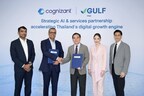
BANGKOK, July 23, 2026 /PRNewswire/ — Cognizant (Nasdaq: CTSH), a leading AI builder and global technology services provider, and Gulf Edge Company Limited, the digital infrastructure arm of Thai energy and infrastructure conglomerate Gulf Development Public Company Limited (GULF) or Gulf Group, today announced a landmark strategic partnership. The alliance is designed to accelerate enterprise AI adoption and establish a resilient, AI-native digital economy in Thailand and the broader region.

As artificial intelligence (AI) rapidly reshapes industries, economies, and societies worldwide, the partnership aims to establish the foundational ecosystem needed to enable Thailand’s next phase of digital transformation. By combining trusted sovereign digital infrastructure with world-class AI engineering and enterprise transformation capabilities, Gulf Edge and Cognizant will help organizations deploy AI securely, responsibly, and at scale.

The collaboration brings together Gulf Edge’s leadership in digital infrastructure, energy, cloud, and strategic relationships across Thailand’s most important industries with Cognizant’s global expertise in AI, digital engineering, cloud modernization, data, and intelligent operations. Together, the two companies will deliver end-to-end AI capabilities spanning infrastructure, AI platforms, enterprise solutions, systems integration, and managed services.

The partnership will initially focus on accelerating AI adoption across key sectors including banking and financial services, energy and utilities, healthcare, telecommunications, manufacturing, and the public sector. Through industry-specific AI solutions, organizations will be able to improve operational efficiency, enhance customer experience, strengthen decision-making, automate complex business processes, and unlock new opportunities for innovation and growth.

Beyond enterprise transformation, Gulf Edge and Cognizant share a broader ambition of strengthening Thailand’s position as a regional AI hub. The partnership is expected to attract global technology expertise, stimulate investment in advanced digital capabilities, and create high-value employment opportunities across AI engineering, data science, cloud infrastructure, cybersecurity, and digital transformation. The two companies also plan to collaborate with universities, research institutions, technology partners, and public-sector organizations to develop AI talent, promote responsible AI adoption, and foster a sustainable innovation ecosystem for the country.

Mr. Sarath Ratanavadi, Chief Executive Officer, Gulf Development Public Company Limited, said, “Our partnership with Cognizant marks an important milestone in our vision of helping Thailand become an AI-native economy. By combining Gulf Edge’s strengths in digital infrastructure, energy, cloud, and deep understanding of the Thai market with Cognizant’s global expertise in enterprise AI, digital engineering, and transformation services, we are creating a comprehensive platform that enables organizations to adopt AI with confidence and generate measurable business outcomes. Together, we will develop secure, resilient, and future-ready sovereign digital infrastructure while delivering industry-specific AI solutions tailored to the needs of Thai enterprises and public institutions. We believe AI has the potential to transform every sector, creating new opportunities for productivity, innovation, and sustainable economic growth.”

Mr. Ganesh Ayyar, President of Asia Pacific & Japan (APJ), Cognizant, said, “As Thailand works toward its ambition of becoming an AI-native economy, we see this partnership as a meaningful way to help contribute to that vision, not just through the projects we deliver, but by building lasting AI and technology capability inside the country. With Gulf Edge’s market reach and Cognizant’s AI Builder strategy and global delivery capability, we are positioned to deliver transformative outcomes for Thai enterprises across every major sector.”

About Gulf Edge
Gulf Edge Company Limited is the digital infrastructure arm of Gulf Development Public Company Limited, Thailand’s leading energy and infrastructure conglomerate. Gulf Edge is building a robust digital ecosystem, spanning data centers, cloud services, satellite technology, and AI infrastructure, to accelerate Thailand’s digital transformation and position the country as a regional hub for the AI economy.

About Cognizant
Cognizant (NASDAQ: CTSH) is an AI Builder and technology services provider, building the bridge between AI investment and enterprise value by building full-stack AI solutions for clients. Its deep industry, process, and engineering expertise enables it to build an organization’s unique context into technology systems that amplify human potential, realize tangible returns, and keep global enterprises ahead in a fast-changing world. See how at www.cognizant.ai or @cognizant.

View original content to download multimedia:https://www.prnewswire.com/apac/news-releases/cognizant-and-gulf-edge-announce-strategic-partnership-to-accelerate-enterprise-ai-adoption-in-southeast-asia-302833116.html

SOURCE Gulf Development Public Company Limited (GULF)

Continue Reading

Trending