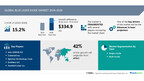
NEW YORK, Aug. 12, 2024 /PRNewswire/ — The global blue laser diode market size is estimated to grow by USD 334.9 million from 2024-2028, according to Technavio. The market is estimated to grow at a CAGR of 15.2% during the forecast period. Advances in laser projectors is driving market growth, with a trend towards growing popularity of high-power blue laser diodes. However, declining demand for blu-ray disc players and dvd players poses a challenge. Key market players include ams OSRAM AG, Coherent Inc., Egismos Technology Corp., Exaktera LLC, Frankfurt Laser Co., IADIY Photonics, Laser Components GmbH, Laserex Technologies Pty Ltd., Laserline GmbH, Nichia Corp., NUBURU Inc., Omicron-Laserage Laserprodukte GmbH, Panasonic Holdings Corp., Renesas Electronics Corp., RPMC Lasers Inc., Sharp Corp., Tomorrows System Sp zoo, TOPTICA Photonics AG, Ushio Inc., and Vortran Laser Technology Inc..
Get a detailed analysis on regions, market segments, customer landscape, and companies- View the snapshot of this report
Blue Laser Diode Market Scope
Report Coverage
Details
Base year
2023
Historic period
2018 – 2022
Forecast period
2024-2028
Growth momentum & CAGR
Accelerate at a CAGR of 15.2%
Market growth 2024-2028
USD 334.9 million
Market structure
Fragmented
YoY growth 2022-2023 (%)
12.87
Regional analysis
North America, Europe, APAC, South America, and Middle East and Africa
Performing market contribution
APAC at 42%
Key countries
US, China, Germany, Canada, and Japan
Key companies profiled
ams OSRAM AG, Coherent Inc., Egismos Technology Corp., Exaktera LLC, Frankfurt Laser Co., IADIY Photonics, Laser Components GmbH, Laserex Technologies Pty Ltd., Laserline GmbH, Nichia Corp., NUBURU Inc., Omicron-Laserage Laserprodukte GmbH, Panasonic Holdings Corp., Renesas Electronics Corp., RPMC Lasers Inc., Sharp Corp., Tomorrows System Sp zoo, TOPTICA Photonics AG, Ushio Inc., and Vortran Laser Technology Inc.
Market Driver
The global blue laser diode market has experienced a moderate growth due to the limited innovation in this sector. However, the increasing adoption of high-power blue laser diodes in various industries is expected to boost market growth. Major players like USHIO and OSRAM have introduced high-power blue laser diodes, capable of delivering a maximum power of 250 W at 450 nm wavelength. These diodes generate less heat, ensuring high operational efficiency. Additionally, blue laser diodes have a superior absorption capacity, enabling them to cut through metals such as copper and gold, which is not possible with red or green laser diodes. Consequently, these diodes are extensively used in material processing equipment, 3D printers, and optical fiber communication networks. These factors are anticipated to fuel the expansion of the global blue laser diode market during the forecast period.
The Blue Laser Diode market is experiencing significant growth due to its increasing applications in various industries. One of the major sectors driving this trend is the LiDAR system, where blue laser diodes are used for their superior brightness and high reliability in creating 3D maps. In addition, blue laser diodes find extensive use in cameras for range finding, target selection, and illumination. Key components of LiDAR systems include data processing electronics, photodetector, motion control equipment, and laser source. Blue laser diodes offer advantages such as superior brightness, high pulse power, and longer reach compared to other laser sources like VCSEL diodes, visible laser diodes, or ultraviolet lasers. However, challenges such as LIDAR system limitations in bad weather conditions and pump sources require continuous innovation. Solid state systems and laser diode arrays are gaining popularity due to their compact size and cost-effectiveness. Rare earth metals like InGaN, GaN, AIGaInP, and doping materials like neodymium, chromium, erbium, and ytterbium are essential in producing blue laser diodes. Leading players in the market include Hamamatsu Photonics, with a focus on medical applications and fiber laser market. The market is expected to grow further as blue laser diodes find applications in IR, UV, and other industries.
Discover 360° analysis of this market. For complete information, schedule your consultation – Book Here!
Market Challenges
The global blue laser diode market faces challenges due to decreasing demand for Blu-Ray disc players and DVD players. Blue laser diodes are essential components in these devices for reading and writing data. However, the rise of online video streaming platforms and portable data storage devices has diminished the need for physical media. According to Technavio, US revenue from Blu-Ray disc and DVD sales dropped by USD549.88 million from 2013 to 2018. Consumers now access content directly from cloud platforms, eliminating the requirement for Blu-Ray discs or DVDs. This trend is projected to impede the expansion of the global blue laser diode market.The blue laser diode market is experiencing significant growth due to its increasing applications in various industries. Blue laser diodes, a type of semiconductor laser diode, emit coherent radiation in the visible spectrum and are in high demand for fiber lasers in the fiber laser market. However, the production of blue laser diodes faces challenges due to the use of rare earth metals like Neodymium, Chromium, Erbium, Ytterbium, and Gallium aluminum arsenide in their manufacture. These elements are costly and can impact the overall price of the laser diode. Blue laser diodes find applications in medical devices, telecommunication industry for broadband communication systems in data centers, and industrial processes like precision cutting, welding, heat treating, cladding, and more. The market for blue laser diodes is expanding into new areas such as LIDAR, radar systems, and autonomous vehicles. However, challenges include achieving high output powers, monochromaticity, coherence, and directionality, which are essential for these applications. Currently, companies like Hamamatsu Photonics lead the market, but competition is increasing from other semiconductor device manufacturers. Blue laser diodes have diverse applications, including in compact disc players, remote control devices, intrusion detection systems, motion sensors, 3D depth sensors, optical disk pickup, and solid-state lasers. The market for blue laser diodes is expected to grow further due to their use in emerging technologies like LIDAR and autonomous vehicles. Despite the challenges, the future of the blue laser diode market looks promising.
For more insights on driver and challenges – Request a sample report!
Segment Overview
This blue laser diode market report extensively covers market segmentation by
Type 1.1 Single-mode1.2 Multi-modeApplication 2.1 Bio/medical2.2 Laser projectors and scanner2.3 Blu-ray devices2.4 OthersGeography 3.1 North America3.2 Europe3.3 APAC3.4 South America3.5 Middle East and Africa
For more information on market segmentation with geographical analysis including forecast (2024-2028) and historic data (2017-2021) – Download a Sample Report
Research Analysis
Blue laser diodes, a type of semiconductor laser diode, emit blue light and are gaining significant attention due to their versatile applications. These diodes are essential components in various industries, including fiber lasers for material processing and broadband communication systems in telecom and data centers. Blue laser diodes find extensive use in fiber lasers for precision cutting of metals, surpassing the capabilities of traditional lasers. In contrast, they are also utilized in medical applications for various purposes, such as UV phototherapy and IR spectroscopy. Rare earth elements like Neodymium, Chromium, Erbium, Ytterbium, and Gallium aluminum arsenide are crucial in the fabrication of blue laser diodes. The global market for blue laser diodes is expected to grow substantially due to the increasing demand for advanced technologies in telecommunications, medical, and industrial sectors.
Market Research Overview
Blue laser diodes, also known as semiconductor laser diodes, are solid-state lasers that emit coherent radiation in the visible and near-infrared spectrum. They are essential components in various industries, including fiber lasers, telecommunications, medical applications, and more. Blue laser diodes are available in different wavelengths, such as UV, IR, and those using rare earth metals like Neodymium, Chromium, Erbium, and Ytterbium. The market for blue laser diodes is driven by their applications in broadband communication systems, data centers, precision cutting, welding, heat treating, cladding, and more. Gallium aluminum arsenide is a common material used in the fabrication of blue laser diodes. Applications include motion sensors, 3D depth sensors, optical disk pickup, LIDAR systems, and radar systems. Output powers, wavelengths, beam shapes, monochromaticity, coherence, and directionality are key parameters for blue laser diodes. Limitations of LIDAR systems include pulse power, bad weather, and pump sources. Solid state systems, laser diode arrays, and high reliability are some of the advantages of blue laser diodes. Doping materials like InGaN and GaN are used to enhance the performance of blue laser diodes.
Table of Contents:
1 Executive Summary
2 Market Landscape
3 Market Sizing
4 Historic Market Size
5 Five Forces Analysis
6 Market Segmentation
TypeSingle-modeMulti-modeApplicationBio/medicalLaser Projectors And ScannerBlu-ray DevicesOthersGeographyNorth AmericaEuropeAPACSouth AmericaMiddle East And Africa
7 Customer Landscape
8 Geographic Landscape
9 Drivers, Challenges, and Trends
10 Company Landscape
11 Company Analysis
12 Appendix
About Technavio
Technavio is a leading global technology research and advisory company. Their research and analysis focuses on emerging market trends and provides actionable insights to help businesses identify market opportunities and develop effective strategies to optimize their market positions.
With over 500 specialized analysts, Technavio’s report library consists of more than 17,000 reports and counting, covering 800 technologies, spanning across 50 countries. Their client base consists of enterprises of all sizes, including more than 100 Fortune 500 companies. This growing client base relies on Technavio’s comprehensive coverage, extensive research, and actionable market insights to identify opportunities in existing and potential markets and assess their competitive positions within changing market scenarios.
Contacts
Technavio Research
Jesse Maida
Media & Marketing Executive
US: +1 844 364 1100
UK: +44 203 893 3200
Email: media@technavio.com
Website: www.technavio.com/
View original content to download multimedia:https://www.prnewswire.com/news-releases/blue-laser-diode-market-size-is-set-to-grow-by-usd-334-9-million-from-2024-2028–advances-in-laser-projectors-boost-the-market-technavio-302219420.html
SOURCE Technavio








 Technology5 days ago
 Technology4 days ago
 Coin Market4 days ago
 Coin Market4 days ago
 Technology4 days ago
 Technology4 days ago