Connect with us

Technology

Enterprise Data Storage Market size is set to grow by USD 11.6 billion from 2024-2028, Increased adoption of cloud applications boost the market, Technavio

Published

on

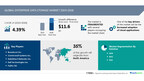
NEW YORK, Aug. 12, 2024 /PRNewswire/ — The global enterprise data storage market size is estimated to grow by USD 11.6 billion from 2024-2028, according to Technavio. The market is estimated to grow at a CAGR of  4.39%  during the forecast period. Increased adoption of cloud applications is driving market growth, with a trend towards software-defined storage. However, high operating expenses for vendors  poses a challenge. Key market players include Broadcom Inc., Commvault Systems Inc., DataDirect Networks Inc., Dell Technologies Inc., Fujitsu Ltd., Hewlett Packard Enterprise Co., Hitachi Ltd., Huawei Technologies Co. Ltd., Infinidat Ltd., Inspur Group, International Business Machines Corp., Lenovo Group Ltd., NetApp Inc., Nutanix Inc., Oracle Corp., Pure Storage Inc., Seagate Technology Holdings Plc, Veritas Technologies LLC, Western Digital Corp., and Zadara Inc..

Get a detailed analysis on regions, market segments, customer landscape, and companies- View the snapshot of this report

Enterprise Data Storage Market Scope

Report Coverage

Details

Base year

2023

Historic period

2018 – 2022

Forecast period

2024-2028

Growth momentum & CAGR

Accelerate at a CAGR of 4.39%

Market growth 2024-2028

USD 11.6 billion

Market structure

Fragmented

YoY growth 2022-2023 (%)

4.13

Regional analysis

North America, Europe, APAC, South America, and Middle East and Africa

Performing market contribution

North America at 35%

Key countries

US, Germany, China, UK, and Japan

Key companies profiled

Broadcom Inc., Commvault Systems Inc., DataDirect Networks Inc., Dell Technologies Inc., Fujitsu Ltd., Hewlett Packard Enterprise Co., Hitachi Ltd., Huawei Technologies Co. Ltd., Infinidat Ltd., Inspur Group, International Business Machines Corp., Lenovo Group Ltd., NetApp Inc., Nutanix Inc., Oracle Corp., Pure Storage Inc., Seagate Technology Holdings Plc, Veritas Technologies LLC, Western Digital Corp., and Zadara Inc.

Market Driver

The global enterprise data storage market is experiencing significant growth, driven by the increasing need for flexible, scalable, and cost-effective storage solutions. Software-defined storage (SDS) is an emerging trend in this market, offering organizations a more efficient way to manage and store data. SDS separates the control plane from the data plane, enabling the use of software to manage storage resources across various hardware platforms. This architecture provides greater flexibility and cost savings, making it an attractive option for businesses dealing with the exponential growth of data.

The Enterprise Data Storage Market is thriving with big businesses prioritizing digital data management for their corporate operations. The market offers a range of products and services, including hardware and software solutions. Hardware includes traditional Hard Disk Drives, Solid State Drives (SSDs), and emerging technologies like Software-Defined Storage (SDS) and Hyper-Converged Infrastructures (HCI). Software solutions include data accessibility tools, security systems, and data analytics platforms.

Discover 360° analysis of this market. For complete information, schedule your consultation – Book Here!

Market Challenges

The global enterprise data storage market faces substantial operating expenses for vendors due to various reasons. Significant research and development (R&D) costs are incurred to create innovative storage solutions, requiring investments in new technologies and infrastructure. Vendors must also maintain a large and intricate infrastructure, including data centers, servers, networking equipment, and hardware and software systems, which can be costly. Marketing and sales efforts are essential to reach potential clients, adding to expenses through advertising, conference attendance, and hiring sales teams. Competition in the market drives up operating expenses as vendors strive to differentiate their offerings and remain competitive. Consequently, designing and developing enterprise data storage solutions tailored to end-users’ requirements, which necessitates substantial R&D and product development investments, can hinder the growth of the global enterprise data storage market.Big enterprises face numerous challenges in managing their business-related information with the increasing volume of data from various workloads. Traditional storage systems like Storage Area Networks (SAN), Network Attached Storage (NAS), Direct Attached Storage (DAS), and digital storage have their unique advantages, but choosing the right one can be complex. Redundant, logical storage containers are crucial for data protection during disasters, ensuring business continuity. Centralized remote support, administration, and scalability are essential for managing large volumes of data. Durable and scalable storage mechanisms like networked appliances, storage drives, and redundant arrays of independent disks (RAID) are popular choices. Big data analytics and management of unstructured data require agile and distributed storage subsystems. Data security is paramount, and software manufacturers offer various solutions for backup, restoration functions, and disaster recovery. Cabling, connectivity, and operating platforms are essential considerations for storage systems. Hyper-converged storage, cloud storage, and distributed storage are emerging trends in the enterprise data storage market. AI and ML are transforming IT systems in healthcare, manufacturing, and IT and telecommunication industries, requiring high-speed 5G communication infrastructure to support their workloads. The enterprise data storage market is evolving rapidly, and businesses must stay informed to make informed decisions.

For more insights on driver and challenges – Request a sample report!

Segment Overview 

This enterprise data storage market report extensively covers market segmentation by  

Solution 1.1 SAN1.2 NAS1.3 DASType 2.1 Storage2.2 Backup2.3 OthersGeography 3.1 North America3.2 Europe3.3 APAC3.4 South America3.5 Middle East and Africa

1.1 SAN-  A Storage Area Network (SAN) is a dedicated high-speed network that interconnects enterprise storage devices to multiple servers. It moves data from the common user network and organizes it into an independent high-speed network, enabling each server to access storage devices and control the storage volume. SAN is a type of Local Area Network (LAN) designed for handling large data volumes. SAN storage devices support data storage, retrieval, and replication using high-end servers and multiple disk arrays. Vendors like Dell Technologies Inc., Hewlett Packard Enterprise, and IBM offer SAN solutions, including FC and iSCSI. FC is suitable for mission-critical applications, while iSCSI offers flexibility through an IP network. SANs come in three types: Virtual SAN, Unified SAN, and Converged SAN. SAN advantages include storage virtualization, high-speed disk technologies, and centralized backup. SAN devices enhance storage management and fault tolerance, fueling AI and real-time analytics adoption, driving IT optimization, and growing the global enterprise storage market.

For more information on market segmentation with geographical analysis including forecast (2024-2028) and historic data (2017-2021) – Download a Sample Report

Learn and explore more about Technavio’s in-depth research reports

The Global Enterprise External OEM Storage Systems Market is witnessing significant growth, driven by the rising demand for data storage solutions across various industries. Simultaneously, the Global Cloud Storage Services Market is expanding rapidly, fueled by the increasing adoption of cloud computing and digital transformation initiatives. Additionally, the Global Software-Defined Storage (SDS) Market is gaining traction, offering scalable and flexible storage solutions to meet the growing data needs. These markets are critical in supporting enterprise digital infrastructure and are expected to continue their upward trajectory.

Table of Contents:

1 Executive Summary
2 Market Landscape
3 Market Sizing
4 Historic Market Size
5 Five Forces Analysis
6 Market Segmentation

SolutionSANNASDASTypeStorageBackupOthersGeographyNorth AmericaEuropeAPACSouth AmericaMiddle East And Africa

7 Customer Landscape
8 Geographic Landscape
9 Drivers, Challenges, and Trends
10 Company Landscape
11 Company Analysis
12 Appendix

About Technavio

Technavio is a leading global technology research and advisory company. Their research and analysis focuses on emerging market trends and provides actionable insights to help businesses identify market opportunities and develop effective strategies to optimize their market positions.

With over 500 specialized analysts, Technavio’s report library consists of more than 17,000 reports and counting, covering 800 technologies, spanning across 50 countries. Their client base consists of enterprises of all sizes, including more than 100 Fortune 500 companies. This growing client base relies on Technavio’s comprehensive coverage, extensive research, and actionable market insights to identify opportunities in existing and potential markets and assess their competitive positions within changing market scenarios.

Contacts

Technavio Research
Jesse Maida
Media & Marketing Executive
US: +1 844 364 1100
UK: +44 203 893 3200
Email: media@technavio.com
Website: www.technavio.com/

View original content to download multimedia:https://www.prnewswire.com/news-releases/enterprise-data-storage-market-size-is-set-to-grow-by-usd-11-6-billion-from-2024-2028–increased-adoption-of-cloud-applications-boost-the-market-technavio-302219411.html

SOURCE Technavio

Continue Reading
Click to comment

Leave a Reply

Your email address will not be published. Required fields are marked *

Technology

BinBase Expands 2026 BIN Dataset with Instant Payout Intelligence for iGaming, Gambling, and Cross-Border Transfers

Published

on

By

BinBase updates its 2026 dataset with specialized Fast Funds, Visa Direct, and Mastercard MoneySend indicators to help iGaming operators and payout platforms execute seamless, instant card disbursements.

MIAMI, July 23, 2026 /PRNewswire-PRWeb/ — BinBase, a global provider of payment routing intelligence and card issuing data, has introduced specialized instant payout indicators as part of its upgraded 2026 BIN Database. Tailored for iGaming operators, online gambling platforms, crypto-to-fiat ramps, and payout aggregators, the updated dataset helps platform engineers streamline real-time card disbursements and Push-to-Card (P2C) transactions.

In high-velocity sectors such as online betting and gaming, instantaneous player payouts are a primary driver of customer retention. However, executing Push-to-Card transactions through protocols like Visa Direct and Mastercard MoneySend requires knowing whether the receiving card issuer supports Fast Funds for specific merchant category codes (MCCs). Attempting instant payouts on non-eligible cards leads to declined transactions, elevated processing fees, and poor user experiences.

The 2026 BinBase release solves this operational bottleneck by delivering dedicated attributes for real-time fund disbursements:

Fast Funds Eligibility: Granular indicators identifying domestic and cross-border Fast Funds support across global Visa and Mastercard ranges.Online Gambling Fast Funds (OG FF): Dedicated flags specifically identifying card ranges authorized to receive real-time gambling and betting payouts.Mastercard MoneySend & Visa Direct Indicators: Precise protocol compatibility markers (MS Ind & MT Ind) ensuring push transactions are routed only to eligible recipient cards.Direct Debit & Pull-Funds Support: Indicators for recurring collections and account-funding transactions.

“Player payouts in iGaming cannot wait for standard 2-to-3-day ACH settlements,” said a spokesperson for Damiko Inc. “By embedding our Fast Funds and Gambling FF flags into their payment engines, operators can instantly validate recipient cards before initiating a transfer, guaranteeing high success rates and instant liquidity for their users.”

Fintech engineers and payout architects can examine the full 29-field database schema and access a free 2026 sample dataset on GitHub.

To explore commercial licensing, bulk database downloads, or custom data feeds, visit BinBase at https://binbase.com.

About Damiko Inc

Damiko Inc is a US-based fintech data provider specializing in card issuer analytics, payment routing data, and global BIN database solutions. Operating through its flagship product, BinBase.com, the company supplies high-precision transaction intelligence to help merchants and payment facilitators worldwide optimize approval rates and mitigate processing fees.

Media Contact
Fedor Lavrikoff, BinBase, 1 7866133334, sales@binbase.com, www.binbase.com 

View original content:https://www.prweb.com/releases/binbase-expands-2026-bin-dataset-with-instant-payout-intelligence-for-igaming-gambling-and-cross-border-transfers-302829344.html

SOURCE BinBase

Continue Reading

Technology

Walnut Coding’s Young Coders Serve as ‘Instructors’ at Huawei Cloud Developer Training Camp

Published

on

By

Ages 8 and 15, students showcase AI-era project-building skills from concept to working application

BEIJING, July 23, 2026 /PRNewswire/ — Walnut Coding (the “Company”), a leading online platform for youth coding education, said two of its students – ages 8 and 15 – have joined the “instructor” lineup at Huawei Cloud Developer Training Camp, making them among the youngest “instructors” in the program’s history. The Company cites the pair as a prime example of how young learners can combine coding fundamentals with AI tools to turn ideas into working applications.

The two students, Bolin Du, 8, and Peiqi Gao, 15, built working applications using Huawei Cloud CodeArts, an AI coding assistant, then presented the projects to the training camp themselves – walking the audience through their design choices, technical builds, and debugging process.

The move lands at a moment when AI coding tools are forcing a rethink across the education sector. Tools that can generate functioning code from a plain-language prompt have undercut the traditional argument for teaching children to program – that they need the skill to build things themselves. Walnut Coding’s answer is that the more valuable skill now is judgment – knowing what problem to solve, breaking it into parts, and determining whether an AI’s output actually works.

Gao built a travel-planning application that generates routes, itineraries, and recommendations based on user input, handling the project end to end, from requirements and design through coding and debugging. Du, the younger of the two, built an interactive calendar application, using HTML for page structure, CSS for visual design, and JavaScript for interactive features. Both students then took on an instructor’s role at the camp, presenting their project goals and technical implementation to the audience – a step Walnut Coding says separated the work from a typical classroom assignment.

These were not classroom exercises but working projects, built and presented inside a professional developer-training environment. The experience demanded more from both students than simply producing something functional – they needed to articulate their reasoning, defend technical choices, and refine the final result under scrutiny. Their participation signals a broader shift underway in what youth coding education can deliver.

AI is making code generation easier, but it is also redrawing which skills actually matter. A student who relies only on one-click generation may get a rough prototype quickly, but still struggle to spot logical flaws, judge whether the output is reliable, or turn an abstract idea into a product that actually works. Students with programming foundations, by contrast, are better positioned to define requirements, evaluate what the AI produces, correct its errors, and treat the technology as a tool rather than a shortcut to lean on.

“AI can help children generate code faster, but it cannot decide for them what problem they should solve, nor can it make the final judgment about whether the result is truly effective,” said Pengxuan Zeng, founder and CEO of Walnut Coding. “What these two students demonstrated is not just coding technique, but the ability to define needs, break down tasks, verify outcomes, and turn an idea into a working product. That is why we believe young people still need to learn programming in the AI era.”

Walnut Coding structures its courses around that thesis, pairing student-led project work with teaching-assistant guidance and AI-assisted support. According to the Company, this data is continuously fed back into its systems to refine the personalization of AI-assisted feedback — a closed-loop process linking teaching, practice, feedback, and curriculum development.

The Company frames the payoffs less around producing professional software engineers than around a broader form of literacy. As AI continues to reshape how tasks get done, the ability to understand the technology, structure problems clearly and collaborate effectively with intelligent tools may prove one of the most durable skills a young learner can develop.

Walnut Coding says it plans to keep expanding opportunities for students to build practical projects, partner with industry technology platforms such as Huawei Cloud, and develop the core capabilities needed to build with technology in the AI era.

View original content:https://www.prnewswire.com/news-releases/walnut-codings-young-coders-serve-as-instructors-at-huawei-cloud-developer-training-camp-302833884.html

SOURCE Walnut Coding

Continue Reading

Technology

MOREH Showcases High-Performance LLM Inference on AMD GPUs at AMD Advancing AI 2026

Published

on

By

SAN FRANCISCO, July 23, 2026 /PRNewswire/ — Moreh, an AI infrastructure software company, led by CEO Gangwon Jo, participated in AMD Advancing AI 2026, AMD’s flagship annual AI event held in San Francisco on July 22–23 (local time), where it demonstrated its distributed inference solution, the MoAI Inference Framework, running on AMD GPUs.

At the event, Moreh presented a live demonstration of the GLM-5.1 large language model (LLM) powered by the MoAI Inference Framework on a system equipped with 32 AMD Instinct™ MI300X GPUs across four nodes. Visitors experienced the chatbot firsthand, evaluating its response speed and service quality while observing performance across a range of real-world use cases.

Unlike conventional demonstrations that simply run an AI model, Moreh’s showcase displayed key inference service metrics in real time, including GPU utilization, Tokens Per Second (TPS), Time To First Token (TTFT), and Time Per Output Token (TPOT). This enabled attendees to directly verify both inference performance and GPU resource efficiency in a production-like service environment.

Global AI industry leaders and enterprise customers attending the event expressed strong interest in the system’s fast response times and stable performance. In particular, the live deployment of the computationally demanding GLM-5.1 model on AMD GPUs at production-grade service levels received positive feedback from visitors.

Moreh’s MoAI Inference Framework is widely recognized as the world’s first commercially deployed distributed inference solution built for the AMD ecosystem. Its distributed inference and heterogeneous computing technologies are designed to dramatically reduce AI service costs, enabling broader adoption of AI worldwide. The technology addresses one of the industry’s biggest challenges-the rapidly rising infrastructure and service costs caused by increasingly larger AI models-by delivering a more efficient inference infrastructure.

Moreh CEO Gangwon Jo stated, “This event provided an opportunity for global customers to verify firsthand that top-tier inference performance can be achieved on AMD GPU environments,” and added “We will continue advancing our AI infrastructure software so enterprises can operate AI services as efficiently as possible, regardless of the underlying GPU platform.”

Moreh develops its own AI infrastructure engine and has expanded its end-to-end AI capabilities through its foundation LLM subsidiary, Motif Technologies, covering both AI infrastructure and foundation models. The company is also strengthening its presence in the global AI market through strategic partnerships with leading technology companies, including AMD and Tenstorrent.

View original content to download multimedia:https://www.prnewswire.com/news-releases/moreh-showcases-high-performance-llm-inference-on-amd-gpus-at-amd-advancing-ai-2026-302833887.html

SOURCE Moreh

Continue Reading

Trending