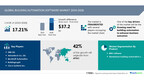
NEW YORK, Aug. 14, 2024 /PRNewswire/ — The global building automation software market size is estimated to grow by USD 37.2 billion from 2024-2028, according to Technavio. The market is estimated to grow at a CAGR of 17.21% during the forecast period. Growing need for building automation to enhance business outcomes is driving market growth, with a trend towards emergence of customized building automation software. However, challenges in integrating building automation software coupled with interoperability issues poses a challenge. Key market players include ABB Ltd., Advantech Co. Ltd., Beckhoff Automation, BuildingLogiX, Cisco Systems Inc., Delta Electronics Inc., Emerson Electric Co., EUROICC, General Electric Co., Hitachi Ltd., Honeywell International Inc., Ingersoll Rand Inc., Johnson Controls International Plc., Lennox International Inc., Lutron Electronics Co. Inc., RTX Corp., Robert Bosch GmbH, Rockwell Automation Inc., Schneider Electric SE, and Siemens AG.
Get a detailed analysis on regions, market segments, customer landscape, and companies – Click for the snapshot of this report
Forecast period
2024-2028
Base Year
2023
Historic Data
2018 – 2022
Segment Covered
Product (BMS software and Standalone building automation software), End-user (Commercial, Industrial, and Others), and Geography (APAC, Europe, North America, South America, and Middle East and Africa)
Region Covered
APAC, Europe, North America, South America, and Middle East and Africa
Key companies profiled
ABB Ltd., Advantech Co. Ltd., Beckhoff Automation, BuildingLogiX, Cisco Systems Inc., Delta Electronics Inc., Emerson Electric Co., EUROICC, General Electric Co., Hitachi Ltd., Honeywell International Inc., Ingersoll Rand Inc., Johnson Controls International Plc., Lennox International Inc., Lutron Electronics Co. Inc., RTX Corp., Robert Bosch GmbH, Rockwell Automation Inc., Schneider Electric SE, and Siemens AG
Key Market Trends Fueling Growth
Building automation software is essential for managing safety and security controls in buildings with a user-friendly interface. With growing competition among vendors, advanced features and capabilities are being integrated into these systems. Vendors are now developing application-specific comprehensive building management solutions to enhance facility management performance. This trend, driven by technological advancements, is set to revolutionize the global building automation software market, offering organizations flexible operations through customized software solutions.
Building automation systems are trending in urban centers as they optimize energy usage and enhance comfort in both residential and commercial sectors. HVAC systems, including solar panels and renewable energy sources, are key components. IoT integrated systems enable predictive maintenance, centralized control, and energy efficiency measures. Lighting, heating, and ventilation systems are also improved. Security systems, such as access control, video surveillance, and intrusion detection, are essential. Interoperability challenges are addressed through smart technologies like sensors, actuators, communication modules, and software. The software segment includes cloud-based platforms and AI for facility management, HVAC control, lighting systems, space utilization, and building automation systems. The commercial segment focuses on offices, retail spaces, hotels, while the residential segment caters to smart technologies for homes. Building control and management systems ensure electric systems run efficiently. Smart cities leverage these systems for waste management, healthcare, education, and retail.
Discover 360° analysis of this market. For complete information, schedule your consultation- Book Here!
Market Challenges
Building automation software plays a crucial role in managing and integrating various sub-systems and appliances in buildings. As building size increases, so does the complexity of the automation system. Effective communication between different hardware systems is essential, and interfacing software must ensure compatibility and configuration of these devices on the same platform. Legacy systems’ integration with new software may lead to compatibility issues, causing potential security breaches. End-users expect multi-device connectivity, but ensuring interoperability across networks is challenging. Additionally, various technologies with different performance, security, cost, and development standards hinder market growth. Ensuring compatibility and interoperability among these standards is necessary to expand the global building automation software market.The Building Automation Software market is experiencing significant growth due to increasing concerns over climate change and the need for zero carbon buildings. With rapid temperature rise and overpopulation in large cities, the demand for smart buildings that adhere to sanitary guidelines and optimize energy efficiency is on the rise. Retail establishments, dining facilities, and educational institutions are leading the charge, integrating ventilation systems, air conditioners, and ductless heating to maintain ideal indoor conditions. Government policies and regulations are driving the adoption of building automation software to reduce energy consumption and improve fire protection systems. Consumers are also demanding advanced features like access control, smart door locks, and wireless intercom devices for enhanced security. However, challenges remain, including the integration of complex systems like air conditioning, electrical systems, lighting control, and sound alerts. Theft and burglary are also concerns, necessitating the integration of fire protection systems and theft prevention measures.
For more insights on driver and challenges – Download a Sample Report
Segment Overview
This building automation software market report extensively covers market segmentation by
Product 1.1 BMS software1.2 Standalone building automation softwareEnd-user 2.1 Commercial2.2 Industrial2.3 OthersGeography 3.1 APAC3.2 Europe3.3 North America3.4 South America3.5 Middle East and Africa
1.1 BMS software- The Building Management Systems (BMS) software segment dominates the building automation software market due to its comprehensive solutions and powerful analytics tools. Commercial buildings in North America and Europe, particularly in the retail and office sectors, are the primary drivers of market growth. The increasing demand for energy efficiency and safety in workplaces, as well as the rising trend of retrofitting activities, are contributing to the expansion of this segment. In the manufacturing sector, there is a growing demand for automated facility management to optimize energy usage. Building automation software enables real-time energy monitoring and control, as demonstrated by Siemens AG’s Desigo automation stations. Strict government regulations in developed regions also fuel the adoption of BMS software. Urbanization in emerging economies, such as India, Brazil, and China, is expected to further boost demand. Consumer preferences for smart, energy-efficient buildings are driving the adoption of BMS software in the residential sector. The COVID-19 pandemic has increased energy consumption in residential buildings, leading to a surge in demand for smart energy management systems. Despite high installation and switching costs, the integration of IoT in supporting infrastructure is driving market growth. The awareness of building automation is rising in developing regions, making them attractive for new projects. Overall, the building automation software market is experiencing significant growth due to the need for energy efficiency, safety, and convenience in both developed and developing countries.
For more information on market segmentation with geographical analysis including forecast (2024-2028) and historic data (2018 – 2022) – Download a Sample Report
Learn and explore more about Technavio’s in-depth research reports
The Global Building Automation and Control Systems Market is driven by increasing demand for energy-efficient solutions and smart buildings. Similarly, the Global Industrial Automation Device Manager Software Market is experiencing growth due to the rising need for real-time monitoring and control of industrial processes. Meanwhile, the Global Manufacturing Execution Systems (MES) Market is expanding as manufacturers seek to optimize production efficiency and reduce operational costs. Together, these markets are pivotal in advancing automation and enhancing productivity across industries worldwide.
Research Analysis
Building automation systems are essential for managing and optimizing various building functions, including HVAC, lighting, heating, ventilation, security, and fire detection. These systems use IoT technologies and centralized control systems to enhance energy efficiency measures and integrate renewable energy sources such as solar panels. Predictive maintenance is a key feature that helps prevent equipment failures and reduce downtime. Interoperability challenges persist as different building systems require integration, including electric, electronic, mechanical, and IoT technologies. Building automation systems are increasingly being adopted in urban centers and smart cities for managing waste management, healthcare facilities, intelligent street lighting, and other infrastructure. The market for building automation solutions continues to grow, driven by the need for energy savings, improved comfort, and enhanced security.
Market Research Overview
Building automation systems are technological solutions that optimize the management of various building functions, including HVAC, lighting, heating, ventilation, security, and more. These systems are increasingly being integrated with renewable energy sources such as solar panels, IoT technologies, and predictive maintenance to enhance energy efficiency measures. Centralized control systems enable real-time monitoring and regulation of these functions, leading to significant cost savings and reduced carbon emissions. In urban centers and smart cities, building automation systems play a crucial role in managing energy consumption in buildings, from commercial offices and retail spaces to residential apartments. Interoperability challenges persist, however, as different systems and devices require compatibility. The software segment of building automation includes cloud-based platforms and artificial intelligence applications, allowing for remote monitoring and control of building functions. The commercial segment, which includes non-residential buildings, is a major market for building automation solutions, with offices, retail spaces, hotels, and other establishments adopting smart technologies for improved space utilization and energy efficiency. Building automation systems are also being implemented in various sectors, such as healthcare, education, and retail, to optimize energy use and enhance security measures through access control systems, video surveillance, and intrusion detection. The integration of IoT devices and network-connected sensors and actuators is revolutionizing building automation, enabling real-time monitoring and control of various building functions. However, security concerns remain a challenge, as these systems require robust cybersecurity measures to protect against potential threats. Government policies and regulations are driving the adoption of building automation systems in new and existing buildings, with a focus on energy efficiency, zero carbon targets, and climate change mitigation. Rapid temperature rise and overpopulation in large cities are further increasing the demand for smart buildings that can optimize energy use and improve living conditions. Sanitary guidelines and ventilation requirements are also important considerations for building automation systems in various sectors. In conclusion, building automation systems are essential for optimizing energy use, improving building functions, and enhancing security and comfort in various sectors. The integration of renewable energy sources, IoT technologies, and predictive maintenance, along with government policies and regulations, are driving the growth of the building automation market. However, interoperability challenges and security concerns remain key challenges that need to be addressed.
Table of Contents:
1 Executive Summary
2 Market Landscape
3 Market Sizing
4 Historic Market Size
5 Five Forces Analysis
6 Market Segmentation
ProductBMS SoftwareStandalone Building Automation SoftwareEnd-userCommercialIndustrialOthersGeographyAPACEuropeNorth AmericaSouth AmericaMiddle East And Africa
7 Customer Landscape
8 Geographic Landscape
9 Drivers, Challenges, and Trends
10 Company Landscape
11 Company Analysis
12 Appendix
About Technavio
Technavio is a leading global technology research and advisory company. Their research and analysis focuses on emerging market trends and provides actionable insights to help businesses identify market opportunities and develop effective strategies to optimize their market positions.
With over 500 specialized analysts, Technavio’s report library consists of more than 17,000 reports and counting, covering 800 technologies, spanning across 50 countries. Their client base consists of enterprises of all sizes, including more than 100 Fortune 500 companies. This growing client base relies on Technavio’s comprehensive coverage, extensive research, and actionable market insights to identify opportunities in existing and potential markets and assess their competitive positions within changing market scenarios.
Contacts
Technavio Research
Jesse Maida
Media & Marketing Executive
US: +1 844 364 1100
UK: +44 203 893 3200
Email: media@technavio.com
Website: www.technavio.com/
View original content to download multimedia:https://www.prnewswire.com/news-releases/building-automation-software-market-size-is-set-to-grow-by-usd-37-2-billion-from-2024-2028–growing-need-for-building-automation-to-enhance-business-outcomes-to-boost-the-market-growth-technavio-302221956.html
SOURCE Technavio









 Coin Market5 days ago
 Technology5 days ago
 Technology5 days ago
 Technology5 days ago
 Technology4 days ago


 Technology5 days ago