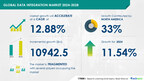
NEW YORK, Nov. 12, 2024 /PRNewswire/ — Report on how AI is driving market transformation – The global data integration market size is estimated to grow by USD 10.94 billion from 2024-2028, according to Technavio. The market is estimated to grow at a CAGR of 12.88% during the forecast period. High need for data integration is driving market growth, with a trend towards increased adoption of cloud-based integration solutions. However, lack of comprehensive integration strategies poses a challenge.Key market players include Adeptia Inc., Alphabet Inc., Cisco Systems Inc., Denodo Technologies Inc., HCL Technologies Ltd., Hevo Data Inc., Hitachi Ltd., Informatica Inc., International Business Machines Corp., Jitterbit Inc., Microsoft Corp., Oracle Corp., Precisely, QlikTech international AB, Salesforce Inc., SAP SE, SAS Institute Inc., Software AG, Talend Inc, and TIBCO Software Inc..
AI-Powered Market Evolution Insights. Our comprehensive market report ready with the latest trends, growth opportunities, and strategic analysis- View Free Sample Report PDF
Forecast period
2024-2028
Base Year
2023
Historic Data
2017 – 2021
Segment Covered
End-user (IT and telecom, Healthcare, BFSI, Government and defense, and Others), Component (Tools and Services), and Geography (North America, Europe, APAC, Middle East and Africa, and South America)
Region Covered
North America, Europe, APAC, Middle East and Africa, and South America
Key companies profiled
Adeptia Inc., Alphabet Inc., Cisco Systems Inc., Denodo Technologies Inc., HCL Technologies Ltd., Hevo Data Inc., Hitachi Ltd., Informatica Inc., International Business Machines Corp., Jitterbit Inc., Microsoft Corp., Oracle Corp., Precisely, QlikTech international AB, Salesforce Inc., SAP SE, SAS Institute Inc., Software AG, Talend Inc, and TIBCO Software Inc.
Key Market Trends Fueling Growth
Data integration is a crucial aspect of business operations, enabling the connection and transfer of data between various systems and applications. This market is witnessing significant trends, including data transformation, analytics solutions, and business intelligence. Data assets, such as data warehouses, are becoming more valuable as businesses seek to gain insights from their data. Automation, cloud-based software, and enterprise connectivity are key drivers in this space. Fraud detection, data enrichment, and data science are also important trends, helping businesses make informed decisions and improve customer experiences. Consulting, training, and technical support are essential services in the data integration market. Hybrid data integration, cloud platforms, and data exchange are also gaining popularity. The retail sector and large company sector are major consumers of data integration solutions, as they deal with vast amounts of data from various sources. Data mapping, transformation tools, data capture, data profiling, and data quality are essential components of data integration. Data governance, workforce training and certifications, and cloud computing technology are also crucial elements in this market. Remote sensors and consumer behavior are emerging data sources, offering new opportunities for businesses. Recruitment firms and the operations segment are also adopting data integration for business automation and corporate reporting. Big data and enterprise analytics are driving the need for advanced data integration platforms. Cloud computing technologies are enabling more efficient and cost-effective data integration.
Organizations are transitioning their IT infrastructure to cloud computing solutions for cost savings and flexibility. One significant application of cloud computing is in supply chain management (SCM) systems. Cloud-based SCM systems enable seamless integration with other back-office systems, allowing for faster data exchange. Cloud-based integration services come in two forms: integration platform-as-a-service (iPaaS) and data platform-as-a-service (dPaaS). IPaaS offers cloud-based integration solutions without the need for physical IT infrastructure. These services enable enterprises to exchange data internally and externally for various commercial applications. The popularity of cloud-based integration services stems from their availability of faster connectivity features, making them an essential component of modern business operations.
Insights on how AI is driving innovation, efficiency, and market growth- Request Sample!
Market Challenges
Data integration is essential for businesses to connect and combine data from various sources for better insights and decision-making. However, integrating data from diverse systems, transforming it into a usable format, and ensuring data quality can be challenging. Analytics solutions and business intelligence tools rely on accurate and timely data from multiple data assets, including data warehouses. Automation, cloud-based software, and data enrichment are key to overcoming integration challenges. Fraud detection and enterprise connectivity are also critical for safeguarding data assets. Data science and software tools aid in data mapping, consulting, training, and technical support. Hybrid data integration platforms and cloud platforms enable data exchange between on-premises and cloud data sources. Consumer behavior, recruitment firms, and the operations segment benefit from data integration in business automation. Data integration solutions are vital for large companies in the retail sector and other industries to manage their customer base, data sets, and data exchange effectively. Transformation tools, data capture, data profiling, and data governance are crucial for ensuring data quality and workforce training and certifications. Cloud computing technologies, including remote sensors, enable real-time data capture and analysis.In today’s complex IT landscape, organizations require a strategic approach to maintain smooth operations. A holistic view of the entire IT infrastructure is essential to identify integration touchpoints between various systems. Service-oriented architecture (SOA) assists in managing application and service delivery within an organization. Enterprises typically allocate over 8% of their revenue towards IT budgets, encompassing application integration, mobile data integration, and on-premises cloud application integration. Without a comprehensive integration strategy, CIOs may create customized solutions for each business challenge, resulting in a heterogeneous environment that is difficult to manage and costly to maintain.
Insights into how AI is reshaping industries and driving growth- Download a Sample Report
Segment Overview
This data integration market report extensively covers market segmentation by
End-user 1.1 IT and telecom1.2 Healthcare1.3 BFSI1.4 Government and defense1.5 OthersComponent 2.1 Tools2.2 ServicesGeography 3.1 North America3.2 Europe3.3 APAC3.4 Middle East and Africa3.5 South America
1.1 IT and telecom- In the telecom sector, businesses rely on Operational Support Systems (OSS) and Business Support Systems (BSS) to manage communication networks and customer management activities. With the rise of IoT and smart devices, integrating multiple systems has become essential for seamless communication. Telecom companies compete on service quality and advanced technologies like 4G LTE and WiMax. They automate operations by integrating back-office and front-office systems for invoicing, accounting, and order management. Cloud-based solutions offer lower upfront investments, leading to their increasing adoption. Disruptive technologies like cloud and virtualization are transforming ICT infrastructure, driving the need for data integration in back-end systems. These factors are expected to fuel growth in the telecom segment of the global data integration market.
Download complimentary Sample Report to gain insights into AI’s impact on market dynamics, emerging trends, and future opportunities- including forecast (2024-2028) and historic data (2017 – 2021)
Research Analysis
Data integration is the process of combining data from various sources into a unified and cohesive format, enabling seamless data flow between systems and applications. This process is essential for businesses to gain valuable insights through analytics solutions and business intelligence. Data assets, such as data sets and data warehouses, play a crucial role in data integration, providing a centralized repository for data transformation and enrichment. Automation, cloud-based software, and data mapping are key technologies driving the data integration market. Automation streamlines the data integration process, reducing manual effort and errors. Cloud-based software offers flexibility, scalability, and cost savings. Data mapping ensures accurate data translation between systems. Data integration platforms provide consulting, training, and technical support services to help businesses implement and optimize their data integration solutions. Hybrid data integration allows businesses to integrate data from both on-premises and cloud-based systems, providing a comprehensive solution for enterprise analytics and corporate reporting. Fraud detection and data science are also important applications of data integration, helping businesses identify anomalies and gain insights from their data. Software tools and data integration solutions enable businesses to automate their data warehouses, ensuring accurate and timely reporting and analysis.
Market Research Overview
Data integration refers to the process of combining data from various sources into a unified and cohesive format. This is essential for businesses to gain valuable insights through analytics solutions and business intelligence. Data assets from diverse data sets are transformed and loaded into data warehouses for analysis. Automation and cloud-based software play a significant role in streamlining data integration processes, enabling real-time fraud detection and data enrichment. Enterprise connectivity ensures seamless data exchange between different systems, while data mapping and consulting services help in managing complex data integration projects. Data integration platforms on cloud platforms facilitate hybrid data integration, catering to the needs of various sectors like retail and large companies. Data integration solutions also support data warehouses for corporate reporting and enterprise analytics. Big data and cloud computing technologies enable the integration of data from remote sensors and other sources, expanding the customer base and enhancing business automation. Transformation tools like data capture, data profiling, data quality, and data governance ensure the accuracy and reliability of integrated data. Workforce training and certifications in data integration and related technologies are crucial for effective implementation and management of data integration projects.
Table of Contents:
1 Executive Summary
2 Market Landscape
3 Market Sizing
4 Historic Market Size
5 Five Forces Analysis
6 Market Segmentation
End-userIT And TelecomHealthcareBFSIGovernment And DefenseOthersComponentToolsServicesGeographyNorth AmericaEuropeAPACMiddle East And AfricaSouth America
7 Customer Landscape
8 Geographic Landscape
9 Drivers, Challenges, and Trends
10 Company Landscape
11 Company Analysis
12 Appendix
About Technavio
Technavio is a leading global technology research and advisory company. Their research and analysis focuses on emerging market trends and provides actionable insights to help businesses identify market opportunities and develop effective strategies to optimize their market positions.
With over 500 specialized analysts, Technavio’s report library consists of more than 17,000 reports and counting, covering 800 technologies, spanning across 50 countries. Their client base consists of enterprises of all sizes, including more than 100 Fortune 500 companies. This growing client base relies on Technavio’s comprehensive coverage, extensive research, and actionable market insights to identify opportunities in existing and potential markets and assess their competitive positions within changing market scenarios.
Contacts
Technavio Research
Jesse Maida
Media & Marketing Executive
US: +1 844 364 1100
UK: +44 203 893 3200
Email: media@technavio.com
Website: www.technavio.com/
View original content to download multimedia:https://www.prnewswire.com/news-releases/data-integration-market-to-grow-by-usd-10-94-billion-2024-2028-driven-by-growing-demand-for-data-integration-ai-powered-report-explores-market-evolution—technavio-302302815.html
SOURCE Technavio









 Coin Market5 days ago
 Technology5 days ago
 Technology5 days ago
 Technology5 days ago
 Technology4 days ago


 Technology5 days ago