Connect with us

Technology

Jones Walker Unveils 2024 Cybersecurity Survey Exposing Critical Gaps in Community and Mid-Size Banks

Published

on

The survey reveals under preparedness in prevention, third-party vendor risks, and the need for technological advancement

NEW ORLEANS, Nov. 12, 2024 /PRNewswire/ — Jones Walker LLP today announced the release of its 2024 Community and Mid-Size Banks Cybersecurity Survey, the fourth in the law firm’s series of industry-focused, biannual cybersecurity studies. The comprehensive report highlights significant vulnerabilities and areas for improvement among community and mid-size banks in the United States.

Experience the full interactive Multichannel News Release here: https://www.multivu.com/jones_walker/9234351-en-jones-walker-2024-cybersecurity-survey

Based on responses from 125 banking executives, including senior risk, technology, and information security leaders, the survey provides a detailed assessment of the current state of cybersecurity awareness, confidence, and preparedness in the banking sector.

This survey is the national law firm’s fourth on the topic of cybersecurity for critical industries. In 2018, the firm’s first survey focused on the greater maritime industry. The second survey, in 2020, focused on the midstream oil and gas sector, and in 2022, the third survey focused on the nation’s ports and terminals.

Key Takeaways:

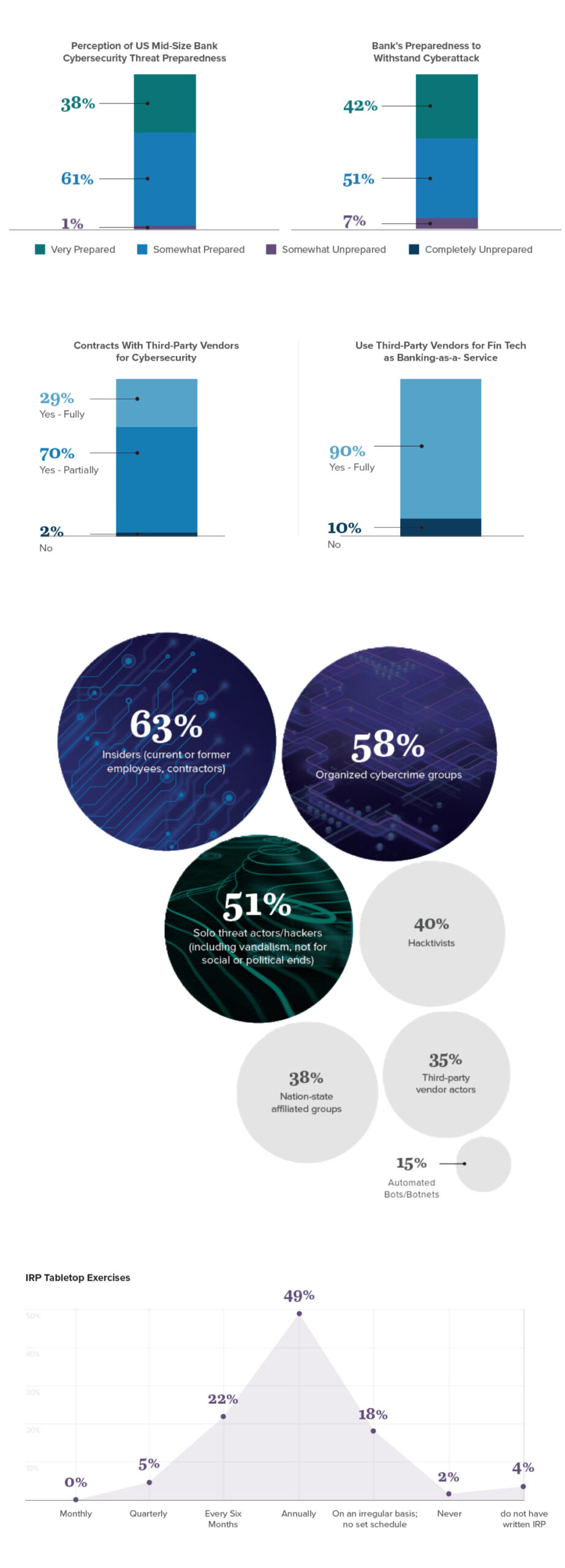
1. Post-Incident Regulatory Compliance is Slowly Improving, but Prevention and Preparedness are Lacking: The banking sector is highly regulated, which makes data security, data privacy, and data breach compliance a top priority for banking executives. However, only 42% of respondents felt their own bank was very prepared for cyber threats, considering that only 61% of banks have established specific incident response teams with clearly assigned roles and responsibilities and 37% fail to encrypt sensitive information.2. The Lack of Due Diligence Performed on Third-Party Vendors is a Significant Risk: While virtually all, 99%, of community and mid-size banks rely in part or in full on the services of third-party vendors to address their cybersecurity needs, only 71% hold them accountable for contractual, legal, or regulatory liability, and a mere 23% require vendors to indemnify them against data breaches.3. Banks Are Underutilizing Outside Counsel and Cybersecurity Professionals: Fifty-seven percent of respondents do not engage experienced cybersecurity attorneys, increasing their exposure to regulatory and legal risks. In addition, only 32% use outside pre- and post-incident forensic consultants, potentially hindering effective breach response and recovery. On top of that, 59% have not reviewed their cyber insurance policies to ensure adequate coverage.4. Responsibly Embracing Emerging Technology Delivers Significant Advantages: Community and mid-size banks are hesitant to implement emerging technologies like artificial intelligence (AI) for cybersecurity enhancements. With large banks adopting AI, this hesitancy may make community and mid-size banks more vulnerable targets if they do not keep pace.

Author Commentary:

“Cyber threats are evolving rapidly, and community and mid-size banks must enhance their cybersecurity posture to protect their customers and assets,” said Andy Lee, a partner and co-leader of Jones Walker’s privacy, data strategy, and artificial intelligence team and Technology Industry Team. “Our survey reveals that while banks are aware of the risks, many are not taking sufficient proactive measures to prevent breaches.”

Tom Walker, a partner on the firm’s Banking & Financial Services Industry Team and a former community bank executive vice president and director, said, “Third-party vendors are a critical resource for community banks, but also a significant source of risk. As our survey clearly points out, community and mid-size banks can do more to mitigate the risks posed by third-party vendors to their information systems, reputations, and customers’ data by following industry and regulatory standards for planning, due diligence, selection, contract negotiation, and monitoring.”

“Banks are highly regulated, but many third-party vendors are not. It is critical that banks conduct thorough due diligence on their vendors and ensure robust contractual protections are in place,” added Rob Carothers, a partner on the firm’s Banking & Financial Services Industry Team.

“As big banks continue to bolster defenses with sophisticated security technologies, cybercriminals are shifting focus to community and other smaller banks,” warned Jason Loring, a partner and co-leader of Jones Walker’s privacy, data strategy, and artificial intelligence team. “AI-based tools, however, can serve as a great equalizer for smaller banks that may have more limited resources, so long as those tools are implemented responsibly. This can help these banks maintain levels of fraud protection, regulatory compliance and operational efficiency commensurate with larger institutions.”

“We urge small and mid-size banks to shift their security mindset to one focused on cyber resilience, which emphasizes the need to anticipate new threats and continuously improve cybersecurity measures, rather than the traditional notion of achieving a static state of cybersecurity,” encouraged Lara Sevener, a partner and co-leader of the firm’s Technology Industry Team. “As security threats are constantly evolving, focusing on a culture of cyber resilience – in which organizations implement a holistic approach that includes anticipation of cyber threats likely to occur, implementation and continuous improvement of security practices and defenses, and a strong focus on business continuity in the wake of an attack – will help to minimize the disruption and negative impacts caused by any future cyber event.”

Best Practices:

Enhance Focus on Prevention and Preparedness: Shift from reactive compliance to proactive measures, including regular training, testing, and updating of cybersecurity policies.Increase Oversight of Third-Party Vendors: Conduct thorough due diligence, enforce robust contractual terms, and hold vendors accountable for security obligations.Leverage Outside Legal Counsel: Engage experienced cybersecurity attorneys and consultants to mitigate regulatory and legal risks and improve breach response.Adopt Emerging Technologies: Embrace AI and other advanced technologies to enhance cybersecurity defenses and stay competitive.

Given community and mid-size banks’ unique position at the center of local and regional economies and the trillions of dollars in assets and loans they collectively manage, they are a prime target for threat actors. We commend the strides the sector has taken so far and urge stakeholders to bolster their cyber readiness to further improve their banks’ defenses.

The 2024 Community and Mid-Size Banks Cybersecurity Survey is part of Jones Walker’s ongoing commitment to provide valuable insights into cybersecurity trends across critical industries.

About Jones Walker
Jones Walker LLP (joneswalker.com) is among the largest 145 law firms in the United States. With offices in Alabama, Arizona, the District of Columbia, Florida, Georgia, Louisiana, Mississippi, New York, and Texas, we serve local, regional, national, and international business interests. The firm is committed to providing a comprehensive range of legal services to major multinational public and private corporations, Fortune® 500 companies, money center banks, worldwide insurers, and emerging companies doing business in the United States and abroad.

All of the sources quoted in this news release are available for interviews and private briefings. Please follow a discussion about our 2024 Community and Mid-Size Banks Cybersecurity Survey on LinkedIn: #JonesWalkerCyberSurvey.

Media Contact:
Amanda Ferrari
aferrari@hellermanllc.com
440-465-6162


View original content:https://www.prnewswire.com/news-releases/jones-walker-unveils-2024-cybersecurity-survey-exposing-critical-gaps-in-community-and-mid-size-banks-302302817.html

SOURCE Jones Walker LLP

Continue Reading
Click to comment

Leave a Reply

Your email address will not be published. Required fields are marked *

Technology

As ADA Anniversary Approaches, University of Phoenix Survey Highlights AI’s Potential to Advance Accessibility in Work and Learning

Published

on

By

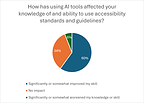
Survey conducted by The Harris Poll on behalf of University of Phoenix finds among those already using AI in the workplace, 60% say AI has improved their knowledge of and ability to use accessibility standards and guidelines.

PHOENIX, July 24, 2026 /PRNewswire/ — As artificial intelligence becomes part of how people work, learn and solve problems, a new University of Phoenix survey conducted by The Harris Poll finds that recent working learners see meaningful opportunities for AI to support accessibility. The survey was designed to understand the impact of AI in the workplace and learning environments on accessibility, defined as ensuring digital content, tools and resources, including AI tools and output, are usable by people with different abilities through inclusive design, use of assistive technology or conformance with accessibility standards, such as the Web Content Accessibility Guidelines (WCAG). The findings are being released ahead of the 36th anniversary of the Americans with Disabilities Act (ADA) on July 26.

The survey, conducted among 1,019 U.S. employed adults who completed a professionally presented training or school course in the past 12 months (“recent working learners”), found that, among workers already using AI in the workplace, 3 in 5 (60%) say AI has improved their knowledge of and ability to use accessibility standards and guidelines, including nearly 1 in 5 (19%) who report significant improvement. 

While the findings point to optimism about AI’s accessibility potential, they also reveal an opportunity for clearer organizational guidance: 45% of respondents say accessibility is absent from, unclear in, or they are uncertain whether it is covered by their workplace AI policies.

“The reality is that accessibility benefits everyone,” shares Kelly Hermann, Vice President of Accessibility and Student Affairs at University of Phoenix. “If accessibility is built in from the beginning, organizations are more likely to create AI-enabled environments that are universally usable. Clearer content, better summaries, accurate captions, and multiple formats can help workers and learners with disabilities, but they also help busy adults, multilingual learners, mobile users, and anyone trying to absorb information quickly.”

Key findings from the survey include:

Workers see AI’s accessibility potential: 89% of recent working learners identify workflows that could benefit from AI and accessibility tools, especially creating accessible documents, presentations, websites or learning materials (38%), presenting information in different formats such as plain language, audio, summaries or translations (33%), and training employees or learners on accessibility practices (30%).AI may help build accessibility awareness: Among those already using AI in the workplace, 60% say AI has improved their knowledge of and ability to use accessibility standards and guidelines.Accessibility is not always clear in workplace AI policies: 45% of recent working learners say accessibility is absent from, unclear in, or they are uncertain whether it is covered by their workplace AI policies.AI tools may not yet fully support different access needs: Among those who use workplace AI tools, only about a quarter of survey respondents (27%) say AI tools available through their workplace or professional learning environment support people with disabilities very well.Human oversight remains important: 36% of recent working learners say human review for important decisions or high-impact work should be part of responsible AI use at work or school.Workers also recognize how AI and accessibility can have an impact on their own career journey: 90% of recent working learners identify AI and accessibility skills that would be valuable in their current or desired career field, including 45% who see value in understanding when AI-generated content needs human review.

Why accessibility is essential to responsible AI adoption

As AI tools are used to draft documents, summarize information, generate captions and transcripts, create image descriptions, support learning and assist with workplace tasks, accessibility becomes central to responsible use. Poorly implemented AI can also create or amplify barriers, including inaccessible content, inaccurate summaries, biased outputs and tools that do not work effectively with assistive technologies.

“Responsible AI is not only about productivity,” Hermann said. “It is about whether the technology works for the people who need to use it. AI can help create more accessible materials and more flexible ways to engage with information, but it still requires clear policies, practical training and human judgment to make sure the outputs are accurate, applicable and usable.”

What the findings mean for employers and educators

The survey suggests that organizations have an opportunity to align AI adoption with supportive design, accessibility practices and workforce training. Employers and educators can take immediate steps by:

Naming accessibility directly in AI policies and guidance.Choosing AI tools with accessibility and assistive technology compatibility in mind.Training workers and learners to create, check and improve accessible AI-generated content.Making support pathways clear for people who experience barriers using AI tools.Keeping human review in place for important decisions, high-impact work and accessibility-sensitive outputs.

The survey also found workers want practical AI training. The most helpful resources identified by recent working learners include real-world examples from their field or industry (36%), hands-on practice using realistic workplace scenarios (34%) and step-by-step demonstrations of common tasks (33%).

Accessibility insights from University of Phoenix

Hermann shared the survey findings ahead of the ADA anniversary in recent media interviews. Hermann oversees the University’s accessibility initiative, including evaluation and remediation of curricular resources, the Center for Access, Resources, Engagement and Support Services (CARES), and the Office of Collaborative Learning and Educational Engagement. Her work focuses on fostering accessible and welcoming educational environments for students, faculty and staff.

Hermann’s office at University of Phoenix also convenes accessibility conversations through initiatives such as Access Amplified™, a free, annual virtual event focused on advancing digital accessibility in web development. The event brings together engineers, developers, designers, content authors and digital strategists for practical strategies and human-centered conversations that address the gap between coding practices and how users with assistive technology experience the web.

About the survey

The survey was conducted online within the United States by The Harris Poll on behalf of University of Phoenix from June 22–29, 2026, among 1,019 employed adults ages 18 and older who have taken a professionally presented training or a school course in the past 12 months, referred to as “recent working learners.” Data were weighted where necessary by age, gender, race/ethnicity, region, education, employment, marital status, household size, household income and smoking status to bring them in line with their actual proportions in the population.

Respondents for this survey were selected from among those who have agreed to participate in surveys. The sampling precision of Harris online polls is measured by using a Bayesian credible interval. For this study, the sample data is accurate to within +/- 3.8 percentage points using a 95% confidence level. This credible interval will be wider among subsets of the surveyed population of interest.

Review the complete survey at phoenix.edu/aiaccessibility.

About University of Phoenix

University of Phoenix is Built for Real Life. 50 Years Strong. The University innovates to help working adults enhance their careers and develop skills in a rapidly changing world through flexible online learning, relevant courses, academic AI pillars, and skills-mapped curriculum for associate, bachelor’s and master’s degree programs. Active students and alumni have access to Career Services for Life® resources including career guidance and tools. For more information, visit phoenix.edu. 

View original content to download multimedia:https://www.prnewswire.com/news-releases/as-ada-anniversary-approaches-university-of-phoenix-survey-highlights-ais-potential-to-advance-accessibility-in-work-and-learning-302834448.html

SOURCE University of Phoenix

Continue Reading

Technology

Mastech Digital to Announce Second Quarter 2026 Financial Results; Participate in Upcoming Investor Conference

Published

on

By

PITTSBURGH, July 24, 2026 /PRNewswire/ — Mastech Digital, Inc. (NYSE American: MHH) (“Mastech Digital”), a leading provider of Digital Transformation IT Services, today announced the date for the release of its financial results for the second quarter ended June 30, 2026, and its participation in an upcoming investor conference.

Second Quarter 2026 Earnings:

Mastech Digital will report its financial results for the second quarter 2026 before the market opens on Thursday, August 6, 2026. Management will host a live conference call and webcast at 9:00 a.m. Eastern Time on that day to discuss the Company’s financial performance and operating results.  The conference call will be hosted by Nirav Patel, President and CEO, and Kannan Sugantharaman, Chief Financial and Operations Officer.

Those wishing to participate via webcast should access the call through Mastech Digital’s Investor Relations website at https://investors.mastechdigital.com. Those wishing to participate via telephone may dial in at 1-800-715-9871 (USA) or 1-646-307-1963 (International) with the passcode 7506988. The replay will be available via webcast through Mastech Digital’s Investor Relations website.

Upcoming Investor Conference:

Mr. Sugantharaman will host a fireside chat at the Sidoti Micro-Cap Investor Conference on Wednesday, August 19, 2026, at 9:15 a.m. Eastern Time.

Mastech Digital management is scheduled to host virtual one-on-one and small group meetings with investors during the conference on August 19-20, 2026. Investors interested in arranging a meeting should contact their Sidoti representative or reach out to the Mastech Digital investor relations team at investors@mastechdigital.com.

About Mastech Digital, Inc.

Mastech Digital (NYSE American: MHH) is a leading provider of Digital Transformation IT Services. The Company offers Data Management, Analytics & AI Solutions, and IT Staffing Services with a digital-first approach. A minority-owned enterprise, Mastech Digital is headquartered in Pittsburgh, PA, with offices across the U.S., Canada, Europe, and India. Visit us at www.mastechdigital.com.

Investor Relations Contact:
investors@mastechdigital.com 


View original content to download multimedia:https://www.prnewswire.com/news-releases/mastech-digital-to-announce-second-quarter-2026-financial-results-participate-in-upcoming-investor-conference-302834421.html

SOURCE Mastech Digital, Inc.

Continue Reading

Technology

SOLAI Limited Announces Extraordinary General Meeting

Published

on

By

AKRON, Ohio, July 24, 2026 /PRNewswire/ — SOLAI Limited (NYSE: SLAI) (“SOLAI” or the “Company”) (previously known as “BIT Mining Limited”), a technology-driven personal AI and digital infrastructure provider, today announced that it will hold its extraordinary general meeting of shareholders at 428 South Seiberling Street, Akron, Ohio, US on August 14, 2026 at 10:00 a.m., New York time.

Holders of record of ordinary shares and preference shares of the Company at the close of business on July 20, 2026, New York time (the “Record Date”) are entitled to receive notice of, and to attend and vote at, the extraordinary general meeting or any adjournment thereof. Holders of the Company’s American Depositary Shares (“ADSs”) who wish to exercise their voting rights for the underlying ordinary shares must act through the depositary of the Company’s ADS program, Deutsche Bank Trust Company Americas.

The notice of the extraordinary general meeting, which sets forth the resolutions to be submitted to shareholder approval at the extraordinary general meeting is available on the Investor Relations section of the Company’s website at https://ir.solai.com

About SOLAI Limited

SOLAI Limited (previously known as “BIT Mining Limited”) (NYSE: SLAI) (previously traded under “BTCM”) is a technology-driven personal AI and digital infrastructure provider. Building upon its historical legacy in digital asset mining and blockchain network operations, the Company is leveraging extensive experience in large-scale hardware deployment, data center operations, and high-performance computing to build the foundational infrastructure for personal AI computing and digital asset ecosystems globally.

For more information:

SOLAI Limited
ir@solai.com
ir.solai.com
www.solai.com 

Christensen Advisory
Jason Ng
Tel: +852-2117-0861
Email: solai@christensencomms.com 


View original content:https://www.prnewswire.com/news-releases/solai-limited-announces-extraordinary-general-meeting-302834034.html

SOURCE SOLAI Limited

Continue Reading

Trending