Connect with us

Technology

Automotive Lighting Market to Grow by USD 12.38 Billion (2024-2028) with Rising Demand for Interior Lighting, Report with the AI Impact on Market Trends – Technavio

Published

on

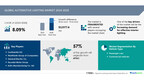
NEW YORK, Nov. 27, 2024 /PRNewswire/ — Report on how AI is redefining market landscape – The global automotive lighting market  size is estimated to grow by USD 12.38 billion from 2024-2028, according to Technavio. The market is estimated to grow at a CAGR of almost 8.09%  during the forecast period. Increasing demand for effective interior lighting is driving market growth, with a trend towards development of autonomous vehicles. However, high cost of led lamps  poses a challenge.Key market players include Continental AG, FlexNGate Group of Companies, General Electric Co., Hyundai Motor Group, Koito Manufacturing Co. Ltd., Koninklijke Philips N.V., LG Corp., Lumax Industries Ltd, Marelli Holdings Co. Ltd., Namyung Lighting Co. Ltd, NXP Semiconductors NV, OSRAM Licht AG, Robert Bosch GmbH, Samsung Electronics Co. Ltd., Seoul Semiconductor Co. Ltd., Stanley Electric Co. Ltd., Stellantis NV, Suprajit Engineering Ltd., Valeo SA, and Varroc Engineering Ltd..

AI-Powered Market Evolution Insights. Our comprehensive market report ready with the latest trends, growth opportunities, and strategic analysis- View Free Sample Report PDF

Forecast period

2024-2028

Base Year

2023

Historic Data

2018 – 2022

Segment Covered

Vehicle Type (Passenger cars and Commercial vehicles), End-user (OEM and Aftermarket), and Geography (APAC, Europe, North America, South America, and Middle East and Africa)

Region Covered

APAC, Europe, North America, South America, and Middle East and Africa

Key companies profiled

Continental AG, FlexNGate Group of Companies, General Electric Co., Hyundai Motor Group, Koito Manufacturing Co. Ltd., Koninklijke Philips N.V., LG Corp., Lumax Industries Ltd, Marelli Holdings Co. Ltd., Namyung Lighting Co. Ltd, NXP Semiconductors NV, OSRAM Licht AG, Robert Bosch GmbH, Samsung Electronics Co. Ltd., Seoul Semiconductor Co. Ltd., Stanley Electric Co. Ltd., Stellantis NV, Suprajit Engineering Ltd., Valeo SA, and Varroc Engineering Ltd.

Key Market Trends Fueling Growth

The Automotive Lighting Market is experiencing significant growth due to increasing demand from car users for advanced lighting systems in both passenger cars and commercial vehicles. Luxury vehicles lead the trend with adaptive lighting systems, such as LED lights and Xenon or HID headlights, becoming standard features. Indium gallium nitide and aluminum gallium arsenide are popular materials for these systems. Adaptive lighting includes projector headlights, reflector headlights, OLED, matrix LEDs, and laser glare-free lighting systems. These technologies enhance visibility during vehicle movements, especially on road tracks with pedestrians, road hazards, and traffic collisions. Passenger cars, buses, LCVs (light commercial vehicles) like pickup trucks, delivery vans, and heavy trucks are all adopting energy-efficient LED technology for headlights, tail lights, brake lights, reversing lights, turn signal lights, and interior lighting. Vehicle manufacturers focus on dynamic light sequencing, Dynamic Light System, and smart lighting systems to improve safety and road safety. The two-wheeler lighting market also follows this trend. Autonomous driving and specialized lighting technologies further boost the market growth. Traditional fixtures like halogen bulbs are being replaced by LED lamps due to their superior illumination and cooling equipment efficiency. Battery technology and charging infrastructure development in electric vehicles also impact the automotive lighting market. The market size is expected to grow based on increasing per capita income, vehicle aesthetics, and lighting design considerations. 

Leading automotive companies, including Delphi, Continental, Bosch, Daimler, Scania, and Volvo, are making significant strides in expanding the autonomous driving market. Their efforts, such as research and development, have led to increased acceptance of semi-autonomous features in both passenger and commercial vehicles. By the end of the forecast period, self-driving cars may become a reality, with a substantial number of these vehicles expected to be on the road within the next decade. These prominent automotive vendors have advanced in their research on autonomous vehicles, and the development and testing of features in advanced driver-assistance systems (ADAS) and telematics/connected vehicle applications and services are estimated to continue. 

Insights on how AI is driving innovation, efficiency, and market growth- Request Sample!

Market Challenges

The Automotive Lighting Market faces several challenges in catering to the varying needs of car users. For luxury vehicles, providing glare-free lighting systems using technologies like OLED, matrix LEDs, and laser is crucial. However, affordability remains a concern for mass-market passenger cars, buses, and commercial vehicles like freight trucks and LCVs. Pedestrian safety is a significant challenge, with the need for adaptive lighting systems that respond to road tracks, vehicle movements, and pedestrian presence. Daytime running lights and LED tail lights are popular energy-efficient lighting solutions. Lighting design also focuses on vehicle aesthetics and autonomous driving requirements. Specialized lighting technologies like LED, Indium Gallium Nitride, and Aluminum Gallium Arsenide continue to evolve, with cooling equipment and battery technology playing essential roles in their implementation. Road safety and improved visibility are key concerns, with the market witnessing a shift from halogen and HID to LED headlamps and tail lights. The two-wheeler lighting market also presents opportunities for innovation, with dynamic light sequencing and smart lighting systems gaining popularity.The automotive lighting market has seen significant growth with the increasing adoption of LED lamps. These lamps offer energy efficiency and numerous features, making them a popular choice over traditional halogen and compact fluorescent lamps (CFL). LED lamps last 25 times longer than halogen lamps and three times longer than CFL, reducing the frequency of replacements. However, their high upfront cost remains a barrier to purchase. Vendors are working to reduce costs while maintaining quality and efficiency, making LED lamps more accessible to consumers. Despite the price reduction, LED lamps remain more expensive than other automotive lighting options.

Insights into how AI is reshaping industries and driving growth- Download a Sample Report

Segment Overview 

This automotive lighting market report extensively covers market segmentation by

Vehicle Type1.1 Passenger cars1.2 Commercial vehiclesEnd-user 2.1 OEM2.2 AftermarketGeography 3.1 APAC3.2 Europe3.3 North America3.4 South America3.5 Middle East and Africa

1.1 Passenger cars-  The automotive lighting market in passenger cars is driven by the growing demand for both exterior and interior lighting systems. While exterior lighting is the primary factor fueling the market’s growth, the increasing preference for interior lighting offers significant opportunities for vendors. Interior lighting in passenger cars has evolved to provide functional and operational benefits, enhancing safety, appeal, and fashion. Although initially found in luxury vehicles, ambient interior lighting is gaining traction in mid-segment and economic classes. Key stakeholders include suppliers, OEMs, and aftermarket service providers, who influence new technology usage. The luxury car sector leads the interior automotive lighting market due to rising demand and technological innovations. SUVs, with their multipurpose applications and added comfort, are the primary driver for the passenger cars segment. Additionally, the increasing adoption of electric vehicles (EVs) and the focus on in-vehicle comfort are boosting market growth. The aftermarket for automotive lighting is also expanding as consumers seek to enhance their vehicles’ comfort and aesthetics.

Download complimentary Sample Report to gain insights into AI’s impact on market dynamics, emerging trends, and future opportunities- including forecast (2024-2028) and historic data (2018 – 2022) 

Research Analysis

The automotive lighting market is witnessing significant growth due to the increasing demand for advanced lighting systems in cars. Car users, especially those driving luxury vehicles, are seeking better visibility and safety features, leading to the adoption of adaptive lighting technologies such as LED lights and Halogen, Xenon or HID headlights. Indium gallium nitride is a key material used in the production of high-performance LED lights. Car lights are not just for illumination but also play a crucial role in ensuring the safety of motor vehicles by enhancing visibility during traffic collisions, pedestrian detection, and warning of road hazards. Vehicle manufacturers are integrating advanced lighting technologies like Daytime running lights, High-Intensity Discharge headlights, LED tail lights, and Smart lighting systems to improve vehicle movements and road tracking. Lighting technology continues to evolve with the introduction of Laser lighting technology, Laser headlights, and cooling equipment for LED lamps. The focus on enhancing vehicle safety and reducing fatal crashes is driving the demand for advanced automotive lighting systems.

Market Research Overview

The Automotive Lighting Market encompasses various lighting technologies and applications for motor vehicles, including cars, buses, commercial vehicles, and two-wheeler vehicles. Adaptive lighting, such as LED lights and Halogen, Xenon or HID, plays a crucial role in enhancing visibility during vehicle movements, particularly in luxury vehicles and passenger cars. Advanced lighting systems, like matrix LEDs, laser, and OLED, offer glare-free lighting and dynamic light sequencing for improved safety during traffic collisions and pedestrian detection. LED technology, with its energy-efficient solutions, dominates the market, with applications ranging from headlights to tail lights, brake lights, reversing lights, and interior lighting. The market also includes traditional fixtures like halogen bulbs and high-intensity discharge headlights. Autonomous driving and specialized lighting technologies are emerging trends in the market, focusing on safety and design flexibility. The two-wheeler lighting market also showcases advancements in LED technology, with dynamic lighting features and superior illumination. Factors influencing the market include vehicle movements, road hazards, road tracks, and per capita income. The market caters to various vehicle types, including passenger cars, electric vehicles, LCVs, pickup trucks, delivery vans, heavy trucks, and buses. Manufacturers prioritize energy-efficient lighting solutions, cooling equipment, and lighting design for both aesthetic and safety purposes. The market also includes advanced lighting systems like dynamic lighting features, side lighting, and lighting grille technology. Road safety, traffic accidents, and fatal crashes are significant concerns driving the demand for advanced lighting systems. The market’s future growth is expected to be influenced by battery technology, charging infrastructure, and the increasing popularity of electric vehicles.

Table of Contents:

1 Executive Summary
2 Market Landscape
3 Market Sizing
4 Historic Market Size
5 Five Forces Analysis
6 Market Segmentation

Vehicle TypePassenger CarsCommercial VehiclesEnd-userOEMAftermarketGeographyAPACEuropeNorth AmericaSouth AmericaMiddle East And Africa

7 Customer Landscape
8 Geographic Landscape
9 Drivers, Challenges, and Trends
10 Company Landscape
11 Company Analysis
12 Appendix

About Technavio

Technavio is a leading global technology research and advisory company. Their research and analysis focuses on emerging market trends and provides actionable insights to help businesses identify market opportunities and develop effective strategies to optimize their market positions.

With over 500 specialized analysts, Technavio’s report library consists of more than 17,000 reports and counting, covering 800 technologies, spanning across 50 countries. Their client base consists of enterprises of all sizes, including more than 100 Fortune 500 companies. This growing client base relies on Technavio’s comprehensive coverage, extensive research, and actionable market insights to identify opportunities in existing and potential markets and assess their competitive positions within changing market scenarios.

Contacts

Technavio Research
Jesse Maida
Media & Marketing Executive
US: +1 844 364 1100
UK: +44 203 893 3200
Email: media@technavio.com
Website: www.technavio.com/

View original content to download multimedia:https://www.prnewswire.com/news-releases/automotive-lighting-market-to-grow-by-usd-12-38-billion-2024-2028-with-rising-demand-for-interior-lighting-report-with-the-ai-impact-on-market-trends—technavio-302316296.html

SOURCE Technavio

Continue Reading
Click to comment

Leave a Reply

Your email address will not be published. Required fields are marked *

Technology

Quickplay’s Triple Play of New Customers, Products and Partnerships Set to Dominate NAB 2026

Published

on

By

LAS VEGAS, April 19, 2026 /PRNewswire/ — (2026 NAB Show) – Quickplay, the Content to Value Operating System, today unveiled a broad array of company news including: an AI-enriched solution that identifies social signals and trending topics, and connects them to relevant content within minutes; transformative customer deployments; and powerful industry research and partnerships.

Debuting at NAB, Social Signals is a new technology within Quickplay AI Studio that identifies trending cultural moments and matches them with high-value content assets to automatically generate social-ready clips and posts. By combining external trend data with performance insights from owned channels, Social Signals enables content teams to move from insight to publishing in minutes, rather than days.

Social Signals is a key part of Quickplay’s AI Studio Solution, which includes metadata enrichment, moment detection, smart verticalization and multi-platform publishing. Its Smart Verticalizer uses multimodal AI and action tracking to intelligently reframe video –preserving key visual elements such as faces, gameplay and on-screen graphics – to maintain broadcast-quality standards across short-form formats. The company has also partnered with Visible Things, the creator-driven platform to deploy the first implementation of Social Signals across the Visible Things infrastructure.

Quickplay further announced it has gone live with Gray Media (NYSE: GTN)’s new streaming experience, which included consolidating 1,300 digital touchpoint, including 163 websites, 326 mobile apps and 815 CTV apps onto a single data-driven platform powered by Quickplay and Google Cloud (NASDAQ: GOOGL). The system now manages 269 live channels and 123 FAST channels across Amazon Prime Video, Roku (NASDAQ: ROKU), Samsung TV Plus, Vizio and Fire TV, delivering hyper-local content to 37% of U.S. TV households.

Quickplay also announced the cloud-native transformation of Television New Zealand’s streaming platform, TVNZ+. Completed in 12 months, Quickplay replaced a fragmented ecosystem of six+ vendors across UI/UX, content management, video processing, advertising and analytics with a single, unified platform. The team at TVNZ also named Amazon Web Services (NASDAQ: AMZN) as its preferred cloud platform for the transformation, further increasing efficiencies and lowering costs by consolidating onto a single cloud vendor. The technology overhaul will drive unprecedented innovation and efficiency for TVNZ, New Zealand’s state-owned broadcaster, which reaches over two million New Zealanders daily.

“Broadcasters don’t need another point solution. They need an AI-enabled operating system that turns content into measurable outcomes,” said Paul Pastor, Co-Founder and Chief Business Officer at Quickplay. “At NAB, we’re showing how to bring cultural moments, content catalogs and distribution workflows together to create engaging and revenue opportunities in real time.”

In partnership with Caretta Research, Quickplay will also release new research, “The Broadcaster Revolution Will Not Be Televised,” highlighting a critical bottleneck in the industry: North American broadcasters spend approximately 75% of their time on technical workflows, leaving only 25% for content creation. The report outlines how automated workflows and unified operations can help broadcasters meet the growing demand for short-form video while maintaining editorial quality and accelerating monetization.

Additionally, Quickplay has joined NAB PILOT, a coalition of innovators, educators and advocates dedicated to advancing broadcast technologies and cultivating new media opportunities. As a part of this group, Quickplay is expanding its collaboration with broadcasters to redefine how value is derived from content.

Quickplay at NAB 2026:

Paul Pastor, Jordan Bartow, and Peter Tanner of Quickplay, and Albert Lai of Google Cloud will be on a panel: An Audience of One: How Gray Media + Google Cloud + Quickplay are Using AI and Cloud OTT to Personalize Local News, Enable User-Generated Content, Engage Younger Viewers, and Unlock New Revenue for Broadcasters. Central Hall Stage, Monday, April 20 at 4:15p PTAt the NAB Streaming Summit TVNZ’s Chief Digital Officer, Rob Hutchinson, will present “How TVNZ+ Built a Co-Viewing Product” on Tuesday, April 21 at 11:30 AM PT.Live Demonstrations: See Quickplay technology in action at AWS, GCP, TwelveLabs and the Encore. To book a meeting, email hello@quickplay.com

About Quickplay:
Quickplay is the Content to Value Operating System for media and entertainment, connecting every stage of the content lifecycle, from creation to monetization. By applying intelligence where it drives measurable impact, Quickplay enables broadcasters, sports operators, streamers, and creators to turn their catalogs into revenue. Quickplay powers 2.5 billion streaming minutes per month, with 5 billion ad impressions served and 99.999% streaming uptime. 

Quickplay was founded by four innovators with deep media and entertainment technology experience from AT&T, McKinsey and Company, The Walt Disney Company, and Warner Bros. Discovery. Headquartered in Toronto, the company has offices in Los Angeles, San Diego, Chennai, and throughout Europe. For more information, visit quickplay.com.

Media Contact:
Breakaway Communications for Quickplay
quickplaypr@breakawaycom.com
+1 917-731-5734

View original content to download multimedia:https://www.prnewswire.com/news-releases/quickplays-triple-play-of-new-customers-products-and-partnerships-set-to-dominate-nab-2026-302746637.html

SOURCE Quickplay

Continue Reading

Technology

Harmonic Enables DIRECTV to Reimagine Nationwide DTH Service

Published

on

By

Harmonic’s Cloud-Native VOS Media Software Lowers Costs by Unifying Media Playout to Delivery on a Single Platform

SAN JOSE, Calif., April 19, 2026 /PRNewswire/ — Harmonic (NASDAQ: HLIT) today announced that DIRECTV is transforming its U.S. direct-to-home (DTH) video platform with Harmonic’s VOS® Media Software. Powering DIRECTV’s playout-to-delivery workflow, Harmonic’s cloud-native software reduces operational costs while enabling scalable, exceptional-quality video delivery for the service provider’s vast array of linear channels.

“As the demand for high-quality media content soars, DIRECTV is committed to deploying innovative technology solutions that bring unparalleled entertainment experiences to our customers. Continuing our work with Harmonic is critical to achieving this mission,” said Jeffrey Seto, vice president of satellite and software engineering at DIRECTV. “Harmonic’s VOS Media Software replaces siloed systems with a unified, software-based platform. By centralizing advanced playout, ad insertion, branding and media processing, we’re simplifying operations and building a scalable foundation.”

Harmonic’s VOS Media Software enables a complete playout-to-delivery workflow for DIRECTV running in its private data center. The Harmonic solution handles ingest, advanced playout, ad insertion, branding, premium encoding and statistical multiplexing for the delivery of broadcast-quality linear channels via satellite distribution. VOS Media Software’s playout capabilities support ad insertion across DIRECTV’s high-value linear and occasional-use channels — including live events and pay-per-view programming — boosting monetization. DIRECTV’s internal automation, storage and monitoring systems are integrated directly with Harmonic’s APIs, enabling seamless control of scheduling, automation and channel operations.

“Harmonic is proud to support DIRECTV’s software-based approach in modernizing its playout-to-delivery operations,” said Gil Rudge, senior vice president, solutions and Americas sales, video business at Harmonic. “With Harmonic’s AI-driven encoding and advanced compression solution, DIRECTV is well positioned to deliver exceptional video experiences to viewers across their linear channels, optimizing quality while minimizing bandwidth usage and operational costs.”

Harmonic will showcase its VOS Media Software at the 2026 NAB Show, April 19-22, in Las Vegas in booth W2831. To schedule a meeting with the company, visit www.harmonicinc.com/video-streaming/events/nab/. Further information about Harmonic and the company’s solutions is available at www.harmonicinc.com.

About Harmonic
Harmonic (NASDAQ: HLIT), the worldwide leader in virtualized broadband and video delivery solutions, enables media companies and service providers to deliver ultra-high-quality video streaming and broadcast services to consumers globally. The company revolutionized broadband networking via the industry’s first virtualized broadband solution, enabling operators to more flexibly deploy gigabit internet services to consumers’ homes and mobile devices. Whether simplifying OTT video delivery via innovative cloud and software platforms, or powering the delivery of gigabit internet services, Harmonic is changing the way media companies and service providers monetize live and on-demand content on every screen. More information is available at www.harmonicinc.com

Legal Notice Regarding Forward-Looking Statements
This press release contains forward-looking statements within the meaning of Section 27A of the Securities Act of 1933 and Section 21E of the Securities Exchange Act of 1934. Statements concerning Harmonic’s business and the anticipated capabilities, advantages, reliability, efficiency, market acceptance, market growth, specifications and benefits of Harmonic products, services and technology are forward-looking statements. These statements are based on our current expectations and beliefs and are subject to risks and uncertainties, including the risks and uncertainties more fully described in Harmonic’s filings with the Securities and Exchange Commission, including its Annual Report on Form 10-K for the year ended Dec. 31, 2025, its Quarterly Reports on Form 10-Q and its Current Reports on Form 8-K. The forward-looking statements in this press release are based on information available to Harmonic as of the date hereof, and Harmonic disclaims any obligation to update any forward-looking statements.

Harmonic, the Harmonic logo and other Harmonic marks are owned by Harmonic Inc. or its affiliates. All other trademarks referenced herein are the property of their respective owners.

View original content to download multimedia:https://www.prnewswire.com/news-releases/harmonic-enables-directv-to-reimagine-nationwide-dth-service-302744362.html

SOURCE Harmonic Inc.

Continue Reading

Technology

TVU Networks and Tencent Cloud Unveil Next-Generation Cloud Production Solution at NAB 2026

Published

on

By

Strategic partnership combines TVU’s cloud-native production platform with Tencent Cloud’s global infrastructure to power next-generation live streaming workflows

LAS VEGAS, April 19, 2026 /PRNewswire/ — TVU Networks, a leader in cloud-native live video solutions, today announced a strategic partnership with Tencent Cloud to launch a next-generation cloud-based media production and distribution platform at NAB 2026. The joint solution empowers broadcasters, content creators, and enterprises to elevate the live streaming experience and unlock new revenue streams.

The global media industry is undergoing a structural shift. According to Omdia, total revenue from traditional TV and online video is projected to reach $1.03 trillion by 2030, with online video advertising expected to grow from $309 billion to $540 billion over the same period. The TVU–Tencent Cloud platform is purpose-built to help customers capture this growth — combining professional cloud production with internet-scale interactivity and monetization.

The platform serves three major segments: broadcasters and OTT providers launching agile FAST channels with global CDN distribution; media platforms and creators requiring mobile-first, broadcast-quality production from anywhere; and enterprises producing high-profile live events with professional-grade multi-camera setups and massive concurrent viewership.

At the core is TVU’s cloud-native microservices architecture — proven in the 2024 Paris Games Torch Relay, a global club football championship spanning remote production across nine countries, and BBC’s UK General Election coverage with 369 simultaneous live streams. Deep integration with Tencent Cloud delivers five key advantages: ultra-low latency streaming via intelligent routing across global edge nodes; elastic scalability powered by TKE container services; cloud-native optimization for peak reliability; AI-powered production including automated subtitles, intelligent editing, and content moderation; and enterprise-grade end-to-end encryption from acquisition through distribution.

Paul Shen, CEO of TVU Networks, stated: “TVU has always been committed to making professional production capabilities more efficient and flexible through cloud-native architecture. Tencent Cloud’s deep expertise and customer insights in the media sector are highly complementary to TVU’s product and technology strengths in cloud production — and that’s the foundation that brought us together. The goal of this joint solution is clear: to help customers build a complete pipeline from content production to audience engagement to monetization, making AI&cloud-based production a true engine for business growth.”

Yan Peng added: “Through our partnership with TVU, we can rapidly help customers build a next-generation technology infrastructure — enabling global acquisition, global production, and global distribution — while driving commercial growth through internet-based services.”

View original content to download multimedia:https://www.prnewswire.com/news-releases/tvu-networks-and-tencent-cloud-unveil-next-generation-cloud-production-solution-at-nab-2026-302746450.html

SOURCE TVU Networks

Continue Reading

Trending