Connect with us

Technology

Cloud Storage Services Market to grow by USD 123.84 Billion from 2024-2028, driven by increased data generation, with AI shaping market trends – Technavio

Published

on

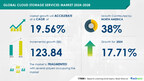
NEW YORK, Nov. 27, 2024 /PRNewswire/ — Report on how AI is redefining market landscape – The global cloud storage services market size is estimated to grow by USD 123.84 billion from 2024-2028, according to Technavio. The market is estimated to grow at a CAGR of 19.56% during the forecast period. Growth in data generation is driving market growth, with a trend towards high adoption of cloud storage services by SMES. However, vendor lock-in issues poses a challenge. Key market players include Alibaba Group Holding Ltd., Alphabet Inc., Amazon.com Inc., Cloud Software Group Inc., Dell Technologies Inc., Fujitsu Ltd., Hewlett Packard Enterprise Co., Hitachi Ltd., Huawei Technologies Co. Ltd., International Business Machines Corp., InterVision Systems LLC, Microsoft Corp., NetApp Inc., Nutanix Inc., Oracle Corp., Pure Storage Inc., Rackspace Technology Inc., ServiceNow Inc., Tencent Holdings Ltd., and Toshiba Corp..

AI-Powered Market Evolution Insights. Our comprehensive market report ready with the latest trends, growth opportunities, and strategic analysis- View Free Sample Report PDF

Forecast period

2024-2028

Base Year

2023

Historic Data

2018 – 2022

Segment Covered

Component (Solutions and Services), End-user (Large enterprises and SMEs), and Geography (North America, APAC, Europe, South America, and Middle East and Africa)

Region Covered

North America, APAC, Europe, South America, and Middle East and Africa

Key companies profiled

Alibaba Group Holding Ltd., Alphabet Inc., Amazon.com Inc., Cloud Software Group Inc., Dell Technologies Inc., Fujitsu Ltd., Hewlett Packard Enterprise Co., Hitachi Ltd., Huawei Technologies Co. Ltd., International Business Machines Corp., InterVision Systems LLC, Microsoft Corp., NetApp Inc., Nutanix Inc., Oracle Corp., Pure Storage Inc., Rackspace Technology Inc., ServiceNow Inc., Tencent Holdings Ltd., and Toshiba Corp.

Key Market Trends Fueling Growth

Cloud storage services have seen adoption in business environments due to their flexibility, scalability, and convenience. Agile IT companies are increasingly turning to cloud storage solutions for their data needs, from small businesses to large enterprises. Cloud storage providers offer various models, including public, private, and hybrid, catering to different business requirements. Key trends include the integration of AI and automation for data management, ensuring data security and integrity. Big data and IoT proliferation necessitate cloud storage for handling large volumes of data. Rapid deployment and reduced CAPEX are also driving the adoption of cloud storage services. Cloud storage solutions offer user-friendly interfaces, seamless monitoring, and reliable uninterrupted services. Data encryption, backup, and synchronization are essential features for safeguarding critical information. Service providers offer customizable storage models, including block, file, and object storage, catering to various use cases. Cloud storage services enable IT hardware savings, quick deployment, and easy accessibility for remote workforces. The technology development also supports database sharing, EC2 Console, and edge computing. With the increasing use of connected devices, cloud storage is essential for data generation and management. Cloud storage services are not just for IT environments but also for verticals like government, healthcare, and finance, ensuring data security and compliance. The market continues to grow, with Dropbox, Amazon S3, and Microsoft Azure leading the way. The future of cloud storage services includes advanced features like self-driving cars, remote sensing, and real-time data processing. 

Enterprises worldwide, including Small and Medium Enterprises (SMEs), are prioritizing cost reduction by embracing new technologies. Cloud storage services have emerged as a preferred choice for SMEs due to their limited IT resources and budget. Instead of managing their own data centers, SMEs can access IT resources like storage and servers on-demand through cloud solutions. Cloud storage offers cross-platform solutions, enabling SMEs to develop web, desktop, and mobile applications for various device types and architectures. The flexibility to scale resources up or down according to requirements makes cloud storage an economical and efficient choice for SMEs. 

Insights on how AI is driving innovation, efficiency, and market growth- Request Sample!

Market Challenges

Cloud storage services have become essential for businesses of all sizes, enabling convenient access to data from anywhere, at any time. However, the market faces several challenges. Agile businesses require quick deployment and scalability, making AI and automation crucial for cloud storage solutions. Big data and data volume necessitate adoption of public and private cloud storage. Data security, integrity, and encryption are paramount, with ransomware and malware posing significant threats. IT environments, including cloud applications, edge computing, and IoT, proliferate, necessitating flexible, user-friendly, and scalable models. Hybrid cloud solutions offer the convenience of public cloud with the security of private cloud. SMEs and large enterprises seek reliable, cost-effective options, while verticals like government, healthcare, and finance prioritize data safeguarding. Cloud storage providers must offer seamless monitoring, customization, and backup. Service providers must ensure uninterrupted services, handling data generation from connected devices and containerized workloads. Rapid deployment, reduced CAPEX, and accessibility are essential for businesses during economic downturns. Cloud storage solutions must cater to the increasing demands of technology development, database sharing, and software stack synchronization. Cloud storage services must be secure, reliable, and offer user-control. They must support various storage models, including block, file, and object storage, and cater to the needs of various industries, including self-driving cars, remote sensing, and remote work. Ultimately, cloud storage services must be convenient, reliable, and cost-effective, enabling businesses to focus on their core competencies.Vendor lock-in is a significant challenge in the cloud storage services market, preventing customers from easily transitioning between vendors. This issue arises when a customer becomes dependent on a specific vendor due to the use of their proprietary technology or solutions. The lack of standardization in cloud computing exacerbates this problem, making it difficult for customers to switch to alternative vendors. Applications built on specific platforms and tools further complicate the situation. To address this concern, there is a growing need for standardization and interoperability in cloud storage services. This will enable customers to freely choose the vendor that best suits their needs without facing undue barriers to migration.

Insights into how AI is reshaping industries and driving growth- Download a Sample Report

Segment Overview 

This cloud storage services market report extensively covers market segmentation by

Component 1.1 Solutions1.2 ServicesEnd-user 2.1 Large enterprises2.2 SMEsGeography 3.1 North America3.2 APAC3.3 Europe3.4 South America3.5 Middle East and Africa

1.1 Solutions- Cloud storage solutions hold a significant position in the component segment of the global cloud storage services market in 2023. These solutions cater to unique customer requirements and generate value through offerings like data security, file synchronization and sharing, disaster recovery, and data backup and recovery. The solutions segment encompasses various cloud-based storage solutions such as file storage and sharing, primary storage, disaster recovery, and backup storage. The popularity of cloud storage solutions among Small and Medium Enterprises (SMEs) due to their scalability, flexibility, cost-effectiveness, and security features. Solutions like Google Drive and Dropbox provide a range of storage options and top-level encryption for data protection. With the shift to remote work due to the COVID-19 pandemic, cloud storage solutions have become indispensable for enabling file sharing and collaboration between teams. Microsoft OneDrive is an example of a cloud storage solution offering file-sharing features. The increasing demand for cloud storage solutions is driven by their scalability, flexibility, cost-effectiveness, security, and file-sharing capabilities, making them a vital component for end-users in data storage and sharing. Consequently, the growth of the global cloud storage services market is anticipated to be fueled by the solutions segment during the forecast period.

Download complimentary Sample Report to gain insights into AI’s impact on market dynamics, emerging trends, and future opportunities- including forecast (2024-2028) and historic data (2018 – 2022) 

Research Analysis

The Cloud Storage Services Market is experiencing exponential growth due to the increasing adoption of cloud technologies by businesses of all sizes. Agile and flexible cloud storage solutions cater to various use cases, including cloud object storage for unstructured data, block storage for databases, and file storage for traditional applications. Big data and IoT generate massive volumes of data, necessitating scalable and secure cloud storage solutions. Artificial intelligence (AI) and automation are transforming cloud storage, enabling data analysis, and improving business continuity. AI-driven data management tools ensure data integrity and security, while edge computing reduces latency and enhances performance. Cloud-based storage solutions offer cost savings, ease of deployment, and seamless integration with cloud applications. Cloud archival storage is an essential component for long-term data retention and disaster recovery. Overall, cloud storage services provide and reliable infrastructure for managing and securing data in the digital age.

Market Research Overview

Cloud Storage Services Market: Unleashing the Power of Agile and Scalable Data Storage Cloud storage services have revolutionized the way businesses handle data, enabling convenient customization, rapid deployment, and uninterrupted services. The market is witnessing adoption across various verticals, from large enterprises to SMEs, due to its flexibility, reliability, and reduced CAPEX. The proliferation of cloud technologies, including AI and automation, is driving innovation, with cloud storage solutions offering advanced features like data encryption, integrity, and security. The market caters to diverse storage needs, from file storage and block storage to cloud object storage and cloud archival storage. Cloud storage services are integral to cloud applications, hybrid cloud, and edge computing, ensuring seamless monitoring and safeguarding data from malware and ransomware attacks. The Internet of Things (IoT) and remote work have further fueled the demand for cloud-based storage, with connected devices and containerized workloads generating massive data volumes. Cloud storage providers offer various storage models, including public, private, and hybrid cloud storage, catering to the unique requirements of different IT environments. The market is expected to continue its rapid growth, driven by technology development, increased data generation, and the need for business continuity and data backup. With user-friendly interfaces, convenient accessibility, and scalable models, cloud storage services are an essential component of modern IT infrastructure.

Table of Contents:

1 Executive Summary
2 Market Landscape
3 Market Sizing
4 Historic Market Size
5 Five Forces Analysis
6 Market Segmentation

ComponentSolutionsServicesEnd-userLarge EnterprisesSMEsGeographyNorth AmericaAPACEuropeSouth AmericaMiddle East And Africa

7 Customer Landscape
8 Geographic Landscape
9 Drivers, Challenges, and Trends
10 Company Landscape
11 Company Analysis
12 Appendix

About Technavio

Technavio is a leading global technology research and advisory company. Their research and analysis focuses on emerging market trends and provides actionable insights to help businesses identify market opportunities and develop effective strategies to optimize their market positions.

With over 500 specialized analysts, Technavio’s report library consists of more than 17,000 reports and counting, covering 800 technologies, spanning across 50 countries. Their client base consists of enterprises of all sizes, including more than 100 Fortune 500 companies. This growing client base relies on Technavio’s comprehensive coverage, extensive research, and actionable market insights to identify opportunities in existing and potential markets and assess their competitive positions within changing market scenarios.

Contacts

Technavio Research
Jesse Maida
Media & Marketing Executive
US: +1 844 364 1100
UK: +44 203 893 3200
Email: media@technavio.com
Website: www.technavio.com/

View original content to download multimedia:https://www.prnewswire.com/news-releases/cloud-storage-services-market-to-grow-by-usd-123-84-billion-from-2024-2028–driven-by-increased-data-generation-with-ai-shaping-market-trends—technavio-302316525.html

SOURCE Technavio

Continue Reading
Click to comment

Leave a Reply

Your email address will not be published. Required fields are marked *

Technology

SK hynix Begins Mass Production of 192GB SOCAMM2 ‘Setting a New Standard for AI Server Memory Performance’

Published

on

By

–     Mass production of 192GB high capacity products designed for the NVIDIA Vera Rubin platform
–     Maximizes power efficiency by featuring high density DRAM based on the latest 1cnm process
–     Company to closely collaborate with NVIDIA to solve bottlenecks in AI infrastructure and provide optimal performance

SEOUL, South Korea, April 19, 2026 /PRNewswire/ — SK hynix Inc. (or “the company”, www.skhynix.com) announced today that it has begun mass production of the 192GB SOCAMM2, a next-generation memory module standard based on the 1cnm process (sixth-generation of the 10-nanometer technology) LPDDR5X low-power DRAM.

SOCAMM2[1] is a module that adapts low-power memory – which was previously used mainly in mobile products like smartphones – for server environments. It is designed to be a primary memory solution for next-generation AI servers.

[1]SOCAMM2 (Small Outline Compression Attached Memory Module 2): An AI server–optimized memory module based on LPDDR. It offers a slim form factor and high scalability, while its compression connector enhances signal integrity and allows for easy module replacement

SK hynix emphasized that the 1cnm based SOCAMM2 product that is now in mass production delivers more than double the bandwidth with over 75% improved power efficiency compared to conventional RDIMM[2], providing an optimized solution for high performance AI operations.

[2]RDIMM (Registered Dual In-Line Memory Module): DRAM module for server/workstation that includes a register or buffer chip to relay address and command signals between the memory controller and DRAM chip in a memory module

In particular, the company noted that its SOCAMM2 products are designed for NVIDIA Vera Rubin platform.

SK hynix expects the new SOCAMM2 product will fundamentally resolve the memory bottlenecks encountered during the training and inference of large language model (LLM) with hundreds of billions of parameters, thereby playing a pivotal role in dramatically accelerating the processing speed of the overall system.

The company stated that with the AI market shifting focus from inference to training, SOCAMM2 is gaining significant attention as a next-generation memory solution capable of operating LLMs with low power consumption. To meet the demands of its global Cloud Service Provider (CSP) customers, SK hynix has not only been providing a supply portfolio, but also stabilized its mass production system early on.

“By supplying the 192GB SOCAMM2, SK hynix has established a new standard for AI memory performance,” Justin Kim, President & Head of AI Infra (CMO, Chief Marketing Officer) at SK hynix said. “We will solidify our position as the most trusted AI memory solution provider, through close collaboration with our global AI customers.”

About SK hynix Inc.

SK hynix Inc., headquartered in Korea, is the world’s top-tier semiconductor supplier offering Dynamic Random Access Memory chips (“DRAM”) and flash memory chips (“NAND flash”) for a wide range of distinguished customers globally. The Company’s shares are traded on the Korea Exchange, and the Global Depository shares are listed on the Luxembourg Stock Exchange. Further information about SK hynix is available at www.skhynix.com, news.skhynix.com.

View original content:https://www.prnewswire.com/news-releases/sk-hynix-begins-mass-production-of-192gb-socamm2–setting-a-new-standard-for-ai-server-memory-performance-302746711.html

SOURCE SK hynix Inc.

Continue Reading

Technology

EBANX announces expansion into four Southeast Asian countries and Turkey, unlocking a USD 610 billion digital market

Published

on

By

Following the inauguration of its Asia-Pacific Headquarters in Singapore, EBANX brings its payments infrastructure to Thailand, Indonesia, Malaysia, Vietnam, and Turkey, opening access to more than 380 million consumers for global merchants

SINGAPORE, April 20, 2026 /PRNewswire/ — EBANX, a global technology company specializing in cross-border payment services for emerging markets, today announced it will begin operating in five new countries: Thailand, Indonesia, Malaysia, Vietnam, and Turkey. With this expansion, EBANX will have integrated payment methods across seven economies in Asia, including India and the Philippines. Combined, they represent a USD 610 billion opportunity in digital commerce and more than 1.1 billion consumers, according to data from Payments and Commerce Market Intelligence (PCMI) and World Data Lab (WDL) analyzed by EBANX. The five new markets alone account for 57% of that volume and 386 million of those consumers — whose spending is projected to grow 97% over the next decade, faster than regions like Europe, the US, and Canada, per WDL data featured in EBANX’s Beyond Borders 2026 study.

EBANX’s announcement follows a series of milestones in the region: the inauguration of its Asia-Pacific Headquarters in Singapore, a Major Payment Institution (MPI) license from the Monetary Authority of Singapore (MAS), and the appointment of Eduardo de Abreu as Chief Product Officer (CPO) and regional CEO of EBANX Singapore.

“Asia is where the world’s fastest-growing consumer base is, and also where some of the most ambitious digital companies are headquartered,” said João Del Valle, Co-founder and CEO of EBANX. “Our investment in the region allows us to be closer to both. Global companies need local payment infrastructure to reach Asian consumers, and Asian companies need that same expertise to sell internationally. The opportunity runs in both directions.”

Among the five new EBANX’s additions, Vietnam is the fastest-growing digital commerce market, with a 22% compound annual rate through 2027, according to PCMI projections — rising from USD 36 billion to USD 44 billion. The others are not far behind. Indonesia will expand 19% over the same period, from USD 106 billion to USD 125 billion. Turkey’s 15% growth takes it from USD 123 billion to USD 142 billion. Malaysia and Thailand round out the group at 16% and 15%, respectively.

As global merchants look to diversify beyond established markets like the U.S., Europe, Brazil, and Mexico, cross-border demand in these economies is already waiting for them: international transactions account for 30% of e-commerce volume in Thailand and Malaysia, and 28% in the Philippines.

EBANX’s operations in Indonesia, Thailand, and Turkey are already available to merchants, with Malaysia and Vietnam set to follow in the next quarter. These operations will be fully supported by EBANX’s APAC HQ in Singapore.

A region that skipped the card era

Southeast Asia’s payment landscape is structurally distinct from other emerging markets. EBANX’s new countries of payment operations largely bypassed card infrastructure entirely, going from cash straight to e-wallets and account-to-account (A2A) transfers. Combined, those two methods account for 65% of e-commerce in Thailand, 61% in Indonesia, 50% in the Philippines, 35% in Malaysia, and 21% in Vietnam, according to PCMI.

“This did not happen by accident,” explained Eduardo de Abreu, Chief Product Officer and regional CEO of EBANX Singapore. “Southeast Asia has one of the youngest, most digitally fluent consumer populations in the world. Many of them got their first smartphone before they ever had a bank account, and certainly before they had a credit card. Digital wallets and instant transfers solved a real problem for a generation that was already living online.”

According to WDL data analysed by EBANX, Southeast Asia and India are the only regions where Generation Z holds the largest share of online spending across all verticals, at 27%. Elsewhere in Asia, Generation X leads at 30% — nearly double Gen Z’s 18% share.

How to reach local consumers

That payment landscape has become a barrier for global companies looking to scale in the region. According to an EBANX survey with its merchants, its fragmentation and low card usage often lead to performance issues that prevent them from reaching local consumers.

“The global companies we talk to about Southeast Asia are no longer asking about the region’s potential; they are asking how to unlock that potential and achieve high conversion rates,” said Abreu. “Our APAC Headquarters in Singapore gives us the regulatory anchor and the operational proximity to build country-by-country solutions that actually convert. We have been working toward this expansion for years, and the infrastructure is ready.”

Considering the seven Asian countries in EBANX’s portfolio, the company will have integrated more than 20 payment methods across the region. Among them are some of the most widely used alternative payment methods in each market, such as digital wallets and account-to-account (A2A) transactions—like bank transfers and QR-based paymentsas well as credit and debit cards.

ABOUT EBANX

EBANX is the leading technology platform connecting global businesses to the world’s fastest-growing digital markets. Founded in 2012 in Brazil, EBANX was built with a mission to expand access to international digital commerce. Leveraging proprietary technology, deep market expertise, and robust infrastructure, the platform enables global businesses to offer hundreds of local payment methods and streamline cross-border payments across Latin America, Africa, and Asia. With a global footprint, it established a technology and regulatory headquarters in Singapore in 2026. More than just payments, EBANX drives growth, enhances sales, and delivers seamless purchase experiences for businesses and end users alike.

For further information, please visit:
Website: https://www.ebanx.com/en/
LinkedIn: https://www.linkedin.com/company/ebanx

Media Contact:
Shan Huang
shan.huang@ahgstrategies.com 

View original content to download multimedia:https://www.prnewswire.com/apac/news-releases/ebanx-announces-expansion-into-four-southeast-asian-countries-and-turkey-unlocking-a-usd-610-billion-digital-market-302745701.html

SOURCE EBANX

Continue Reading

Technology

Agoda Report Highlights Opportunities for Japanese Hoteliers to Capture Asia’s Travelers as Only 34% Reach Advanced Localization

Published

on

By

Insights from Agoda’s latest report highlight how moving beyond basic localization can drive stronger revenue outcomes as Japan sees rising intra-Asia travel demand

SINGAPORE, April 20, 2026 /PRNewswire/ — Digital travel platform Agoda, in its latest deep dive report “Tailored to Win: Mastering Localization to Capture Asia’s Travelers in Japan“, reveals opportunities for Japanese hotels to capture more value from Asia’s fast-growing travel demand, with only 34% of properties having progressed beyond basic localization strategies.

Among surveyed properties, 71% of hotels at early stages of localization report positive revenue outcomes, compared to all hotels that have implemented more advanced localization, showing that while early efforts are delivering results, a more holistic approach maximizes commercial outcomes.

According to the Japan National Tourism Organization (JNTO), the market welcomed over 42 million international visitors in 2025, a 16% year-on-year increase, with Asian travelers accounting for over 80% of all arrivals.[1]  With such a high concentration of regional travelers, tailored strategies are becoming essential for hotels looking to better capture Japan’s Asian visitor market.

Agoda’s report highlights that with around 7 in 10 visitors coming from just five key Asian markets (South Korea, China, Taiwan, Hong Kong, and Thailand), hotels need to move beyond one-size-fits-all strategies and tailor their offerings to the distinct preferences of each market, whether through localized digital payment options, language support or culturally relevant on-site experiences. Hotels that adopt this more integrated approach are already seeing results, with around 80% of surveyed hoteliers reporting improvements in bookings.

“Only 34% of hotels have reached advanced stages of localization today with real opportunity lying in accelerating these efforts across the guest experience,” said Tadashi Ikai, Senior Country Director for Japan at Agoda. “By closing gaps across payments, language, and cultural understanding, hotels can better connect with Japan’s highly concentrated Asian traveler base and turn this into a sustained competitive advantage.”

Despite the potential results, Japanese hotels face several challenges in advancing localization efforts. According to the report, hoteliers cite limitations in payment integrations and marketing resources (each at 51%) as key barriers, alongside gaps in foreign language capabilities and awareness of cultural norms (each at 49%). These constraints continue to slow the adoption of more advanced, market-specific strategies.

As Japan’s tourism landscape becomes increasingly shaped by regional travel, the ability to deliver culturally attuned and localized guest experiences is becoming a key differentiator. To help partners navigate these challenges, Agoda’s report includes targeted “Quick Wins” based on traveler motivations:

South Korean Travelers: Seeks cultural exploration and unique local experiencesChinese Travelers: Spends more on experiences such as dining and activities rather than accommodationTaiwanese Travelers: Strongly motivated by culinary exploration and wellness experiencesHong Kong Travelers: Frequent, tech-savvy repeat visitors who value flexibility and convenienceThai Travelers: Often travel in families and favor budget-conscious, short-haul getaways

Agoda’s digital suite for localization draws on a global network of over 6 million diverse accommodations across markets, enabling partners to better align their offerings with the preferences of different traveler segments. With support for 39 languages, multi-currency payment options, and 24/7 customer support, Agoda helps hotels deliver more seamless and locally relevant experiences. Dedicated programs such as the Agoda Growth Program for visibility in priority markets, country-specific promotions and Agoda Media Solutions for native-language campaigns further support partners in localizing effectively. Through Agoda’s platform and expertise, hotels can overcome barriers, reach new segments and optimize their returns from international demand.

To explore how practical localization tips and actionable insights can help hotels capture more value from Asia’s diverse traveler base, download the full report at https://ago-da.co/4bAITjm.

[1] Japan National Tourism Organization (JNTO) (2025), “Tourism Statistics Database – Inbound Travel to Japan (Annual Data 2025).”
Available at: https://www.tourism.jp/en/tourism-database/stats/inbound/


View original content to download multimedia:https://www.prnewswire.com/apac/news-releases/agoda-report-highlights-opportunities-for-japanese-hoteliers-to-capture-asias-travelers-as-only-34-reach-advanced-localization-302739301.html

SOURCE Agoda

Continue Reading

Trending