Connect with us

Technology

Ticket Market to Grow by USD 554.2 Billion (2025-2029), Driven by Movie Success Through Animation, Report on How AI is Redefining the Market Landscape – Technavio

Published

on

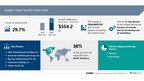
NEW YORK, Jan. 28, 2025 /PRNewswire/ — Report with market evolution powered by AI – The global ticket market size is estimated to grow by USD 554.2 billion from 2025-2029, according to Technavio. The market is estimated to grow at a CAGR of 29.7% during the forecast period. Success of movies due to increasing use of animation is driving market growth, with a trend towards high utilization of social media in selling tickets. However, growing threat of terrorism and occurrence of war between nations poses a challenge. Key market players include AMC Entertainment Holdings Inc., Anschutz Entertainment Group Inc., Big Tree Entertainment Pvt. Ltd., Cinemark Holdings Inc., Citizen Ticket Ltd., Coast To Coast Tickets LLC, Comcast Corp., CTS Eventim AG and Co. KGaA, Cvent Holding Corp., eBay Inc., Eventbee Inc., Eventbrite Inc., Ideabud LLC, Live Nation Entertainment Inc., Lyte Inc., One97 Communications Ltd., Softjourn Corp., TickPick LLC, Viagogo Entertainment Inc., and Zoonga.

Key insights into market evolution with AI-powered analysis. Explore trends, segmentation, and growth drivers- View Free Sample PDF

Ticket Market Scope

Report Coverage

Details

Base year

2024

Historic period

2019 – 2023

Forecast period

2025-2029

Growth momentum & CAGR

Accelerate at a CAGR of 29.7%

Market growth 2025-2029

USD 554.2 billion

Market structure

Fragmented

YoY growth 2022-2023 (%)

24.6

Regional analysis

North America, Europe, APAC, South America, and Middle East and Africa

Performing market contribution

North America at 38%

Key countries

US, China, UK, Germany, India, Canada, Japan, France, South Korea, and Italy

Key companies profiled

AMC Entertainment Holdings Inc., Anschutz Entertainment Group Inc., Big Tree Entertainment Pvt. Ltd., Cinemark Holdings Inc., Citizen Ticket Ltd., Coast To Coast Tickets LLC, Comcast Corp., CTS Eventim AG and Co. KGaA, Cvent Holding Corp., eBay Inc., Eventbee Inc., Eventbrite Inc., Ideabud LLC, Live Nation Entertainment Inc., Lyte Inc., One97 Communications Ltd., Softjourn Corp., TickPick LLC, Viagogo Entertainment Inc., and Zoonga

Market Driver

Ticket Market is trending with the integration of artificial intelligence in convenient ticketing solutions. Credit amounts can now be stored on wearables like smartwatches and NFC cards for contactless electronic ticket purchases. Operational efficiencies are increased through hardware like tap-off readers and RFID tags. Virtual reality maps offer experiences for event ticketing, while buses and parking lots adopt electronic ticketing for cashless transactions. Component manufacturers are developing ticket validators with Wi-Fi modules, GPS, and IR sensors for public transportation networks. Smart cards and smart ticketing are replacing traditional paper tickets, providing premium experiences for customers. Digital transformation in the public sector includes mobile ticketing, contactless transactions, and ticketless entry through wristbands. Sports, movies, and entertainment events are utilizing digital ticketing platforms, offering deals, discounts, and pre-sales to expand their customer base. Fintech companies like Mastercard are partnering with service providers to ensure secure transactions and customer satisfaction. The entertainment industry is embracing digital ticketing for convenience, safety, and accessibility, with programming alternatives on Android and digital wallets for mobile payment platforms. Surveys show that customers prefer the user experience of mobile ticketing and online purchasing for leisure services, special presentations, and event marketing. Pre-recorded programs and 3-d content are enhancing the patronage of music concerts and movies. The future of ticketing is digital, offering a more convenient, hygienic, and accessible solution for all. 

Social media plays a significant role in today’s business world, particularly for event organizers and moviemakers. They utilize social computing tools for various purposes, including branding, marketing, and ticket selling. By creating accounts on social networking sites like Twitter and Facebook, vendors can reach a broader audience and gather valuable feedback through blogs and social media interactions. Sentiment analysis and behavioral analytics are increasingly important, driving cost-effective collaborations with the public. These advanced techniques enable businesses to understand consumer preferences and tailor their offerings accordingly. In summary, social media provides a cost-efficient platform for vendors to engage with their audience, gather feedback, and ultimately, grow their business. 

Request Sample of our comprehensive report now to stay ahead in the AI-driven market evolution!

Market Challenges

In today’s digital world, artificial intelligence is revolutionizing the ticketing industry. From convenient electronic ticketing for public transportation like buses and NFC cards, to event ticketing for sports, movies, and entertainment, the challenges are numerous. Credit amount management, hardware like tap-off readers and card readers, and operational efficiencies are key considerations. Wearables and RFID tags offer contactless ticketing experiences, while virtual reality maps and satellite delivery enhance the customer experience. Component manufacturers supply ticket validators, Wi-Fi modules, and GPS for smart ticketing systems. Operational efficiencies are further improved through mobile ticketing, cashless transactions, and digital payment services. Customer satisfaction is paramount, and digital transformation in the public sector is essential for staying competitive. Smarter ticketing solutions include ticketless entry through wristbands, deals, and discounts for internet users. Event organizers benefit from event ticketing software, online ticket purchase platforms, and digital wallets. Safety and accessibility are crucial, with hygiene a growing concern. Fintech companies like Mastercard are leading the way in digital ticketing and online purchasing. The entertainment industry, from music concerts to special presentations, is embracing digital ticketing for premium experiences. Programming alternatives on Android devices, pre-sales, and barcode scanning make ticket purchases seamless. Pre-recorded programs and online event ticketing offer convenience and access to a wider customer base. The future of ticketing is digital, and the challenges are many, but the rewards are great.The global rise in terrorist activities poses significant challenges for event organizers, particularly those hosting large gatherings in special venues or crowded places. These incidents often target tourists and foreign delegates, leading to increased security concerns and border clearance issues. As a result, tighter inspections and delays at borders have become common. This trend has negatively impacted participation in events, particularly in countries like the US, the UK, France, and Germany, where the threat level is perceived to be high. Despite investments in advanced security technologies, the fear of terrorist attacks continues to deter potential attendees.

Discover how AI is revolutionizing market trends- Get your access now!

Segment Overview

This ticket market report extensively covers market segmentation by

Source 1.1 Primary1.2 SecondaryType 2.1 Sporting events2.2 Movies2.3 Concerts2.4 Performing artsGeography 3.1 North America3.2 Europe3.3 APAC3.4 South America3.5 Middle East and Africa

1.1 Primary- The primary segment of the global ticket market is the largest and most dynamic, driven by the increasing number of movies and professional events. Primary tickets are sold through both online and offline platforms by event organizers and third-party providers. Movies, with their increasing visual and special effects, are a significant contributor to this growth, as is the expanding roster of professional events in various industries. End-users have diverse expectations, leading to intense competition among vendors. The adoption of AI and changes in consumer preferences will further boost demand for primary tickets. Additionally, the rise of sports events, mobile devices, and Internet penetration are catalysts for growth. The corporate segment, including private organizations, businesses, educational institutions, and political parties, is another major driver. Technavio anticipates a shift from in-person event attendance to digitally delivered content during the forecast period, which will increase the primary segment’s market share.

Download a Sample of our comprehensive report today to discover how AI-driven innovations are reshaping competitive dynamics

Research Analysis

Entertainment ticketing and transit ticketing are two essential components of the modern mobility landscape. The entertainment ticketing industry offers seamless solutions for booking tickets to concerts, sports events, and other attractions, while transit ticketing focuses on optimizing the passenger experience through innovative technologies. Journey management and operational efficiency are key priorities in transit ticketing. Contactless and NFC ticketing, real-time transit information, and integrated ticketing systems are transforming the industry, enabling connected transportation and multimodal mobility. Public transport innovation includes fare collection systems, transit infrastructure improvements, and smart city initiatives. Durable ticketing solutions, ticket transfer, and ticket recovery are essential for ensuring a user-friendly experience. Transit automation, transit data analytics, and secure ticketing are crucial for enhancing operational efficiency and ensuring a seamless passenger journey. Transit technology advancements, such as RFID ticketing, digital fare media, and transit accessibility features, are making transportation more accessible and sustainable. The future of transportation includes fast ticketing, ticket platform solutions, event ticketing, and social media marketing. Event ticketing solutions, event ticketing APIs, and event management software are revolutionizing the way we plan and attend events. Smart mobility solutions, parking ticketing, and transit planning are also essential components of the evolving transportation landscape.

Market Research Overview

Artificial intelligence is revolutionizing the ticketing industry, offering convenient and contactless ticketing solutions for various sectors. Wearables, such as smartwatches and wristbands, integrated with NFC chips and RFID tags, are becoming popular for sports, entertainment, and transportation events. Electronic ticketing systems, including mobile ticketing and smart cards, provide operational efficiencies and customer satisfaction through cashless transactions and ticketless entry. Hardware components, like ticket validators, card readers, and tap-off readers, ensure secure and accurate transactions. Virtual reality maps and GPS-enabled transportation networks offer enhanced customer experiences. Component manufacturers and service providers collaborate to deliver innovative ticketing solutions, integrating Wi-Fi modules and satellite delivery for seamless online ticket purchases and event discovery. Digital transformation in the public sector has led to the adoption of smart ticketing systems, reducing marketing costs and offering premium experiences through deals, discounts, and personalized recommendations. Event ticketing software caters to various industries, including movies, music concerts, and special presentations, providing digital projection, 3-d content, and alternative entertainment options. Digital devices, fintech companies, and digital payment services enable secure and convenient transactions, enhancing the overall user experience. Safety and accessibility are essential considerations, with hygiene becoming increasingly important in the post-pandemic world. The ticketing industry continues to evolve, offering a wide range of ticketing experiences for internet users and patronage growth for event organizers.

Table of Contents:

1 Executive Summary
2 Market Landscape
3 Market Sizing
4 Historic Market Size
5 Five Forces Analysis
6 Market Segmentation

SourcePrimarySecondaryTypeSporting EventsMoviesConcertsPerforming ArtsGeographyNorth AmericaEuropeAPACSouth AmericaMiddle East And Africa

7 Customer Landscape
8 Geographic Landscape
9 Drivers, Challenges, and Trends
10 Company Landscape
11 Company Analysis
12 Appendix

About Technavio

Technavio is a leading global technology research and advisory company. Their research and analysis focuses on emerging market trends and provides actionable insights to help businesses identify market opportunities and develop effective strategies to optimize their market positions.

With over 500 specialized analysts, Technavio’s report library consists of more than 17,000 reports and counting, covering 800 technologies, spanning across 50 countries. Their client base consists of enterprises of all sizes, including more than 100 Fortune 500 companies. This growing client base relies on Technavio’s comprehensive coverage, extensive research, and actionable market insights to identify opportunities in existing and potential markets and assess their competitive positions within changing market scenarios.

Contacts

Technavio Research
Jesse Maida
Media & Marketing Executive
US: +1 844 364 1100
UK: +44 203 893 3200
Email: media@technavio.com
Website: www.technavio.com/

View original content to download multimedia:https://www.prnewswire.com/news-releases/ticket-market-to-grow-by-usd-554-2-billion-2025-2029-driven-by-movie-success-through-animation-report-on-how-ai-is-redefining-the-market-landscape—technavio-302362558.html

SOURCE Technavio

Continue Reading
Click to comment

Leave a Reply

Your email address will not be published. Required fields are marked *

Technology

Singtel Receives Four Frost & Sullivan 2026 Recognitions for Leadership in Enterprise Connectivity, Cybersecurity, and Digital Transformation

Published

on

By

The recognitions highlight Singtel’s leadership in secure connectivity, network transformation, IoT innovation, and cybersecurity, delivering customer value through intelligent digital infrastructure and AI-enabled enterprise services.

SAN ANTONIO, July 20, 2026 /CNW/ — Frost & Sullivan is pleased to honor Singtel with the 2026 Southeast Asia IoT Connectivity Service Provider Company of the Year, 2026 Singapore Network Transformation Customer Value Leadership, 2026 Singapore Cybersecurity Services Company of the Year, and 2026 Singapore SD-WAN and SASE Service Provider Company of the Year recognitions. These acknowledgements reflect Singtel’s outstanding achievements in delivering secure, intelligent, and scalable digital infrastructure that enables enterprises to modernize operations, simplify complexity, and accelerate digital transformation across Singapore and Southeast Asia. They underscore the company’s consistent leadership in strategy execution, customer value creation, and innovation across enterprise connectivity, cybersecurity, software-defined networking, and IoT connectivity services.

Frost & Sullivan evaluates companies through a rigorous benchmarking process across two core dimensions: strategy effectiveness and strategy execution. Singtel excelled in both, demonstrating its ability to anticipate evolving enterprise requirements while consistently translating long-term vision into measurable customer outcomes. Through platforms such as Singtel CUBΣ (CUBE) and its multidomestic IoT connectivity architecture, the company continues to unify networking, cybersecurity, automation, and AI-driven intelligence into integrated solutions that address the growing complexity of hybrid, multicloud, and connected environments. “Singtel has established itself as a benchmark for enterprise digital infrastructure by converging connectivity, cybersecurity, network intelligence, and IoT orchestration into a unified, customer-centric ecosystem. Its disciplined execution, platform-led innovation, and commitment to simplifying complex enterprise environments continue to strengthen operational resilience and deliver sustained value for organizations across the region,” said Kenny Yeo, Director at Frost & Sullivan.

Guided by a long-term strategy focused on digital innovation, intelligent infrastructure, and customer-centric transformation, Singtel has moved well-beyond traditional telecommunications to a trusted technology partner for enterprises navigating increasingly connected and data-driven environments. Its strategic investments in AI-enabled operations, cloud-native platforms, secure connectivity, and ecosystem partnerships enable organizations to modernize critical infrastructure while maintaining the flexibility to support future business growth.

The company’s strategic agility and sustained investment in integrated digital platforms have enabled it to scale innovative services across local, regional, and global enterprise environments. Innovation remains central to Singtel’s approach through solutions including the CUBΣ connected intelligence platform, multidomestic IoT connectivity powered by eSIM orchestration, managed cybersecurity services, AI-driven network automation, and network-as-a-service capabilities. These solutions simplify network and security management, strengthen cyber resilience, improve operational visibility, and provide enterprises with scalable, secure, and high-performing connectivity across cloud, edge, IoT, and hybrid infrastructures.

By streamlining service delivery through intelligent automation, centralized orchestration, proactive monitoring, and flexible managed and co-managed service models, Singtel continues to help organizations reduce operational complexity while improving service reliability and business agility. Its ability to integrate best-of-breed technologies in a unified operational framework, combined with strong regional network ownership and localized expertise, enables customers to confidently scale digital initiatives while maintaining security, governance, and operational excellence.

Frost & Sullivan commends Singtel for setting a high standard in competitive strategy, execution, and customer value across multiple technology domains. By combining intelligent networking, secure digital infrastructure, AI-enabled operations, and cross-border IoT capabilities in an integrated platform strategy, the company is shaping the future of enterprise connectivity while helping organizations build resilient, future-ready digital ecosystems.

Each year, Frost & Sullivan presents its Company of the Year and Customer Value Leadership recognitions to organizations that demonstrate outstanding strategy development and implementation, resulting in measurable improvements in customer satisfaction, competitive positioning, and business performance. These recognitions honor forward-thinking companies that continuously raise industry standards through innovation, operational excellence, and long-term value creation.

Frost & Sullivan Best Practices Recognition
Frost & Sullivan’s Best Practices Recognitions honor companies across regional and global markets that exhibit exceptional achievement and consistent excellence in areas such as leadership, technological innovation, customer experience, and strategic product development. Each recognition is the result of a rigorous analytical process in which Frost & Sullivan industry experts benchmark performance through comprehensive interviews, deep-dive analysis, and extensive secondary research. The goal is to identify true best-in-class organizations that are driving transformative growth and setting new industry standards.
Contact us: Start the discussion.

Contact:
Tarini Singh
E: Tarini.Singh@frost.com


View original content:https://www.prnewswire.com/news-releases/singtel-receives-four-frost–sullivan-2026-recognitions-for-leadership-in-enterprise-connectivity-cybersecurity-and-digital-transformation-302829114.html

SOURCE Frost & Sullivan

Continue Reading

Technology

Foreign entrepreneurs find business opportunities and a home in Yiwu

Published

on

By

BEIJING, July 19, 2026 /PRNewswire/ — A report from People’s Daily:

Yiwu, a city in east China’s Zhejiang province, is neither a coastal hub nor a border town. Yet it has built a trade network that reaches across the globe. Today, the city is home to more than 10,000 foreign-invested businesses and around 38,000 foreign merchants who live and work there.

People’s Daily reporters recently visited Yiwu to meet foreign entrepreneurs who have built successful businesses and settled down in the city. They shared stories of growing alongside Yiwu and becoming part of its remarkable transformation.

“I wouldn’t be where I am today without Yiwu,” said Senegalese businessman Sourakhata Tirera, a sentiment he often expresses. He first came to Yiwu in 2003 to source hardware products and was immediately impressed by the Yiwu International Trade Market. He noted, “If you can’t find something here, it’s probably because you haven’t searched carefully enough.”

In 2007, Tirera opened a foreign trade agency in Yiwu. In 2012, leveraging Yiwu’s comprehensive foreign trade pilot reform project, he established a wholly foreign-owned trading company. Today, his company ships 200 to 300 containers every month, dealing in more than 1,000 product categories and providing one-stop sourcing services for clients across Africa.

“Everyone is fascinated by Yiwu because it’s a place full of opportunities. Things that once seemed impossible can become reality here,” Tirera told People’s Daily after he finished receiving a trade delegation from Gabon.

Yemeni businessman Maged Mohammed Ali Al-Huraibi came to Yiwu alone in 2008 to pursue his entrepreneurial dream and founded a cosmetics trading company. In 2024, Yiwu launched a one-stop entrepreneurship service for foreign talent, offering factory leasing, policy consultation, and talent recruitment. Seizing the opportunity, Al-Huraibi invested in a cosmetics factory early that year, successfully transitioning from trader to manufacturer.

“Yiwu made my entrepreneurial dream come true. Now I want to bring cosmetics made in Yiwu to even more countries and regions around the world,” Al-Huraibi said.

Yiwu’s success is not simply about gathering products. More importantly, it comes from the city’s ability to create what the market needs — pioneering new approaches where none exist and forging new paths through continuous exploration.

Nepalese businessman Khadka Raj Kumar first came to Yiwu in 2002. In 2011, Yiwu pioneered a dual-track system for representative offices and foreign-invested business entities, addressing challenges related to residency, employment and business operations for foreign entrepreneurs. The following year, Kumar established his own trading company in Yiwu and later bought a home there.

In 2013, Yiwu established China’s first people’s mediation committee dedicated to foreign-related disputes, inviting foreign businesspeople to serve as mediation processes. Kumar has served in this role since 2017 and has participated in resolving more than 150 foreign-related disputes.

“In Yiwu, we’re not outsiders — we’re part of the local community,” he said.

As Yiwu’s sixth-generation marketplace, the Yiwu Global Digital Trade Center marks the city’s transition from traditional trade to a digital trade ecosystem.

Pakistani businessman Sheikh Jamil, who has operated in Yiwu for 21 years, has witnessed this transformation firsthand. According to him, more and more business is now conducted online. With the help of AI, he can quickly generate product solutions tailored to different market demands. “I can do business with the whole world without leaving my office,” he said.

Yemeni businessman Hasan Mohammed entered Yiwu’s cosmetics business as a distributor a decade ago. In 2018, he registered his own cosmetics brand in Saudi Arabia. With its products registered in Saudi Arabia, manufactured in China and sold worldwide, his business model delivers both high-quality products and a strong competitive edge.

“Yiwu is more like an ecosystem where ideas can quickly become reality. It offers not only opportunities, but also the potential for continuous growth,” said Mohammed.

For Brazilian businesswoman Ana Garcia, Yiwu’s transformation from “Made in Yiwu” to “Created in Yiwu” has been fueled by broad support in branding, digital innovation and global expansion. She founded a business consultancy that helps overseas clients identify market opportunities and sourcing needs, connect with qualified suppliers, and manage every step of the supply chain — from product selection and quality inspection to logistics and customs clearance.

Yiwu belongs not only to China, but also to the world. Together with entrepreneurs from around the globe, the city will continue turning the impossible into the possible, further burnishing its reputation as the “world’s supermarket” and ensuring that products created in Yiwu benefit people in more countries.

View original content:https://www.prnewswire.com/apac/news-releases/foreign-entrepreneurs-find-business-opportunities-and-a-home-in-yiwu-302829158.html

SOURCE People’s Daily

Continue Reading

Technology

New Datingsmatch Survey: 1 in 5 Users Say a Wink Led to a Conversation

Published

on

By

New findings from a Datingsmatch.com user survey show that the smallest gestures are doing more of the communication work than most people realize.

GIBRALTAR, July 19, 2026 /PRNewswire-PRWeb/ — People tend to think about opening messages as the moment a conversation actually starts online. The carefully worded introduction, the line someone spent time writing and then rewrote. What the data from a recent Datingsmatch survey points to is something different: for a meaningful share of users, none of that is where things began. It began with a wink.

According to the survey, 1 in 5 users of Datingsmatch reported that a wink was what got a conversation going. One-fifth of respondents, spread across different age groups and usage habits, identified that a single small gesture as the moment something actually started between two people.

What the Datingsmatch Survey Found

The survey was conducted among 5,000 users of the Datingsmatch online communication platform in June 2026, with participants asked to voluntarily share their experiences. The aim was to get a clearer picture of how conversations tend to begin, what it is that people hesitate about, and what eventually prompts someone to go ahead and reach out.

The wink finding was among the more consistent findings from the responses. Among users who described a conversation they felt good about, a notable portion were able to trace it back to a wink being sent first, whether they had sent it or received it. The reverse situation, where someone sent a cold message with no prior signal of any kind, was something respondents described as harder on both sides of the exchange.

That tracks with what broader research also points to. A 2023 Pew Research Center survey found that 55% of online daters felt insecure about the number of messages they received, and 36% felt overwhelmed by incoming contact. What that suggests is not that people don’t want to connect — it’s that the way contact gets initiated matters a great deal for how it lands.

Why Small Signals Carry More Weight Than They Seem

The Datingsmatch survey also looked at what stops people from reaching out when they want to. Uncertainty came up repeatedly. Not knowing whether someone is open to hearing from you. Not wanting to guess wrong and feel like you’ve overstepped.

What respondents described is not a lack of interest in connecting. It’s the absence of a clear enough signal that the other person is open to it. A Datingsmatch wink feature provides exactly that. It’s visible, unambiguous, and low-commitment enough that neither person has to feel exposed by it. For those still finding their footing on the platform, the beginner’s guide to the Datingsmatch platform walks through how these features work and how to use them effectively.

This connects to a 2024 study published in the journal Cyberpsychology, Behavior, and Social Networking that examined online rejection: ghosting was the most common form of rejection in digital communication, even after substantial prior exchanges. The fear that a message will simply be ignored — without any acknowledgment — is a real barrier. A lower-stakes signal reduces that barrier because the cost of no response feels smaller.

Datingsmatch notes, based on what survey participants shared, that this kind of low-friction signal seems to work differently than most people expect. It doesn’t just start conversations. It seems to reduce the gap that many users described feeling between “I want to reach out” and “I actually did.”

How People Actually Use the Wink Feature on Datingsmatch

Survey responses offered a more specific picture of the behavior. Winks were not being used randomly or as a form of mass outreach. Respondents described using them deliberately, on users they had spent time looking at, toward people they were genuinely interested in but not yet sure about approaching with a message.

Some users described sending a wink as a way of checking whether there was any openness to further contact, without having to commit to a full message exchange in order to find out. Others who had been on the receiving end of a wink said it was something they found easier to respond to, in part because it did not feel like it was asking too much of them too soon. There were also respondents who noted that when a wink had gone back and forth between two people, the first actual message felt less like an approach out of nowhere and more like a natural continuation of something that had already started.

Datingsmatch customer service regularly hears from users that knowing how to start a conversation is one of the things people think about most when they first join the platform. The survey data puts some numbers to what those conversations have long suggested.

What This Means for How the Platform Thinks About Connection

Datingsmatch highlights that findings like these shape how the platform continues to think about the role of small, low-pressure interactions in the overall experience. A conversation that begins with a wink is not a lesser conversation. Survey respondents who traced their most valued exchanges back to a wink described those conversations in consistently positive terms.

The platform sees value in giving users multiple ways to signal interest at different levels of commitment. A message is a commitment. A wink is an invitation. Both have a place, and the data suggests that for a meaningful portion of users, the invitation comes first and matters more than it might look like from the outside.

About Datingsmatch

Datingsmatch is an online communication platform that gives people a range of ways to connect online. The platform is built around the idea that how a conversation starts shapes everything that follows, and that not every interaction needs to begin with a message. Datingsmatch operates globally and continues to develop its communication tools based on how users actually engage with each other.

Media Contact

Elizabeth Fielden, Datingsmatch, 1 5869132511, review@datingsmatch.com, https://datingsmatch.com/

View original content:https://www.prweb.com/releases/new-datingsmatch-survey-1-in-5-users-say-a-wink-led-to-a-conversation-302828676.html

SOURCE Datingsmatch

Continue Reading

Trending