Technology
Augmented & Virtual Reality Market to Grow by USD 442.99 Billion (2024-2028), Boosted by AR and VR Demand – Market Evolution Powered by AI – Technavio
Published
1 year agoon
By
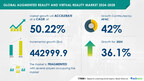
NEW YORK, Feb. 11, 2025 /PRNewswire/ — Report on how AI is driving market transformation – The global augmented reality and virtual reality market size is estimated to grow by USD 442.99 billion from 2024-2028, according to Technavio. The market is estimated to grow at a CAGR of 50.22% during the forecast period. Growing demand for AR and VR technology is driving market growth, with a trend towards growing funding in startup ar and vr companies from investors. However, high development costs associated with AR and VR apps poses a challenge. Key market players include Alphabet Inc., Apple Inc., Augmented Pixels Inc., Blippar Ltd., CyberGlove Systems Inc., Eon Reality Inc., HP Inc., HTC Corp., Innovega Inc., Lenovo Group Ltd., Magic Leap Inc., Maxst Co. Ltd., Microsoft Corp., PTC Inc., Samsung Electronics Co. Ltd., Seiko Epson Corp., Toshiba Corp., Vuzix Corp., Wikitude GmbH, and Zugara Inc..
Key insights into market evolution with AI-powered analysis. Explore trends, segmentation, and growth drivers- View Free Sample PDF
Augmented Reality And Virtual Reality Market Scope
Report Coverage
Details
Base year
2023
Historic period
2017 – 2021
Forecast period
2024-2028
Growth momentum & CAGR
Accelerate at a CAGR of 50.22%
Market growth 2024-2028
USD 442999.9 million
Market structure
Fragmented
YoY growth 2022-2023 (%)
36.1
Regional analysis
North America, APAC, Europe, Middle East and Africa, and South America
Performing market contribution
APAC at 42%
Key countries
US, China, Germany, UK, and Japan
Key companies profiled
Alphabet Inc., Apple Inc., Augmented Pixels Inc., Blippar Ltd., CyberGlove Systems Inc., Eon Reality Inc., HP Inc., HTC Corp., Innovega Inc., Lenovo Group Ltd., Magic Leap Inc., Maxst Co. Ltd., Microsoft Corp., PTC Inc., Samsung Electronics Co. Ltd., Seiko Epson Corp., Toshiba Corp., Vuzix Corp., Wikitude GmbH, and Zugara Inc.
Market Driver
Augmented Reality (AR) and Virtual Reality (VR) markets are experiencing significant growth due to the integration of 3D models in 3D environments. With the rollout of 5G networks, the speed and responsiveness of AR and VR technologies will increase, benefiting commercial industries such as aerospace & defense, architecture, and manufacturing. AR applications using cameras and gesture-tracking devices are revolutionizing consumer engagement in sectors like e-commerce, entertainment, and gaming. HMDs (Head-mounted displays) and heads-up displays are transforming industries like healthcare, industrial automation, and transportation. AR and VR technologies are also being used in IT & telecommunication, media & entertainment, and tourism businesses for innovative solutions. The investment activity in AR and VR is on the rise, driven by the integration of AI, semiconductor components, and SoC (System on Chip) technology. The future of AR and VR holds endless possibilities, from mental illness treatments to simulations and self-monitoring devices.
The global Augmented Reality (AR) and Virtual Reality (VR) market is experiencing significant growth due to increasing collaborations and partnerships among vendors. These strategic alliances enable companies to enhance their product offerings and explore new application areas for AR and VR software platforms. For instance, in March 2020, Valve, Microsoft Corp., and HP Inc. Announced a collaboration to develop a next-generation SteamVR headset, called HP Reverb G2. Such collaborative efforts are expected to fuel the growth of the AR and VR market during the forecast period. Vendors are leveraging these partnerships to expand their reach, improve product quality, and cater to the evolving needs of end-users.
Request Sample of our comprehensive report now to stay ahead in the AI-driven market evolution!
Market Challenges
Augmented Reality (AR) and Virtual Reality (VR) markets are experiencing significant growth due to increasing demand from commercial industries. AR technology overlays digital 3D models onto real-world environments, enhancing consumer engagement in sectors like retail, architecture, and manufacturing. Challenges include developing 3D environments for AR applications, integrating AR technology with 5G networks, and creating technical expertise for hardware like HMDs (Head-mounted displays) and gesture-tracking devices. VR technology immerses users in entirely digital 3D environments, revolutionizing industries such as aerospace & defense, healthcare, and entertainment. Challenges include investing in network infrastructure for cloud-based VR applications, creating VR content for gaming and simulations, and ensuring security compliance. Consumer electronics, including smartphones and smart glasses, are driving mass adoption of AR and VR. Industries like e-commerce, real-estate, and tourism businesses are exploring AR applications for product visualization and customer engagement. Meanwhile, AR and VR are transforming industrial automation, IT & telecommunication, and the infotainment industry, improving efficiency and productivity. Semiconductor components and SoC integration are crucial for developing AR and VR hardware. AI and position trackers are essential for enhancing user experience and creating realistic simulations. VR exposure therapy is a promising application for mental illnesses, while VR technology is revolutionizing industrial tools and training. In conclusion, the AR and VR market presents numerous opportunities for innovation and growth, with challenges that require investment in hardware, software, and technical expertise. Industries from consumer electronics to aerospace & defense are embracing these technologies to enhance user experience, improve efficiency, and drive productivity.In the realm of Augmented Reality (AR) and Virtual Reality (VR) market, creating engaging projects involves various intricate components. Cost considerations are crucial, encompassing expenses for VR content creation and distribution, as well as hardware and software costs. For instance, 360-degree cameras are utilized to generate panoramic content at a relatively lower cost compared to computer-generated graphics. However, the real value of VR games lies in their interactive content. To create lifelike VR content, a combination of 360-degree cameras, computer graphics, and high-end photorealistic cameras is necessary. The approximate cost for developing only the VR content for an app falls between USD50,000 and USD100,000.
Discover how AI is revolutionizing market trends- Get your access now!
Segment Overview
This augmented reality and virtual reality market report extensively covers market segmentation by
TechnologyARVRApplicationConsumerEnterpriseGeographyNorth AmericaAPACEuropeMiddle East And AfricaSouth America
1.1 AR- The Augmented Reality (AR) segment is experiencing significant growth due to increasing new product launches, expanding application areas, and rising investments in AR technology. AR is an innovative technology that overlays digital information onto the real world, offering an enhanced user experience. This technology can be accessed through apps or web platforms. AR’s versatile applications in various industries, including enterprise, retail, healthcare, media and entertainment, and education, are driving its demand. Key players, such as Alphabet and Microsoft, are investing in AR software development kits to create AR platforms. For instance, Microsoft’s Mesh service enables people to collaborate in AR environments. Technological advancements in AR hardware and software, including smartphones and AR development platforms, are making AR more accessible and user-friendly. The growing need for remote collaboration and training solutions, especially during the COVID-19 pandemic, is also accelerating AR adoption. Major vendors, including Microsoft, Google, and Apple, are providing AR technology for enterprise applications, such as remote assistance, training, and product visualization. The increasing adoption of AR across industries for remote collaboration, training, and customer engagement, technological advancements, and continued innovation in AR applications will fuel the growth of the AR segment in the Augmented Reality and Virtual Reality market.
Download a Sample of our comprehensive report today to discover how AI-driven innovations are reshaping competitive dynamics
Research Analysis
Augmented Reality (AR) and Virtual Reality (VR) are revolutionary technologies that have been gaining significant traction in various industries. AR superimposes digital 3D models onto the real world, enhancing user experience in areas like gaming, simulations, and infotainment. Smartphones and smart glasses serve as popular devices for AR, while heads-up displays are used in vehicles. VR, on the other hand, immerses users in a completely virtual 3D environment. VR technology finds applications in gaming, simulations, and exposure therapy, among others. Investment activity in AR and VR is on the rise, driven by the potential of these technologies in sectors like manufacturing industries, industrial automation, and self-monitoring devices. Engineers and designers use AR and VR for creating and testing complex designs, while the infotainment industry leverages these technologies for providing experiences. VR technology is also transforming shopping, allowing customers to virtually try on clothes or explore homes before purchasing. SoC integration is making VR and AR more accessible and affordable for the masses.
Market Research Overview
Augmented Reality (AR) and Virtual Reality (VR) are revolutionary technologies that transform the way we interact with our surroundings and digital content. AR overlays 3D models and information onto real-world environments in real-time using cameras and AR technology. VR creates 3D environments, transporting users to new worlds. Both technologies are gaining traction in various industries, including aerospace & defense, architecture, engineering, and manufacturing industries, for design and simulation. 5G networks enable seamless AR and VR experiences. AR applications are being used in commercial industries, consumer electronics, e-commerce, and tourism businesses for consumer engagement, product visualization, and information search. VR is popular in gaming, entertainment, healthcare, and education for training, therapy, and experiences. HMDs (Head-mounted displays), gesture-tracking devices, and position trackers are essential hardware components. The IT & telecommunication industry is investing heavily in AR and VR technology, with semiconductor components playing a crucial role. Technical expertise is required for software development and integration with SoCs (Systems on Chips). AR and VR are also being used in industrial automation, security compliance, and mental illnesses treatment. The future of AR and VR is bright, with endless possibilities in entertainment, education, and everyday life.
Table of Contents:
1 Executive Summary
2 Market Landscape
3 Market Sizing
4 Historic Market Size
5 Five Forces Analysis
6 Market Segmentation
TechnologyARVRApplicationConsumerEnterpriseGeographyNorth AmericaAPACEuropeMiddle East And AfricaSouth America
7 Customer Landscape
8 Geographic Landscape
9 Drivers, Challenges, and Trends
10 Company Landscape
11 Company Analysis
12 Appendix
About Technavio
Technavio is a leading global technology research and advisory company. Their research and analysis focuses on emerging market trends and provides actionable insights to help businesses identify market opportunities and develop effective strategies to optimize their market positions.
With over 500 specialized analysts, Technavio’s report library consists of more than 17,000 reports and counting, covering 800 technologies, spanning across 50 countries. Their client base consists of enterprises of all sizes, including more than 100 Fortune 500 companies. This growing client base relies on Technavio’s comprehensive coverage, extensive research, and actionable market insights to identify opportunities in existing and potential markets and assess their competitive positions within changing market scenarios.
Contacts
Technavio Research
Jesse Maida
Media & Marketing Executive
US: +1 844 364 1100
UK: +44 203 893 3200
Email: media@technavio.com
Website: www.technavio.com/
View original content to download multimedia:https://www.prnewswire.com/news-releases/augmented–virtual-reality-market-to-grow-by-usd-442-99-billion-2024-2028-boosted-by-ar-and-vr-demand–market-evolution-powered-by-ai—technavio-302372308.html
SOURCE Technavio
You may like
Technology
Mox Breaks Even in Q1 2026 amid Strengthening Profitability Outlook, Launches Mox+ Wealth Solutions and Mox Invest Upgrades
Published
33 minutes agoon
May 6, 2026By
Bringing Wealth Within Reach of all in Hong Kong
HONG KONG, May 6, 2026 /PRNewswire/ — Mox Bank Limited (“Mox” or “the Bank”), on the back of delivering a financial breakeven quarter for Q1 2026, today announced the launch of Mox+. This wealth solution is engineered for Hong Kong’s young professionals and emerging affluent and will be a driver of sustainable profitability for the Bank. Mox+ combines wealth capabilities with curated lifestyle benefits, marking Mox’s evolution from everyday banking to a comprehensive wealth partnership.
The financial achievement was driven by robust momentum across all business lines and achieving a significant milestone demonstrates the success of the accessible business model which after 5 years is now used and valued by over 750,000 customers in Hong Kong.
Barbaros Uygun, CEO of Mox, said, “Achieving financial breakeven for the first quarter of 2026 on the back of a strong 2025 set of results, shows our direction of travel. We have the momentum to drive positive change, providing wealth opportunities to all in Hong Kong and do so in a profitable manner. Our client-centric business model is proving that it is the right one for sustainable profitability.
Our digital wealth management platform serves as a trusted partner for our over 750,000 customers at every stage of life, empowering them to manage their finances with confidence and unlock new possibilities. We are entering a new chapter of growth as we continue to expand our product portfolio and wealth management offerings, with the launch of Mox+ being one such initiative.”
He continued, “To support this evolution, we are evolving into an AI-native bank, doubling our operational capacity through a strategic human-bot partnership, equipping every staff member with a personalised AI assistant to deliver even greater service and efficiency.”
Mox+ members enjoy preferential fees and charges on Mox Invest and preferential pricing on foreign exchange, enhanced deposit rates (3.5% p.a. up to HKD5 million), as well as priority customer support and early access to experiences and new products. These benefits can be gained simply by maintaining an average daily balance of HKD 600,000 or above across all deposits and investments which will lead to automatic qualification for Mox+ for the following month. The programme integrates financial advantages with lifestyle benefits—including curated dining rebates, free hotel stays, Starbucks coffee vouchers, health benefits and exclusive member experiences—reflecting Mox’s belief that wealth building should be both strategic and rewarding.
Jayant Bhatia, Chief Business Officer of Mox, commented, “At Mox, we are dedicated to establishing the financial well-being of Hongkongers. Designed and tailored for Hong Kong’s young professionals and emerging affluent segment, which is underserved in Hong Kong, Mox+ offers solutions for daily savings and preferential wealth management service fees for long-term wealth creation as well as rewarding lifestyle benefits. This is strategically significant as one of our key initiatives to drive business growth and make Wealth Within Reach for Hongkongers.”
Throughout 2025, Mox has already strengthened its product portfolio with new solutions in Mox Invest. The Mox Invest platform saw trading volumes increasing to 2.4 times and assets under management (AUM) growing to 2.6 times that of last year. More than 10% of Mox customers have opened a Mox Invest account, reflecting strong demand for its wealth solutions driven by new products and services. In 2026, we will continue our momentum in launching new and innovative products and services and are already scaling up to serve the next generation of wealth builders in Hong Kong. Having already recently launched a crypto trading service, Mox Invest is set to introduce an IPO subscription service later this year.
The Bank has clear reasons for continuing to develop wealth management products. The “Wealth Behaviours: Insights into how individuals are saving and investing” survey conducted by Mox in collaboration with Ipsos revealed that Hongkongers continue to take a conservative approach to investing, with 63% of their liquid assets kept in cash and deposits – a trend that contributes to “cash drag” and limits potential wealth growth. More than two-thirds of respondents indicated they require an average of 5.6 months to save up to their desired investment threshold and typically delay investing their savings by a further 2.75 months on average, resulting in missed opportunities for long-term wealth accumulation[1]. This survey will continue as an ongoing research initiative to deepen our understanding of Hongkonger’s wealth management behaviours and enable the Bank to develop tailored solutions that puts wealth within reach.
After Mox was amongst the first wave of banks in Asia to offer a crypto trading service, Mox Invest now further offers One Click Investments (a simplified process for buying equities based on themes such as AI, technology, amongst others), Trading Signals, and gives customers access to professional fund strategies including Signature CIO funds developed in partnership between Standard Chartered Bank CIO office and Amundi. The Signature CIO funds offer four different type of funds based on individuals’ risk appetite which could be Conservative, Income, Balanced or Growth. Customers also have options amongst a wide range of funds offered by other world-class fund houses.
A Track Record of Rapid Scale and Adoption in the Last 5 Years
Since its launch in September 2020, Mox has brought to the market more than 15 market-first products or services and achieved significant scale with over 750,000 customers, reflecting the trust and growing preference of Hong Kong consumers for a seamless digital banking experience. To date, Mox customers have driven a cumulative spend of HKD70 billion, supported by a robust volume of 176 million card transactions and approximately 2 billion Asia Miles earned through Mox Card and other banking services. Its commitment to delivering tangible value to customers is further evidenced by the HKD2 billion distributed in cash rewards.
Beyond daily spending, Mox has become central to its customers’ financial lives, facilitating approximately 50 million outward FPS transfers and more than 5 million bill payments. As a preferred companion for travelers, the Mox Card has been used over 31 million times in overseas transactions, contributing to a total of 250 million app engagements as we continue to redefine digital banking for the Hong Kong community.
To learn more about Mox, please visit: mox.com.
About Mox Bank Limited (“Mox”)
Mox is a pioneering digital bank licensed in Hong Kong, and a registered institution (CE number: BNO808) powered by Standard Chartered in partnership with PCCW, HKT and Trip.com. Launched in September 2020, Mox is reimagining banking, unlock more of life’s possibilities, and setting global benchmarks for digital banking from Hong Kong.
Mox is well on track to be the number one digital bank for cards, lending and wealth. In 2026, it was awarded as Best Pure-Play Digital Bank for CX in Hong Kong and Outstanding Digital CX in Banking App/ Platform by The Digital Banker Digital CX Awards. It was also recognised as NeoBank of the Year, Retail Banking, Hong Kong and Best Retail Banking Experience, Hong Kong by The Asset Triple A Digital Finance Awards. In 2025, Mox is ranked as the number one digital bank in Hong Kong in Neobank Ranking 2025 by The Banker, a publication by Financial Times. It was also awarded the Best Digital Bank in Hong Kong by The Asian Banker for three consecutive years, and the Digital Bank of the Year in Hong Kong by Asian Banking & Finance for two years in a row. It was also recognised as one of Asia’s Top 5 mobile banking app and the number one Hong Kong digital banking app in Sia Partners’ 2025 International Mobile Banking Benchmark. Mox Credit Card held its position as the seventh-largest credit card portfolio among all retail banks in Hong Kong[2]. Through a scalable platform, lower cost-to-serve, top-notch customer experience and the unique promise of safe, simple, smart, and fun banking, Mox has found immense affinity among Hong Kong customers: Mox app is the top-rated Hong Kong digital banking app in Apple App Store in Hong Kong[3], scoring 4.8 out of 5. Mox’s influence extends beyond Hong Kong, as shown by the company’s technology and know-how being transferred to Trust Bank in Singapore.
Join us in shaping the future of banking.
Follow Mox on mox.com, Facebook, Instagram, Threads, LinkedIn and YouTube for our latest updates.
[1] The “Wealth Behaviours: Insights into how individuals are saving and investing” study was conducted in collaboration with Ipsos and it surveyed 2,500 working adults with a monthly household income above HKD15,000 in Hong Kong between August 2025 and April 2026.
[2] According to TransUnion’s Market Insights and Intelligence Dashboard (MIID) for the period from January to December 2025.
[3] As of the period from 28 January 2025 to 5 May 2026.
View original content to download multimedia:https://www.prnewswire.com/apac/news-releases/mox-breaks-even-in-q1-2026-amid-strengthening-profitability-outlook-launches-mox-wealth-solutions-and-mox-invest-upgrades-302763875.html
SOURCE Mox Bank Limited
Technology
UK Students Recognised in National AI Investment Challenge
Published
33 minutes agoon
May 6, 2026By
University teams apply AI to real-world investment problems, with Lancaster University team taking the top prize.
LONDON, May 6, 2026 /PRNewswire/ — CFA Institute, the global association of investment professionals, has announced the winner of its inaugural AI Investment Challenge, with the top prize awarded to a student team from Lancaster University.
Some 28 teams from 15 universities took part in the competition.
Delivered by CFA Institute and CFA Society UK, the competition brought together students from universities across the United Kingdom to tackle real investment challenges using artificial intelligence. The focus was on practical application, responsible use, and real-world relevance.
Finalists came from Durham University, Heriot-Watt University, Lancaster University, University of Exeter, and University of Manchester.
Teams presented AI-powered solutions to a range of industry challenges, from assessing how carbon pricing affects portfolio values to analysing large volumes of company disclosures and extracting insights from company earnings calls. The winning team from Lancaster University impressed judges with its design of a Disclosure Degradation Detection System – an early-alert tool for analysts that monitors upstream exposure to disclosure risk by analysing company and supplier filings for increasingly vague, complex, or weakening language.
Peter Watkins, Head of University Relations, CFA Institute, said:
“It’s encouraging to see how quickly students can apply technical skills to real investment problems. The strongest teams combined solid analysis with a clear understanding of how AI can be used responsibly in practice. This reflects where the investment industry is heading, with professionals expected to use new technologies effectively while continuing to apply sound human judgement.”
Nick Bartlett, CFA, ASIP, Chief Executive, CFA Society UK, adds:
“It’s been great to see students from across the UK take part. Opportunities like this help people build practical skills, make connections in the industry, and gain confidence in applying what they’ve learned. Bridging that gap between education and industry is increasingly important, as the skills needed for a career in the investment profession continue to evolve.”
The winning team members from Lancaster University are Connor O’Keeffe, Ebro Dossajee, and Bradley McCann.
Connor O’Keeffe, speaking on behalf of the winning team, said:
“The CFA Institute AI Investment Challenge gave us the chance to work on a real investment problem and engage directly with industry professionals. Presenting our work and receiving feedback has been invaluable, and we’re proud to bring first place back to Lancaster. It’s been a great experience for the whole team.”
Steve Young, Professor of Accounting at Lancaster University Management School, commented:
“The AI Investment Challenge is a fabulous initiative from CFA Institute that helps students formulate and execute artificial intelligence solutions to assist investment analysis professionals, and we are thrilled that Brad, Connor, and Ebro have been able to make such a positive contribution to the competition. Congratulations to all teams involved and thank you to CFA Institute and CFA Society UK for organising such an inspiring event.”
The competition was judged on practical relevance, quality of analysis, innovation in the use of AI, responsible use of technology, and clarity of presentation. The final was judged by a panel of six investment industry professionals based in the UK.
University representatives and students can opt-in to be the first to hear about future AI Investment Challenge events via Information Waitlist.
Notes to Editors
The AI Investment Challenge was held on Thursday 30 April 2026 in London.
First, second, and third-place teams received prizes of £2,000, £1,200, and £800, respectively. In addition, all finalist team members received a CFA Program Access Scholarship and the opportunity to showcase their work on CFA Institute platforms.
More information about the AI Investment Challenge is available here: CFA Institute AI Investment Challenge.
About CFA Institute
As the global association of investment professionals, CFA Institute sets the standard for professional excellence and credentials. We champion ethical behavior in investment markets and serve as the leading source of learning and research for the investment industry. We believe in fostering an environment where investors’ interests come first, markets function at their best, and economies grow. With more than 200,000 charterholders worldwide across 160 markets, CFA Institute has 8 offices and 157 local societies. Find us at www.cfainstitute.org or follow us on LinkedIn, and subscribe on YouTube.
View original content:https://www.prnewswire.co.uk/news-releases/uk-students-recognised-in-national-ai-investment-challenge-302762959.html
Technology
Huawei SPN Helps Yunnan Power Grid Build a Next-Gen High-Speed Bearer Network
Published
33 minutes agoon
May 6, 2026By
KUNMING, China, May 6, 2026 /PRNewswire/ — As a key energy hub in Southwest China, Yunnan Power Grid Co., Ltd. (Yunnan Power Grid) is tasked with large-scale clean energy transmission and smart grid development. However, the region’s complex terrain and long transmission lines have made this transformation challenging, rendering the digital and intelligent upgrade increasingly urgent. The explosion of production data and the rise of complex service scenarios further amplify this urgency, imposing ever-stricter requirements on the underlying communication bearer network.
Network Transport Challenges in the Digital and Intelligent Transformation of the Power Industry
To tackle these issues, Yunnan Power Grid has chosen SPN to drive the evolution of its next-gen bearer network, incorporating it into both the 14th and 15th Five-Year Plans. The company has progressively rolled out the technology on a large scale across 16 cities, laying a communication foundation for the next two decades. In this strategic upgrade of electric power services, Huawei has emerged as a key partner.
Dual Dividends: Ultimate Experience and Long-Term Value
Since the pilot in 2022, SPN has evolved from a technical trial to a standard architecture across Yunnan Province. With SPN now being deployed in Zhaotong and Pu’er, the full value of the next-gen bearer network is being unleashed.
First, the bandwidth bottleneck has been resolved. The next-gen SPN bearer network resolves bandwidth bottlenecks by breaking the 155 Mbit/s–10 Gbit/s capacity limit. SPN devices boost access layer (substations, power stations, customer centers) bandwidth to 1 Gbit/s, meeting China Southern Power Grid standards. Aggregation and core layers scale up to 50 Gbit/s or 100 Gbit/s based on site and service size. The solution enables 10 Mbit/s fine-granularity hard pipes for end-to-end isolation of power private lines, supporting high-bandwidth services like transmission video surveillance and ensuring smooth evolution.
Second, the bandwidth upgrade has significantly improved inspection and maintenance efficiency. Huawei’s SPN solution enables real-time SLA monitoring (latency, packet loss) and fault localization within minutes, cutting maintenance costs linked to SDH equipment failures. At Qujing Power Supply Bureau, single inspection time dropped from 30 to 3 minutes, and full-cycle maintenance from over 7 hours to 21 minutes. The O&M center now detects major defects 15 days earlier via preset monitoring points. Over six months, site visits fell from 112 to 61—a 45.54% reduction.
Third, the intelligence level of service transport has been greatly improved. Huawei’s SPN solution supports diverse electric power services—from latency-sensitive teleprotection and dispatching to high-traffic video—with reliable transmission. Using FlexE hard and soft slicing, it ensures rigid isolation between services while enhancing bandwidth reuse. IPv4/IPv6 dual stack enables flexible local forwarding and easy IoT access, such as transmission line monitoring and source-grid-load-storage integration.
Finally, SPN provides long-term investment protection. The evolution to 25 Gbit/s to 400 Gbit/s rates can be supported through low-cost upgrades, avoiding repeated construction.
For detailed solutions, please visit our official website:
https://e.huawei.com/en/case-studies/industries/grid/202604-yunnan-power-grid-spn
Photo – https://mma.prnewswire.com/media/2973652/1panbiyi.jpg
View original content:https://www.prnewswire.co.uk/news-releases/huawei-spn-helps-yunnan-power-grid-build-a-next-gen-high-speed-bearer-network-302763900.html
Mox Breaks Even in Q1 2026 amid Strengthening Profitability Outlook, Launches Mox+ Wealth Solutions and Mox Invest Upgrades
UK Students Recognised in National AI Investment Challenge
Huawei SPN Helps Yunnan Power Grid Build a Next-Gen High-Speed Bearer Network
Send Rakhi to UK swiftly with UK Gifts Portal
Whiteboard Series with NEAR | Ep: 45 Joel Thorstensson from ceramic.network
New Gooseneck Omni Antennas Offer Enhanced Signals in a Durable Package
Why You Should Build on #NEAR – Co-founder Illia Polosukhin at CV Labs
Whiteboard Series with NEAR | Ep: 45 Joel Thorstensson from ceramic.network
NEAR End of Year Town Hall 2021: The Open Web World, MetaBUILD 2 Hackathon and 2021 recap
Trending
-
Technology5 days agoRoyal Visit to Front Royal: Randolph-Macon Academy Shines at Block Party for King Charles III and Queen Camilla
-
Technology5 days agoManufacturing PMI® at 52.7%; April 2026 ISM® Manufacturing PMI® Report
-
Coin Market4 days ago
CLARITY Act stablecoin yield rules finalised: ‘Go time’ for crypto bill
-
Coin Market4 days ago
Bitcoin rally extends, yet BTC options price only 25% chance of $84K in May
-
Technology4 days agoFirst Online Conversations Are Changing in 2026, According to New Secretmeet Research
-
Coin Market5 days ago
SBI eyes Bitbank deal as Japan’s crypto exchange market consolidates
-
Coin Market4 days agoThree Bitcoin data points suggest a rally to $80K is imminent
-
Technology4 days ago2026 Brockton High School Film Festival