Connect with us

Technology

IT Talent Trends 2026 Report: “Uniquely Human Abilities” Will Define the New Human-AI Hybrid IT Workforce, Says Info-Tech Research Group

Published

on

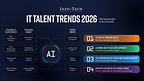
Info-Tech Research Group’s IT Talent Trends 2026 report finds that technical skills alone will no longer define success in the rapidly shifting IT workforce. Released during Info-Tech LIVE 2026 in Las Vegas, where the firm is exploring the future of IT leadership and workforce readiness, the report urges CIOs to prepare for a new hybrid human-AI workforce by hiring and cultivating uniquely human abilities that can’t be mimicked by AI, such as critical thinking and business acumen. IT Talent Trends 2026 also provides CIOs with an actionable roadmap to build human-AI teams and design talent strategies that can adapt effectively to constant disruption.

LAS VEGAS, June 9, 2026 /PRNewswire/ – Technical skills remain essential, but they are no longer enough to distinguish IT talent as the workforce is rapidly reshaped by AI, according to new findings from Info-Tech Research Group. Launched at Info-Tech LIVE 2026 in Las Vegas, the firm’s latest report, IT Talent Trends 2026: The Human Edge in an AI World, predicts that “uniquely human abilities” that cannot be replicated by AI, such as creative problem solving, emotional intelligence, and business acumen, will become key differentiators for IT talent, especially as AI adoption rises and IT departments become more business-aligned.

“These kinds of soft skills, like business acumen, emotional intelligence, and creative problem solving, enable IT experts to grasp business requirements, foster innovation, and manage complex transformations in ways that technical knowledge alone can’t achieve,” says Heather Leier-Murray, research director at Info-Tech Research Group.

This key trend is one of four detailed in IT Talent Trends 2026. This year’s edition of the annual report also provides CIOs with a forward-looking roadmap for building effective human-AI hybrid teams and designing an adaptive, future-ready approach to IT workforce management amid ongoing operational disruption.

IT Talent Strategy Must Adapt To Constant Disruption
The overarching theme of Info-Tech’s report is change, as AI adoption, the decreasing shelf life of technology skills, and ongoing economic and regulatory disruption reshape the IT workforce. As outlined in the firm’s analysis, disruption has become continuous rather than episodic, and CIOs must design IT talent strategies that can adapt to constant change.

“The steady state is gone, and it’s not coming back,” says Leier-Murray. “CIOs can no longer treat talent strategy as a periodic adjustment. They need to continuously realign their workforce, elevate uniquely human capabilities, and intentionally design a hybrid model of how people and AI work together.”

Key Data Points from Info-Tech’s IT Talent Trends 2026 Report
IT Talent Trends 2026 contains several data points from Info-Tech’s Future of IT 2026 survey that put the shifting talent and workforce environment into timely context:

42% of IT professionals were actively or passively job seeking.76% of IT managers reported moderate or increasing stress levels.89% of IT leaders anticipated restructuring their IT organization.95% of IT professionals acknowledged that major skill changes will be required to keep pace with technology by 2030.

Info-Tech’s IT Talent Trends For 2026
The IT Talent Trends 2026 report identifies four critical trends defining IT talent strategy in the year ahead:

1. The Rise of Enabling Skills: Prioritize the Human Advantage in a Digital Era
AI is taking on more routine execution, shifting the value of IT talent toward judgment, communication, and business problem-solving. With 94% of respondents expecting AI to have a positive organizational impact and 87% planning to adopt, continue, or increase AI use through 2026, CIOs must ensure their teams are prepared for broader AI-enabled change. Info-Tech advises leaders to build enabling skills such as critical thinking, adaptability, communication, and business acumen into hiring, development, and role design so IT can move from technical delivery to strategic advisory.

2. Learning Agility as a Core Capability: Embed Learning Into the Flow of Work
Hiring and ad hoc training alone cannot close capability gaps quickly enough as skills requirements continue to shift. CIOs are moving toward continuous learning models that help employees build new skills while work is being delivered, rather than treating development as a separate event.

3. The Convergence of Talent and Transformation: Design Hybrid Teams For the Future
As 65% of organizations anticipate structural changes specifically due to generative AI, CIOs need to redesign teams around how work is changing, not simply add new tools to existing models. The report advises leaders to define human-AI workflows, create roles around emerging technologies, and treat AI agents as part of the broader talent model.

4. Adaptive Culture as the Change Engine: Hardwire Adaptability Into Leadership and Team Practices
With change now continuous rather than episodic, culture becomes the decisive differentiator. CIOs must invest in leadership development, psychological safety, decentralized decision-making, and continuous feedback mechanisms so teams can adapt without becoming overwhelmed.

The report also reframes the broader talent debate facing CIOs in 2026. While some leaders remain skeptical about the long-term impact of AI, others are redesigning their operating models around human-AI collaboration. Info-Tech’s research encourages organizations to assess where they sit on this spectrum and determine how far they are willing to move toward reinvention.

Based on Info-Tech’s analysis, CIOs who succeed in 2026 will be those who treat talent strategy as a continuous discipline rather than a periodic initiative. By leveraging the insights in IT Talent Trends 2026, IT leaders can transform persistent disruption into sustained competitive advantage.

For exclusive and timely commentary from Info-Tech’s experts, including Heather Leier-Murray, and access to the complete IT Talent Trends 2026 report, please contact pr@infotech.com.

About Info-Tech Research Group
Info-Tech Research Group is the “get things done” partner for over 30,000 IT, HR, and marketing leaders worldwide. The fastest growing research and advisory firm, Info-Tech, enables leaders to make well-informed decisions and transform their organizations through AI, strategic foresight, step-by-step methodologies, practical tools, industry-leading advisory, and training programs. For nearly 30 years, tens of thousands of private and public organizations have trusted Info-Tech to lead their most important initiatives through periods of change and deliver outcomes that truly matter.

To learn more about Info-Tech’s HR research and advisory services, visit McLean & Company, and for data-driven software buying insights and vendor evaluations, visit the firm’s SoftwareReviews platform.

Media professionals can register for unrestricted access to research across IT, HR, and software, as well as hundreds of industry analysts through the firm’s Media Insiders program. To gain access, contact pr@infotech.com.

For information about Info-Tech Research Group or to access the latest research, visit infotech.com and connect via LinkedIn and X.

View original content to download multimedia:https://www.prnewswire.com/news-releases/it-talent-trends-2026-report-uniquely-human-abilities-will-define-the-new-human-ai-hybrid-it-workforce-says-info-tech-research-group-302795729.html

SOURCE Info-Tech Research Group

Continue Reading
Click to comment

Leave a Reply

Your email address will not be published. Required fields are marked *

Technology

Operata deepens Observability across AI to human agents – launching the control layer for CX

Published

on

By

MELBOURNE, Australia and DENVER, Aug. 27, 2026 /PRNewswire/ — To address the growing complexity and operational blind spots of fragmented CX AI Agent and CX tech stacks, Operata today introduced expanded CX AI Agent Observability. CX observability is the critical control layer to monitor, assure, diagnose, and optimize AI and human agents as they work together to deliver the best customer experiences. Every AI interaction is now recorded on the same customer journey as the human agent it hands to, and measured against the same standards.

To view the full product release details and explore how CX AI Agent Observability provides a single control layer for both AI and human interactions, learn more about the release here.

“At Operata, we believe human judgment and AI execution together deliver the best end-to-end customer experience,” said Romilly Blackburn, co-founder and CEO of Operata. “Observability is the control layer for both; it monitors, assures, diagnoses, and optimizes them as they work side by side.”

One Record Across Every Service

Enterprises are racing to deploy AI agents across a fragmented voice AI, AI CX, and CCaaS tech stack — with diverse in-house, remote, and outsourced operations.

A single interaction crosses telephony, CX AI, CCaaS, CRM, CPaaS, tool calls, transfers, human agents, and the network. Each services reporting to its own edge. They are rarely connected under one control layer, so no system holds the whole interaction as the customer experienced it.

Operata sits outside the stack it measures. It normalizes the metrics, traces, and logs from every service it collects from into one record of the journey, setting one standard for whatever combination of platforms sits in the path. The record also shows the impact of systems, such as a slow response from the downstream API the AI called.

Data Teams Can Build On

The telemetry and the CX knowledge base behind Operata is available to build against over one open standard, alongside the connectors teams already run. IT and operations teams can question the data from the AI clients they already use, and act on the answer in the same place: raise an incident, notify a team, attach the evidence.

CX AI Agent Observability is available now across Operata’s supported platforms. Verified status for an individual platform follows Operata’s standard verification process and is available on request to customers and partners.

Evidence for Governance

Operata is not a governance platform. Risk assessments, policies, review boards, and sign-offs stay with the enterprise. This release supplies the evidence underneath them for the AI layer: what the AI heard and decided, where the handoff to a person happened, whether context survived that handoff, and if performance still clears the bar release after release.

Article 50 of the EU AI Act has applied since August 2026 to any AI system a person interacts with. US states are adding their own disclosure requirements, with more taking effect through 2027. Where the obligation applies, it sits with the enterprise deploying the AI, not the vendor supplying it. Operata holds the record behind whatever the enterprise has to account for, from whether a handoff carried context through to whether a disclosure was audible to the customer rather than only played.

Industries Already Scored on Customer Experience

Operata’s customers span industries. In some, the standard is set by a regulator; in others, it’s set by the market. The consequence of missing the mark is real either way:

Healthcare: US health plans are scored by CMS on member experience, and the rating decides whether a contract earns its quality bonus.Financial Services: Conduct regulators require firms to provide evidence of the outcomes customers get from support, including the customers least able to advocate for themselves.Brand Differentiators: In other verticals, the brand is the differentiator and customers do the scoring. Poor interactions compound into repeat contacts, complaints, and churn.

Where AI handles those interactions, it is measured against the same standard.

About Operata

Operata is the world’s first CX Observability platform, built for the enterprise customer experience. Today’s CX infrastructure is a complex ecosystem of CCaaS vendors, AI platforms, global networks, browsers, and BPOs. This fragmentation creates massive operational blind spots. Operata delivers the real-time visibility and absolute certainty enterprises need to boldly deploy AI while protecting the customer experience.

By capturing and correlating billions of technical, operational, and experience data points, Operata provides the packet-level truth of every live interaction — whether an AI or human agent is on the line. This empowers IT and Ops teams to eradicate blind spots, end the blame game, slash MTTR from days to minutes, and safely execute their AI deployment and governance mandates.

Founded in Melbourne and built to serve global enterprises, Operata is trusted by customers like 3M, Accenture, Adobe, and ServiceNow. Ultimately, we exist to power better connection – for and with our customers, our partners, and our people.

Get started todayOperata.com

Media contact: Gary Tuohy
gary@operata.com 

View original content to download multimedia:https://www.prnewswire.com/news-releases/operata-deepens-observability-across-ai-to-human-agents—launching-the-control-layer-for-cx-302862521.html

SOURCE Operata

Continue Reading

Technology

Alibaba’s Amap Introduces ABot-Recon, Reconstructing 10,000-Frame-Scale 3D Scenes From Just 12 Frames in Real Time

Published

on

By

BEIJING, Aug. 28, 2026 /PRNewswire/ — Amap, Alibaba’s location-based services platform, today released ABot-Recon, a streaming 3D reconstruction model that requires only 12 consecutive frames to reconstruct scenes spanning over 10,000 frames in real time, eliminating the need for long-range memory.

The model achieves state-of-the-art accuracy on multiple public benchmarks — including KITTI, Oxford Spires and VBR — while reducing peak memory usage to roughly one-third that of comparable methods, making real-time 3D reconstruction feasible on consumer-grade hardware.

As autonomous driving and embodied AI systems move into open environments, they require continuous spatial understanding while in motion — knowing where they are, what surrounds them and where to go next. Conventional streaming 3D reconstruction systems maintain memory anchors that store and fuse historical information to preserve global consistency. As input sequences grow longer, such systems become progressively slower, less accurate and more memory-intensive.

ABot-Recon takes a fundamentally different approach. Rather than maintaining long-range memory anchors, the model operates within a fixed 12-frame local context window, predicting only the local point cloud and the relative pose between adjacent frames. An online composition mechanism then assembles the complete global trajectory incrementally, keeping computational complexity constant regardless of sequence length.

To address drift inherent in local prediction, ABot-Recon incorporates dedicated correction and constraint mechanisms at both the prediction and training stages, calibrating trajectory error in real time.

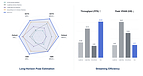
On the Oxford Spires long-sequence benchmark, ABot-Recon reduces average trajectory error by 40.6% compared with the prior leading method, achieving a relative rotation error (RPE-R) of 0.12 degrees — approximately 40% lower than the previous state of the art. On KITTI-02, the model achieves real-time reconstruction at 24.45 FPS, 1.24 times the speed of existing approaches, with peak memory usage of approximately 6.71 GB — meaning a consumer-grade GTX 1080 Ti is sufficient to run the full pipeline.

The model requires only monocular RGB video as input, and needs no depth sensors or pre-calibrated camera parameters. This positions ABot-Recon for deployment across private-area mapping, embodied AI training, autonomous driving and 3D content production — scenarios where pre-built maps are unavailable and real-time reconstruction is essential.

ABot-Recon’s inference code, evaluation scripts and pre-trained weights are now open-sourced on GitHub. The project page is accessible at https://amap-cvlab.github.io/ABot-Recon-html/.

View original content to download multimedia:https://www.prnewswire.com/news-releases/alibabas-amap-introduces-abot-recon-reconstructing-10-000-frame-scale-3d-scenes-from-just-12-frames-in-real-time-302862527.html

SOURCE Amap

Continue Reading

Technology

Fosun International Reports 1H2026 Results: Total Revenue RMB86.96 Billion, Net Profit RMB1.72 Billion

Published

on

By

HONG KONG, Aug. 28, 2026 /PRNewswire/ — On 27 August 2026, Fosun International Limited (HKEX stock code: 00656, “Fosun International”), together with its subsidiaries (“Fosun” or the “Group”), announced its interim results for the six months ended 30 June 2026 (the “Reporting Period”).

In the first half of 2026, Fosun continued to advance its business streamlining and core business-focused strategy. Powered by the twin engines of innovation and globalization, the operational quality of its core industries, including pharmaceuticals and healthcare, insurance and finance, and cultural tourism and consumer businesses, steadily improved and gained collective momentum, driving a notable increase in profitability.

During the Reporting Period, the Group’s total revenue reached RMB86.96 billion, remaining broadly stable despite the continued divestment of non-strategic and non-core assets; industrial operation profit reached RMB3.69 billion, representing a year-on-year increase of 17%; and profit attributable to owners of the parent reached RMB1.72 billion, representing a significant year-on-year increase of 160.3%.

During the Reporting Period, Fosun’s asset base remained solid, with its subsidiaries Fosun Pharma, Yuyuan, Fosun Insurance Portugal (Fidelidade), and Fosun’s Tourism segment generating a total revenue of RMB63.88 billion, accounting for 73.5% of the Group’s total revenue.

Guo Guangchang, Chairman of Fosun International, said: “Over the past few years, Fosun has steadfastly advanced its business streamlining and core business-focused strategy, and completed a systematic realignment of ‘repairing the roof on a sunny day’. The strong earnings recovery we delivered in the first half of this year validates our strategic direction and sustained focus. Fosun has now returned to a growth trajectory and is well-positioned to accelerate its growth going forward.”

Supported by its business presence and profound operations in more than 40 countries and regions worldwide, Fosun comprehensively advanced its strategy of “Combining Global Resources with China’s Capabilities”, deeply integrating China’s manufacturing capabilities, service capabilities, and innovation dividends with the global market. In the first half of 2026, overseas revenue reached RMB49.16 billion, representing a year-on-year increase of 5.3%. Its share of total revenue rose by 3 percentage points to 56.5%, underscoring the success of its globalization strategy.

In the first half of 2026, Fosun remained committed to innovation-driven development, fully embraced AI applications, accelerated the conversion of its technology innovations into tangible value, and continued to enhance operational efficiency. During the Reporting Period, Fosun’s investment in technology innovation reached RMB4.2 billion, representing a year-on-year increase of 16.7%. Its global innovation system integrating “independent R&D + investment incubation + ecosystem collaboration” continued to gain momentum, fostering a series of globally competitive innovations.

Meanwhile, Fosun adhered to proactive and prudent liquidity and debt management, maintaining sufficient liquidity buffer. During the Reporting Period, the Group generated proceeds equivalent to more than RMB12.0 billion from the divestment of non-strategic and non-core assets. As at 30 June 2026, cash, bank balances and term deposits amounted to RMB61.214 billion, an increase compared to the end of 2025; the total debt to total capital ratio was 55.7%, a further decrease compared to the end of 2025. A healthy debt ratio and ample cash reserves strengthen the Group’s risk resilience while also enhancing its capacity to seize investment opportunities.

During the Reporting Period, Fosun continued to gain international recognition for its environmental, social and governance (ESG) performance. Its MSCI ESG rating was upgraded to the highest rating of AAA. It was once again included in S&P Global’s Sustainability Yearbook 2026 and ranked among the top 1% in the Sustainability Yearbook (China Edition) 2026. In addition, its FTSE Russell ESG score remained above the global industry and Chinese corporate averages. It was selected as a constituent of the FTSE4Good Index Series for the fifth consecutive year.

Looking ahead, Guo Guangchang said: “The earnings recovery we delivered in the first half of the year was no coincidence. It was the result of Fosun’s long-term commitment and sustained focus on its core businesses. Going forward, we will continue to advance innovation-driven and global development in industries where we have established competitive advantages. With a clear path ahead, we are confident that we can steadily restore annual profit to the RMB10 billion level.”

View original content:https://www.prnewswire.co.uk/news-releases/fosun-international-reports-1h2026-results-total-revenue-rmb86-96-billion-net-profit-rmb1-72-billion-302862531.html

Continue Reading

Trending