Connect with us

Technology

Software As a Service (SaaS) Market size is set to grow by USD 423.2 billion from 2024-2028, Augmenting use of mobile apps to boost the market growth, Technavio

Published

on

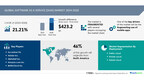
NEW YORK, June 27, 2024 /PRNewswire/ — The global software as a service (SaaS) market  size is estimated to grow by USD 423.2 billion from 2024-2028, according to Technavio. The market is estimated to grow at a CAGR of  21.21%  during the forecast period.  augmenting use of mobile apps is driving market growth, with a trend towards increasing use of vertical SaaS. However, issues associated with system integration  poses a challenge. Key market players include Accenture Plc, Adobe Inc., Alphabet Inc., Amazon.com Inc., BetterCloud Inc., Box Inc., Cisco Systems Inc., Convedo Ltd., Fujitsu Ltd., Hewlett Packard Enterprise Co., Infosys Ltd., International Business Machines Corp., Intuit Inc., Microsoft Corp., Oracle Corp., Salesforce Inc., SAP SE, ServiceNow Inc., Shopify Inc., and Zendesk Inc..

Get a detailed analysis on regions, market segments, customer landscape, and companies – Click for the snapshot of this report

Forecast period

2024-2028

Base Year

2023

Historic Data

2018 – 2022

Segment Covered

Deployment (Public cloud, Private cloud, and Hybrid cloud), End-user (Large enterprises and SMEs), and Geography (North America, Europe, APAC, South America, and Middle East and Africa)

Region Covered

North America, Europe, APAC, South America, and Middle East and Africa

Key companies profiled

Accenture Plc, Adobe Inc., Alphabet Inc., Amazon.com Inc., BetterCloud Inc., Box Inc., Cisco Systems Inc., Convedo Ltd., Fujitsu Ltd., Hewlett Packard Enterprise Co., Infosys Ltd., International Business Machines Corp., Intuit Inc., Microsoft Corp., Oracle Corp., Salesforce Inc., SAP SE, ServiceNow Inc., Shopify Inc., and Zendesk Inc.

Key Market Trends Fueling Growth

Vertical Software as a Service (SaaS) refers to cloud computing solutions designed for specific industries, such as retail, healthcare, or automotive manufacturing. These solutions offer customizable features tailored to clients within these industries and supply chains. Examples include retail analytics software and healthcare business intelligence tools. Enterprises benefit from vertical SaaS due to its industry-specific focus, enabling the generation of valuable customer data and insights. In May 2021, Honeywell International Inc. Launched a cloud-based SaaS solution for building owners and managers, combining operational and business data for improved decision-making and efficiency. Vendors are increasingly offering vertical SaaS to address client demands and expand their customer base. IBM’s Genelco SaaS, designed for the insurance industry, is an example of this trend. The use of vertical SaaS solutions provides significant business value, contributing to the growth of the global SaaS market. 

The Software as a Service (SaaS) market is experiencing significant growth across various application areas like Human Resource Management, Media and Entertainment, and more. Leads and prospects for SaaS are abundant among startups and businesses seeking flexible solutions. Trends include integration with 3D printing technologies and mobile devices. Investment in SaaS is ongoing, with companies like Alphabet’s Google Cloud Marketplace and Microsoft Cloud leading the charge. Business models include Cloud Software, Cloud Consulting Services, and IBM Cloud Integration. Digital transformation brings challenges such as data breaches and cyber-attacks, necessitating focus on data security concerns. Employee well-being and operational efficiency are key considerations. The competitive environment is intense, with Communication Service Providers and IT companies implementing remote work policies. Cloud computing technologies continue to evolve, with hybrid cloud and public cloud offerings from the Cloud Security Alliance. Augmenting company capabilities is a primary goal. However, ongoing costs, including hosting data, electricity, employee fees, and downtime issues, must be managed carefully. 

Research report provides comprehensive data on impact of trend. For more details- Download a Sample Report

Market Challenges

Enterprises are increasingly turning to Software as a Service (SaaS) solutions due to their cost-effectiveness and flexibility compared to traditional IT deployments. However, integrating new software systems and IT infrastructure into existing monolithic architectures poses challenges. Monolithic applications, which combine UI and data access code into a single program, make it difficult to integrate new software. Furthermore, data stored in various formats across different business units can create interoperability issues when migrating to cloud-based software. Lastly, selecting the appropriate integration tool from numerous vendors offering SaaS solutions for various applications, while ensuring hybrid integration capabilities, is a complex task. These integration challenges may hinder the growth of the global SaaS market during the forecast period.The Software as a Service (SaaS) market is experiencing significant growth, with key industries like private cloud, human capital management, operations management, large enterprises in IT and telecom, healthcare, education, B2B and B2C enterprises adopting this model. Challenges include VAT regulations, quarterly earnings reports, and expert opinions on relevant segments. Main drivers are digitization levels, current exchange rates, and country-specific needs. SaaS leaders like AppOmni and Veeva Systems offer Enterprise Resource Planning (ERP) and Customer Relationship Management (CRM) solutions using Artificial Intelligence (AI), Internet of Things (IoT), and Platform as a Service (PaaS). SMEs and small businesses benefit from mobile SaaS growth, allowing access to information, devices, and team partnerships via laptops, tablets, and web browsers on a subscription basis for official purposes. Time and space efficiency are major attributing factors. Deployment is typically cloud-based, ensuring flexibility and ease.

For more insights on driver and challenges – Download a Sample Report

Segment Overview 

This software as a service (saas) market report extensively covers market segmentation by

Deployment 1.1 Public cloud1.2 Private cloud1.3 Hybrid cloudEnd-user 2.1 Large enterprises2.2 SMEsGeography 3.1 North America3.2 Europe3.3 APAC3.4 South America3.5 Middle East and Africa

1.1 Public cloud-  The Software as a Service (SaaS) market continues to grow, with businesses increasingly relying on cloud-based solutions for their software needs. SaaS offers several advantages, including cost savings, flexibility, and ease of use. Companies can access software applications through the internet, eliminating the need for expensive hardware and maintenance. SaaS providers offer regular updates and improvements, ensuring that businesses have access to the latest features. This model allows businesses to focus on their core competencies while leaving the software management to the experts. Overall, the SaaS market is a cost-effective and efficient solution for businesses of all sizes

For more information on market segmentation with geographical analysis including forecast (2024-2028) and historic data (2018 – 2022)  – Download a Sample Report

Research Analysis

The Software as a Service (SaaS) market continues to grow at an unprecedented rate, driven by the increasing level of digitization and the shift towards remote work policies. Communication service providers and B2C enterprises are major contributors to this market, with SaaS products becoming essential for time, space, and information management. Cloud Software, including Google Cloud Marketplace and Microsoft Cloud, dominates the scene, offering a wide range of solutions for businesses of all sizes. IT companies are also leveraging SaaS to provide cloud consulting services and integrate various systems using IBM Cloud Integration. The main drivers of this market include ease of use, cost savings, and flexibility. Current exchange rates and quarterly earnings of key players are closely watched by experts in the relevant segment. SaaS enables team partnerships through laptops, tablets, and other devices, making collaboration more efficient than ever before. VAT and other regulatory considerations are important factors for businesses adopting SaaS solutions.

Market Research Overview

The Software as a Service (SaaS) market is a significant segment of the cloud computing industry, enabling businesses to access and use software applications over the internet on a subscription basis. SaaS offers flexibility, scalability, and cost savings for businesses of all sizes, from SMEs to large enterprises in various industries such as IT and telecom, healthcare, education, B2B, and B2C. Key drivers for SaaS market growth include the level of digitization, remote work policies, and the increasing adoption of cloud computing technologies. Communication Service Providers and IT companies offer SaaS products in areas like Human Capital Management, Operations Management, and Customer Relationship Management. SaaS covers various application areas like Enterprise Resource Planning, Artificial Intelligence, Internet of Things, Robotic Process Automation, and more. The market is shaped by ongoing costs, including hosting data, electricity, and employee fees, as well as downtime issues and the competitive environment. Main drivers for SaaS growth include flexibility, investment, and the shift towards mobile SaaS and cloud-based software services. Relevant segments include public cloud, private cloud, and hybrid cloud solutions. Current exchange rates and country-specific levels of digitization also impact the market. SaaS market statistics show steady growth, with major attributing factors like time, space, information, devices, team partnerships, and official purposes. Key trends include the integration of PaaS, SME adoption, and the impact of net neutrality and VAT on quarterly earnings. Expert opinions and industry reports provide insights into the current state and future prospects of the SaaS market.

Table of Contents:

1 Executive Summary
2 Market Landscape
3 Market Sizing
4 Historic Market Size
5 Five Forces Analysis
6 Market Segmentation

DeploymentPublic CloudPrivate CloudHybrid CloudEnd-userLarge EnterprisesSMEsGeographyNorth AmericaEuropeAPACSouth AmericaMiddle East And Africa

7 Customer Landscape
8 Geographic Landscape
9 Drivers, Challenges, and Trends
10 Company Landscape
11 Company Analysis
12 Appendix

About Technavio

Technavio is a leading global technology research and advisory company. Their research and analysis focuses on emerging market trends and provides actionable insights to help businesses identify market opportunities and develop effective strategies to optimize their market positions.

With over 500 specialized analysts, Technavio’s report library consists of more than 17,000 reports and counting, covering 800 technologies, spanning across 50 countries. Their client base consists of enterprises of all sizes, including more than 100 Fortune 500 companies. This growing client base relies on Technavio’s comprehensive coverage, extensive research, and actionable market insights to identify opportunities in existing and potential markets and assess their competitive positions within changing market scenarios.

Contacts

Technavio Research
Jesse Maida
Media & Marketing Executive
US: +1 844 364 1100
UK: +44 203 893 3200
Email: media@technavio.com
Website: www.technavio.com/

View original content to download multimedia:https://www.prnewswire.com/news-releases/software-as-a-service-saas-market-size-is-set-to-grow-by-usd-423-2-billion-from-2024-2028–augmenting-use-of-mobile-apps-to-boost-the-market-growth-technavio-302184126.html

SOURCE Technavio

Continue Reading
Click to comment

Leave a Reply

Your email address will not be published. Required fields are marked *

Technology

Raythink Showcases Thermal Imaging Solutions for Energy Efficiency and Infrastructure Reliability at Middle East Energy 2026

Published

on

By

DUBAI, UAE, Sept. 1, 2026 /PRNewswire/ — As the Middle East energy sector advances toward greater efficiency, reliability, and sustainability, early fault detection, energy efficiency, and asset reliability are becoming increasingly important.

Against this backdrop, advanced thermal imaging solutions provider Raythink | Raytron Industrial is showcasing its latest thermal imaging technologies at Middle East Energy 2026, taking place September 1–3 at Dubai World Trade Centre, Stand H4-C28. The technologies on display address a range of energy and industrial inspection and monitoring applications.

Making Hidden Heat Visible Across Energy Applications

Thermal anomalies can indicate equipment degradation, electrical faults, insulation problems, or abnormal operating conditions. By visualizing temperature differences without physical contact, thermal imaging technology helps operators identify potential issues that may not be visible to the naked eye.

At Middle East Energy, Raythink is highlighting applications including power and electrical inspection, pipeline and infrastructure inspection, HVAC and energy efficiency, and gas leak detection. These applications demonstrate how thermal imaging solutions can provide greater visibility into equipment conditions and support inspection and maintenance decisions.

Advancing Energy Inspection with Intelligent Thermal Imaging

Raythink combines a broad thermal imaging solutions portfolio with intelligent imaging and analysis technologies to address diverse inspection requirements.

Broad Imaging Capabilities. Raythink’s portfolio spans resolutions from 160 × 120 in the EX Series to 1280 × 1024 in its RS1280 flagship handheld camera. Across its product range, frame rates span from 25 Hz to 120 Hz, supporting routine inspection and dynamic applications requiring smooth imaging and rapid response.

Smarter Inspection. Real-time AI Super Resolution enhances image detail, while the RG630 uses gas cloud coloring to identify gas leaks and their dispersion. AI voice assistance further supports efficient field operation.

Integrated Analysis. TI Studio enables thermal data analysis and streamlined report generation, helping users turn field measurements into actionable information for maintenance and operational decisions.

“Thermal imaging provides a practical, non-contact way to visualize hidden temperature information and turn it into actionable insights,” said Martin, Middle East Sales Manager at Raythink. “At Middle East Energy, we are demonstrating how thermal imaging solutions can support more efficient maintenance and smarter energy management across the region.”

Through its participation in Middle East Energy 2026, Raythink aims to connect with energy and industrial professionals across the Middle East and explore new applications for thermal imaging solutions.

For More Information:

Email: sales@raythink-tech.com
Website: https://www.raythink-tech.com/

View original content to download multimedia:https://www.prnewswire.co.uk/news-releases/raythink-showcases-thermal-imaging-solutions-for-energy-efficiency-and-infrastructure-reliability-at-middle-east-energy-2026-302867077.html

Continue Reading

Technology

BNI India Surpasses U.S. to Become BNI’s Largest Country by Membership

Published

on

By

Milestone reflects rapid Chapter expansion and a growing community of more than 75,000 entrepreneurs building businesses through trusted relationships and referrals

BENGALURU, India, Sept. 2, 2026 /PRNewswire/ — BNI® (Business Network International), the world’s largest business referral network, announced today that India has become the largest country in its global network by membership, surpassing the United States, where BNI was founded more than 41 years ago.

As of August 31, 2026, BNI India has 75,300+ Members across 1,559 Chapters in 146 cities, marking a significant milestone in the organization’s growth in India.

“Reaching this milestone is significant, but the real magic is what happens inside these 1,559 Chapters every week,” said Hemu Suvarna, President of BNI India. “An entrepreneur may walk into BNI looking for business, but what they often find is something equally valuable: a trusted network. They learn how to articulate their business, how to give before expecting something in return, how to hold themselves accountable and, in many cases, how to lead.”

The milestone has been fueled in large part by the continued launch of new Chapters, expanding access to BNI’s structured referral networking model for entrepreneurs across the country. In 2026 alone, BNI India launched 125 new Chapters, year to date, creating new communities where business owners can build relationships, exchange referrals and develop as leaders.

BNI India’s growth has been supported by a series of initiatives designed to foster a growth mindset and strengthen Chapter communities. These include +1 Net Add, encouraging consistent membership growth; 41@41, which marked BNI’s 41st anniversary by challenging Chapters with fewer than 41 Members to grow beyond that milestone; and Launch2Fame, focused on accelerating growth through new and developing Chapters.

“We are not simply building a larger network,” said Mary Kennedy Thompson, CEO of BNI. “We are helping entrepreneurs build businesses, confidence and relationships and, in many cases, a better life. When entrepreneurs grow together, the multiplier is greater than business. Perhaps that is the most important business we are in.”

At the center of BNI’s model is its longstanding Givers Gain® philosophy: the belief that by creating opportunities for others, Members ultimately create opportunities for themselves. That philosophy is reinforced through weekly Chapter meetings, relationship building, professional development and leadership opportunities.

“Leadership is central to what happens inside a strong BNI Chapter,” Suvarna added. “Good Chapter leaders do more than run meetings. They create accountability, recognize effort, make introductions, encourage Members to learn and give people opportunities to lead. I have watched quiet Members find their voice through leadership roles, and I have seen entrepreneurs become better businesspeople because someone held them accountable to a commitment they made.”

As BNI continues building on its momentum throughout the second half of 2026, the organization remains focused on expanding into new markets across the United States and internationally while supporting entrepreneurs through meaningful business connections and long-term franchise growth. To learn more about franchise opportunities, visit www.bni.com

About BNI®
BNI (Business Network International) is the world’s largest and most successful business networking organization. Today, BNI has over 355,000 Member-businesses participating in over 11,800 BNI Chapters that meet in-person, online, or in a hybrid format each week in 77 countries around the globe. Since inception in 1985, BNI has proudly helped 2.28 million businesses garner over $228 billion USD in revenue. To learn more about BNI and how you can visit a Chapter, go to www.bni.com.

View original content to download multimedia:https://www.prnewswire.com/apac/news-releases/bni-india-surpasses-us-to-become-bnis-largest-country-by-membership-302866743.html

SOURCE BNI

Continue Reading

Technology

Subscription-Based Services Boom! Geek+ Reports 2026 Interim Results: Orders Up 35.5%, Breakthroughs Across the Business Spectrum

Published

on

By

HONG KONG, Sept. 1, 2026 /PRNewswire/ — Geek+ (stock code: 2590.HK),  a global leader in intelligent robotics, today announced its interim results for the six months ended 30 June 2026. Driven by the dual engines of AI and embodied intelligence breakthroughs alongside deepened global expansion, the Group delivered a standout interim performance. New signed orders jumped 35.5% YoY to RMB2.385 billion, leading the industry and injecting strong momentum into full-year performance. Revenue climbed 25.3% YoY to RMB1.284 billion, while gross margin improved to 35.8%. Adjusted net loss narrowed 32.1% YoY to RMB60.6 million; excluding embodied intelligence R&D investment of RMB44.5 million, the loss shrank 81.9% to just RMB16.1 million, bringing the core business close to break-even.

The Group’s growth engines have become more diversified and robust, with the boom in subscription-based service orders signalling that its substantial installed base is accelerating conversion into incremental service revenue, forming a high-quality growth pattern of sustained core warehouse AMR growth plus coordinated multi-engine drivers.

Subscription-Based Services Emerge as New Growth Engine

The standout of the results was the explosive growth in subscription-based services, with orders reaching RMB156 million, up over 75% YoY. Leveraging an installed base of 1,000 end customers and 81,000 deployed robots worldwide, the Group is upgrading client relationships from one-off project delivery to long-term operations services. This high-margin, recurring model brings greater predictability and counter-cyclical resilience to performance, while significantly enhancing customer stickiness and building a differentiated competitive moat. The 75% growth rate signals that services are rapidly becoming one of Geek+’s core strategic pillars. Notably, subscription orders in the Americas jumped 455% YoY, fully validating robust demand in mature overseas markets and opening up global replication opportunities.

Beyond subscriptions, the business matrix saw broad-based strength: Pallet-to-Person orders grew over 200% YoY, consolidating market leadership; manufacturing scenario orders jumped over 600% YoY, extending from warehouse fulfillment to production logistics; and embodied intelligence products secured partnerships with multiple Fortune Global 500 companies, whose global business networks serve as a natural global replication channel.

Profitability and Global Reach

In 1H2026, overall gross profit reached RMB460 million, up 27.8% YoY, with gross margin expanding from 35.1% to 35.8%, reflecting continuously enhanced profitability. Revenue from non-domestic regions accounted for over 75% of total revenue, and sales gross margin from these markets hit 46.2%, fully demonstrating the high value-added competitiveness of the Group’s globalized products and services.

As at period end, Geek+ served over 1,000 end customers across 40+ countries and regions, including 85+ Fortune Global 500 enterprises, with a customer repurchase rate as high as 80%. According to Interact Analysis, the Company has retained the No. 1 global autonomous mobile robot (AMR) market share for seven consecutive years.

Outlook: Three Engines for Growth

Going forward, Geek+ will focus on three strategic directions: AI-powered intelligent operations subscription services, full-scenario product innovation, and embodied intelligence commercialization.

In August, the Group launched the all-new RoboShuttle Hyper climbing Tote-to-Person solution, with system throughput of 6,000 totes per hour, precisely targeting high-traffic MFC front warehouses in a market projected to reach US$55.18 billion by 2030. Meanwhile, shared technology foundations and core components across product lines continue to accelerate economies of scale and cross-selling advantages, further supporting steady performance growth.

As its second growth curve, embodied intelligence will transition from order realization to scale contribution. Based on the data flywheel and GINO ECO ecosystem strategy, the Group targets cumulative shipments of over 10,000 units within three years, expanding from warehousing to manufacturing and retail scenarios.

View original content:https://www.prnewswire.com/news-releases/subscription-based-services-boom-geek-reports-2026-interim-results-orders-up-35-5-breakthroughs-across-the-business-spectrum-302867104.html

SOURCE Geek+

Continue Reading

Trending