Connect with us

Technology

Artificial Intelligence (AI) Chips Market: 51% Growth from North America, Report on AI Impact on Market Trends – Technavio

Published

on

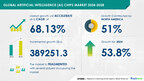
NEW YORK, Dec. 12, 2024 /PRNewswire/ — Report on how AI is redefining market landscape – The global artificial intelligence (AI) chips market size is estimated to grow by USD 389.25 billion from 2024 to 2028, according to Technavio. The market is estimated to grow at a CAGR of over 68.13% during the forecast period.

For comprehensive forecast and historic data on regions,market segments, customer landscape, and companies- Click for the snapshot of this report

Report Attribute

Details

Base Year

2023

Forecast period

2024-2028

Historic Data for

2018 – 2022

Segments Covered

Product (ASICs, GPUs, CPUs, and FPGAs), End-user (Media and advertising, BFSI, IT and telecommunication, and Others), and Geography (North America, Europe, APAC, South America, and Middle East and Africa)

Key Companies Covered

Advanced Micro Devices Inc., Alphabet Inc., Baidu Inc., Broadcom Inc., Cerebras, Fujitsu Ltd., Graphcore Ltd., Huawei Technologies Co. Ltd., Intel Corp., International Business Machines Corp., MediaTek Inc., Microchip Technology Inc., NVIDIA Corp., NXP Semiconductors NV, Qualcomm Inc., SambaNova Systems Inc., Samsung Electronics Co. Ltd., SenseTime Group Inc., Taiwan Semiconductor Manufacturing Co. Ltd., and Tesla Inc, NVIDIA Corporation, Advanced Micro Devices, Inc., Intel Corporation, Micron Technology, Inc., Google, SK HYNIX INC., Qualcomm Technologies, Inc., Samsung, Huawei Technologies Co., Ltd., Apple Inc., Imagination Technologies, Graphcore, Cerebras, Mythic, Kalray, Blaize, Groq, Inc., HAILO TECHNOLOGIES LTD., GreenWaves Technologies, SiMa Technologies, Inc

Regions Covered

North America, Europe, APAC, South America, and Middle East and Africa

Region Outlook

North AmericaEuropeAsiaRest of World

1. North America – North America is estimated to contribute 51%. To the growth of the global market. The Artificial Intelligence (Ai) Chips Market report forecasts market growth by revenue at global, regional & country levels from 2017 to 2027. 

The AI chip market in North America is experiencing significant growth due to increasing investments in autonomous vehicle technology. Advanced systems such as ADAS, HUD, LiDAR, and RADAR, integrated into these vehicles, generate and process vast amounts of real-time data. In response, chip manufacturers are heavily investing in research and development of AI chips tailored for autonomous vehicles. Major automotive original equipment manufacturers (OEMs) are working on commercializing autonomous vehicles, creating lucrative opportunities for AI chip manufacturers to capitalize on this emerging market.

For more insights on North America’s significant contribution along with the market share of rest of the regions and countries – Download a FREE Sample

Segmentation Overview

Product 1.1 ASICs1.2 GPUs1.3 CPUs1.4 FPGAsEnd-user 2.1 Media and advertising2.2 BFSI2.3 IT and telecommunication2.4 OthersGeography 3.1 North America3.2 Europe3.3 APAC3.4 South America3.5 Middle East and Africa

Get a glance at the market contribution of rest of the segments – Download a FREE Sample Report in minutes!

1.1 Fastest growing segment:

Artificial Intelligence (AI) chips, specifically Application-Specific Integrated Circuits (ASICs), are becoming increasingly popular in data center applications due to their superior performance and speed. ASICs are customized, non-configurable chips that offer an instruction set and libraries for local data processing, acting as an accelerator for parallel algorithms. Google’s Tensor Processing Unit (TPU) is a prime example, designed for deep neural networks and already in use for Google Search and Google Street View. ASICs provide faster performance than GPUs, FPGAs, and CPUs, making them a preferred choice for data centers. TPUs have an instruction set that allows TensorFlow programs to be modified and new algorithms to be developed, making them a valuable asset for managing data effectively. The use of ASIC-based AI chips is expected to witness significant growth in the forecast period.

Research Analysis

Artificial Intelligence (AI) Chips Market: The global AI Chips Market is experiencing significant growth due to the increasing adoption of AI technologies in various industries. Deep learning and machine learning algorithms are driving the demand for AI chips, which are specialized hardware components designed to accelerate AI computations. These chips are essential for robotics, quantum computing, and advanced AI applications. The market includes CPU, FPGA, GPU, System on Chip (SoC), and Multichip Module (MCM) solutions. AI chips are finding applications in sectors like healthcare, retail, finance, automotive, autonomous vehicles, IoT devices, and more. High-performance AI chips are crucial for training generative AI models and powering supercomputers. Ethical concerns surrounding AI are also fueling the development of specific integrated circuits. Key technologies include highbandwidth memory and Trainium2 chip. The market is evolving with the shift from cloud to edge computing.

Market Overview

Artificial Intelligence (AI) Chips Market: Overview The AI Chips Market is witnessing significant growth due to the increasing demand for advanced AI technologies such as deep learning and machine learning in various industries. AI chips are specialized hardware components designed to accelerate AI algorithms and technologies, including neural networks, quantum computing, and cognitive computing. These chips are essential for powering AI applications in robotics, computer vision, natural language processing, and other fields. The market for AI chips includes various types of hardware components, such as CPUs, GPUs, FPGAs, ASICs, DSPs, and microcontrollers. Companies are investing heavily in the development of AI chip lines, including Nvidia’s A100 chip, Ascend 910B chipset, and H200 chipset, to meet the growing demand for energy-efficient and high-performance AI solutions. AI applications are widespread across industries, including healthcare, retail, finance, automotive, and manufacturing. The use of AI in healthcare for health monitoring, health information access, personalized health, and treatment devices is gaining popularity, especially for the elderly population. In retail, AI is used for customer behavior analysis, inventory management, and personalized marketing. In finance, AI is used for fraud detection, risk assessment, and algorithmic trading. The automotive industry is also adopting AI technologies for autonomous vehicles, advanced driver assistance systems, and connected cars. The use of AI in manufacturing machines, smart homes, and IoT devices is increasing, leading to the growth of AI data centers and edge computing. However, ethical concerns surrounding AI and the potential for system failure or malfunctioning are major challenges for the market. The development of specific integrated chips and multichip modules is a potential solution to address these challenges. The AI Chips Market is expected to continue growing due to the increasing demand for real-time applications, low latency, and big data processing. The market is also being driven by the development of generative AI, large language models, and other advanced AI technologies. The use of AI in mobile applications, gaming consoles, and personal computers is also expected to drive market growth. In conclusion, the AI Chips Market is a rapidly growing market, driven by the increasing demand for advanced AI technologies and applications across various industries. The market is expected to continue growing due to the development of energy-efficient and high-performance AI solutions, the increasing use of AI in various industries, and the growing demand for real-time applications and low latency. However, ethical concerns and the potential for system failure or malfunctioning are major challenges that need to be addressed.

Start exploring market insights by Download a FREE Sample Report in minutes!

Key Topics Covered:

 1 Executive Summary
 2 Market Landscape
 3 Market Sizing
 4 Historic Market Size
 5 Five Forces Analysis
 6 Market Segmentation
 7 Customer Landscape
 8 Geographic Landscape
 9 Drivers, Challenges, and Trends
10 Venodr Landscape
11 Vendor Analysis
11.1 NVIDIA Corporation
11.2 Advanced Micro Devices, Inc
11.3 Intel Corporation
11.4 Micron Technology, Inc
11.5 Google, SK HYNIX INC
11.6 Qualcomm Technologies, Inc
11.7 Samsung, Huawei Technologies Co., Ltd
11.8 Apple Inc
11.9 Imagination Technologies
11.10 Graphcore
11.11 Cerebras
11.12 Mythic
11.13 Kalray
11.14 Blaize
11.15 Groq, Inc
11.16 HAILO TECHNOLOGIES LTD
11.17 GreenWaves Technologies
11.18 SiMa Technologies, Inc
12 Appendix

About Technavio

Technavio is a leading global technology research and advisory company. Their research and analysis focuses on emerging market trends and provides actionable insights to help businesses identify market opportunities and develop effective strategies to optimize their market positions.

With over 500 specialized analysts, Technavio’s report library consists of more than 17,000 reports and counting, covering 800 technologies, spanning across 50 countries. Their client base consists of enterprises of all sizes, including more than 100 Fortune 500 companies. This growing client base relies on Technavio’s comprehensive coverage, extensive research, and actionable market insights to identify opportunities in existing and potential markets and assess their competitive positions within changing market scenarios.

Contacts

Technavio Research
Jesse Maida
Media & Marketing Executive
US: +1 844 364 1100
UK: +44 203 893 3200
Email: media@technavio.com
Website: www.technavio.com/

View original content to download multimedia:https://www.prnewswire.com/news-releases/artificial-intelligence-ai-chips-market-51-growth-from-north-america-report-on-ai-impact-on-market-trends—technavio-302330401.html

SOURCE Technavio

Continue Reading
Click to comment

Leave a Reply

Your email address will not be published. Required fields are marked *

Technology

As ADA Anniversary Approaches, University of Phoenix Survey Highlights AI’s Potential to Advance Accessibility in Work and Learning

Published

on

By

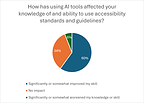
Survey conducted by The Harris Poll on behalf of University of Phoenix finds among those already using AI in the workplace, 60% say AI has improved their knowledge of and ability to use accessibility standards and guidelines.

PHOENIX, July 24, 2026 /PRNewswire/ — As artificial intelligence becomes part of how people work, learn and solve problems, a new University of Phoenix survey conducted by The Harris Poll finds that recent working learners see meaningful opportunities for AI to support accessibility. The survey was designed to understand the impact of AI in the workplace and learning environments on accessibility, defined as ensuring digital content, tools and resources, including AI tools and output, are usable by people with different abilities through inclusive design, use of assistive technology or conformance with accessibility standards, such as the Web Content Accessibility Guidelines (WCAG). The findings are being released ahead of the 36th anniversary of the Americans with Disabilities Act (ADA) on July 26.

The survey, conducted among 1,019 U.S. employed adults who completed a professionally presented training or school course in the past 12 months (“recent working learners”), found that, among workers already using AI in the workplace, 3 in 5 (60%) say AI has improved their knowledge of and ability to use accessibility standards and guidelines, including nearly 1 in 5 (19%) who report significant improvement. 

While the findings point to optimism about AI’s accessibility potential, they also reveal an opportunity for clearer organizational guidance: 45% of respondents say accessibility is absent from, unclear in, or they are uncertain whether it is covered by their workplace AI policies.

“The reality is that accessibility benefits everyone,” shares Kelly Hermann, Vice President of Accessibility and Student Affairs at University of Phoenix. “If accessibility is built in from the beginning, organizations are more likely to create AI-enabled environments that are universally usable. Clearer content, better summaries, accurate captions, and multiple formats can help workers and learners with disabilities, but they also help busy adults, multilingual learners, mobile users, and anyone trying to absorb information quickly.”

Key findings from the survey include:

Workers see AI’s accessibility potential: 89% of recent working learners identify workflows that could benefit from AI and accessibility tools, especially creating accessible documents, presentations, websites or learning materials (38%), presenting information in different formats such as plain language, audio, summaries or translations (33%), and training employees or learners on accessibility practices (30%).AI may help build accessibility awareness: Among those already using AI in the workplace, 60% say AI has improved their knowledge of and ability to use accessibility standards and guidelines.Accessibility is not always clear in workplace AI policies: 45% of recent working learners say accessibility is absent from, unclear in, or they are uncertain whether it is covered by their workplace AI policies.AI tools may not yet fully support different access needs: Among those who use workplace AI tools, only about a quarter of survey respondents (27%) say AI tools available through their workplace or professional learning environment support people with disabilities very well.Human oversight remains important: 36% of recent working learners say human review for important decisions or high-impact work should be part of responsible AI use at work or school.Workers also recognize how AI and accessibility can have an impact on their own career journey: 90% of recent working learners identify AI and accessibility skills that would be valuable in their current or desired career field, including 45% who see value in understanding when AI-generated content needs human review.

Why accessibility is essential to responsible AI adoption

As AI tools are used to draft documents, summarize information, generate captions and transcripts, create image descriptions, support learning and assist with workplace tasks, accessibility becomes central to responsible use. Poorly implemented AI can also create or amplify barriers, including inaccessible content, inaccurate summaries, biased outputs and tools that do not work effectively with assistive technologies.

“Responsible AI is not only about productivity,” Hermann said. “It is about whether the technology works for the people who need to use it. AI can help create more accessible materials and more flexible ways to engage with information, but it still requires clear policies, practical training and human judgment to make sure the outputs are accurate, applicable and usable.”

What the findings mean for employers and educators

The survey suggests that organizations have an opportunity to align AI adoption with supportive design, accessibility practices and workforce training. Employers and educators can take immediate steps by:

Naming accessibility directly in AI policies and guidance.Choosing AI tools with accessibility and assistive technology compatibility in mind.Training workers and learners to create, check and improve accessible AI-generated content.Making support pathways clear for people who experience barriers using AI tools.Keeping human review in place for important decisions, high-impact work and accessibility-sensitive outputs.

The survey also found workers want practical AI training. The most helpful resources identified by recent working learners include real-world examples from their field or industry (36%), hands-on practice using realistic workplace scenarios (34%) and step-by-step demonstrations of common tasks (33%).

Accessibility insights from University of Phoenix

Hermann shared the survey findings ahead of the ADA anniversary in recent media interviews. Hermann oversees the University’s accessibility initiative, including evaluation and remediation of curricular resources, the Center for Access, Resources, Engagement and Support Services (CARES), and the Office of Collaborative Learning and Educational Engagement. Her work focuses on fostering accessible and welcoming educational environments for students, faculty and staff.

Hermann’s office at University of Phoenix also convenes accessibility conversations through initiatives such as Access Amplified™, a free, annual virtual event focused on advancing digital accessibility in web development. The event brings together engineers, developers, designers, content authors and digital strategists for practical strategies and human-centered conversations that address the gap between coding practices and how users with assistive technology experience the web.

About the survey

The survey was conducted online within the United States by The Harris Poll on behalf of University of Phoenix from June 22–29, 2026, among 1,019 employed adults ages 18 and older who have taken a professionally presented training or a school course in the past 12 months, referred to as “recent working learners.” Data were weighted where necessary by age, gender, race/ethnicity, region, education, employment, marital status, household size, household income and smoking status to bring them in line with their actual proportions in the population.

Respondents for this survey were selected from among those who have agreed to participate in surveys. The sampling precision of Harris online polls is measured by using a Bayesian credible interval. For this study, the sample data is accurate to within +/- 3.8 percentage points using a 95% confidence level. This credible interval will be wider among subsets of the surveyed population of interest.

Review the complete survey at phoenix.edu/aiaccessibility.

About University of Phoenix

University of Phoenix is Built for Real Life. 50 Years Strong. The University innovates to help working adults enhance their careers and develop skills in a rapidly changing world through flexible online learning, relevant courses, academic AI pillars, and skills-mapped curriculum for associate, bachelor’s and master’s degree programs. Active students and alumni have access to Career Services for Life® resources including career guidance and tools. For more information, visit phoenix.edu. 

View original content to download multimedia:https://www.prnewswire.com/news-releases/as-ada-anniversary-approaches-university-of-phoenix-survey-highlights-ais-potential-to-advance-accessibility-in-work-and-learning-302834448.html

SOURCE University of Phoenix

Continue Reading

Technology

Mastech Digital to Announce Second Quarter 2026 Financial Results; Participate in Upcoming Investor Conference

Published

on

By

PITTSBURGH, July 24, 2026 /PRNewswire/ — Mastech Digital, Inc. (NYSE American: MHH) (“Mastech Digital”), a leading provider of Digital Transformation IT Services, today announced the date for the release of its financial results for the second quarter ended June 30, 2026, and its participation in an upcoming investor conference.

Second Quarter 2026 Earnings:

Mastech Digital will report its financial results for the second quarter 2026 before the market opens on Thursday, August 6, 2026. Management will host a live conference call and webcast at 9:00 a.m. Eastern Time on that day to discuss the Company’s financial performance and operating results.  The conference call will be hosted by Nirav Patel, President and CEO, and Kannan Sugantharaman, Chief Financial and Operations Officer.

Those wishing to participate via webcast should access the call through Mastech Digital’s Investor Relations website at https://investors.mastechdigital.com. Those wishing to participate via telephone may dial in at 1-800-715-9871 (USA) or 1-646-307-1963 (International) with the passcode 7506988. The replay will be available via webcast through Mastech Digital’s Investor Relations website.

Upcoming Investor Conference:

Mr. Sugantharaman will host a fireside chat at the Sidoti Micro-Cap Investor Conference on Wednesday, August 19, 2026, at 9:15 a.m. Eastern Time.

Mastech Digital management is scheduled to host virtual one-on-one and small group meetings with investors during the conference on August 19-20, 2026. Investors interested in arranging a meeting should contact their Sidoti representative or reach out to the Mastech Digital investor relations team at investors@mastechdigital.com.

About Mastech Digital, Inc.

Mastech Digital (NYSE American: MHH) is a leading provider of Digital Transformation IT Services. The Company offers Data Management, Analytics & AI Solutions, and IT Staffing Services with a digital-first approach. A minority-owned enterprise, Mastech Digital is headquartered in Pittsburgh, PA, with offices across the U.S., Canada, Europe, and India. Visit us at www.mastechdigital.com.

Investor Relations Contact:
investors@mastechdigital.com 


View original content to download multimedia:https://www.prnewswire.com/news-releases/mastech-digital-to-announce-second-quarter-2026-financial-results-participate-in-upcoming-investor-conference-302834421.html

SOURCE Mastech Digital, Inc.

Continue Reading

Technology

SOLAI Limited Announces Extraordinary General Meeting

Published

on

By

AKRON, Ohio, July 24, 2026 /PRNewswire/ — SOLAI Limited (NYSE: SLAI) (“SOLAI” or the “Company”) (previously known as “BIT Mining Limited”), a technology-driven personal AI and digital infrastructure provider, today announced that it will hold its extraordinary general meeting of shareholders at 428 South Seiberling Street, Akron, Ohio, US on August 14, 2026 at 10:00 a.m., New York time.

Holders of record of ordinary shares and preference shares of the Company at the close of business on July 20, 2026, New York time (the “Record Date”) are entitled to receive notice of, and to attend and vote at, the extraordinary general meeting or any adjournment thereof. Holders of the Company’s American Depositary Shares (“ADSs”) who wish to exercise their voting rights for the underlying ordinary shares must act through the depositary of the Company’s ADS program, Deutsche Bank Trust Company Americas.

The notice of the extraordinary general meeting, which sets forth the resolutions to be submitted to shareholder approval at the extraordinary general meeting is available on the Investor Relations section of the Company’s website at https://ir.solai.com

About SOLAI Limited

SOLAI Limited (previously known as “BIT Mining Limited”) (NYSE: SLAI) (previously traded under “BTCM”) is a technology-driven personal AI and digital infrastructure provider. Building upon its historical legacy in digital asset mining and blockchain network operations, the Company is leveraging extensive experience in large-scale hardware deployment, data center operations, and high-performance computing to build the foundational infrastructure for personal AI computing and digital asset ecosystems globally.

For more information:

SOLAI Limited
ir@solai.com
ir.solai.com
www.solai.com 

Christensen Advisory
Jason Ng
Tel: +852-2117-0861
Email: solai@christensencomms.com 


View original content:https://www.prnewswire.com/news-releases/solai-limited-announces-extraordinary-general-meeting-302834034.html

SOURCE SOLAI Limited

Continue Reading

Trending