Technology
Software as a Service (SaaS) Market to Grow by USD 562.6 Billion (2025-2029), Driven by Rising Mobile App Usage, with AI Impacting Market Trends – Technavio
Published
1 year agoon
By
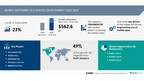
NEW YORK, Jan. 31, 2025 /PRNewswire/ — Report on how AI is redefining market landscape – The global software as a service (saas) market size is estimated to grow by USD 562.6 billion from 2025-2029, according to Technavio. The market is estimated to grow at a CAGR of 23% during the forecast period. Augmenting use of mobile apps is driving market growth, with a trend towards increasing use of vertical saas. However, issues associated with system integration poses a challenge. Key market players include Accenture PLC, Adobe Inc., Alphabet Inc., Amazon.com Inc., BetterCloud Inc., Box Inc., Cisco Systems Inc., Convedo Ltd., Fujitsu Ltd., Hewlett Packard Enterprise Co., Infosys Ltd., International Business Machines Corp., Intuit Inc., Microsoft Corp., Oracle Corp., Salesforce Inc., SAP SE, ServiceNow Inc., Shopify Inc., and Zendesk Inc..
Key insights into market evolution with AI-powered analysis. Explore trends, segmentation, and growth drivers- View Free Sample PDF
Software As A Service (SaaS) Market Scope
Report Coverage
Details
Base year
2024
Historic period
2019 – 2023
Forecast period
2025-2029
Growth momentum & CAGR
Accelerate at a CAGR of 23%
Market growth 2025-2029
USD 562.6 billion
Market structure
Fragmented
YoY growth 2022-2023 (%)
19.5
Regional analysis
North America, Europe, APAC, South America, and Middle East and Africa
Performing market contribution
North America at 49%
Key countries
US, Canada, UK, Germany, France, Japan, China, Italy, India, and Brazil
Key companies profiled
Accenture PLC, Adobe Inc., Alphabet Inc., Amazon.com Inc., BetterCloud Inc., Box Inc., Cisco Systems Inc., Convedo Ltd., Fujitsu Ltd., Hewlett Packard Enterprise Co., Infosys Ltd., International Business Machines Corp., Intuit Inc., Microsoft Corp., Oracle Corp., Salesforce Inc., SAP SE, ServiceNow Inc., Shopify Inc., and Zendesk Inc.
Market Driver
The SaaS market is experiencing significant growth with major players like Alphabet and Google Cloud Marketplace, Microsoft Cloud, IBM Cloud Integration, and IT companies dominating the scene. Remote work policies and Communication Service Providers are driving the demand for cloud computing technologies. SaaS products, including Human Resource Management, Enterprise Resource Planning, Customer Relationship Management, Artificial Intelligence, and Internet of Things, are leading the way. Trends like hybrid cloud, cloud security, and public/private cloud solutions are shaping the industry. Large enterprises in IT and telecom, healthcare, education, B2B and B2C sectors are major contributors. SaaS growth is fueled by flexibility, investment, and ongoing costs. Time and space are crucial as more employees use laptops, tablets, and mobile devices for work. Experts predict mobile SaaS growth, especially in SMEs, due to the subscription-based business model. However, challenges like downtime issues, competitive environment, and cybersecurity concerns persist. The Cloud Security Alliance reports data breaches and cyber-attacks as major concerns. Employee well-being and operational efficiency are also essential considerations. According to Statista, the market size is projected to grow, with flexibility being a significant factor. Deployment models, application areas, and ongoing costs vary, making it essential for businesses to choose the right SaaS products and partners.
Vertical Software as a Service (SaaS) refers to cloud computing solutions tailored for specific industries, such as retail, healthcare, or automotive manufacturing. These solutions offer customizable features to cater to the unique needs of each sector. Examples include retail analytics software, healthcare business intelligence tools, and logistics analytics. Enterprises seeking industry specialization find vertical SaaS cost-effective and beneficial. Vertical SaaS enables the generation of industry-specific customer data and intelligence, enhancing operational efficiency and decision-making capabilities.
Request Sample of our comprehensive report now to stay ahead in the AI-driven market evolution!
Market Challenges
The SaaS market is witnessing significant growth with major players like Alphabet, Google Cloud Marketplace, Google Workspace, Microsoft Cloud, IBM Cloud Integration, and IT companies offering various cloud software solutions. Remote work policies and communication service providers are driving the demand for cloud computing technologies. SaaS products, including Human Resource Management, Enterprise Resource Planning, Customer Relationship Management, Artificial Intelligence, and Internet of Things, are in high demand among large enterprises in IT and telecom, healthcare, education, B2B and B2C enterprises, and SMEs. Challenges include digitization level, VAT, quarterly earnings, and expert opinions. Public and private clouds, hybrid cloud, and deployment models like PaaS are relevant segments. Main drivers are flexibility, investment, ongoing costs, and time and space savings. Mobile SaaS growth is a major attributing factor, with mobile devices and 3D printing technologies leading the way. However, the competitive environment presents challenges like downtime issues, data security concerns, and employee well-being. Business models, digital transformation, and cybersecurity are ongoing concerns for SaaS providers. Cloud Security Alliance reports reveal data breaches and cyber-attacks as significant challenges. Companies must ensure compliance with current exchange rates and country-specific levels for optimal net returns. SaaS growth is a net positive for businesses, offering subscription-based access to information, applications, and team partnerships via the internet on laptops, tablets, and web browsers.Enterprises are increasingly turning to Software as a Service (SaaS) solutions due to their cost-effectiveness compared to traditional IT deployments. With SaaS, businesses avoid the need to purchase or construct their own IT infrastructures, install software, configure applications, and hire IT staff for maintenance. SaaS offers flexibility and adaptability, enabling enterprises to serve their customers more efficiently and enhance business processes. However, integrating new SaaS systems and IT infrastructure can present challenges. One such issue is connecting to monolithic systems, which combine UI and data access code into a single program from a single platform. Addressing these integration complexities is crucial for successful SaaS implementation.
Discover how AI is revolutionizing market trends- Get your access now!
Segment Overview
This software as a service (saas) market report extensively covers market segmentation by
Deployment 1.1 Public cloud1.2 Private cloud1.3 Hybrid cloudEnd-user 2.1 Large enterprises2.2 SMEsGeography 3.1 North America3.2 Europe3.3 APAC3.4 South America3.5 Middle East and Africa
1.1 Public cloud- The public cloud segment of the Software as a Service (SaaS) market is growing due to its elasticity and scalability, making it an ideal choice for IT-enabled services. Public cloud delivers IT services over the Internet, including software applications like email, sales management, CRM, financial management, HRM, billing, and collaboration. Vendors offer these services on a subscription-basis, providing multi-tenant capabilities, high availability, and reduced complexity. Enterprises benefit from no upfront investments, flexible pricing, and cost agility. Public SaaS solutions, such as Microsoft Office 365 and Slack, are widely adopted by SMEs for their simplicity and ease of implementation. Additionally, public cloud services offer access to advanced platform solutions like AI, big data, data analytics, and IoT. These advantages are driving the growth of the public cloud segment in the global SaaS market.
Download a Sample of our comprehensive report today to discover how AI-driven innovations are reshaping competitive dynamics
Research Analysis
The Software as a Service (SaaS) market is experiencing unprecedented growth due to the increasing shift towards remote work and digital transformation. SaaS products, including those for communication, collaboration, and productivity, have become essential for businesses of all sizes. The relevance of this segment is further amplified by the current global situation, which has accelerated the adoption of cloud-based solutions. Key drivers for the SaaS market include the level of digitization, time and cost savings, and the ability to access information, devices, and team partnerships from anywhere, at any time. Communication service providers and B2C enterprises are major consumers of SaaS solutions. The SaaS market is not limited to IT companies, with many other industries also adopting these services. Quarterly earnings reports and expert opinions provide insights into the financial health and future prospects of SaaS providers. The European Union’s Value-Added Tax (VAT) regulations also impact the SaaS market, adding complexity to pricing and billing structures. Main drivers of growth include the increasing use of laptops and tablets, as well as the integration of cloud consulting services and IBM Cloud Integration. Current exchange rates also play a role in the global SaaS market, with fluctuations impacting pricing and revenue for providers. The SaaS market is expected to continue its growth trajectory in the coming years, as more businesses embrace the benefits of cloud-based solutions.
Market Research Overview
The Software as a Service (SaaS) market is experiencing unprecedented growth, driven by the increasing digitization of businesses across various industries. SaaS products, delivered over the internet on a subscription basis, offer flexibility, cost savings, and ease of use for businesses of all sizes. SMEs and large enterprises in sectors like IT and telecom, healthcare, education, B2B and B2C, are adopting SaaS solutions for human capital management, operations management, communication, and more. Key drivers include the level of digitization, remote work policies, and the availability of cloud computing technologies. SaaS offerings span various application areas such as Enterprise Resource Planning, Customer Relationship Management, Artificial Intelligence, Internet of Things, and Robotic Process Automation. The market is competitive, with various solutions available for time, space, and information management. SaaS growth is majorly attributed to mobile SaaS, cloud-based software services, and team partnerships. However, businesses face challenges such as downtime issues, ongoing costs, data security concerns, and the need for employee well-being in the digital transformation era. SaaS solutions are available on public and private clouds, with hybrid cloud offerings gaining popularity. Main drivers of SaaS market growth include the flexibility of subscription models, ongoing investment, and the availability of various SaaS products. Statistics show that the market is expected to continue growing, with experts predicting significant expansion in the coming years. However, businesses must carefully consider the costs of hosting data, electricity, and employee fees when adopting SaaS solutions. Competitive environment and cybersecurity concerns are also major considerations. In conclusion, the SaaS market offers numerous benefits for businesses, but careful consideration is required when selecting a solution. Factors such as deployment, application area, and ongoing costs must be taken into account. With the right solution, businesses can streamline operations, improve efficiency, and stay competitive in today’s digital landscape.
Table of Contents:
1 Executive Summary
2 Market Landscape
3 Market Sizing
4 Historic Market Size
5 Five Forces Analysis
6 Market Segmentation
DeploymentPublic CloudPrivate CloudHybrid CloudEnd-userLarge EnterprisesSMEsGeographyNorth AmericaEuropeAPACSouth AmericaMiddle East And Africa
7 Customer Landscape
8 Geographic Landscape
9 Drivers, Challenges, and Trends
10 Company Landscape
11 Company Analysis
12 Appendix
About Technavio
Technavio is a leading global technology research and advisory company. Their research and analysis focuses on emerging market trends and provides actionable insights to help businesses identify market opportunities and develop effective strategies to optimize their market positions.
With over 500 specialized analysts, Technavio’s report library consists of more than 17,000 reports and counting, covering 800 technologies, spanning across 50 countries. Their client base consists of enterprises of all sizes, including more than 100 Fortune 500 companies. This growing client base relies on Technavio’s comprehensive coverage, extensive research, and actionable market insights to identify opportunities in existing and potential markets and assess their competitive positions within changing market scenarios.
Contacts
Technavio Research
Jesse Maida
Media & Marketing Executive
US: +1 844 364 1100
UK: +44 203 893 3200
Email: media@technavio.com
Website: www.technavio.com/
View original content to download multimedia:https://www.prnewswire.com/news-releases/software-as-a-service-saas-market-to-grow-by-usd-562-6-billion-2025-2029-driven-by-rising-mobile-app-usage-with-ai-impacting-market-trends—technavio-302364484.html
SOURCE Technavio
You may like
Technology
Penn Medicine, Children’s Hospital of Philadelphia team awarded Breakthrough Prize for developing gene therapy for inherited blindness
Published
9 minutes agoon
April 18, 2026By
LOS ANGELES, April 18, 2026 /PRNewswire/ — Their discovery started with a group of blind dogs living at a vet school. Now, the work has been awarded the prestigious Breakthrough Prize at the “Oscars of Science.”
Today, Jean Bennett, MD, PHD, and Albert Maguire, MD, both emeritus professors of Ophthalmology in the Perelman School of Medicine at the University of Pennsylvania, and Katherine High, MD, an emeritus professor of Pediatrics and the founding director of the Raymond G. Perelman Center for Cellular and Molecular Therapeutics at Children’s Hospital of Philadelphia (CHOP), received the Breakthrough Prize in Life Sciences for their work in developing the first FDA-approved gene therapy for an inherited condition, which dramatically improves sight in people with a form of blindness called Leber Congenital Amaurosis (LCA).
Their work blazed a trail for the more than 140 gene therapy trials for retinal conditions, including macular degeneration and diabetic retinopathy, diseases that collectively impact about 30 million people in the US. Eighty more trials are currently underway.
“Even 20 years ago, treating people with gene therapy was seen by some as an impossibility,” said Jonathan Epstein, MD, dean of the Perelman School of Medicine and executive vice president of the University of Pennsylvania for the Health System. “But this group of incredible physician-scientists persisted and created something that is providing sight to people who would have been completely blind as early as kindergarten. Their belief in the power of life-changing science has led to breathtaking results and richly deserved global recognition.”
The Breakthrough Prizes are called the “Oscars of Science” for their high-profile celebration of research and support from celebrities spanning numerous areas of pop culture. Created in 2012 by Sergey Brin, Priscilla Chan and Mark Zuckerberg, Yuri and Julia Milner, and Anne Wojcicki, the prizes are given out in five categories including Life Sciences, Fundamental Physics, and Math, each with an accompanying $3 million award.
This year’s accolade now means that nine Penn-affiliated researchers have received the Breakthrough Prize, tied for the most with Harvard University. The prior Penn Medicine award winners are Carl June, PhD (2024), Drew Weissman, MD, PhD, and Katalin Karikó, PhD (2022), and Virginia M.Y. Lee, PhD (2019). Additionally, Penn faculty members Charles Kane, PhD, and Eugene Mele, PhD, won the prize for Physics in 2019. Mathew Madhavacheril, PhD, an assistant professor of Physics and Astronomy in Penn’s School of Arts & Sciences, also received recognition at this year’s Breakthrough Prize ceremony when he was honored with the New Horizons in Physics award, given to researchers early in their careers.
“Science is rarely a straight path, and those who make the most profound discoveries are resilient and persistent, overcoming obstacles along the way,” said J. Larry Jameson, MD, PhD, president of the University of Pennsylvania. “That is exactly what I see in this year’s awardees, and it has been true of all our remarkable faculty who have been recognized for scientific breakthroughs. Whether they are discovering what lies beneath Alzheimer’s Disease, curing cancer by engineering a patients’ own immune cells, or reversing blindness—they have persisted with imagination and rigor. Their steadfastness has pushed the boundaries of what medicine can achieve.”
“Developing cell and gene therapies has long been a top priority for our organization,” said Madeline Bell, CHOP’s CEO. “This breakthrough is the result of decades of investment and collaboration, and reflects our commitment to translating scientific discoveries into therapies that will transform patients’ lives. It has paved the way for many more cell and gene therapy innovations and has given hope to families around the world.”
“They can see!”
Bennett and Maguire met and married during medical school in the 1980s. It was then that they both became intrigued by the concept of genetic therapy, the practice of replacing a mutated or faulty gene with a functional copy, and started dreaming of treating inherited forms of blindness with the technique, which at that time remained the stuff of science fiction.
It was “like thinking you wanted to go to the moon in 1950,” Maguire said many years later.
Both Bennett and Maguire joined Penn’s Scheie Eye Institute in the 1990s and began working on their ideas with lab mice. They learned that the University of Pennsylvania School of Veterinary Medicine housed a group of blind dogs who had a condition similar to the human disease: Leber congenital amaurosis (LCA). People born with a mutation on the RPE65 gene have poor vision starting at birth and often progress rapidly to complete blindness, usually by their 20s, but sometimes in early childhood.
The pair developed a therapy that used a virus as a transport, carrying a piece of DNA into cells that would then correct the faulty, blindness-causing proteins formed by the bad gene. The idea: Once the proteins were set right, some sight might return. First, they tested the therapy by injecting it into a single eye in each of three dogs.
It wasn’t long until they knew whether it worked. Bennett recalls receiving an excited phone call from a technician at the lab, who exclaimed, “They can see!”
Sure enough, the dogs were twirling around, using their treated eyes to see. Before treatment, the dogs had bumped and tripped through an obstacle course set up to test their sight. After the full treatment, the course was an easy task for the dogs.
A knock on the door
In parallel with Bennett and Maguire’s dreams of gene therapy, High was also working to bring the field forward. Like Bennett and Maguire, she had achieved long-term reversal of a serious genetic disease in a dog model: In her case, for hemophilia, a life-threatening bleeding disorder. High had advanced these studies from success in dogs to initial clinical trials in humans, delivering the donated gene into skeletal muscle and the liver.
The work was promising, but the human immune response to the gene delivery vessel—which was derived from a virus in the same way Bennett and Maguire’s therapy was—prevented sustained benefits from the therapeutic gene. At the same time, companies and investors, discouraged by high profile negative events, began to turn away from gene therapy. Progress stalled.
But with support from CHOP, High founded the Raymond G. Perelman Center for Cellular and Molecular Therapeutics (CCMT) in 2004. She recruited experts in all aspects of clinical gene therapy, including specialized knowledge in the manufacturing and release of gene therapy vectors, which are the particles that deliver a healthy copy of a defective gene to patients.
After vector production was set up at CHOP, High went to Bennett’s office and knocked on the door with a proposition to start a clinical trial in humans. In 2007, Maguire, who was then a surgeon in Pediatric Ophthalmology at CHOP, administered an injection of the experimental therapy at CHOP into a clinical trial participant – a 26-year-old woman—for the first time. Her twin, with the same condition, received the treatment shortly after.
When the team assessed the treatment of the 37 eligible participants from the original clinical trials, 72 percent reported the maximum possible improvement in a test of low-light conditions, which simulates night vision. Amid these, many reported improved peripheral and central vision, too. One patient, who could only detect changes in light, was suddenly able to navigate walking through Philadelphia at night, unaided, and could make out the clock on City Hall. Another patient was able to see a star for the first time in her life just six days after the procedure.
In 2017, the therapy—by then manufactured by Spark Therapeutics, a spinout from CHOP, and called Luxturna—received approval by the U.S. Food and Drug Administration. It became the first FDA approval of a genetic therapy for an inherited disease. Today, hundreds of people around the world have successfully received the treatment.
A celebration of decades of work
Today’s celebration in Los Angeles marks a celebratory milestone in roughly 40 years of work led by Bennett, Maguire, and High that has inspired others in the now vibrant field of gene therapy. In fact, a treatment stemming from High’s original work with hemophilia received FDA approval in 2024.
“We always just did what we thought you were supposed to do if you were a doctor: Find treatments for diseases,” said Maguire. “Both my father and Jean’s worked in science, and it seemed normal to try to push the envelope.”
“I think the only surprise for us was that things worked out so well,” Bennett said. “For every success, there are usually so many failures. That’s just the nature of science. But our team hit on something that has helped so many people and helped progress the field, and we’re really grateful for our part in that.”
High described the journey between the start of her collaboration with Bennett and Maguire in 2005 and the FDA approval in 2017 as “an arduous one.”
“At times, it seemed that the number of obstacles we needed to overcome to reach regulatory approval was never-ending,” High said. “Working without the benefit of the guidelines and precedents we now have today, we sought to solve each day’s problems so that the program would have a tomorrow. It was a bold and uncertain investment of time, effort, and resources. Few were willing to take on the risks, but it ultimately paid off, and it helped build the foundation of modern gene therapy.”
About Penn Medicine:
Penn Medicine is one of the world’s leading academic medical centers, dedicated to the related missions of medical education, biomedical research, excellence in patient care, and community service.
The organization consists of the University of Pennsylvania Health System and Penn’s Raymond and Ruth Perelman School of Medicine, founded in 1765 as the nation’s first medical school.
The Perelman School of Medicine is consistently among the nation’s top recipients of funding from the National Institutes of Health, with more than $588 million awarded in the 2024 fiscal year. Home to a proud history of “firsts,” Penn Medicine teams have pioneered discoveries that have shaped modern medicine, including CAR T cell therapy for cancer and the Nobel Prize-winning mRNA technology used in COVID-19 vaccines.
The University of Pennsylvania Health System cares for patients in facilities and their homes stretching from the Susquehanna River in Pennsylvania to the New Jersey shore. UPHS facilities include the Hospital of the University of Pennsylvania, Penn Presbyterian Medical Center, Chester County Hospital, Doylestown Health, Lancaster General Health, Princeton Health, and Pennsylvania Hospital—the nation’s first hospital, chartered in 1751. Additional facilities and enterprises include Penn Medicine at Home, GSPP Rehabilitation, Lancaster Behavioral Health Hospital, and Princeton House Behavioral Health, among others.
Penn Medicine is a $13.7 billion enterprise powered by more than 50,000 talented faculty and staff.
About Children’s Hospital of Philadelphia:
A non-profit, charitable organization, Children’s Hospital of Philadelphia was founded in 1855 as the nation’s first pediatric hospital. Through its long-standing commitment to providing exceptional patient care, training new generations of pediatric healthcare professionals, and pioneering major research initiatives, the hospital has fostered many discoveries that have benefited children worldwide. Its pediatric research program is among the largest in the country. The institution has a well-established history of providing advanced pediatric care close to home through its CHOP Care Network, which includes more than 50 primary care practices, specialty care and surgical centers, urgent care centers, and community hospital alliances throughout Pennsylvania and New Jersey. CHOP also operates the Middleman Family Pavilion and its dedicated pediatric emergency department in King of Prussia, the Behavioral Health and Crisis Center (including a 24/7 Crisis Response Center) and the Center for Advanced Behavioral Healthcare, a mental health outpatient facility. Its unique family-centered care and public service programs have brought Children’s Hospital of Philadelphia recognition as a leading advocate for children and adolescents. For more information, visit www.chop.edu.
Media Contacts:
CHOP PR Contact:
Ashley Moore
Moorea1@chop.edu
267-426-6071
Penn Medicine PR Contact:
Frank Otto
Frank.Otto@pennmedicine.upenn.edu
267-693-2999
View original content to download multimedia:https://www.prnewswire.com/news-releases/penn-medicine-childrens-hospital-of-philadelphia-team-awarded-breakthrough-prize-for-developing-gene-therapy-for-inherited-blindness-302746319.html
SOURCE Children’s Hospital of Philadelphia
Technology
Haloid Solutions Expands Access to Radio Equipment by Offering Flexible Financing and Leasing Solutions Named HaloidFLEX
Published
3 hours agoon
April 18, 2026By
NEW YORK, April 18, 2026 /PRNewswire/ — As part of Haloid Solutions’ long-term commitment to helping businesses and municipalities acquire critical communications equipment despite budgetary constraints, Haloid now offers specialized financing and leasing programs through its HaloidFLEX program.
Designed to ensure that companies and governments have the equipment they need without costly capital expenditures outlays, HaloidFLEX offers financing for equipment purchased directly from manufacturers or local radio dealers. HaloidFLEX financing offers zero percent and low-interest options as well as predictable monthly payments for qualified buyers. HaloidFLEX clients can even opt to incorporate extended support services and protections into their financing to prepare for accidents, theft, or equipment losses. This gives companies peace of mind with one low monthly payment.
For organizations that don’t want or need to own equipment long-term, the HaloidFLEX leasing program offers similar benefits with potential tax advantages. Companies can lease brand new equipment and upgrade or return it at lease-end as needed. For companies seeking flexible options – or those that are interested in upgrading to the latest technology as it becomes available – leasing makes perfect sense.
One of the added benefits of each program is that HaloidFLEX allows clients to bundle services and protections that would normally be billed separately. Accidental damage, theft, and loss protections can be put in place, so that there’s never a lapse in communication if a radio fails. Extended warranties are also available upon request, so companies can customize their financing and protection to fit their budget and safeguard their equipment simultaneously.
According to a Haloid Solutions spokesperson, “Bundling expenses simply makes sense. It reduces the need for multiple policies and flexes with organizations to ensure critical communication equipment is available when needed while guaranteeing that the company’s investment is protected for the life of the equipment.”
HaloidFLEX financing and leasing programs are available to qualified businesses and municipalities nationwide. To learn more or request a customized quote, visit HaloidSolutions.com.
About Haloid Solutions
Haloid Solutions is the go-to resource for U.S. businesses and municipalities in search of financing and leasing for two-way radios, walkie talkies, communications equipment, accessories, and services. Focused on reliability, affordability, and performance, Haloid strives to equip professionals in all communication-based industries with the resources they need most.
For more information about Haloid Solutions, or details about the HaloidFLEX financing or leasing programs, please visit https://haloidsolutions.com/collections/lmr-radio-financing-and-leasing-and-subscription-low-cost-payment-options-for-2-way-radio-equipment or contact us on our website.
View original content to download multimedia:https://www.prnewswire.com/news-releases/haloid-solutions-expands-access-to-radio-equipment-by-offering-flexible-financing-and-leasing-solutions-named-haloidflex-302746527.html
SOURCE HALOID SOLUTIONS
Technology
CAS Holdings Appoints Patrick McDermott as Chief Executive Officer
Published
4 hours agoon
April 18, 2026By
Leadership Transition Positions CAS Holdings for Continued Growth and Customer-Focused Innovation
FRANKLIN, Mass., April 18, 2026 /PRNewswire/ — CAS Holdings, a leader in industrial automation distribution, engineering, and integration, is pleased to announce that Patrick McDermott has been named Chief Executive Officer.
McDermott previously served as President and Chief Revenue Officer, where he played a key role in driving growth across the organization, strengthening customer relationships, and leading teams with a clear focus on execution and results.
In his new role as CEO, McDermott will lead CAS Holdings into its next phase of growth, building on the company’s strong foundation and continued commitment to delivering value to customers, partners, and employees.
“I’m honored to step into the role of CEO at CAS Holdings,” said McDermott. “Over the past year, I’ve had the opportunity to work alongside an incredible team, support our customers, and help drive the growth of our organization. I’m excited to build on that momentum as we move into our next chapter.”
CAS Holdings, through its divisions including iAutomation and RND Automation, delivers a full spectrum of industrial automation solutions – from product distribution and technical support to custom machine building and system integration. Serving OEM machine builders and end-users, the company brings deep expertise in motion control, robotics, and vision, along with value-added capabilities such as kitting, sub-assembly, panel building, and turnkey automation systems, acting as an extension of its customers’ engineering and production teams.
McDermott’s leadership will focus on advancing CAS Holdings’ strategic initiatives, strengthening its market position, and continuing to deliver innovative automation solutions that support customers across a wide range of industries.
“We have a strong foundation, a talented team, and a clear direction. I’m looking forward to what we’ll accomplish together,” McDermott said. “Our focus remains on supporting our customers with responsive, local expertise, strong supplier partnerships, and the engineering and production capabilities they rely on to keep their operations running and growing.”
About Complete Automation Solutions Holdings
Complete Automation Solutions Holdings (CAS Holdings) is dedicated to empowering industrial automation companies, including those in the packaging industry, to achieve optimal efficiency and success. With a diverse portfolio encompassing industrial distribution, panel building and assembly, system integration, and robotics, CAS Holdings provides comprehensive packaging machines and solutions tailored to meet industry needs. The company prioritizes strong partnerships, expert engineering, and innovative solutions, ensuring sustainable practices and continuous improvement. CAS Holdings envisions a future where its transformative automation solutions redefine industry standards and drive growth. Committed to transparency and collaboration, CAS Holdings aims to be the most trusted partner in the automation sector.
Press Contact:
Erika Jacques
508-838-8012
http://www.iautomation.com/
View original content to download multimedia:https://www.prnewswire.com/news-releases/cas-holdings-appoints-patrick-mcdermott-as-chief-executive-officer-302746520.html
SOURCE CAS Holdings, Inc.
Penn Medicine, Children’s Hospital of Philadelphia team awarded Breakthrough Prize for developing gene therapy for inherited blindness
Kelp restaking platform exploited, $293M drained in attack
Solana futures open interest rose by 20% this week: Is $100 SOL next?
Whiteboard Series with NEAR | Ep: 45 Joel Thorstensson from ceramic.network
New Gooseneck Omni Antennas Offer Enhanced Signals in a Durable Package
Huawei Launches Global City Intelligent Twins Architecture to Accelerate City Digital Transformation
Why You Should Build on #NEAR – Co-founder Illia Polosukhin at CV Labs
Whiteboard Series with NEAR | Ep: 45 Joel Thorstensson from ceramic.network
NEAR End of Year Town Hall 2021: The Open Web World, MetaBUILD 2 Hackathon and 2021 recap
Trending
-
Coin Market1 day agoSingapore Gulf Bank adds stablecoin mint and redeem for 24/7 settlement
-
Near Videos1 day agoWe Have Only Scratched The Surface Of The Agentic Future
-
Near Videos1 day agoNEAR Intern Demos the Future of Private Trading
-
Technology1 day agoDynamite Integrates Biometric Cryptography and AI into its Wallet Product
-
Coin Market1 day agoFrench finance minister backs euro-pegged stablecoins to compete with US
-
Near Videos1 day agoAnthropic Cuts Off OpenClaw Subscribers | GPT-Image-2 Leaked | Drift $285M Hack Explained
-
Coin Market1 day agoUS Senator asks for Binance monitor update amid scrutiny of Iran sanctions
-
Coin Market22 hours agoWorldcoin tanks 13% as World’s iris-scanning tech expands to Zoom, Docusign