Technology
Healthcare IT Market to Grow by USD 215.4 Billion from 2025-2029, Driven by Service Quality and Efficiency Focus, with AI Impact on Market Trends – Technavio
Published
1 year agoon
By
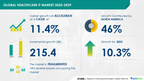
NEW YORK, Feb. 7, 2025 /PRNewswire/ — Report with market evolution powered by AI – The global healthcare IT market size is estimated to grow by USD 215.4 billion from 2025-2029, according to Technavio. The market is estimated to grow at a CAGR of almost 11.4% during the forecast period. Increasing focus on improving quality of services and efficiency is driving market growth, with a trend towards emergence of ai-enabled emotion recognition technologies. However, vulnerability of emrs toward cybercrime poses a challenge. Key market players include 3M Co., athenahealth Inc., Cognizant Technology Solutions Corp., Dassault Systemes SE, Datavant, Dell Technologies Inc., Epic Systems Corp., GE Healthcare Technologies Inc., International Business Machines Corp., Koninklijke Philips NV, McKesson Corp., Microsoft Corp., Oracle Corp., SAS Institute Inc., Siemens AG, Tata Consultancy Services Ltd., Tenet Healthcare Corp., Optum Inc., Veradigm LLC, and Wipro Ltd..
Key insights into market evolution with AI-powered analysis. Explore trends, segmentation, and growth drivers- View Free Sample PDF
Healthcare IT Market Scope
Report Coverage
Details
Base year
2024
Historic period
2019 – 2023
Forecast period
2025-2029
Growth momentum & CAGR
Accelerate at a CAGR of 11.4%
Market growth 2025-2029
USD 215.4 billion
Market structure
Fragmented
YoY growth 2022-2023 (%)
10.3
Regional analysis
North America, Europe, APAC, South America, and Middle East and Africa
Performing market contribution
North America at 46%
Key countries
US, Canada, Germany, UK, China, Japan, France, Italy, India, and South Korea
Key companies profiled
3M Co., athenahealth Inc., Cognizant Technology Solutions Corp., Dassault Systemes SE, Datavant, Dell Technologies Inc., Epic Systems Corp., GE Healthcare Technologies Inc., International Business Machines Corp., Koninklijke Philips NV, McKesson Corp., Microsoft Corp., Oracle Corp., SAS Institute Inc., Siemens AG, Tata Consultancy Services Ltd., Tenet Healthcare Corp., Optum Inc., Veradigm LLC, and Wipro Ltd.
The healthcare IT industry is experiencing significant growth, according to the latest research study. The industry trend analysis shows that e-prescribing, interoperability, and security concerns are top priorities for healthcare organizations. A single diagram and multiple tables highlight the highest revenue-generating segments: electronic health records, clinical devices, and capacity management solutions. Healthcare systems are investing in healthcare providers to monitor and manage disease progression, coordinate care, and ensure patient safety. The Worldometer reports that over 6 million hospital beds are in use, requiring IT systems for communication and data exchange. Healthcare management focuses on specialty medications, ePrescriptions, and virtual healthcare. Prescribers and controlled substances are under scrutiny, leading to the adoption of electronic prior authorizations and remote monitoring. Smaller healthcare organizations and outpatient settings face unique challenges, including basic infrastructure, usability, and integration. Federal bodies are pushing for web-based management and information systems to improve patient information access and decision-making for healthcare professionals. Security concerns persist, with exploitation and proliferation of medical apps and consumer technology companies posing risks. Healthcare IT solutions, including RCM, are essential for managing patient care quality and purchasing power. Cloud-based solutions, AI & IoT technologies, and data security are key investments for integrated healthcare systems. Virtual reality (VR) and augmented reality (AR) are transforming medical imaging and patient management. Value-based payment models, payer-provider mergers, and quality reporting solutions are shaping the eHealth market. Big data, IT investments, and healthcare analytics solutions are driving innovation in patient care and personalized medicine. The future of healthcare IT includes virtual hospitals, remote patient monitoring, telemedicine solutions, and accountable care solutions. Artificial Intelligence (AI) and Machine Learning (ML) are revolutionizing care delivery and patient data management. Geriatric population growth and workflow management are major considerations for healthcare IT architecture. Healthcare IT solutions must address the unique needs of hospitals, ambulatory care centers, and IT systems while ensuring patient safety and data security.
In the healthcare industry, doctors and caregivers are utilizing advanced medical technologies, including Artificial Intelligence (AI), for precise ailment diagnosis and effective patient treatment. AI is gaining significant traction in the healthcare IT sector. One noteworthy application of AI is emotion recognition, which enables the technology to identify, decipher, and react to human emotions and moods. Telemedicine vendors, particularly those focusing on telepsychiatry, have begun implementing emotion recognition technology to comprehend patients’ feelings. This technology is beneficial for patients who are not physically present and may not verbally express their emotions to psychiatrists. AI’s ability to recognize emotions enhances the quality of remote healthcare services.
Request Sample of our comprehensive report now to stay ahead in the AI-driven market evolution!
• The healthcare IT industry is experiencing significant growth, with e-prescribing, virtual healthcare, and electronic health records leading the way. However, challenges persist, such as interoperability issues and security concerns. According to a recent research study, the industry is projected to reach USD735.6 billion by 2025. Key trends include the use of clinical devices for coordinated care, capacity management solutions for hospital beds, and RCM solutions for healthcare organizations. EPrescriptions, electronic prior authorizations, and remote monitoring are also gaining popularity. However, smaller healthcare organizations and outpatient settings face unique challenges, including basic infrastructure and communication issues. According to a survey by United Health, 75% of US hospitals use web-based management systems, but only 30% have fully integrated IT systems. Security concerns remain a major challenge, with exploitation and proliferation of medical apps and consumer technology companies a growing concern. Healthcare providers must invest in trained IT personnel and data security measures to ensure patient care quality. The highest revenue-generating segments include healthcare systems, hospitals, and ambulatory care centers. Key players include Change Healthcare, Mass Media Data, and Healthcare IT solutions. The eHealth market is also seeing significant growth, with hardware, software, and electronic information systems driving innovation. Cloud-based solutions, AI & IoT technologies, and data security are key areas of investment. Despite these challenges, the future of healthcare IT looks promising, with virtual hospitals, telemedicine solutions, and value-based payment models transforming care delivery. However, usability, integration, and IT architecture remain key areas for improvement. Worldometer reports that there are currently over 7.9 billion people in the world, with an aging population and increasing demand for personalized medicine and geriatric care. Healthcare organizations must adapt to these trends to provide quality care and manage disease progression effectively. In conclusion, the healthcare IT industry is undergoing significant change, with e-prescriptions, electronic health records, and virtual healthcare leading the way. However, challenges such as interoperability issues, security concerns, and communication challenges persist. Healthcare organizations must invest in IT systems, trained IT personnel, and data security measures to provide quality patient care and adapt to the changing healthcare landscape.
• The healthcare industry’s reliance on IT and electronic communications for managing large data volumes has significantly advanced. However, this progress comes with risks, particularly cybercrime. Hacking of computers, software, and intranet portals pose threats to sensitive data such as medical records, patient personal information, and insurance details. Ensuring data accuracy is crucial for healthcare providers to deliver appropriate patient insights. As technology advances, it’s essential to prioritize cybersecurity measures to protect this valuable information.
Discover how AI is revolutionizing market trends- Get your access now!
This healthcare it market report extensively covers market segmentation by
End-userHealthcare ProvidersHealthcare PayersComponentServicesSoftwareHardwareGeographyNorth AmericaEuropeAPACSouth AmericaMiddle East And Africa
1.1 Healthcare providers- The healthcare providers segment, which includes hospitals, clinics, laboratories, pharmacies, and ambulatories, is the largest and continuing leader in the global healthcare IT market. In recent years, technological advancements have significantly transformed healthcare, with medical facilities adhering to regulatory changes and enhancing patient care quality. Hospitals and physician offices, regardless of size, have embraced new technologies. These modern medical facilities are high-tech operations that provide skilled personnel with advanced technology. Healthcare IT adoption offers numerous benefits, such as improved care quality, accuracy, reduced costs, and seamless collaboration. The HITECH Act of 2009 mandated medical facilities to upgrade their IT infrastructure, particularly regarding electronic health records (EHRs). EHR systems enable healthcare professionals to securely capture and exchange vital patient health information, fostering teamwork and critical decision-making. Pharmacies have also adopted IT to streamline operations and access essential patient and medical data. Digital messaging facilitates faster, more direct communication between doctors and pharmacists, resolving concerns before patients arrive. Laboratories, too, have implemented IT services for efficient information management through Laboratory Information Systems (LIS). The integration of IT in healthcare leads to enhanced patient care, with advantages such as improved quality, accuracy, reduced costs, and seamless collaboration. As healthcare providers continue to adopt and optimize these technologies, the healthcare IT market within this segment will thrive during the forecast period.
Download a Sample of our comprehensive report today to discover how AI-driven innovations are reshaping competitive dynamics
Title: Healthcare IT Industry Trends and Financial Insights: A Comprehensive Analysis of E-Prescribing, Interoperability, and Digital Health Introduction: The healthcare IT industry is witnessing significant growth, driven by the adoption of e-prescribing, interoperability, and digital health solutions. This research study provides an industry trend analysis of the healthcare IT market, focusing on revenue-generating segments such as hardware, software, electronic information systems, and eHealth. Key Findings: – The e-prescribing market is expected to grow at a CAGR of 12.2% from 2021 to 2028. – Interoperability issues continue to challenge the industry, with Change Healthcare and Mass Media Data leading the charge towards standardization. – The highest revenue-generating segment in 2020 was software, accounting for 52.6% of the total market share. – Hardware and cloud-based solutions are gaining popularity due to their cost-effectiveness and scalability. – AI & IoT technologies are revolutionizing healthcare IT, with applications in data security, remote patient monitoring, and predictive analytics.
Title: Healthcare IT Industry Trends and Market Analysis: A Comprehensive Overview The healthcare IT industry is experiencing significant growth as digital transformation reshapes care delivery. According to the latest research study, the global eHealth market is projected to reach USD618.8 billion by 2026, growing at a CAGR of 15.5% from 2021. Key industry trends include the adoption of e-prescribing, interoperability, and security concerns. E-prescriptions and electronic prior authorizations are becoming standard in healthcare organizations, with over 80% of US hospitals using electronic health records (EHRs). Interoperability issues persist, with the need for standardized data communication protocols and IT architecture. Healthcare providers are investing in capacity management solutions, such as remote monitoring and virtual healthcare, to manage disease progression and improve patient care quality. The highest revenue-generating segments include clinical solutions, patient care, and healthcare management. The healthcare IT industry comprises various stakeholders, including healthcare organizations, clinical devices, and information systems. The Worldometer reports over 7.9 billion patient beds worldwide, and the US alone has over 60,000 hospitals and ambulatory care centers. The industry faces challenges such as security concerns, exploitation, and proliferation of medical apps and consumer technology companies. Trained IT personnel are in high demand to manage these systems and ensure patient data security. The financial information reveals that the largest players in the healthcare IT industry include Change Healthcare, Mass Media Data, Healthcare IT solutions, and United Health. Federal bodies and RCM solutions are also significant contributors to the industry. The healthcare IT industry is evolving rapidly, with trends such as cloud-based solutions, AI & IoT technologies, and value-based payment models. The future of healthcare IT includes virtual reality (VR), augmented reality (AR), genomics, personalized medicine, and virtual hospitals. The industry’s growth is driven by the increasing purchasing power of healthcare organizations, the need for usability and integration, and the shift towards accountable care solutions and healthcare analytics. The survey reveals that smaller healthcare organizations and outpatient settings are also adopting IT solutions to improve care delivery and patient management. In conclusion, the healthcare IT industry is experiencing significant growth and transformation, driven by trends such as e-prescribing, remote monitoring, and cloud-based solutions. The industry faces challenges such as interoperability, security concerns, and the need for trained IT personnel. The future of healthcare IT includes AI, machine learning, and virtual hospitals, among other trends.
1 Executive Summary
2 Market Landscape
3 Market Sizing
4 Historic Market Size
5 Five Forces Analysis
6 Market Segmentation
End-userHealthcare ProvidersHealthcare PayersComponentServicesSoftwareHardwareGeographyNorth AmericaEuropeAPACSouth AmericaMiddle East And Africa
7 Customer Landscape
8 Geographic Landscape
9 Drivers, Challenges, and Trends
10 Company Landscape
11 Company Analysis
12 Appendix
Technavio is a leading global technology research and advisory company. Their research and analysis focuses on emerging market trends and provides actionable insights to help businesses identify market opportunities and develop effective strategies to optimize their market positions.
With over 500 specialized analysts, Technavio’s report library consists of more than 17,000 reports and counting, covering 800 technologies, spanning across 50 countries. Their client base consists of enterprises of all sizes, including more than 100 Fortune 500 companies. This growing client base relies on Technavio’s comprehensive coverage, extensive research, and actionable market insights to identify opportunities in existing and potential markets and assess their competitive positions within changing market scenarios.
Technavio Research
Jesse Maida
Media & Marketing Executive
US: +1 844 364 1100
UK: +44 203 893 3200
Email: media@technavio.com
Website: www.technavio.com/
View original content to download multimedia:https://www.prnewswire.com/news-releases/healthcare-it-market-to-grow-by-usd-215-4-billion-from-2025-2029–driven-by-service-quality-and-efficiency-focus-with-ai-impact-on-market-trends—technavio-302371183.html
SOURCE Technavio
You may like
Technology
Sixty-One Percent of CEOs Say Their Boards Are Rushing AI Transformation
Published
1 hour agoon
May 4, 2026By
New Research from Boston Consulting Group Reveals Disconnect at the Top on AI Strategy and ExecutionThree-Quarters of Board Members Believe They Understand AI, but 35% of CEOs Say Boards Overestimate the Human Capabilities AI Can ReplaceMore Than Half of CEOs Say AI Hype Is Distorting Boardroom Judgment
BOSTON, May 4, 2026 /PRNewswire/ — Sixty-one percent of CEOs say their boards are rushing AI transformation, exposing a divide at the top just as companies enter a critical phase of scaling AI. While both groups agree on AI’s importance, they differ on how quickly it should be implemented and how ready organizations are to deliver results.
These findings are from the first edition of Split Decisions: The BCG CEOs and Boards Survey. The research is based on a global survey of 625 leaders, including 351 CEOs and 274 board members, from companies with at least $100 million in annual revenue, spanning both private and public sectors.
Boards tend to favor faster AI implementation, according to the survey, while CEOs take a more measured approach. Gaps in AI understanding and FOMO (fear of missing out) may be contributing to this dynamic. Board members with lower confidence in their AI knowledge are more likely to believe their organizations are moving too slowly, suggesting that uncertainty is translating into increased urgency.
Boards’ AI Confidence Faces CEO Skepticism
While 75% of board members believe their AI knowledge is on par with or ahead of that of their peers, CEOs are less convinced. Nearly 40% say boards lack an informed view of how AI is reshaping growth strategy, and one-third say boards overestimate the human capabilities that AI can replace. (See the exhibit.)
“I feel this tension so acutely between CEOs and boards,” said Julie Bedard, a BCG managing director and partner. “A powerful way for CEOs to bridge the gap between their AI knowledge and their boards’—especially if they feel there is a deficit there—is for the CEO to personally lead an AI upskilling session for their board to show them the latest AI tools and what they can do. CEOs can also bridge the gap by talking about AI in a much more differentiated way to clearly illustrate where AI can be a substitute for humans and where it can complement human work.”
AI Hype and Misaligned Expectations Shape Boardroom Dynamics
More than half of CEOs say boards need to better understand the gap between AI hype and reality, while boards want CEOs to do a better job of selling them on their AI strategy.
CEOs report feeling greater pressure to deliver AI results than boards may fully recognize. Chief executives estimate that 35% of their performance evaluation depends on achieving AI ROI, compared with boards’ estimate of 27%, suggesting a mismatch between perceived expectations and formal accountability.
AI Literacy Emerges as a Shared Priority
Despite some misalignment, CEOs and boards broadly agree on the need to raise AI fluency at the highest levels of leadership. Approximately 80% of both groups say that prospective board members should be required to demonstrate a measurable understanding of how AI can reshape their industry.
“CEOs need to be very intentional about supporting their boards on the same learning journey they’ve taken,” said Judith Wallenstein, a BCG managing director and senior partner and the global head of the firm’s CEO Advisory. “But at a much faster pace, with more focus, and in a way that builds real understanding rather than just surface-level awareness of how AI can create true competitive advantage for the company.”
Download the publication here:
https://www.bcg.com/publications/2026/ai-governance-gaps-where-ceos-and-boards-disagree
Media Contact:
Eric Gregoire
+1 617 850 3783
gregoire.eric@bcg.com
About Boston Consulting Group
Boston Consulting Group partners with leaders in business and society to tackle their most important challenges and capture their greatest opportunities. BCG was the pioneer in business strategy when it was founded in 1963. Today, we work closely with clients to embrace a transformational approach aimed at benefiting all stakeholders—empowering organizations to grow, build sustainable competitive advantage, and drive positive societal impact.
Our diverse, global teams bring deep industry and functional expertise and a range of perspectives that question the status quo and spark change. BCG delivers solutions through leading-edge management consulting, technology and design, and corporate and digital ventures. We work in a uniquely collaborative model across the firm and throughout all levels of the client organization, fueled by the goal of helping our clients thrive and enabling them to make the world a better place.
View original content to download multimedia:https://www.prnewswire.com/news-releases/sixty-one-percent-of-ceos-say-their-boards-are-rushing-ai-transformation-302760527.html
SOURCE Boston Consulting Group (BCG)
Technology
IBM Study: CEOs are Reshaping C-suite Roles for the AI Era
Published
1 hour agoon
May 4, 2026By
76% of surveyed organizations now have a Chief AI Officer, up from 26% a year ago59% of CEO respondents say the CHRO’s influence will increase over the next few yearsNearly two-thirds of surveyed CEOs are comfortable using AI to help inform major strategic decisions
ARMONK, N.Y., May 4, 2026 /CNW/ — A new global study from the IBM (NYSE: IBM) Institute for Business Value finds that the accelerating pace of AI is pushing CEOs to redesign how C-suite roles are structured to drive greater business impact across the enterprise.
In the foreword of the study, IBM Vice Chairman Gary Cohn writes, “The CEO’s role has always been to lead through disruption. What AI changes is the velocity and consequences of leadership. Enterprises that succeed will operate AI-first – not as a layer of technology, but as a new operating model. Decision cycles will compress. Boundaries between functions will dissolve. Advantage will accrue to those who can learn, adapt, and execute faster than their competitors.”
The annual IBM CEO study,* which surveyed 2,000 CEOs globally, shows that as AI becomes more pervasive in the enterprise, CEOs are under growing pressure to rethink how leadership teams operate, how decisions get made and how organizations are structured.
Among the key findings:
76% of surveyed organizations have a Chief AI Officer (CAIO) in 2026, up from just 26% in 2025.Analysis shows that organizations with an AI-first approach to C-suite design have scaled 10% more AI initiatives enterprise-wide than their peers.64% of surveyed CEOs say they are comfortable making major strategic decisions based on AI-generated input. 83% of respondents agree that AI sovereignty is essential to business strategy, underscoring the importance of having the right controls as AI plays a larger enterprise-wide role. Surveyed CEOs say only 25% of the workforce is using AI regularly as part of their job, despite 86% believing their employees have the skills to collaborate with AI.
“AI is changing how work gets done, bringing people and software together in new ways, and it’s changing how people come together in the workplace,” said Mohamad Ali, Senior Vice President, IBM Consulting. “The CEOs delivering real results from AI transformation aren’t just deploying AI faster, they’re redesigning their organizations to bring together the best people with the best technology.”
New challenges demand different kinds of leadership
85% of respondents say all functional leaders must become technology experts in their domain, signaling that AI accountability is expanding beyond specialized roles. Among organizations with a CAIO, all surveyed CEOs expect the influence of the role to increase by 2030, alongside rising influence across every member of the C-suite. 59% of surveyed CEOs say the CHRO’s influence will increase over the next few years.
As CEOs turn to AI-driven decisions, governance and controls become more critical
By 2030, surveyed CEOs expect 48% of operational decisions where consistency and guardrails can be codified will be made by AI without human intervention, compared to 25% today. 79% of executives surveyed confirm they are decentralizing decision-making, distributing accountability as AI plays a more significant role enterprise wide.
Organizations are betting on people to drive AI success
83% of CEOs surveyed say AI success depends more on people’s adoption than technology.Between 2026 and 2028, respondents expect 29% of employees to require reskilling for a different role and 53% to need upskilling to perform their current role more effectively. Surveyed organizations that redesigned five core business areas — technology, finance, HR, operations and cross-functional collaboration — are four times more likely to have delivered on business objectives. 77% of respondents say talent and technology leadership roles are converging, suggesting tighter integration between talent, technology and enterprise strategy.
To view the full study, visit: https://www.ibm.com/thought-leadership/institute-business-value/en-us/c-suite-study/ceo
The study also features industry perspectives from senior executives on how business leaders are responding to AI-driven change. A selection of these firsthand views are available in the addendum below.
*Study Methodology
The IBM Institute for Business Value, in cooperation with Oxford Economics, conducted a survey of 2,000 CEOs and equivalent senior leaders across 33 geographies and 21 industries from February to April 2026. The survey explored how leaders are redesigning business models, operating structures and execution capabilities in an AI-driven economy, with additional analysis examining how organizations translate AI ambition into enterprise-wide execution and business value.
The IBM Institute for Business Value, IBM’s thought leadership think tank, combines
global research and performance data with expertise from industry thinkers and leading academics to deliver insights that make business leaders smarter. For more world-class thought leadership, visit: www.ibm.com/ibv. To receive more insights, subscribe to the IdeaWatch newsletter: https://ibm.co/ibv-ideawatch.
About IBM
IBM is a leading provider of global hybrid cloud and AI, and consulting expertise. We help clients in more than 175 countries capitalize on insights from their data, streamline business processes, reduce costs and gain the competitive edge in their industries. Thousands of government and corporate entities in critical infrastructure areas such as financial services, telecommunications and healthcare rely on IBM’s hybrid cloud platform and Red Hat OpenShift to affect their digital transformations quickly, efficiently and securely. IBM’s breakthrough innovations in AI, quantum computing, industry-specific cloud solutions and consulting deliver open and flexible options to our clients. All of this is backed by IBM’s long-standing commitment to trust, transparency, responsibility, inclusivity, and service. Visit www.ibm.com for more information.
Media Contact
Marisa Conway
IBM Corporate Communications
conwaym@us.ibm.com
Executive Perspectives:
“It’s not laying AI on top of your existing tools and services. It’s reimagining the entire process.” — Pablo T. Rivero, CEO, Resy and SVP, Global Dining, American Express
“You can’t forecast every disruption, but you can prepare by building organizations that are resilient, adaptable, and ready to operate through change.” — Andrew Anagnost, President and CEO, Autodesk
“AI has moved from the infrastructure layer, largely invisible, to the surface layer of how we work and how we serve customers.” — David Risher, CEO, Lyft
“The introduction of AI is more transformative than the introduction of the internet was at the time – not because of the technology itself, but because of its impact on how people work, decide and collaborate.” — Jan Polkerman, CEO, Dutch Tax and Customs Authority IT
“AI needs to be embedded into how we operate. That means integrating it into workflows across design, merchandising, marketing, stores, and operations–not as a separate initiative, but as part of how the business runs.” – Patrice Louvet, President and CEO, Ralph Lauren Corporation
View original content to download multimedia:https://www.prnewswire.com/news-releases/ibm-study-ceos-are-reshaping-c-suite-roles-for-the-ai-era-302760745.html
SOURCE IBM
Technology
Eddid Financial Honored with “Professional Services Award in RWA” by HKCT Highlighting its Leading Edge in Web3 and Digital Assets
Published
2 hours agoon
May 4, 2026By
HONG KONG, May 4, 2026 /PRNewswire/ — Eddid Financial (the “Group”) has won the “Professional Services Award in RWA” at the HKCT Business Awards, hosted by the Hong Kong Commercial Times. The award recognizes the Group’s exceptional professional service capabilities and innovative achievements in the Real-World Assets Tokenisation (“RWA”) sector. This prestigious honor serves as a strong industry endorsement of the Group’s dedicated efforts in the RWA space, affirming its leadership in bridging traditional and digital finance while injecting significant momentum into Hong Kong’s digital asset market.
The HKCT Business Awards evaluates candidates based on four core criteria: corporate achievements, market competitiveness, brand philosophy, and professional standing. As one of the most credible and influential business awards in Hong Kong, it aims to recognize outstanding enterprises across various sectors for their performance over the past year, encouraging companies to continuously enhance their core competitiveness and pioneer innovative economic directions. During this year’s selection process, the judging panel conducted a comprehensive assessment of Eddid Financial’s compliance infrastructure, innovative services, and industry contributions within the RWA sector, highly commending the Group’s professional strength and forward-looking vision in asset tokenisation.
Compliance-Driven: Building a Full-Chain Service Ecosystem
As a licensed pioneer in Hong Kong’s RWA landscape, Eddid Financial has consistently relied on compliance as its foundation and innovation as its driving force. Having deeply cultivated the digital asset space for years, the Group has established a full-chain professional service ecosystem that encompasses asset screening, product design, compliance auditing, and distribution operations. Eddid Securities and Futures, a subsidiary of the Group, became one of the first brokerages in Hong Kong to upgrade its licenses in September 2023. It subsequently secured further upgrades for its Type 1 and Type 9 regulated activity licenses, making it one of the few institutions authorized to distribute tokenised securities and RWA products. This regulatory milestone has laid a solid, compliant foundation for the Group’s RWA business operations.
Successful Launch of Landmark Precious Metal RWA Projects
In terms of practical application, Eddid Financial has actively spearheaded the launch of several landmark RWA projects, setting a new benchmark for the industry. Notably, the Group partnered with Timeless Resources Holdings Limited (8028.HK) and HashKey Chain to introduce Hong Kong’s first silver RWA project. By leveraging blockchain technology to tokenise physical silver assets, each digital coin is backed 1:1 by one ounce of physical silver, strictly held by an independent trustee. This initiative not only lowers the barrier to entry for precious metal investments but also enhances asset liquidity. The project’s product design and issuance framework received a “no further comment” reply from the Hong Kong Securities and Futures Commission (SFC), demonstrating the highest standard of compliance.
Concurrently, the Group has collaborated with CAC Fintech to advance China’s first agricultural RWA project. By converting agricultural products, land management rights, and future agricultural revenue rights into on-chain digital certificates, this project addresses critical pain points such as poor liquidity and low financing efficiency in agricultural assets. Furthermore, it supports the national rural revitalization strategy and explores novel pathways for the innovative integration of agricultural assets with financial markets.
Leading the Upgrade of the Regional RWA Industry
Beyond launching landmark projects, Eddid Financial continues to drive the ecosystem construction and market development of the RWA sector. The Group’s research department published the “Core Guide to RWA: From Basic Theory to Global Practice,” sharing its leading experience in asset tokenisation to help establish industry standards. Simultaneously, the Group has built a tripartite development model encompassing “Technology + Compliance + Ecosystem”. Internally, it has assembled a dedicated fintech team to advance underlying technologies; externally, it connects core stakeholders, including asset holders, investors, and licensed exchanges, to form a comprehensive RWA service ecosystem that provides clients with all-encompassing, one-stop professional services.
Looking ahead, Eddid Financial will continue to leverage its comprehensive licensing advantages, expert service teams, and robust technical support to drive the digital transformation of a diverse range of real-world assets. The Group is committed to delivering highly flexible, efficient, and compliant RWA services to its clients while actively supporting the standardized and international development of Hong Kong’s digital asset market, thereby cementing Hong Kong’s status as a premier global digital finance hub.
View original content:https://www.prnewswire.com/apac/news-releases/eddid-financial-honored-with-professional-services-award-in-rwa-by-hkct-highlighting-its-leading-edge-in-web3-and-digital-assets-302760892.html
SOURCE Eddid Financial
Stablecoin firms have a $112B opportunity in LATAM remittance outside of US-Mexico: Bybit
Sixty-One Percent of CEOs Say Their Boards Are Rushing AI Transformation
IBM Study: CEOs are Reshaping C-suite Roles for the AI Era
Send Rakhi to UK swiftly with UK Gifts Portal
Whiteboard Series with NEAR | Ep: 45 Joel Thorstensson from ceramic.network
New Gooseneck Omni Antennas Offer Enhanced Signals in a Durable Package
Why You Should Build on #NEAR – Co-founder Illia Polosukhin at CV Labs
Whiteboard Series with NEAR | Ep: 45 Joel Thorstensson from ceramic.network
NEAR End of Year Town Hall 2021: The Open Web World, MetaBUILD 2 Hackathon and 2021 recap
Trending
-
Near Videos4 days agoReading blockchain with IronClaw
-
Coin Market4 days agoRealmint launches to give retail investors a smarter way into RWAs
-
Technology5 days agoSimply announces compatibility with AI glasses from Meta
-
Coin Market5 days agoZetaChain dismissed bug report that could have prevented $334K exploit
-
Coin Market4 days agoRealOpen and TRON verify $9.4M in USDT for crypto-enabled real estate purchases
-
Technology4 days agoSocomec, Daitron team up to meet Japan’s growing power demands
-
Coin Market4 days agoStable Sea integrates WisdomTree tokenized Treasury fund for corporate cash management
-
Technology4 days agoNew Blog Series from Commercial Credit Group (CCG) Helps Businesses Make Smarter Equipment Financing Decisions for Long-Term Growth