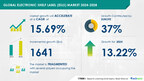
NEW YORK, June 27, 2024 /PRNewswire/ — The global electronic shelf label (ESLS) market size is estimated to grow by USD 1641 million from 2024-2028, according to Technavio. The market is estimated to grow at a CAGR of almost 15.69% during the forecast period. Implementation of in-store technologies is driving market growth, with a trend towards rising number of strategic partnerships and alliances. However, growth in e-commerce industry poses a challenge. Key market players include Danavation Technologies Corp., Diebold Nixdorf Inc., Displaydata Ltd., E Ink Holdings Inc., LANCOM Systems GmbH, M2COMM, New Zealand Electronic Shelf Labelling, Opticon Sensors Europe BV, Panasonic Holdings Corp., Pricer AB, Rational Innovation, RSJ Software GmbH, S and K Solutions GmbH and Co. KG, Samsung Electronics Co. Ltd., Shenzhen Minew Technologies Co. Ltd., SOLUM Europe Gmbh, Teraoka Seiko Co. Ltd., troniTAG GmbH, VusionGroup, and Zhejiang Hanshow Technology Co. Ltd.
Get a detailed analysis on regions, market segments, customer landscape, and companies – Click for the snapshot of this report
Forecast period
2024-2028
Base Year
2023
Historic Data
2018 – 2022
Segment Covered
Technology (Radio frequency, Infrared, and Others), Product (LCD ESL, Full graphic e-paper ESL, and Segmented e-paper ESL), End-user (Supermarkets and hypermarkets, Convenience stores/department stores/mass merchants, and Drug stores and others), and Geography (Europe, APAC, North America, Middle East and Africa, and South America)
Region Covered
Europe, APAC, North America, Middle East and Africa, and South America
Key companies profiled
Danavation Technologies Corp., Diebold Nixdorf Inc., Displaydata Ltd., E Ink Holdings Inc., LANCOM Systems GmbH, M2COMM, New Zealand Electronic Shelf Labelling, Opticon Sensors Europe BV, Panasonic Holdings Corp., Pricer AB, Rational Innovation, RSJ Software GmbH, S and K Solutions GmbH and Co. KG, Samsung Electronics Co. Ltd., Shenzhen Minew Technologies Co. Ltd., SOLUM Europe Gmbh, Teraoka Seiko Co. Ltd., troniTAG GmbH, VusionGroup, and Zhejiang Hanshow Technology Co. Ltd.
Key Market Trends Fueling Growth
The global Electronic Shelf Label (ESL) market is expanding, and vendors are actively investing in product development to capitalize on its growth potential. Strategic partnerships and alliances are a key focus for vendors, enabling them to broaden their offerings and extend their reach in various regions. For instance, in 2023, Qualcomm Technologies, Inc. Collaborated with SES-imagotag to develop new ESL technology based on Bluetooth SIG’s ESL wireless standard. Such collaborations are anticipated to boost the market’s growth during the forecast period.
Electronic Shelf Labels (ESLs) have become a trending technology in retail stores, replacing traditional paper labels with real-time, battery-powered displays. The market for ESLs is surging due to the proliferation of technologies like Radio Frequency Identification (RFID) and Bluetooth, enabling seamless communication between ESL devices and store networks. SES-imagotag and Hanshow Technology lead the market, with master framework agreements and regulatory support from trade and market regulations. ESLs offer numerous benefits, including accurate pricing, product information, and special offers. They facilitate mobile payment and near field communication for a better shopping experience. ESLs also support inventory status, product details, and real-time promotions, enhancing brand loyalty and employee job satisfaction. The market for ESLs is expected to grow as automation in stores continues, with E-commerce and order picking becoming increasingly important. However, import-export and production analysis indicate potential challenges for market dominance. Inaccurate pricing and regulatory compliance are also crucial considerations. Legacy ESL solutions are being upgraded with connectivity technologies like QR codes and NFC to meet the demands of modern retail.
Research report provides comprehensive data on impact of trend. For more details- Download a Sample Report
Market Challenges
The e-commerce industry is experiencing significant growth due to the increasing use of digital technologies and the convenience of shopping online. E-commerce retailers, such as Alibaba Group Holding, Amazon, eBay, Walmart, Flipkart, and Rakuten, are focusing on online retailing to cater to the growing demand for digital shopping. These companies offer competitive prices and a wide range of products and services online, making it challenging for traditional brick-and-mortar stores to compete. Technological innovations, including digital payments and digital advertisements, are driving the growth of the e-commerce market. Smartphones and web applications serve as the foundation for e-commerce and payment gateway providers. However, the trend of online shopping has led to lower prices for consumers compared to physical stores, potentially hindering the growth of the global electronic shelf label market. Despite this challenge, electronic shelf labels offer benefits such as real-time price updates, reduced labor costs, and improved accuracy. Retailers can use electronic shelf labels to remain competitive by offering dynamic pricing and personalized promotions to customers. As the retail industry continues to evolve, it is essential for retailers to adapt and integrate technology to remain competitive in the market. In conclusion, the e-commerce industry’s growth is limiting the growth of the global electronic shelf label market due to the competitive pricing offered online. However, electronic shelf labels offer benefits such as real-time pricing and personalized promotions, making them a valuable tool for retailers looking to remain competitive in the digital age.The Electronic Shelf Label (ESL) market is experiencing significant growth in the retail sector, with Bluetooth and Near Field Communication (NFC) technologies driving real-time product information updates. However, challenges persist, such as the cost of installation expenses and supporting infrastructure for legacy ESL solutions. Employees require training to use mobile devices for order picking and replenishment, while regulatory support for e-commerce and mobile payment facilitation is essential. Retailers in emerging economies seek win-win solutions, such as Proof of Concept and pilots, to test ESL deployments. Carrefour and vendors are collaborating to optimize Key Performance Indicators and meet smart retail standards. Retail automation solutions, including 5G and ESLs, offer retailers opportunities for increased ROI and improved staff resources, leading to higher job satisfaction. Low labor costs in some regions make ESLs an attractive option. NFC and Quick Response codes are also important considerations for retailers looking to streamline operations and enhance the shopping experience.
For more insights on driver and challenges – Download a Sample Report
Segment Overview
This electronic shelf label (esls) market report extensively covers market segmentation by
Technology 1.1 Radio frequency1.2 Infrared1.3 OthersProduct 2.1 LCD ESL2.2 Full graphic e-paper ESL2.3 Segmented e-paper ESLEnd-user 3.1 Supermarkets and hypermarkets3.2 Convenience stores/department stores/mass merchants3.3 Drug stores and othersGeography 4.1 Europe4.2 APAC4.3 North America4.4 Middle East and Africa4.5 South America
1.1 Radio frequency- Radio frequency technology, which uses electromagnetic waves to automatically scan and track tags attached to products without requiring line of sight, is a significant innovation in Electronic Shelf Label (ESL) systems. With a frequency range between 3 kHz and 300 GHz, RF communication enables real-time pricing and information updates across a store network, improving operational efficiency and pricing accuracy compared to manual, paper-based systems. Leading ESL vendors, such as SES-Imagotag, SOLUM, and Teraoka Seiko, offer RF-integrated ESL models like VUSION, Graphic Label, and InfoTag. These ESLs support various frequencies, including 2.4 GHz and 900 MHz, and offer diverse functionalities beyond pricing updates, such as user engagement and expanded data transmission capabilities. The low cost and ease of installation of RF-integrated ESLs are driving their demand, making them a preferred choice for retailers and fueling market growth during the forecast period.
For more information on market segmentation with geographical analysis including forecast (2024-2028) and historic data (2018 – 2022) – Download a Sample Report
Research Analysis
Electronic Shelf Labels (ESLs) are an essential component of retail automation, revolutionizing the way retailers manage pricing and inventory in their stores. With the advent of 5G and the proliferation of technologies, ESLs are becoming more advanced, offering real-time price updates, special offers, and promotions. ESLs are ideal for retailers seeking to enhance the shopping experience, reduce labor costs, and minimize inaccurate pricing. ESL market dynamics are driven by the surge in digitalization and automation in stores. Retailers of all store types are adopting ESLs to improve efficiency and maintain accurate inventory status. Communication technologies, such as Wi-Fi, Bluetooth, and RFID, enable ESLs to receive updates and synchronize with central systems. Battery-powered displays ensure uninterrupted operation, while supporting infrastructure includes installation expenses and the necessary hardware and software. In emerging economies, the adoption of ESLs is increasing due to their cost-effectiveness and ability to enhance brand loyalty. Traditional paper labels are being replaced by ESLs, offering retailers a more flexible and efficient solution for managing pricing and promotions.
Market Research Overview
The Electronic Shelf Label (ESL) market is experiencing significant growth in the retail sector due to the surge in digitalization and automation in stores. ESLs, also known as digital price tags, offer real-time pricing and product information, enabling retailers to optimize inventory, reduce labor costs, and enhance the shopping experience. ESLs use various connectivity technologies such as Radio Frequency, Bluetooth, and NFC to communicate with supporting infrastructure. ESL market dynamics are driven by the proliferation of technologies, automation in retail stores, and the need for accurate pricing and product information. Emerging economies present significant opportunities for ESL market growth due to low labor costs and regulatory support. Retailers are increasingly adopting ESL solutions to improve Key Performance Indicators, enhance brand loyalty, and facilitate mobile payment and order picking. ESLs offer various benefits, including special offers, promotions, and inventory status updates. ESL devices can be battery-powered displays or integrated into existing store networks. Traditional paper labels are being replaced with digital alternatives to provide more accurate pricing and product information in real time. Market regulations and import-export analysis are crucial factors in the ESL market. Master framework agreements and pilot projects are common strategies for retailers to test ESL solutions before large-scale deployments. Key players in the ESL market include SES-imagotag and Hanshow Technology, among others. Trade regulations and production analysis are essential for understanding the market dynamics and market niches. Inaccurate pricing and product details can negatively impact brand loyalty and customer satisfaction, making ESLs a win-win solution for retailers and vendors. Proof of concept and pilots are crucial steps in the adoption process, with Carrefour and other retailers leading the way in ESL deployments. Overall, the ESL market is poised for growth due to the increasing demand for retail automation and the need for real-time product information and pricing. ESLs offer significant benefits for retailers, including improved employee job satisfaction, regulatory support, and increased sales through targeted promotions and inventory optimization.
Table of Contents:
1 Executive Summary
2 Market Landscape
3 Market Sizing
4 Historic Market Size
5 Five Forces Analysis
6 Market Segmentation
TechnologyRadio FrequencyInfraredOthersProductLCD ESLFull Graphic E-paper ESLSegmented E-paper ESLEnd-userSupermarkets And HypermarketsConvenience Stores/department Stores/mass MerchantsDrug Stores And OthersGeographyEuropeAPACNorth AmericaMiddle East And AfricaSouth America
7 Customer Landscape
8 Geographic Landscape
9 Drivers, Challenges, and Trends
10 Company Landscape
11 Company Analysis
12 Appendix
About Technavio
Technavio is a leading global technology research and advisory company. Their research and analysis focuses on emerging market trends and provides actionable insights to help businesses identify market opportunities and develop effective strategies to optimize their market positions.
With over 500 specialized analysts, Technavio’s report library consists of more than 17,000 reports and counting, covering 800 technologies, spanning across 50 countries. Their client base consists of enterprises of all sizes, including more than 100 Fortune 500 companies. This growing client base relies on Technavio’s comprehensive coverage, extensive research, and actionable market insights to identify opportunities in existing and potential markets and assess their competitive positions within changing market scenarios.
Contacts
Technavio Research
Jesse Maida
Media & Marketing Executive
US: +1 844 364 1100
UK: +44 203 893 3200
Email: media@technavio.com
Website: www.technavio.com/
View original content to download multimedia:https://www.prnewswire.com/news-releases/electronic-shelf-label-esls-market-size-is-set-to-grow-by-usd-1-64-billion-from-2024-2028–implementation-of-in-store-technologies-to-boost-the-market-growth-technavio-302184127.html
SOURCE Technavio










 Coin Market5 days ago
 Coin Market5 days ago
 Technology5 days ago
 Coin Market5 days ago
 Technology5 days ago
 Coin Market5 days ago
 Technology5 days ago
 Technology5 days ago