Connect with us

Technology

KLA Corporation Announces Ten-to-One Stock Split and Quarterly Cash Dividend Payment

Published

on

MILPITAS, Calif., May 7, 2026 /PRNewswire/ — KLA Corporation (NASDAQ: KLAC) today announced that its board of directors approved a Ten‑for‑One forward stock split of the company’s outstanding shares of common stock—enhancing share accessibility and reinforcing the company’s long-term innovation and growth strategy. 

Each stockholder of record at close of trading on Thursday, June 4, 2026, will receive nine additional shares for each share held after the close of trading on Thursday, June 11, 2026. Shares will begin trading on a split adjusted basis at market open on Friday, June 12, 2026. KLA’s overall market capitalization and stockholder ownership percentages will not be affected by the stock split. 

“This stock split is intended to improve the accessibility and liquidity of KLA shares, while maintaining consistency with our long‑term capital allocation strategy,” said KLA Chief Financial Officer Bren Higgins. “We believe this action supports broader investor and employee access to our shares while remaining fully aligned with our long‑term financial objectives.”

Additionally, KLA’s board of directors approved a quarterly dividend payment of $2.30 per share, payable on June 2, 2026, to shareholders of record on May 18, 2026. This represents a 21% increase in the quarterly dividend which was announced on March 12, 2026.  The dividend to be declared in August 2026 is expected to be $0.23 per share, after giving effect to the stock split.

As a result of the stock split, proportionate adjustments will be made to, among others, the number of shares of KLA’s common stock underlying the company’s outstanding restricted stock unit and performance-based restricted stock unit awards, the number of shares issuable under the company’s equity incentive plans, and the beginning price per share for the current offering period under KLA’s employee stock purchase plan.

Additional information regarding the stock split, including an investor FAQ, can be found at: www.ir.kla.com.   

About KLA

KLA Corporation (“KLA”) develops industry-leading equipment and services that enable innovation throughout the electronics industry. We provide advanced process control and process-enabling solutions for manufacturing wafers and reticles, integrated circuits, packaging and printed circuit boards. In close collaboration with leading customers across the globe, our expert teams of physicists, engineers, data scientists and problem-solvers design solutions that move the world forward. Investors and others should note that KLA announces material financial information including SEC filings, press releases, public earnings calls and conference webcasts using an investor relations website (ir.kla.com). Additional information may be found at: www.kla.com.

Note Regarding Forward-Looking Statements:
Statements in this press release other than historical facts, such as statements pertaining to the amount and timing of dividends are forward-looking statements and are subject to the Safe Harbor provisions created by the Private Securities Litigation Reform Act of 1995. These forward-looking statements are based on current information and expectations and involve a number of risks and uncertainties. Actual results may differ materially from those projected in such statements due to various factors, including, but not limited to: our vulnerability to a weakening in the condition of the financial markets and the global economy; risks related to our international operations; evolving Bureau of Industry and Security of the U.S. Department of Commerce rules and regulations and their impact on our ability to sell products to and provide services to certain customers in China; tariffs and other trade restrictions; costly intellectual property disputes that could result in our inability to sell or use the challenged technology; risks related to the legal, regulatory and tax environments in which we conduct our business; differing stakeholder expectations, requirements and attention to environment, social and governance (“ESG”) matters and the resulting costs, risks and impact on our business; unexpected delays, difficulties and expenses in executing against our environmental, climate, or other ESG targets, goals and commitments; our ability to attract, retain and motivate key personnel; our vulnerability to disruptions and delays at our third-party service providers; cybersecurity threats, cyber incidents affecting our and our business partners’ systems and networks; our inability to access critical information in a timely manner due to system failures; risks related to acquisitions, integrations, strategic alliances or collaborative arrangements; climate change, earthquake, flood or other natural catastrophic events, public health crises or terrorism and the adverse impact on our business operations; the war between Ukraine and Russia, the armed conflict in Iran and elsewhere in the Middle East, and the significant military activity in those regions; lack of insurance for losses and interruptions caused by terrorists and acts of war, and our self-insurance of certain risks including earthquake risk; risks related to fluctuations in foreign currency exchange rates; risks related to fluctuations in interest rates and the market values of our portfolio investments; risks related to tax and regulatory compliance audits; any change in taxation rules or practices and our effective tax rate; compliance costs with federal securities laws, rules, regulations, NASDAQ requirements, and evolving accounting standards and practices; ongoing changes in the technology industry, and the semiconductor industry in particular, including future growth rates, pricing trends in end-markets, or changes in customer capital spending patterns; our vulnerability to a highly concentrated customer base; the cyclicality of the industries in which we operate; our ability to timely develop new technologies and products that successfully address changes in the industry; risks related to artificial intelligence; our ability to maintain our technology advantage and protect proprietary rights; our ability to compete in the industry; availability and cost of the materials and parts used in the production of our products; our ability to operate our business in accordance with our business plan; risks related to our debt and leveraged capital structure; we may not be able to declare cash dividends at all or in any particular amount; liability to our customers under indemnification provisions if our products fail to operate properly or contain defects or our customers are sued by third parties due to our products; our government funding for research and development is subject to audit, and potential termination or penalties; we may incur significant restructuring charges or other asset impairment charges or inventory write offs; we are subject to risks related to receivables factoring arrangements and compliance risk of certain settlement agreements with the government; and risks related to the Court of Chancery of the State of Delaware being the sole and exclusive forum for certain actions and proceedings. For other factors that may cause actual results to differ materially from those projected and anticipated in forward-looking statements in this press release, please refer to KLA’s Annual Report on Form 10-K for the year ended June 30, 2025, and other subsequent filings with the Securities and Exchange Commission (including, but not limited to, the risk factors described therein). KLA assumes no obligation to, and does not currently intend to, update these forward-looking statements.

View original content to download multimedia:https://www.prnewswire.com/news-releases/kla-corporation-announces-ten-to-one-stock-split-and-quarterly-cash-dividend-payment-302766137.html

SOURCE KLA Corporation

Continue Reading
Click to comment

Leave a Reply

Your email address will not be published. Required fields are marked *

Technology

Beyond the Credential: As AI Erases the ‘Entry-Level Job’ and Climate Volatility Accelerates, Planet Classroom Unveils July Lineup Mapping the New Rules of Human Resilience

Published

on

By

Through Six Timely Global Premieres, the Planet Classroom Network Exposes the Critical Inflection Points Reshaping the Future of Work, Climate Science, and Human Creativity

NEW YORK, July 5, 2026 /PRNewswire/ — As global economic, ecological, and technological systems undergo simultaneous, rapid transformations, a central question faces leaders, educators, and the next generation: How do we adapt when the foundational rules of work, survival, and creative expression are being rewritten in real time?

The Planet Classroom Network’s July 2026 releases confront this transition head-on. Through six compelling new films and cross-generational conversations, the network explores the high-stakes intersections of climate science, generative AI, and human-centered innovation—focusing entirely on the lived realities of a youth generation navigating a world in flux.

“We are witnessing the erosion of traditional pathways,” states C. M. (Cathy) Rubin, Co-Founder and CEO of Planet Classroom. “From the vanishing of the classic junior-level corporate ladder to systemic climate risks targeting global food security, the next generation isn’t waiting for institutions to catch up. They are actively prototyping new models for capability-first work, predictive survival, and raw emotional resilience.”

Spotlighting the “Problem Solvers” Series

A cornerstone of this month’s lineup is Planet Classroom’s highly popular and deeply educational Problem Solvers series. These specialized short films feature young filmmakers investigating urgent, real-world problems facing humanity, highlighting the innovative solutions that organizations or pioneering individuals are deploying to solve them. July brings three distinct Problem Solvers stories to global audiences:

Healthcare’s Predictive Leap: Can AI Help Doctors Catch Sepsis Before It’s Too Late?, created by Kaylee Cordray, delivers a gripping look at how emerging diagnostic tools are shifting modern medicine from reactive damage-control to instantaneous, earlier intervention, establishing AI as a critical, life-saving early-warning companion.The Restoration of Food Systems: IMPOSSIBLE BURGER vs Beef: The Carbon Slowdown, created by Cameran Small, explores the hard metrics of plant-based culinary innovation as it scales globally to meet severe environmental limits and mounting resource pressures on our planet.Creative Organization via Next-Gen Tech: The Legend of The Lost Notes, created by Kayla Lucas, explores a contemporary challenge: how a young writer conquers creative chaos and gets organized utilizing Google’s NotebookLM. In a groundbreaking technical feat, this entire short film was brought to life visually utilizing the cutting-edge Veo artificial intelligence video generation model, demonstrating how technology can bring structural clarity to the mechanics of modern creative production.

Critical Inflection Points in Global Systems & ArtThe Evolution of Workforce Entry

In AI for a Better World – AI and the Future of Entry-Level Jobs, host C. M. (Cathy) Rubin—in the acclaimed series produced by the Planet Classroom Network—sits down with Dom and Phil Kwok, co-founders of EasyA. Together, they examine the massive macroeconomic shift from traditional, credential-based hiring to a strict “proof of skill” model, exploring how youth can leverage AI to automate routine tasks while expanding opportunities as independent builders.

Climate Signal Amplification and Economic Stability

In Net Zero Speaks to Jong-Seong Kug, host Pranav Kumar Gahadwal speaks with renowned climate scientist Professor Jong-Seong Kug. Professor Kug explains how intensifying El Niño patterns have transcended isolated weather phenomena to become severe, systemic threats to global food security, municipal water access, and international supply chain stability.

Human Connection and Emotional Expression

In The Shallows, directed by Tamzen Lim, examines the intimate boundaries between emerging technology and human art. The film demonstrates that while machine intelligence can accelerate visual and structural execution, deep emotional storytelling and vulnerable human connection remain exclusively human currencies.

Macro Takeaways for a World in Transition:

Capability-First Workforce Readiness: As automation dissolves conventional junior corporate roles, education and industry must realign around verified, skill-first capability pathways.Systemic Climate Volatility: Rapidly warming global systems are compounding the unpredictability of macro weather patterns, triggering profound economic and social consequences.Proactive, Predictive Medicine: AI integration is successfully transitioning critical healthcare from delayed response to immediate, predictive detection.Human-Centered Technology: The true commercial and social value of AI lies entirely in how it enhances—rather than replaces—the nuances of human intuition and raw empathy.

From the Archive: Continuity Amid Deepening Complexity

To anchor these forward-looking narratives, Planet Classroom highlights four masterworks from its global archive that reinforce the enduring permanence of identity, accountability, and physical expression:

Gone (Directed by Hunter Nickless): A stark, cinematic study in personal accountability and the lasting weight of human choice.Dying to Defrost (Directed by Heather Ann Abeyasekera): A contemporary, razor-sharp reimagining of traditional genre storytelling.Instruments of Revelation (Directed by Victoria Bond, performed by Ballet Chicago): A beautiful testament to classical tradition acting as a living, evolving, and adaptive art form.23THSR (Directed by Mimi Garrard): A brilliant exploration of the fluid boundary where physical human movement meets digital visual expression.

Together, these archival selections underscore a central thesis: though global systems, tools, and economic frameworks rapidly evolve, the core human questions remain entirely constant.

Explore the Complete July Releases and Archive Selections


View original content to download multimedia:https://www.prnewswire.com/news-releases/beyond-the-credential-as-ai-erases-the-entry-level-job-and-climate-volatility-accelerates-planet-classroom-unveils-july-lineup-mapping-the-new-rules-of-human-resilience-302816622.html

SOURCE Planet Classroom Network

Continue Reading

Technology

Chongqing Summit Seeks to Bridge Capital and Industry as City Accelerates Economic Transformation

Published

on

By

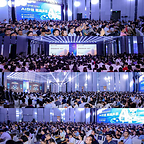
CHONGQING, China, July 5, 2026 /PRNewswire/ — A major financial summit was held in Chongqing on July 3 aimed at strengthening connections between capital and the city’s innovation-driven industries. The “Financial Support for High-Quality Development” conference featured deal-signing, investment pitches, panel discussions, and startup showcases, all designed to channel more private and institutional funding into local supply chains, technological innovation, and infrastructure projects. The event served as a targeted matchmaking platform—connecting companies seeking growth capital with financial institutions looking for investment opportunities in one of China’s fastest-growing urban centers.

During the conference, the city unveiled four new financing lists covering industrial, technological, infrastructure, and state-owned enterprise projects. In total, 549 projects are seeking approximately RMB419.4 billion in funding. Following multiple rounds of matchmaking, 60.66% of these projects have already secured matching investors. As of the end of the first quarter, the city’s medium- and long-term manufacturing loans reached RMB298.5 billion, while sci-tech lending hit RMB870 billion—up 13.9% and 13.1% year-on-year, respectively.

Beyond project pipelines, the conference delivered tangible outcomes: 56 contracts valued at RMB154.9 billion were signed on-site. The funds are directed toward some of China’s most dynamic industrial sectors, including connected electric vehicles and next-generation electronics manufacturing. Perhaps more telling is the diversity of financial backers—banks, securities firms, and asset managers all participated.

Zhang Zemin, an academician at the Chinese Academy of Sciences, said Chongqing is cultivating a collaborative ecosystem that unites universities, research institutes, hospitals, and corporations. He called on investors to focus on early-stage, innovative companies developing hard-tech healthcare technologies. Separately, Yin Qi, chairman of Afari Technology, observed that artificial intelligence and the automotive industry are now advancing in tandem. He urged deeper integration of R&D, manufacturing, capital, and talent to foster a self-sustaining industrial environment.

Executives from three major financial institutions—Xu Siwei, chairman of state-owned China Reform Holdings Corporation; Chen Liang, chairman of China International Capital Corporation (CICC); and Li Liang, founding partner of Hillhouse—said they would continue to increase investment to drive Chongqing’s technological innovation and industrial transformation by strengthening collaboration between finance and industry.

The event, organized by the Chongqing municipal government in partnership with its finance, technology, industry, and economic planning agencies. Two off-site sessions, held in the regional hubs of Wanzhou and Yongchuan, will explore each region’s role in Chongqing’s future growth.

View original content to download multimedia:https://www.prnewswire.com/apac/news-releases/chongqing-summit-seeks-to-bridge-capital-and-industry-as-city-accelerates-economic-transformation-302817965.html

SOURCE Xinhua Finance

Continue Reading

Technology

SK Telecom Pursues 15GW AI Data Center Buildout, Aiming to Become Asia’s AI Infrastructure Hub

Published

on

By

Ulsan AI Data Center to expand to GW scale; 5GW to be activated in stages from 2029, reaching 15GW in totalSK Group brings together full-stack AI infrastructure capabilities; SKT to spearhead the overall projectKorea’s third national infrastructure revolution following the Gyeongbu Expressway and high-speed internet

SEOUL, Korea, July 5, 2026 /PRNewswire/ — SK Telecom (NYSE: SKM, hereafter “SKT”) today announced that it will pursue the construction of an AI data center with a scale of up to 15GW. The goal is to become an AI infrastructure hub in Asia.

The move is intended to preemptively build domestic AI computing infrastructure at a time when demand for AI model training and inference is surging and high-performance computing infrastructure determines national competitiveness.

SKT is pursuing the project by linking it with the government’s “AI G3” strategy — the goal of becoming one of the world’s three leading AI powers alongside the U.S. and China — and the task of balanced regional development, comprehensively reviewing core infrastructure elements such as power, siting, and operations for the AI data center.

Ulsan AI Data Center to Expand to GW Scale; 5GW to Be Activated in Stages from 2029, Reaching 15GW in Total

Due to the buildout of high-performance AI computing infrastructure and rising memory prices, constructing a typical 1GW-class AI data center may require a substantial project cost reaching approximately KRW 70 trillion. Such costs are expected to be financed not only through the company’s own investment but also through strategic partner investment, long-term customer contracts, and project financing.

The backdrop to SKT’s move into building an AI data center at this scale is a global supply shortage. Global consulting firm McKinsey & Company forecasts that global data center demand will grow 19–22% annually while supply fails to keep pace, resulting in an estimated shortfall of about 15GW in the U.S. alone by 2030.[1]

Accordingly, global big tech companies are expanding data center investment beyond the U.S. to locations around the world. In this context, Korea is drawing attention as an investment destination for global big tech companies’ AI data centers.

Korea holds strong competitiveness in core AI components such as high-bandwidth memory (HBM). It also has stable power supply conditions based on nuclear power and liquefied natural gas (LNG), along with GW-class infrastructure operating capabilities accumulated through operating semiconductor fabs, making it an attractive location for AI data centers.

Based on this solid demand and locational advantages, SKT plans to build AI data center capacity totaling 15GW.

First, starting with the AI data center currently under construction in Ulsan, SKT will build a cluster of over 2GW across the southeastern region (Gyeongsang), using it as a base to attract AI infrastructure demand from global big tech companies to Korea. It also plans to build an additional 1GW in the southwestern region (Jeolla), bringing its domestic AI data center capacity to a total of 5GW to be opened in stages starting in 2029.

To this end, SKT will pursue AI data center construction by considering various factors together — including site selection, power supply, and securing key anchor tenants — in connection with the government’s balanced regional development tasks and strategic supply plans.

SK Group brings together full-stack AI infrastructure capabilities; SKT to spearhead the overall project as AI Infrastructure Architect

AI data center infrastructure hinges on three core elements: semiconductors, energy solutions, and data center construction and operation capabilities. SK Group already holds these core capabilities across its affiliates. This project will bring together the Group’s full-stack AI infrastructure capabilities, with each affiliate contributing its own strengths.

In particular, SKT will take on the central role of leading the design, construction, and operation of the AI data centers. SKT has already been actively pursuing the AI data center business and has continued its cooperation with global big tech companies[2].  

At SK AI Summit 2025 last November, SKT President and CEO Jung Jai-hun unveiled the company’s AI infrastructure roadmap, stating that SKT would lead the evolution of AI infrastructure as the nation’s leading AI operator. He also presented a longer-term blueprint for expanding cooperation with global big tech companies and scaling up the Ulsan AI Data Center to a total of over 1GW.

More recently, SKT announced plans to operate an “AI Factory,” described as a next-generation AI data center. SKT plans to begin AI Factory operations in 2027 and expand it to GW scale going forward.

Korea’s Third National Infrastructure Revolution Following the Gyeongbu Expressway and High-Speed Internet

The AI industry expects that AI data centers will serve not only as a new growth engine for Korea, but also as a national strategic asset. In particular, it is expected that linking AI data centers with regional industries will contribute to balanced regional development.

The construction of a 15GW-scale AI data center is expected to serve as a springboard for Korea to become an AI infrastructure hub. SKT views AI data centers as Korea’s third innovative infrastructure, following the Gyeongbu Expressway (1968) and high-speed internet (1998), and intends to take a leading role in advancing it.

“This AI data center project is aimed at preemptively preparing the computing infrastructure that the global AI ecosystem needs,” said Jung Jai-hun, President and CEO of SKT. “We will work closely with the government, industry, and local communities to help Korea grow into Asia’s core AI infrastructure hub.”

About SK Telecom 

SK Telecom has been leading the growth of the mobile industry since 1984. Now, it is taking customer experience to new heights by extending beyond connectivity. By placing AI at the core of its business, SK Telecom is rapidly transforming into an AI company with a strong global presence. It is focusing on driving innovations in areas of AI Infrastructure, AI Transformation (AIX) and AI Service to deliver greater value for industry, society, and life. 

For more information, please visit our newsroom at https://news.sktelecom.com/en/ or our LinkedIn page at www.linkedin.com/company/sk-telecom.

Forward-Looking Statements: Certain statements in this press release including, but not limited to, statements as to: SK Telecom’s plans, objectives and expectations regarding the development, construction, financing and operation of AI data centers and AI infrastructure; the planned development of AI data center capacity, including the phased development of projects in Ulsan and other regions of Korea; anticipated project timing, financing arrangements and strategic partnerships; expectations regarding AI Factory deployment, AI infrastructure demand and Korea’s position as an AI infrastructure hub; and other statements that are not historical facts are forward-looking statements within the meaning of Section 27A of the Securities Act of 1933, as amended, and Section 21E of the Securities Exchange Act of 1934, as amended, which are subject to the “safe harbor” created by those sections based on management’s beliefs and assumptions and on information currently available to management and are subject to risks and uncertainties that could cause actual results to be materially different than expectations.

Important factors that could cause actual results to differ materially include: global economic and political conditions; customer demand for AI infrastructure and services; the availability and cost of financing, computing resources, semiconductors, power, networking capacity and data center infrastructure; changes in governmental policies, applicable laws and regulations; the ability to secure strategic partners and customers; technological developments and competition; supply chain disruptions; the ability of SK Telecom and its collaborators and partners to successfully implement the contemplated initiatives and realize anticipated benefits; and other factors detailed from time to time in reports filed or furnished by SK Telecom with the U.S. Securities and Exchange Commission, including its most recent Annual Report on Form 20-F.

These forward-looking statements are not guarantees of future performance and speak only as of the date hereof, and, except as required by applicable law, SK Telecom undertakes no obligation to update these forward-looking statements to reflect future events or circumstances.

[1]  “AI Power: Expanding data center capacity to meet growing demand” (McKinsey & Company)

[2] SK Telecom and NVIDIA Build AI Infrastructure to Power Korea’s AI Innovation (June 8, 2026) https://news.sktelecom.com/en/3124
  SK Group and AWS Team Up to Build Cloud Computing Infrastructure to Support AI Innovation (June 22, 2025) https://news.sktelecom.com/en/1948


View original content:https://www.prnewswire.com/apac/news-releases/sk-telecom-pursues-15gw-ai-data-center-buildout-aiming-to-become-asias-ai-infrastructure-hub-302817964.html

SOURCE SK Telecom

Continue Reading

Trending