Connect with us

Technology

Automotive Radar Sensors Market to Grow by USD 6.51 Billion (2024-2028), High-Frequency Radar Sensors Drive Growth, Report on How AI Redefines Market Landscape – Technavio

Published

on

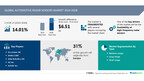
NEW YORK, Nov. 26, 2024 /PRNewswire/ — Report with market evolution powered by AI – The global automotive radar sensors market size is estimated to grow by USD 6.51 billion from 2024-2028, according to Technavio. The market is estimated to grow at a CAGR of over 14.01%  during the forecast period. Availability of high-frequency radar sensors is driving market growth, with a trend towards increased accuracy in perceiving environment through sensor fusion technique. However, concerns associated with cybersecurity risks poses a challenge.Key market players include Acconeer AB, AISIN CORP., Arbe Robotics Ltd, AU Inc, Autoliv Inc., Banner Engineering Corp., DENSO Corp., Faurecia SE, Infineon Technologies AG, Tsien UK Ltd, MediaTek Inc., NXP Semiconductors NV, Renesas Electronics Corp., Robert Bosch GmbH, Rohde and Schwarz GmbH and Co. KG, S.m.s Smart Microwave Sensors GmbH, Schaeffler AG, Texas Instruments Inc., Valeo SA, Vayyar Imaging Ltd., and Eravant.

Key insights into market evolution with AI-powered analysis. Explore trends, segmentation, and growth drivers- View Free Sample PDF

Automotive Radar Sensors Market Scope

Report Coverage

Details

Base year

2023

Historic period

2018 – 2022

Forecast period

2024-2028

Growth momentum & CAGR

Accelerate at a CAGR of 14.01%

Market growth 2024-2028

USD 6.51 billion

Market structure

Fragmented

YoY growth 2022-2023 (%)

13.39

Regional analysis

Europe, North America, APAC, South America, and Middle East and Africa

Performing market contribution

Europe at 31%

Key countries

US, China, Japan, Germany, and UK

Key companies profiled

Acconeer AB, AISIN CORP., Arbe Robotics Ltd, AU Inc, Autoliv Inc., Banner Engineering Corp., DENSO Corp., Faurecia SE, Infineon Technologies AG, Tsien UK Ltd, MediaTek Inc., NXP Semiconductors NV, Renesas Electronics Corp., Robert Bosch GmbH, Rohde and Schwarz GmbH and Co. KG, S.m.s Smart Microwave Sensors GmbH, Schaeffler AG, Texas Instruments Inc., Valeo SA, Vayyar Imaging Ltd., and Eravant

Market Driver

The Automotive Radar Sensors market is experiencing significant growth due to the increasing demand for advanced safety features in both passenger and commercial vehicles. Radar sensors, including short-range and long-range, are crucial components of Advanced Driver-Assistance Systems (ADAS) and Autonomous Driving (AD) systems. Optical imaging, video, ultrasonic, infrared, LIDAR, and ultrasound are alternative technologies, but radar sensors offer superior detection capabilities and range. ADAS applications include Intelligent Park Assist, Lane Change Assistance, and Collision Prevention. Long-range radar sensors operate at 24 GHz, 77-GHz, and 79GHz frequencies, enabling high-resolution tracking and detection of objects at greater distances. Short-range radar sensors are used for parking assistance and collision mitigation. The autonomous car market is a major driver of the radar sensor industry, with companies like Tesla, Waymo, and NVIDIA investing heavily in this technology. Radar sensors are also used in security and surveillance, industrial applications, traffic monitoring, and infrastructure development. The future of the automotive radar sensor market lies in technology innovation, electrification, and mobility solutions. 

Modern vehicles incorporate numerous electronic systems, including radar, ultrasound, LIDAR, and cameras, to enhance Advanced Driver Assistance Systems (ADAS) features. Strict regulations and OEM differentiation drive the increasing demand for automotive radar sensors. However, these systems operate independently, limiting their effective and realistic functionality. Overcoming the shortcomings of each sensor type requires integration and information exchange among them, which is currently lacking. Thus, the market for automotive radar sensors continues to grow, addressing safety and regulatory requirements. 

Request Sample of our comprehensive report now to stay ahead in the AI-driven market evolution!

Market Challenges

The Automotive Radar Sensors market is experiencing significant growth due to the increasing demand for advanced safety features in both passenger and commercial vehicles. Traditional sensors like Optical imaging, Video, Ultrasonic, and Infrared are being supplemented by newer technologies such as LIDAR, Short range radar, Mid range radar, and Long range radar. Automakers are integrating these sensors into Advanced Driver Assistance Systems (ADAS) and Autonomous Driving (AD) systems, including Intelligent Park Assist, Lane change assistance, and Collision prevention. Automotive radar sensors operate at various frequencies, including 24 GHz, and offer long-range detection capabilities. SAE-Level 3 automation and autonomous driving are driving the market, with technologies like DRIVE PILOT leading the way. The industry is also being influenced by trends such as Industry 4.0, electrification, and mobility. However, challenges remain, including the need for innovative packaging concepts and cutting-edge production processes for high-frequency components. The market is also impacted by competition from other sensors like cameras and ultrasound, as well as Moisture sensors and other technologies. The autonomous car market, consumer electronic devices, and infrastructure development are also key factors influencing the market. Long-range radar sensors, operating at 77-GHz and 79GHz frequencies, offer high-resolution tracking and detection capabilities, making them essential for collision mitigation (CM) and parking assistance (PA) systems. The market is expected to continue growing, driven by the increasing demand for safety features and the development of autonomous cars.Radar sensors in the automotive industry transmit signals between vehicles and roadside infrastructure, making them susceptible to eavesdropping attacks by malicious actors. These attacks can compromise vehicle privacy and expose sensitive information, such as location data, driving patterns, and vehicle telemetry. Cybercriminals may also launch denial-of-service (DoS) attacks against radar sensors or their communication networks, impairing sensor performance and disrupting safety-critical functions. Additionally, radar sensor systems are vulnerable to malware and ransomware attacks, which can inject malicious software into electronic control units (ECUs) or networked components, potentially causing significant harm to vehicle operations. It is essential for automotive companies to prioritize cybersecurity measures to protect against these threats and ensure the safe and reliable operation of radar sensors in vehicles.

Discover how AI is revolutionizing market trends- Get your access now!

Segment Overview 

This automotive radar sensors market report extensively covers market segmentation by 

Type 1.1 Medium-range1.2 Long-range1.3 Short-rangeApplication 2.1 FCW2.2 AEBS2.3 ACC2.4 BCD and othersGeography 3.1 Europe3.2 North America3.3 APAC3.4 South America3.5 Middle East and Africa

1.1 Medium-range-  The Automotive Radar Sensors Market is driven by the increasing adoption of advanced collision avoidance and prevention systems in both passenger and commercial vehicles. These systems utilize radar sensors to detect and alert drivers when their vehicle is approaching another at an unsafe distance. The systems offer various warning mechanisms, including alarm sounds, warning lights, or vibrations. The US National Highway Traffic Safety Administration (NHTSA) and New Car Assessment Programme (NCAP) in the EU, Japan, Korea, and China have mandated or encouraged the use of these systems in heavy vehicles and trucks. Tests have shown significant positive results in reducing crashes caused by driver distraction and other factors. Furthermore, these sensors are part of the bundled Advanced Driver-Assistance Systems (ADAS) offering, making them a standard fitment in the future. The global Automotive Radar Sensors Market is expected to grow significantly during the forecast period due to these factors.

Download a Sample of our comprehensive report today to discover how AI-driven innovations are reshaping competitive dynamics

Research Analysis

The Automotive Radar Sensors market is a rapidly growing segment in the automotive industry, driven by the increasing demand for advanced safety features and autonomous driving technologies. Radar sensors use radio waves to detect objects and measure their distance, velocity, and size. They offer several advantages over other sensing technologies such as optical imaging, video, ultrasonic, and infrared. Radar sensors come in various ranges, including short, mid, and long-range, catering to different applications in Advanced Driver Assistance Systems (ADAS) and Autonomous Driving (AD) systems. These systems enhance automation and mobility, providing features like lane change assistance, collision prevention, and safety enhancements. Industry 4.0 and electrification are also influencing the market, as radar sensors play a crucial role in optimizing vehicle performance and ensuring safety in these advanced technologies. With the increasing number of registered cars and the growing focus on mobility solutions, the Automotive Radar Sensors market is poised for significant growth in the coming years. Technology innovation continues to drive the market, with high-frequency components and advanced signal processing algorithms enabling improved accuracy and reliability. The market is expected to expand across passenger vehicles and commercial vehicles, catering to the diverse needs of the automotive industry.

Market Research Overview

Automotive Radar Sensors are an essential component of Advanced Driver-Assistance Systems (ADAS) and Autonomous Driving (AD) systems in modern vehicles. These sensors use radio waves to detect objects in the vehicle’s surroundings, providing real-time information on range, velocity, and angle. Unlike Optical imaging, Video, Ultrasonic, Infrared, and LIDAR sensors, Automotive Radar Sensors operate using radio waves in various frequency bands, including Short Range Radar (SRR), Mid Range Radar (MRR), and Long Range Radar (LRR). Radar sensors play a crucial role in various ADAS features, such as Lane Change Assistance, Collision Prevention, and Automation. They come in different frequency bands, with 24 GHz being commonly used for short-range applications, and 77-GHz and 79GHz frequencies for long-range detection. The Automotive Radar Sensors market is growing rapidly due to the increasing demand for safety features in passenger cars and commercial vehicles. The market is also driven by the trend towards autonomous driving and Industry 4.0, which requires high-resolution tracking and detection capabilities. The market for Automotive Radar Sensors is expected to grow significantly in the coming years, driven by the increasing number of registered cars, the adoption of SAE-Level 3 and higher automation, and the expanding use cases in areas such as security and surveillance, industrial applications, and traffic monitoring. The development of Automotive Radar Sensors involves cutting-edge production processes and innovative packaging concepts to ensure high-frequency components perform optimally. The market is also witnessing technology innovation in areas such as electrification, mobility, and safety features, making radar sensors an essential component of the future of transportation.

Table of Contents:

1 Executive Summary
2 Market Landscape
3 Market Sizing
4 Historic Market Size
5 Five Forces Analysis
6 Market Segmentation

TypeMedium-rangeLong-rangeShort-rangeApplicationFCWAEBSACCBCD And OthersGeographyEuropeNorth AmericaAPACSouth AmericaMiddle East And Africa

7 Customer Landscape
8 Geographic Landscape
9 Drivers, Challenges, and Trends
10 Company Landscape
11 Company Analysis
12 Appendix

About Technavio

Technavio is a leading global technology research and advisory company. Their research and analysis focuses on emerging market trends and provides actionable insights to help businesses identify market opportunities and develop effective strategies to optimize their market positions.

With over 500 specialized analysts, Technavio’s report library consists of more than 17,000 reports and counting, covering 800 technologies, spanning across 50 countries. Their client base consists of enterprises of all sizes, including more than 100 Fortune 500 companies. This growing client base relies on Technavio’s comprehensive coverage, extensive research, and actionable market insights to identify opportunities in existing and potential markets and assess their competitive positions within changing market scenarios.

Contacts

Technavio Research
Jesse Maida
Media & Marketing Executive
US: +1 844 364 1100
UK: +44 203 893 3200
Email: media@technavio.com
Website: www.technavio.com/

View original content to download multimedia:https://www.prnewswire.com/news-releases/automotive-radar-sensors-market-to-grow-by-usd-6-51-billion-2024-2028-high-frequency-radar-sensors-drive-growth-report-on-how-ai-redefines-market-landscape—technavio-302316081.html

SOURCE Technavio

Continue Reading
Click to comment

Leave a Reply

Your email address will not be published. Required fields are marked *

Technology

Technosylva Introduces First-of-Its-Kind Urban Conflagration Modeling for the Built Environment

Published

on

By

Significant enhancements deliver critical fire intelligence in the wildland-urban interface, helping utilities and emergency agencies protect lives and infrastructure

LA JOLLA, Calif., April 22, 2026 /PRNewswire/ — Technosylva, the global leader in wildfire and extreme weather science and technology, today launched major enhancements to its urban conflagration model that predicts how fires spread through populated areas and quantifies risk to buildings. The model addresses a key limitation of traditional wildfire science: much of it has focused on wildland areas, classifying urban areas as “non-burnable.” This limitation slows fire simulations at the community boundary, leaving fire agencies, utilities, and insurers with limited forward visibility into how fire will behave in populated communities.


Technosylva’s capabilities provide two notable wildfire modeling enhancements. First, the urban conflagration model simulates how fires will behave in the wildland urban interface (WUI), where characteristics such as structure density, vegetation encroachment, and fuel types result in fundamental differences compared to wildland fires. Second, the Dynamic Building Loss Factor provides unprecedented insight into the vulnerability of structures. This information enables utilities and agencies to undertake appropriate mitigations, such as asset hardening, undergrounding lines, vegetation management, and community education and engagement.

“Recent devastating fires have made one thing clear: populated areas face disproportionate impacts—and require greater focus to protect them,” said Bryan Spear, CEO of Technosylva. “Traditional wildfire models were designed for wildland fuels and fire behavior. Our approach builds on that foundation by showing how fires actually move through communities. By more accurately modeling the risks and consequences, utilities and fire agencies can make smarter, risk-based decisions to mitigate wildfire risks, communicate threats, maintain power, and better protect the communities they serve.”

According to a 2023 article in the Proceedings of the National Academy of Sciences [1], “community fire destruction has become a national crisis.” Recent disasters in Lahaina, Gatlinburg, and Marshall show why. Many communities aren’t built to withstand ignition, and once a structure catches fire, it can quickly spread flames and embers to neighboring buildings. The result is fast-moving, large-scale destruction with lasting impacts on entire communities.

Key Technology Advances Addressing Critical Industry Needs

Technosylva’s unique model was trained on a comprehensive database of WUI fires, examining environmental conditions, weather patterns, and fuel characteristics to understand the drivers of urban conflagration. One of the primary challenges in modeling fire behavior in the built environment is a limited number of historical fires upon which to draw conclusions and build scalable models. Technosylva’s modeling approach has overcome these challenges, effectively capturing the complex interactions between wildfire and the built environment.

Notable enhancements to Technosylva’s modeling approach include:

WUI Fuel Mapping: Development of 12 unique WUI fuel types that more accurately reflect the manner in which the infrastructure in the built environment becomes a fuel source for the fire. This is critical for understanding how the characteristics of the built environment impact the rate of spread, intensity, and speed of fires in the WUI.Dynamic Building Loss Factor: Machine learning models to capture expected building loss, leveraging characteristics such as structure characteristics and building age that drive vulnerability. Combined with assessments of topography, vegetation, and other building properties such as density and proximity to roads, this intelligence identifies not just whether a community is threatened, but the types of structures and conditions that result in the highest risk.Characterization of Fire Behavior Under Extreme Conditions: Calibrated to accurately reflect urban encroachment and fire spread rates in WUI environments—particularly during the most extreme events. Capturing fires that have historically been labeled as “outliers” is critical for utilities and communities to understand and prepare for potential worst-case scenarios.High-Resolution Weather Integration: Captures localized wind patterns, humidity gradients, and temperature variations at a scale matched to “neighborhood-level” fire behavior.

Large-scale urban fires were once rare, but in recent years their frequency and severity has increased dramatically. When wildfires reach communities, the “fuel” is no longer just vegetation—it’s homes and businesses. In Lahaina alone, a single urban conflagration caused an estimated $4 to $6 billion in economic losses. The consequences can be devastating for both life and property. Technosylva’s modeling has evolved to capture how fires spread through the built environment, enabling utilities and agencies to make more informed, risk-based decisions.

[1] https://www.fs.usda.gov/rm/pubs_journals/2023/rmrs_2023_calkin_d001.pdf

About Technosylva
Technosylva is the leading provider of wildfire and extreme weather modeling, risk mitigation, and operational response software. Technosylva’s market-leading solutions, enhanced by AI and machine learning capabilities, provide real-time and predictive insights into developing wildfire and extreme weather risks to support electric utility, insurance, and government agency customers. Founded in 1997, Technosylva has offices in La Jolla, CA, León, Spain, and Calgary, Canada. Learn more at www.Technosylva.com.

Contacts
For Technosylva:
Lucian Deaton
Senior Digital Marketing Manager
412620@email4pr.com

Colin Mahoney
Mahoney Communications Group
412620@email4pr.com
212.220.6045

View original content to download multimedia:https://www.prnewswire.com/news-releases/technosylva-introduces-first-of-its-kind-urban-conflagration-modeling-for-the-built-environment-302749820.html

SOURCE Technosylva

Continue Reading

Technology

Parks Associates: Roku (28%) and Samsung (23%) Dominate Connected TV Platforms, Controlling Access to Streaming Audiences in the US Market

Published

on

By

Data shows Amazon, LG, and Vizio hold smaller shares as platform control drives content discovery, advertising, and monetization

PLANO, Texas, April 22, 2026 /PRNewswire/ — Parks Associates’ latest US household research from the Streaming Video Tracker shows the connected TV platform market remains concentrated among a small group of leading operating systems, with Roku OS (28%) and Samsung’s Tizen OS (23%) accounting for the largest share of usage in US broadband households.

The firm’s data shows Amazon Fire TV, LG webOS, and Vizio SmartCast maintain mid-tier positions, while platforms such as Apple tvOS, gaming consoles, and Android TV hold smaller shares. This distribution reinforces the role of smart TV operating systems as the primary gateway for streaming content and services.

“Control of the platform layer is central to competition in the connected TV market,” said Michael Goodman, Director, Entertainment, Parks Associates. “Operating systems determine what content consumers see, how services are positioned, and how advertising is delivered.”

Recent trends highlighted in the research include:

Platform concentration: A small number of operating systems account for the majority of CTV (connected TV) usage, limiting visibility for services without strong distribution partnerships.Stable market share: Platform rankings have remained consistent over time, with Roku showing modest growth and Samsung maintaining a strong installed base.Advertising control: Leading platforms manage ad inventory, data collection, and targeting, shaping monetization across the ecosystem.Discovery and engagement: The TV OS plays a key role in recommendations, search, and user experience, influencing viewing behavior.

The data highlights the importance of platform ecosystems, as control of the TV operating system impacts content distribution, advertising revenue, and consumer engagement across the CTV market. With the growing role of AI in the TV OS for search and personalization, the importance of platform ecosystems is only going to grow in the coming years.

For more information, contact Mindi Sue Sternblitz-Rubenstein. Request information about Parks Associates’ Streaming Video Tracker.

Parks Associates will host the ninth annual Future of Video at the Marina del Rey Marriott in California, November 17-18. 

About Parks Associates
Parks Associates helps companies identify new opportunities, refine strategy, and accelerate growth in connected technology markets through data-driven insights and industry expertise. With more than 40 years of experience, the firm delivers proprietary consumer and industry research, market forecasts, and strategic analysis that guide business decisions across personal, connected home, small business, and commercial technology ecosystems. Parks Associates supports clients in navigating evolving markets including AI, security, smart home, broadband, entertainment, energy, multifamily, smart buildings, and connected health.

The firm also fosters industry growth and collaboration by convening thousands of leaders each year through its flagship executive conferences, including CONNECTIONS™, Connected Health Summit, Smart Energy Summit, Smart Spaces, and Future of Video. Learn more at https://www.parksassociates.com.

Follow Parks Associates on LinkedIn, Facebook, and Instagram.

Mindi Sue Sternblitz-Rubenstein
Parks Associates
972.490.1113
412621@email4pr.com 

View original content to download multimedia:https://www.prnewswire.com/news-releases/parks-associates-roku-28-and-samsung-23-dominate-connected-tv-platforms-controlling-access-to-streaming-audiences-in-the-us-market-302749732.html

SOURCE Parks Associates

Continue Reading

Technology

FINBOA Named Double Finalist for 2026 Banking Tech Awards

Published

on

By

FINBOA recognized in ‘Best of RegTech’ and ‘Best-as-a-Service’ categories

HOUSTON, April 22, 2026 /PRNewswire/ — FINBOA, Inc., a leader in process automation solutions for regulatory compliance in financial institutions, is proud to announce it has been named a finalist in two categories for the 2026 Banking Tech Awards: Excellence in Tech Awards. The company was recognized in the Best RegTech Solution category for its FINBOA BI-Disputes solution and in the Best “as-a-Service” Solution category for its FINBOA Treasury Onboarding solution. As a shortlist finalist, FINBOA’s software has been identified as an innovation leader in the U.S. Banking and RegTech space.

“Being named a finalist in two categories at the Banking Tech Awards is a strong validation of our mission to simplify and modernize complex banking operations,” said Raj Singal, CEO of FINBOA. “FINBOA Treasury Onboarding and BI-Disputes solutions were built to solve real challenges our bank and credit union clients face every day; such as eliminating manual effort, improving regulatory compliance and timely access to information to guide decision-making. We’re proud to see both solutions recognized for their impact and innovation.”

The FINBOA Treasury Onboarding solution was selected as a finalist in the Best “as-a-Service” category for providing intuitive automated workflows to replace manual, paper-based, and fragmented processes for new account setups. The solution accelerates account activation, shortens time to revenue, and enhances the commercial client experience, without requiring core system integration. Its zero-integration deployment model enables financial institutions to modernize quickly while minimizing operational disruption. FINBOA clients using the solution have noted the time-saving impact of process automation on their workflows. For example, First Oklahoma Bank’s Senior Vice President, Kristy Smith noted, “Within just two months, we transformed our Treasury Onboarding from a slow, manual process—relying on paper and email—to a fully digitized workflow. The feedback from both customers and staff has been overwhelmingly positive. FINBOA made that possible.”

FINBOA BI-Disputes, recognized in the RegTech category, extends the value of FINBOA Payment Disputes solution by transforming dispute data into clear, actionable insights through an intuitive interface that eliminates time-consuming manual reporting and provides instant visibility into detailed views of dispute information. The solution enables stakeholders to quickly generate audit and board-ready reports while strengthening compliance by tracking Reg E deadlines, provisional credits, and resolution requirements. Advanced fraud analytics provide insights on emerging trends and high-risk merchants, empowering financial institutions to make more confident decisions, reduce risk, and optimize dispute management performance.

The 2026 Banking Tech Awards celebrate excellence and innovation in the use of IT in financial services worldwide. Winners will be announced on May 28, 2026 at a special awards event in New York.

About FINBOA

FINBOA provides intelligent process automation software to banks, credit unions and service providers to simplify compliance processing by eliminating manual systems. Solutions include FINBOA Payment Disputes, FINBOA BI-Disputes, FINBOA Exception Management, and FINBOA Treasury Onboarding. FINBOA delivers transformative software proven to enable institutional growth by reducing operational costs and risk. Headquartered in Houston, FINBOA is trusted to help over 500 financial institutions nationwide achieve targeted business outcomes and peace of mind. Learn more at www.finboa.com or follow us on LinkedIn and X social media platforms.

View original content to download multimedia:https://www.prnewswire.com/news-releases/finboa-named-double-finalist-for-2026-banking-tech-awards-302746619.html

SOURCE FINBOA

Continue Reading

Trending